
Let’s be honest. A messy pantry can make even the nicest kitchen feel annoying. You go in for one thing, then somehow spend five minutes moving pasta boxes, snack bags, and three random cans of beans that seem to multiply when nobody’s looking. It is not exactly the calm, functional kitchen moment most of us want.
I have always felt that a good pantry setup makes everyday life easier in a very real way. It saves time, cuts down on waste, and makes cooking feel less chaotic. And no, pantry organization is not just for people who enjoy alphabetizing spices for fun. It is for regular people who want to find the cereal without starting a treasure hunt.
So if your pantry currently looks like it has its own secret drama going on, you are in the right place. These pantry organization ideas for 2026 focus on making your space easier to use, easier to maintain, and a lot less stressful.
1. Use Clear Storage Bins for Similar Items
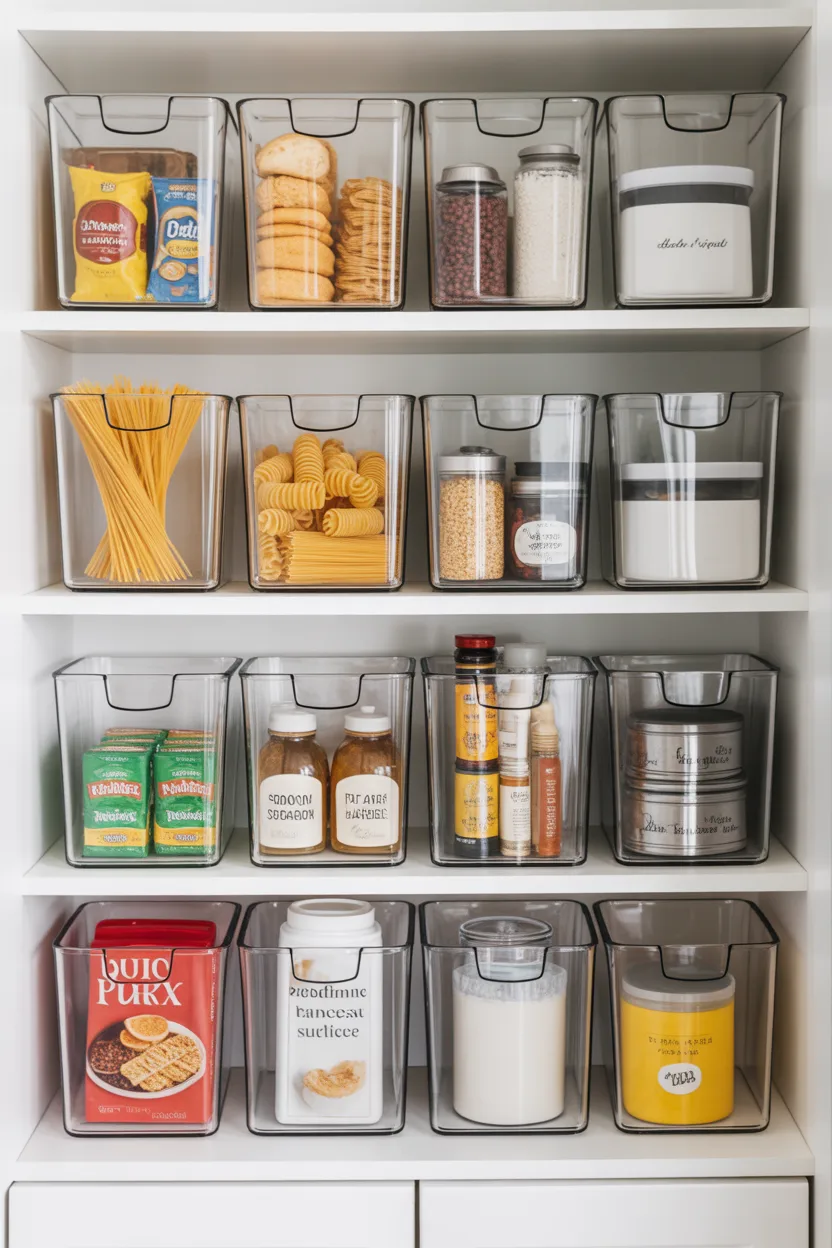
Clear storage bins make a pantry feel more organized almost immediately. The reason is simple. They group similar items together and stop everything from spreading out across every shelf like it pays rent there.
I love using clear bins for snacks, baking supplies, breakfast foods, pasta, and canned goods that come in smaller packs. When everything sits in one place, you waste less time searching and you keep shelves from looking chaotic. That little visual order changes the whole feel of the pantry.
This idea also makes cleanup easier. If a shelf starts looking messy, you only need to straighten one bin instead of twenty random items. That is a huge win, especially if you want a system that actually lasts longer than two days.
Clear bins make pantry categories obvious, tidy, and easy to maintain. They also help you see what you have before you buy more. Ever bought another box of crackers when you already had three? Yeah, same.
2. Label Everything Like You Mean It
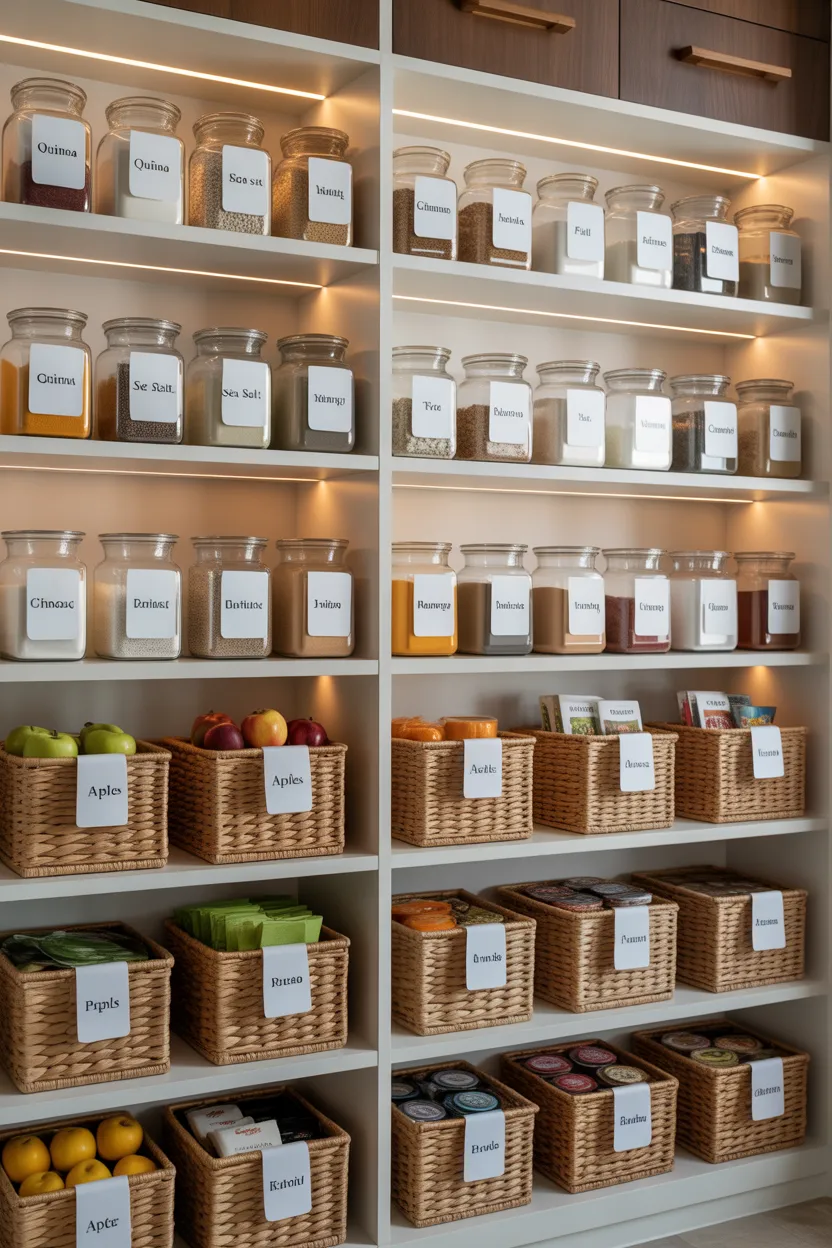
Labels sound basic, but they do a lot of the hard work in an organized pantry. A label tells everyone where things belong, and that matters more than people think.
Without labels, people start guessing. And let’s be real, people are terrible at guessing in shared kitchen spaces. One person puts oatmeal with snacks, another puts flour next to cereal, and suddenly the pantry makes no sense again.
Also Read: 23 Small Pantry Ideas 2026 That Use Every Inch Well
You do not need anything fancy here. Simple printed labels look clean and professional. Handwritten labels can also look charming if you keep them neat. The point is not perfection. The point is clarity.
Labels help your pantry stay organized instead of just looking organized for one afternoon. They create structure, reduce confusion, and make it much easier to put things back where they belong.
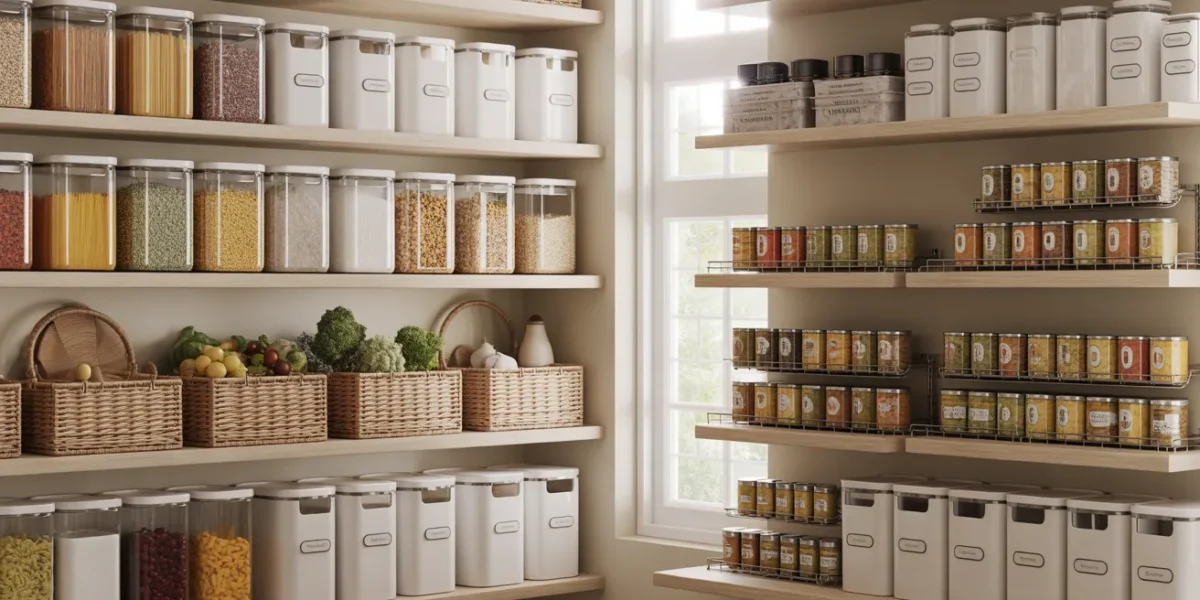
3. Switch Dry Goods Into Matching Containers
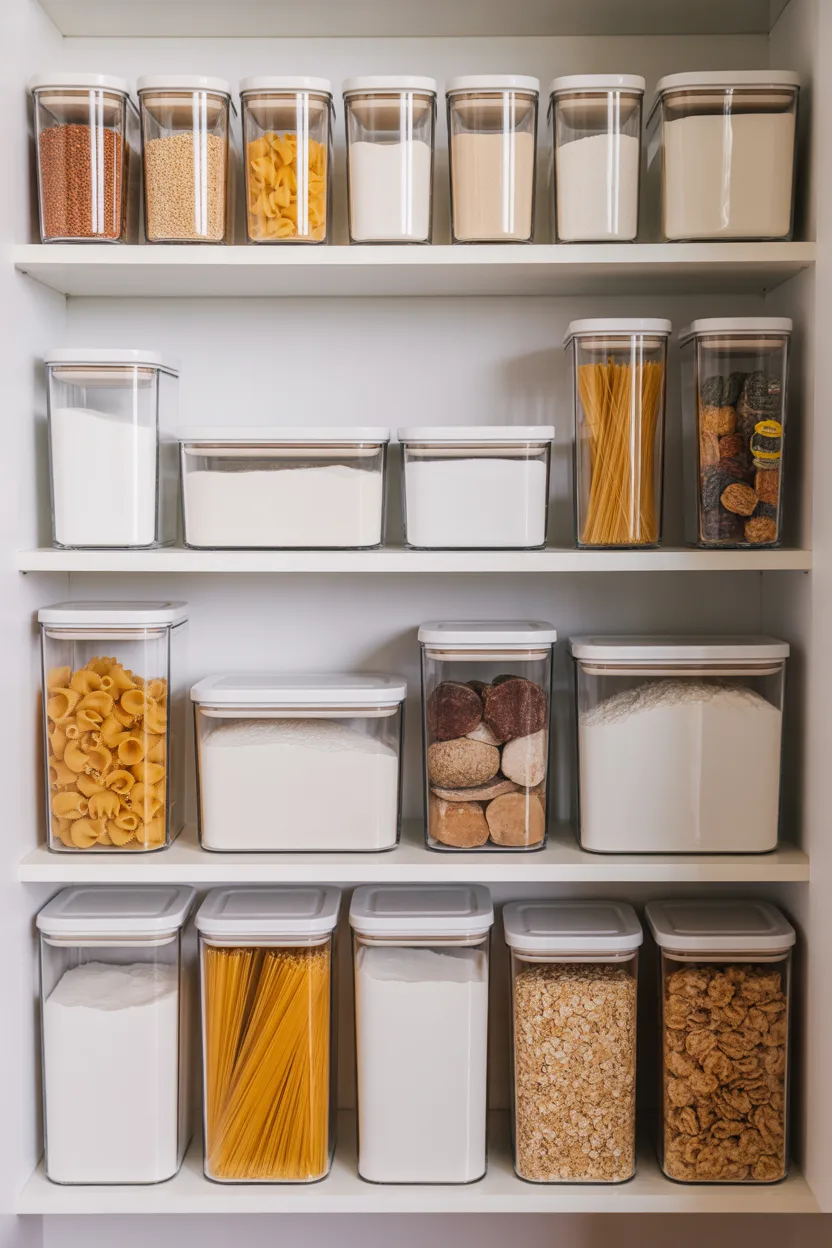
This is one of those pantry organization ideas that instantly makes the whole space feel calmer. Dry goods in matching containers look cleaner, stack better, and make it easier to see what you actually have.
Think about rice, flour, pasta, sugar, cereal, oats, and lentils. Those products often come in bulky bags and boxes that tear, spill, or look messy after one use. Matching containers solve that problem fast.
I personally love this setup because it makes shelves feel less crowded. It also keeps ingredients fresher and easier to scoop. No more clipping a half open flour bag and hoping for the best. That little game rarely ends well.
Matching containers improve freshness, visibility, and shelf appeal at the same time. If you want your pantry to feel more put together without doing anything too complicated, start here.
4. Add Tiered Shelf Risers for Cans and Jars
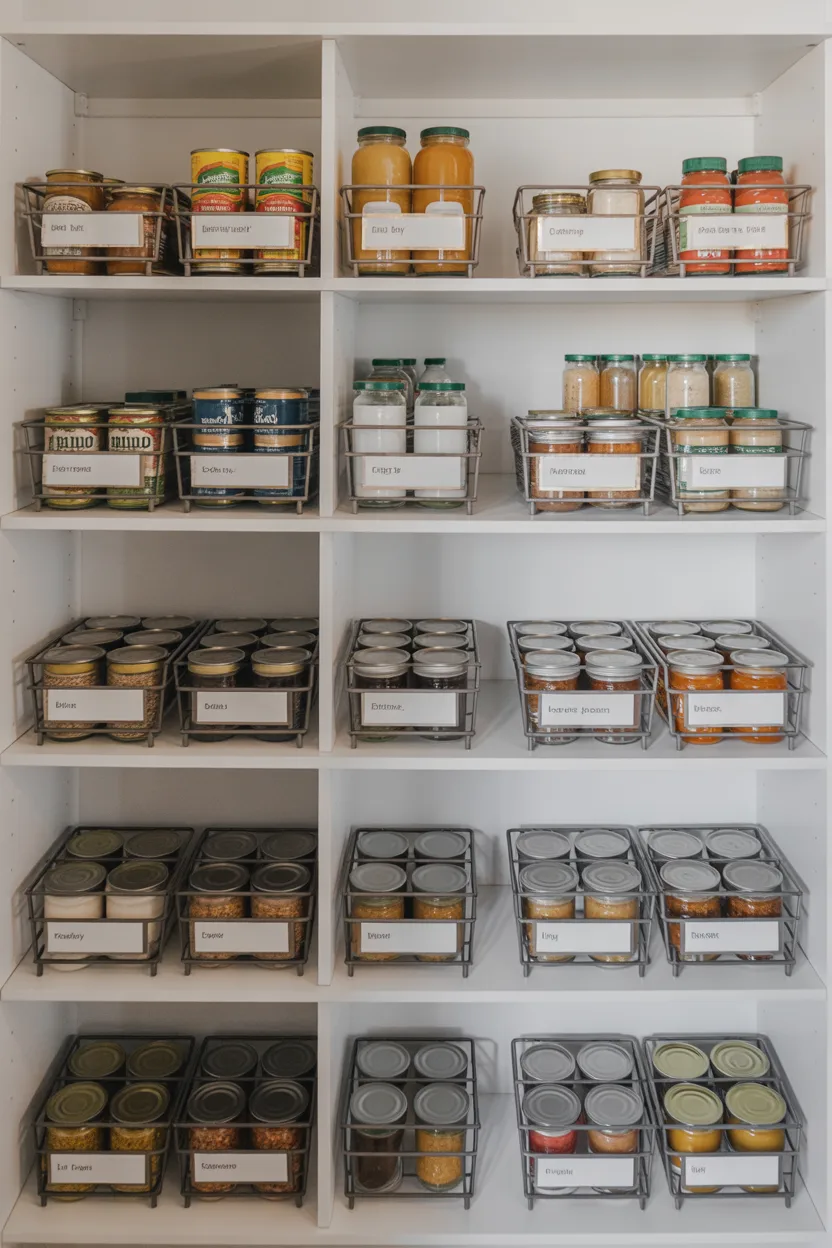
Cans and jars love to hide in the back of pantry shelves. You buy them, forget about them, then find them months later like you just uncovered kitchen archaeology.
Tiered shelf risers fix that problem because they lift items in the back so you can actually see them. Instead of one flat row where everything blocks everything else, you get neat levels that keep labels visible.
This works especially well for canned vegetables, soups, sauces, beans, and jars of condiments. You can scan the shelf in seconds instead of moving half the pantry around just to find one thing.
Shelf risers make better use of vertical space and stop food from disappearing in the back. That means less waste, easier meal planning, and fewer duplicate purchases.
5. Create a Snack Zone
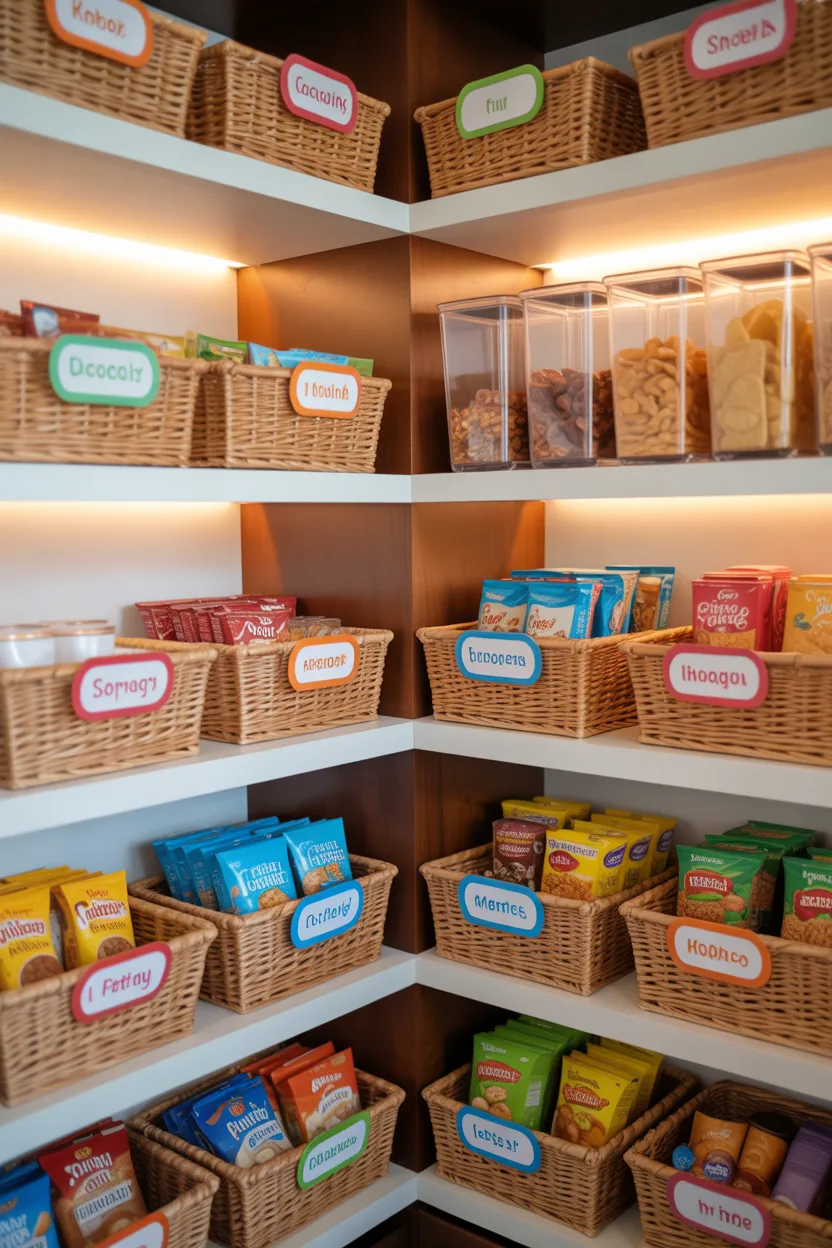
A snack zone makes life easier for everyone. It gives snacks a clear home, which means people stop rummaging through the entire pantry every time they want crackers or a granola bar.
You can dedicate one shelf, two bins, or one section of the pantry to snack items. Keep chips, bars, cookies, trail mix, fruit pouches, or whatever your household reaches for most in that area. The important part is keeping it separate from everything else.
Also Read: 24 Pantry Organization Ideas 2026 That Make Life So Easy
This idea works really well in homes with kids, but honestly, adults benefit just as much. I like knowing exactly where quick snacks live, especially on busy days when I want something fast and do not feel like digging through ten shelves.
A snack zone cuts down on clutter and makes daily pantry use much smoother. It also helps you see when snacks are running low before a full household meltdown begins.
6. Use Lazy Susans for Bottles and Small Jars
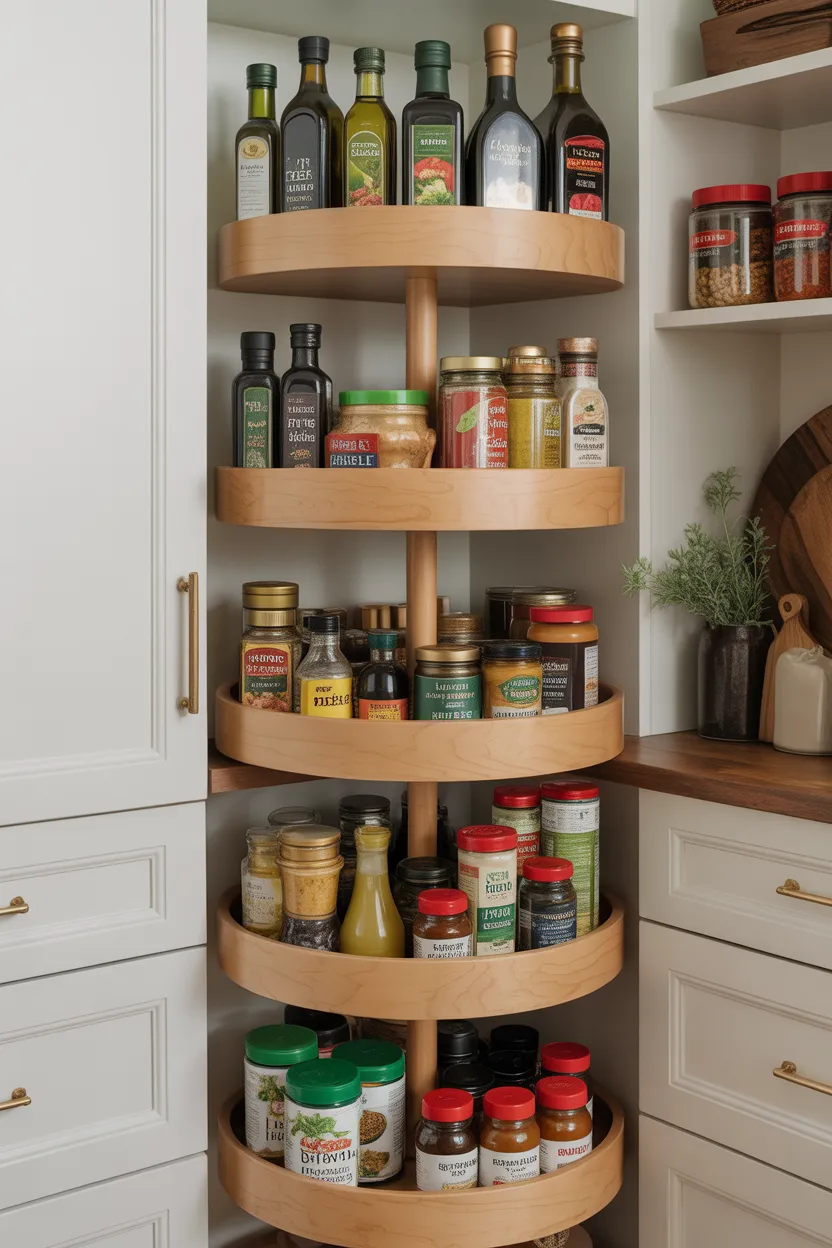
Lazy Susans make awkward pantry corners and deep shelves much more useful. You place bottles and jars on the tray, give it a quick spin, and grab what you need. Easy.
This works beautifully for oils, sauces, vinegars, syrups, dressings, peanut butter, and other small containers that tend to collect in strange little clusters. Instead of knocking things over to reach the bottle in the back, you just rotate the tray.
I have always liked this idea because it feels simple but smart. It solves a real problem without asking you to rebuild your pantry or spend a fortune on fancy inserts.
A Lazy Susan improves access and keeps small pantry items from turning into a cluttered mess. Ever wondered why some pantries feel so much easier to use? Little solutions like this do a lot of the work.
7. Dedicate One Shelf to Breakfast Items
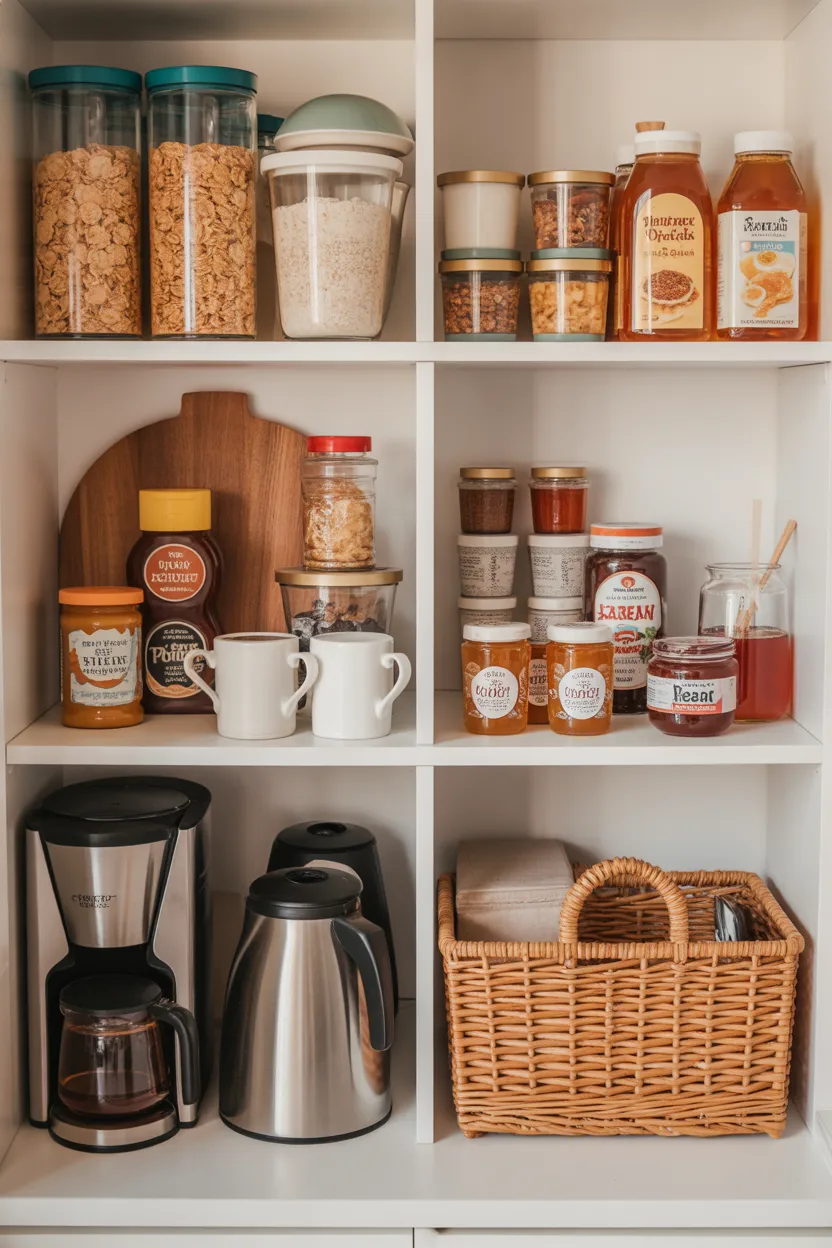
Breakfast gets easier when all your morning staples live in one place. That way, you do not need to grab cereal from one shelf, oats from another, and honey from the back corner next to random baking supplies.
Keep cereal, oatmeal, pancake mix, coffee, tea, jam, nut butter, and breakfast bars together. If you have kids, this setup helps them find what they need without asking ten questions before 8 a.m., which feels like a gift to everyone involved.
I love a breakfast shelf because it creates a mini routine. It makes mornings feel smoother, and that matters a lot when the day already starts rushed.
A dedicated breakfast shelf saves time and brings more order to busy mornings. It is one of those ideas that feels small until you use it every day.
8. Organize by Meal Type
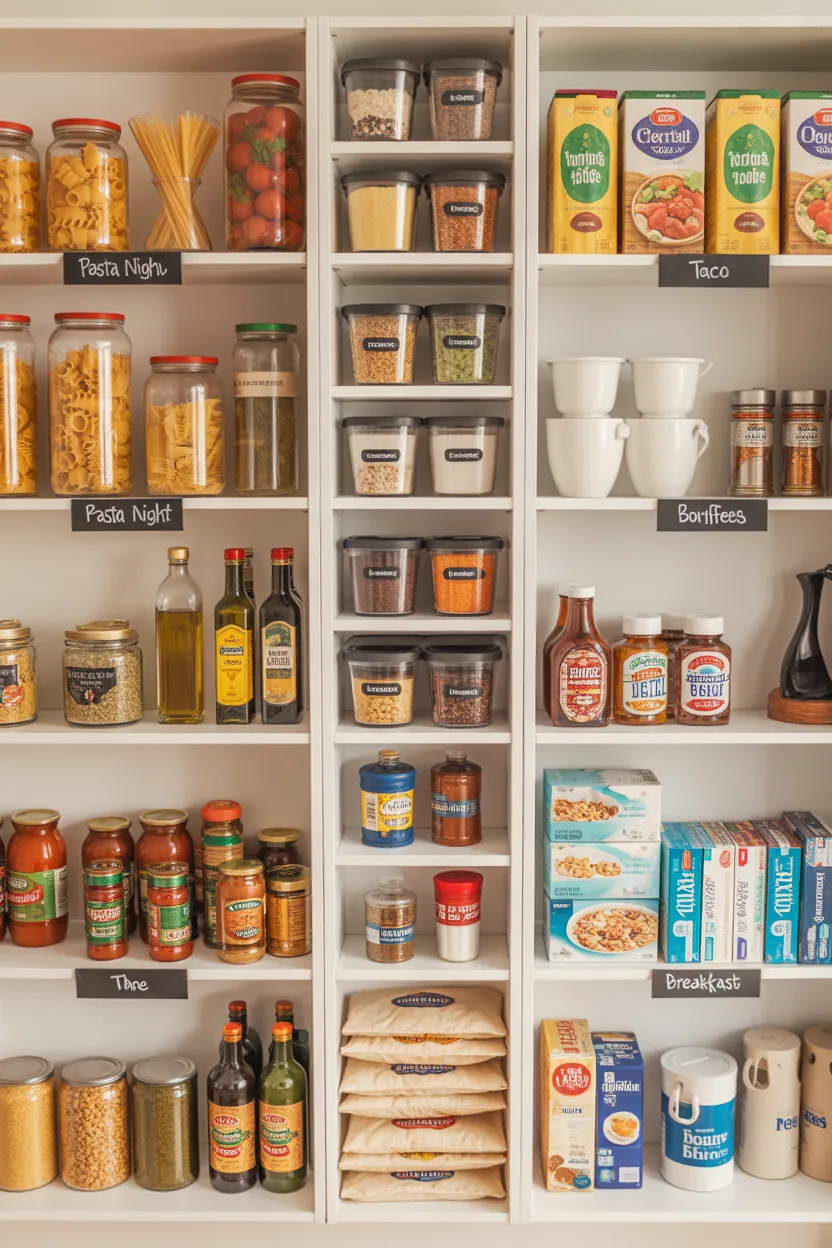
This idea works surprisingly well if you cook often. Instead of organizing only by food category, you group pantry items by how you actually use them.
For example, you can keep pasta, pasta sauce, breadcrumbs, and noodles close together. You can place taco shells, salsa, beans, and seasoning in another section. Breakfast items can stay together. Baking supplies can have their own zone too.
This setup makes meal prep faster because the ingredients you need already sit near each other. That saves time and reduces the chance of forgetting what you have.
Also Read: 21 Dining Room Ideas 2026 That Look Warm and Inviting
Meal based organization supports real cooking habits and makes pantry storage more practical. If you want your pantry to work with your routine instead of against it, this idea makes a lot of sense.
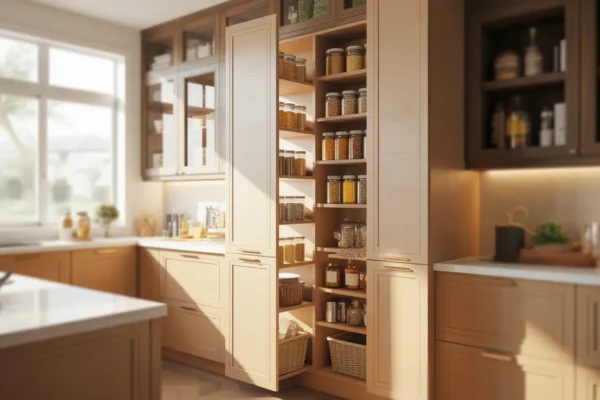
9. Add Pull Out Drawers or Sliding Baskets
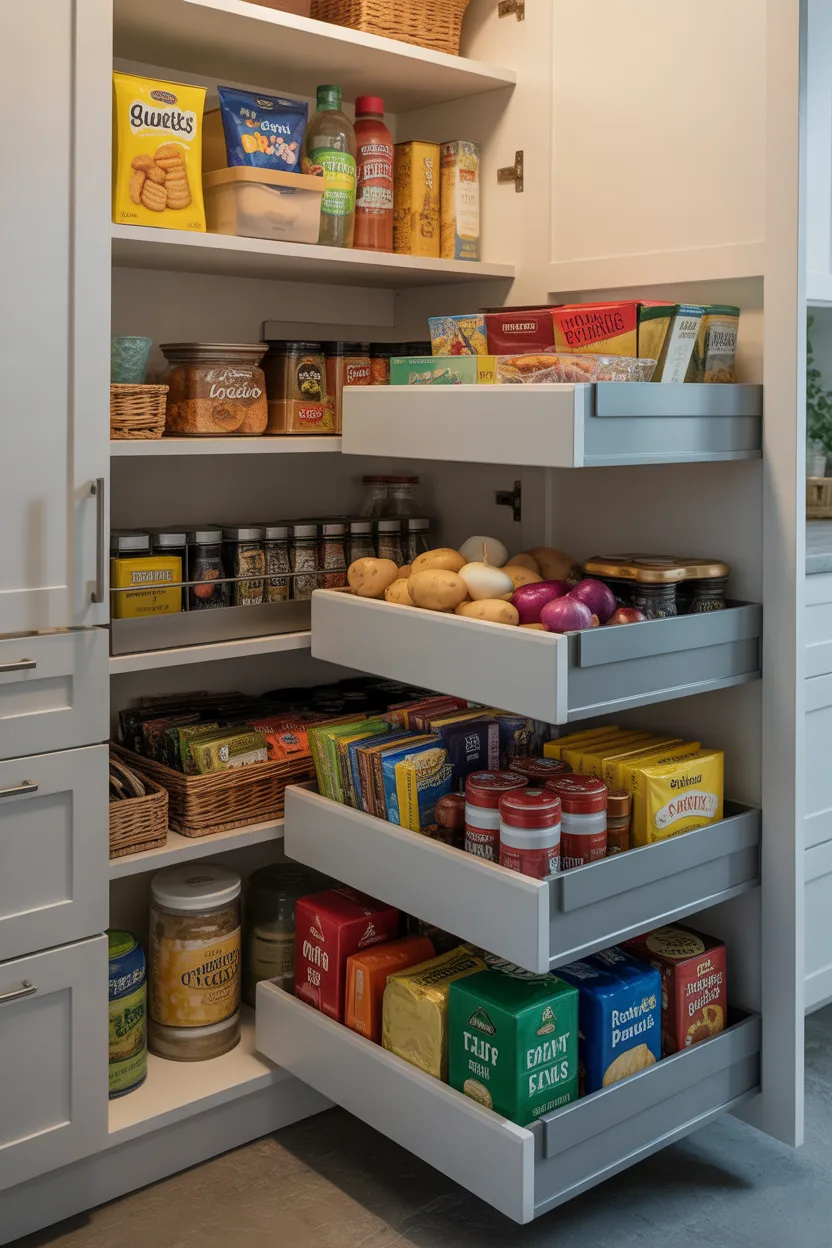
Deep pantry shelves often waste space because you cannot easily reach what sits in the back. Pull out drawers and sliding baskets solve that issue by bringing the contents forward.
This setup works especially well for potatoes, onions, packaged foods, snacks, and heavy pantry basics. You pull the basket out, see everything clearly, and grab what you need without moving other items around.
It also helps keep categories separate. Instead of one deep shelf turning into a giant mixed pile, you get clear zones that stay easier to manage.
Pull out storage makes deep shelves more functional, visible, and user friendly. Once you try it, regular deep shelves start to feel weirdly inconvenient.
10. Keep a Backstock Section
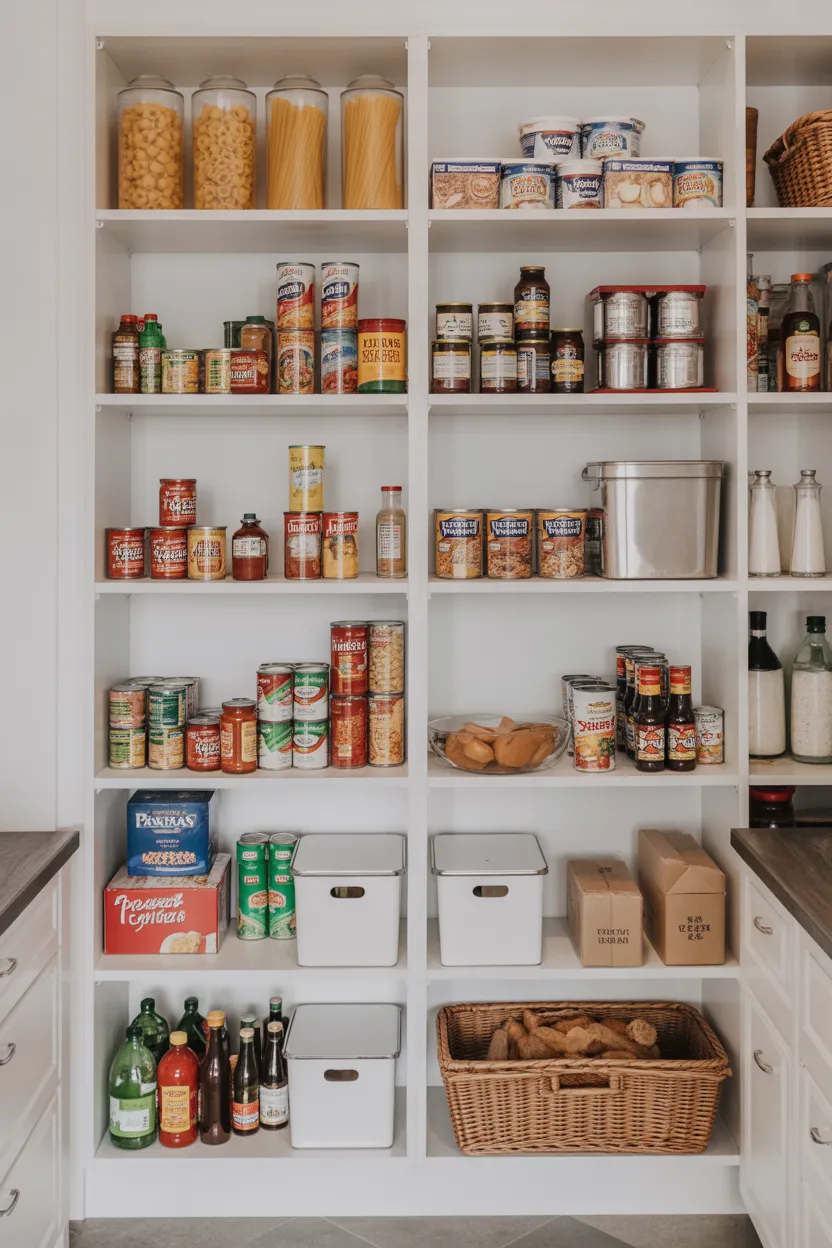
A backstock section gives extra pantry items one designated home. If you buy in bulk or stock up during sales, this idea helps a lot.
Store duplicate items like extra pasta, canned tomatoes, cereal boxes, sauces, or paper goods in one area. Then keep your everyday active items in the main pantry zone. That way, your shelves stay neat and you still know where the extras live.
I think this system works because it prevents random overflow. Instead of stuffing extra items into every available gap, you create a controlled backup section that stays easy to track.
A backstock section keeps bulk purchases organized and reduces overbuying. It also helps you restock your main shelves quickly when something runs out.
11. Use Door Storage for Small Items
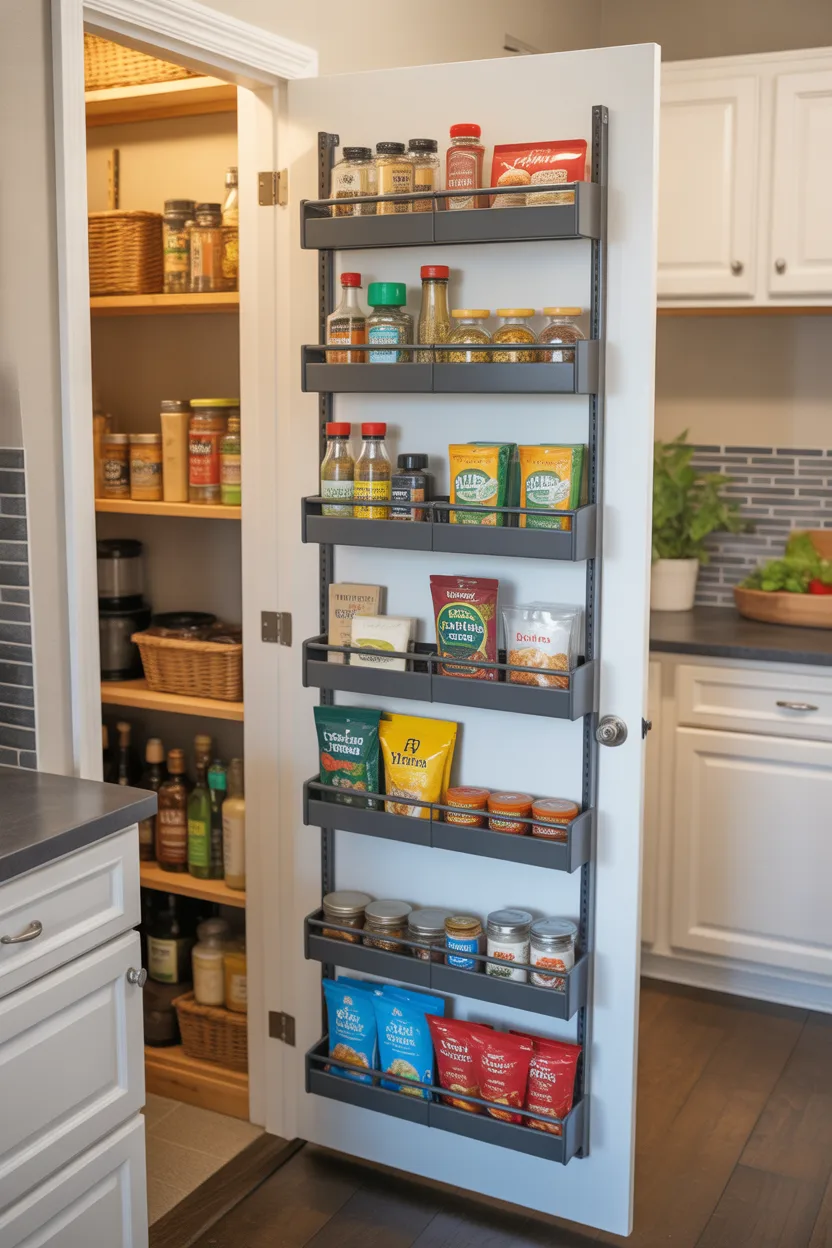
The back of a pantry door offers storage space that many people completely ignore. That is kind of wild when you think about it, because it can hold a lot.
You can use slim racks or hanging organizers for spices, seasoning packets, wraps, foil, tea bags, sauce mixes, or snack packs. These items usually take up more shelf space than they need, so moving them to the door frees up room for larger things.
Also Read: 22 Minimalist Bedroom Ideas 2026 That Feel Calm and Clean
This idea works especially well in small pantries where every inch counts. Even one narrow rack can make a noticeable difference.
Door storage adds extra space without taking away from your shelves. It is simple, practical, and one of the easiest ways to improve a cramped pantry.
12. Set Up a Baking Station
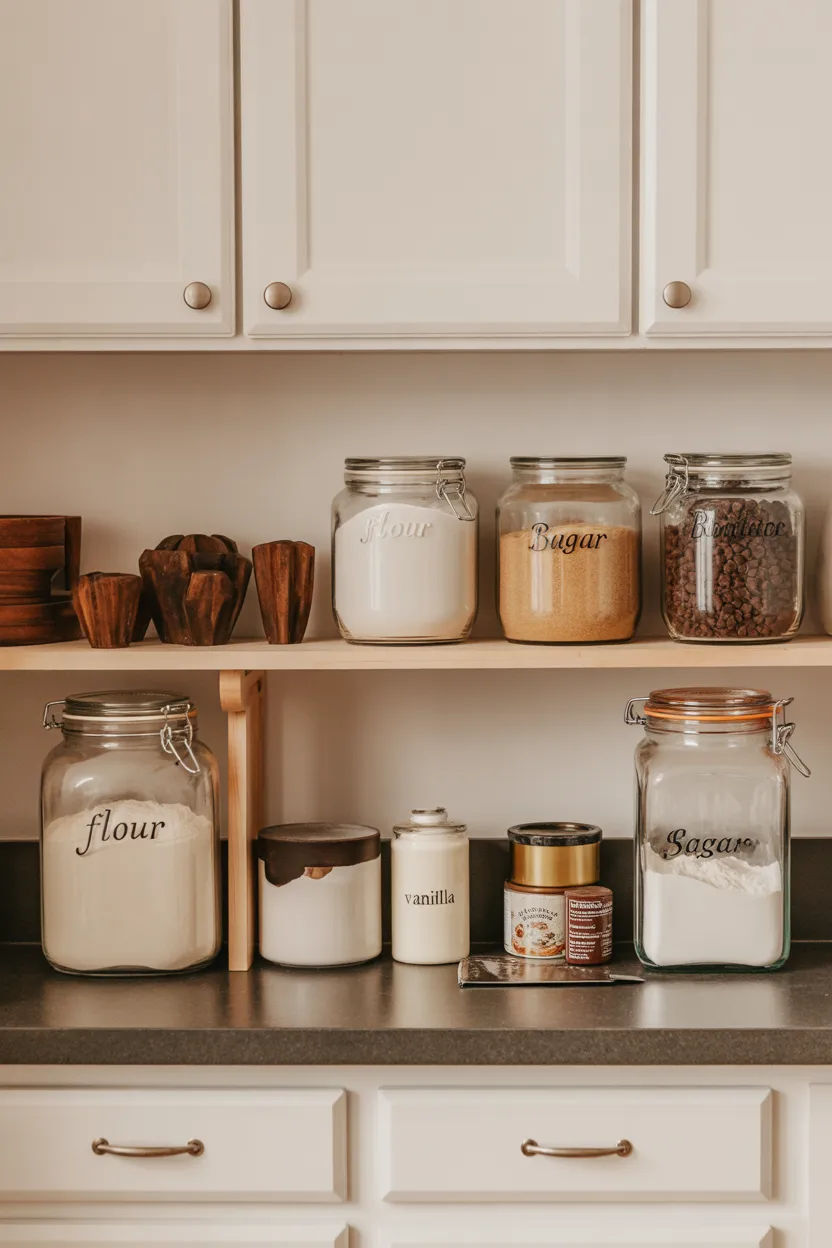
If you bake at all, even casually, a baking station saves a lot of time. It keeps your core ingredients together so you do not have to search every shelf for sugar, cocoa powder, and baking powder when you want to make something.
Store flour, sugar, brown sugar, chocolate chips, baking soda, baking powder, vanilla, sprinkles, and measuring tools in one clear zone. If possible, keep them close to your mixing bowls or baking pans in the kitchen.
I love this setup because it makes baking feel less like prep work and more like something fun you can start right away. It removes friction, and that matters more than people realize.
A baking station keeps ingredients organized and makes baking faster and less frustrating. It also makes your pantry feel more intentional overall.
13. Use Uniform Baskets for a Cleaner Look
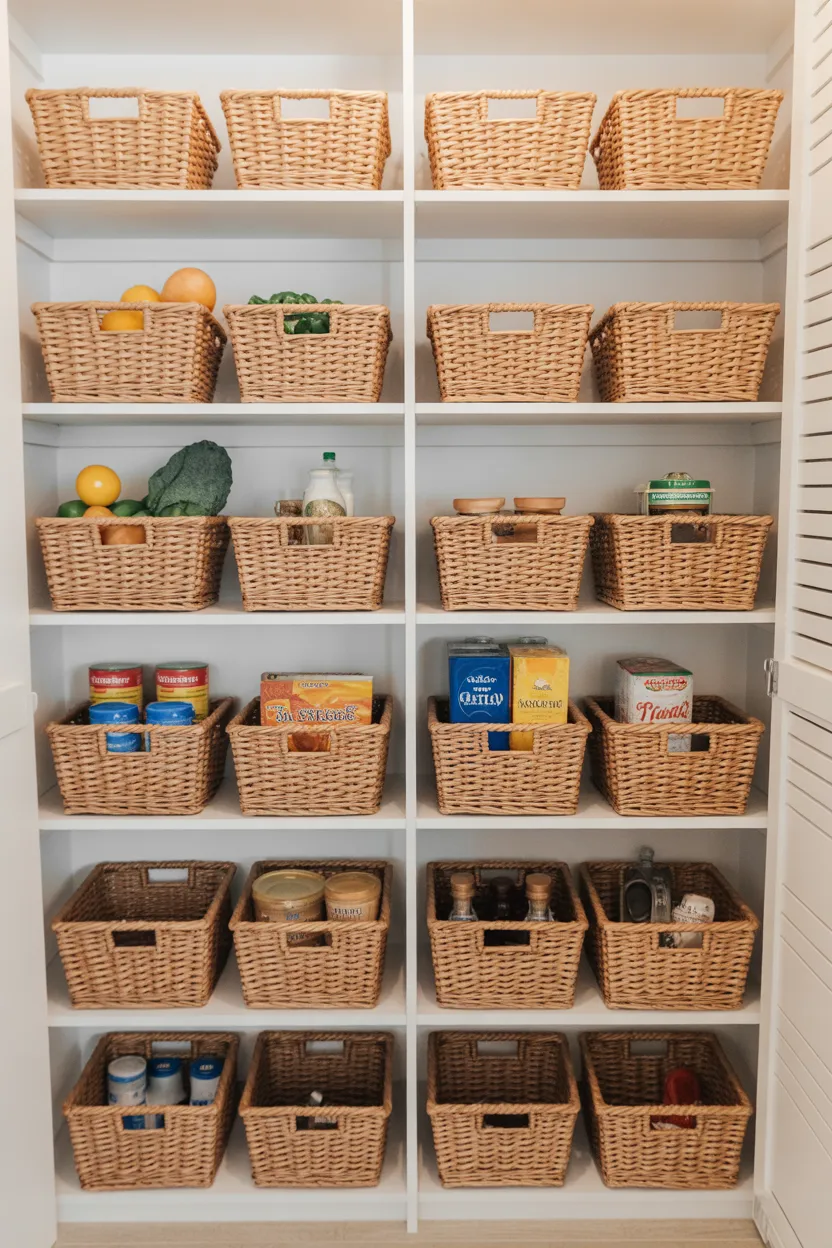
Uniform baskets make a pantry look more polished because they create visual consistency. Even if the shelves hold lots of different products, matching baskets make everything feel calmer.
You can use baskets for produce, snacks, baking extras, drink packets, or pantry odds and ends that do not stack neatly on their own. Woven baskets feel warm and natural, while plastic or wire baskets can look more modern.
This idea works because our eyes like order. When storage looks consistent, the entire pantry feels less chaotic and more styled without becoming fussy.
Uniform baskets improve both appearance and organization. They help define categories while giving your pantry that neat, finished look people usually want.
14. Store Heaviest Items on Lower Shelves
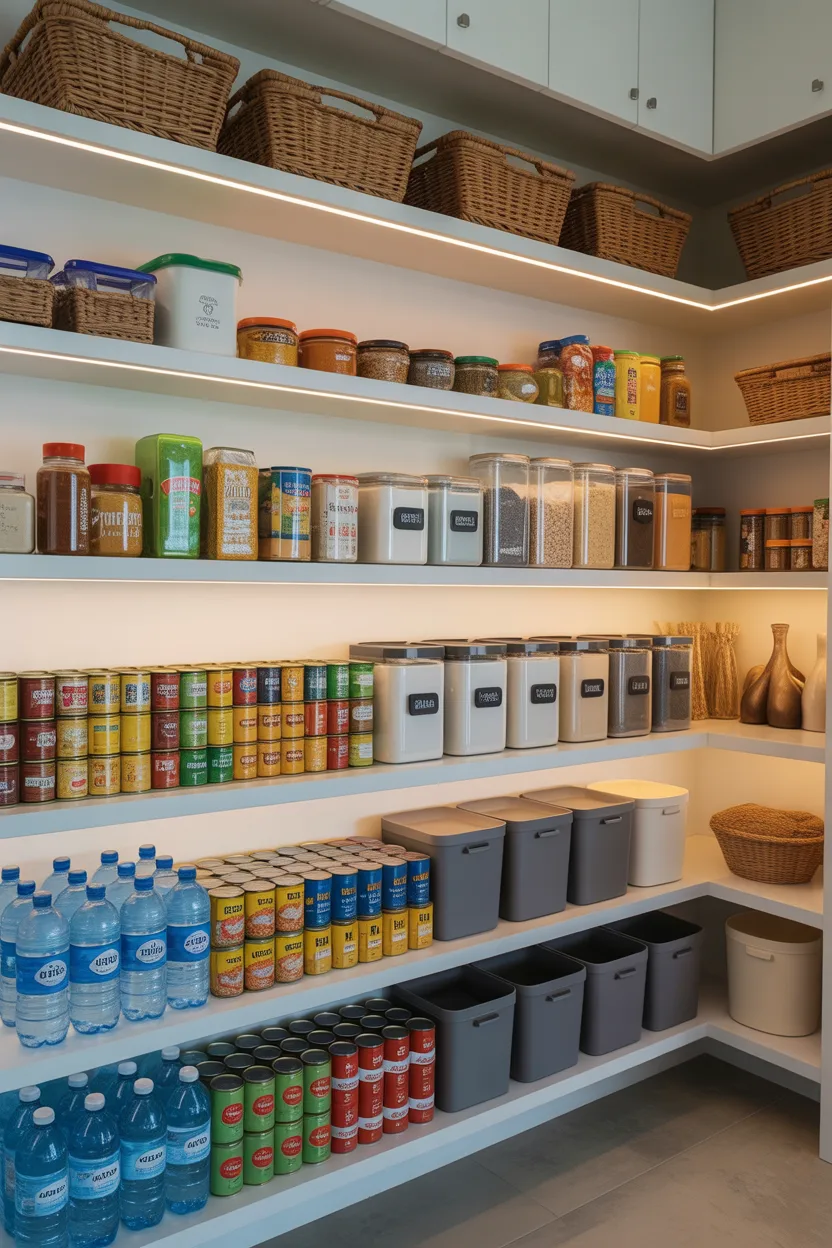
Heavy items belong on lower shelves. It sounds obvious, but plenty of pantries ignore this rule and make daily use harder than it needs to be.
Keep bulk flour, drinks, canned goods, large jars, and big containers down low where you can lift them safely. This makes the pantry easier to use and reduces the chance of dropping something from a top shelf, which nobody enjoys.
Also Read: 20 Open Kitchen Living Rooms 2026 That Feel Airy and Modern
I always think practicality should lead pantry design. Pretty shelves matter, sure, but not more than convenience and safety.
Lower shelf storage makes heavy pantry items easier to reach and safer to handle. It also keeps upper shelves available for lighter products that you grab more often.
15. Give Every Shelf a Purpose
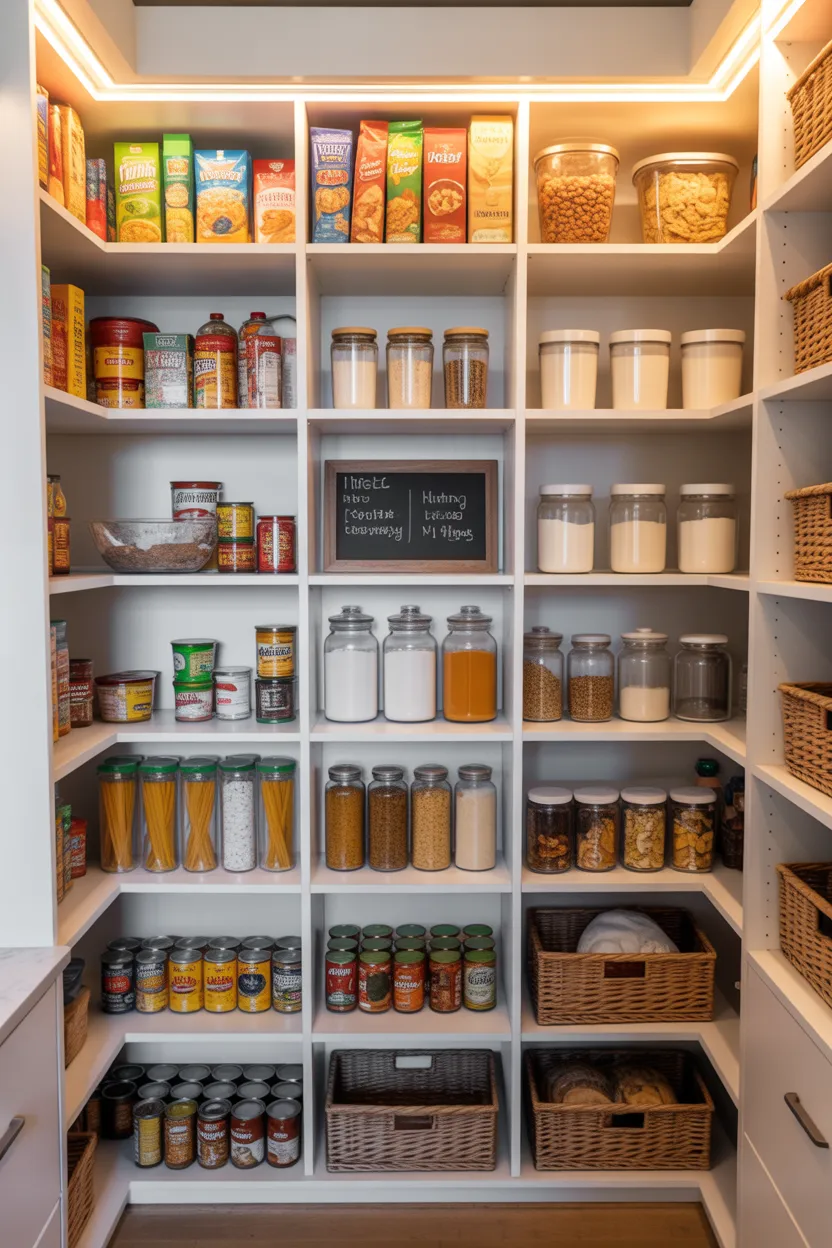
A pantry stays organized longer when every shelf has a job. Without that structure, shelves turn into random holding areas where anything can go, and that never ends well.
One shelf can hold breakfast foods. Another can hold canned goods. Another can focus on baking. You can create zones for snacks, grains, dinner staples, and backstock depending on your space.
This system gives the pantry a clear layout that feels easy to understand. People know where to find things and where to return them. That makes a huge difference in everyday maintenance.
Purpose driven shelves create a simple system that supports long term organization. The less guessing involved, the better the pantry works.
16. Add a Small Inventory List
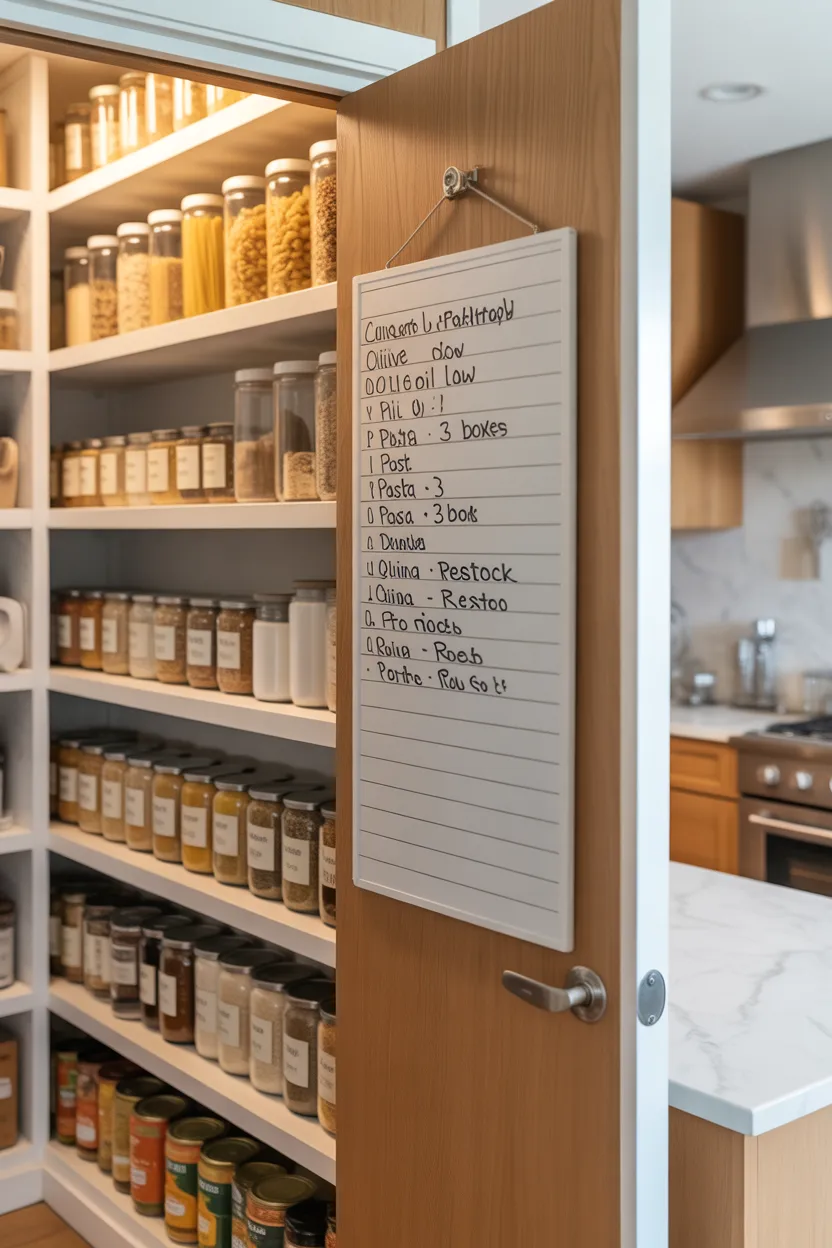
A simple inventory list helps you keep track of key pantry items without relying on memory, which, let’s be honest, tends to fail the moment you enter a grocery store.
You do not need anything elaborate. A notepad, small whiteboard, or notes app works just fine. Track pantry staples like rice, pasta, flour, canned beans, cereal, and sauces that you use often.
This habit helps you avoid buying duplicates and makes it easier to know what needs restocking. It also supports meal planning because you get a clearer picture of what you already have at home.
A pantry inventory reduces waste, saves money, and improves grocery planning. FYI, it also saves you from bringing home your fifth bag of lentils by accident.
17. Use Stackable Bins to Maximize Height
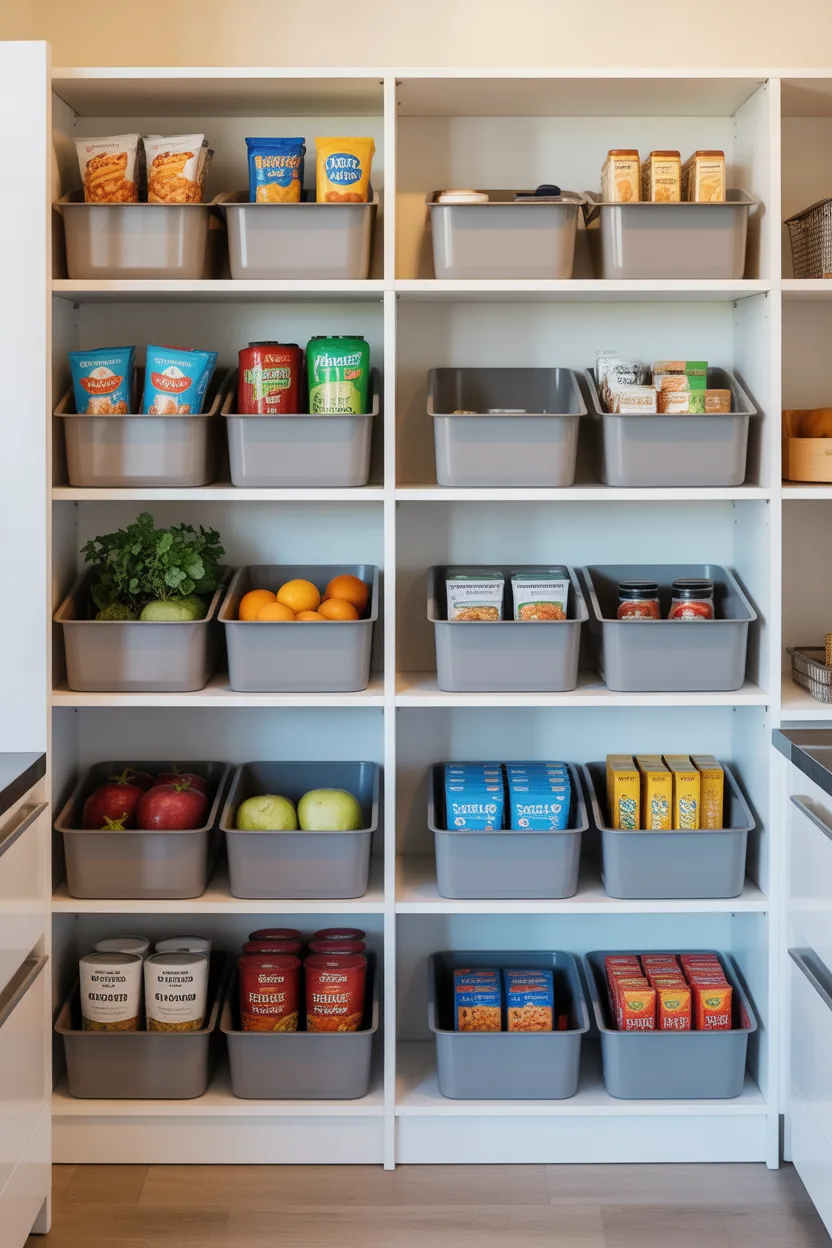
Tall pantry shelves often waste vertical space. Stackable bins solve that problem by using the height you already have in a cleaner, more controlled way.
They work well for snack packs, produce, canned drinks, packaged foods, and anything else that fits neatly in layers. Instead of placing everything side by side and running out of room fast, you build upward in an organized way.
Also Read: 24 Compact Living Room Ideas 2026 That Make Space Feel Bigger
I like stackable bins because they make shelves feel more efficient without making them look crowded. That balance matters if you want both function and visual order.
Stackable storage helps you use shelf height better while keeping categories contained. More storage without more chaos always feels like a good trade.
18. Try Color Coded Zones
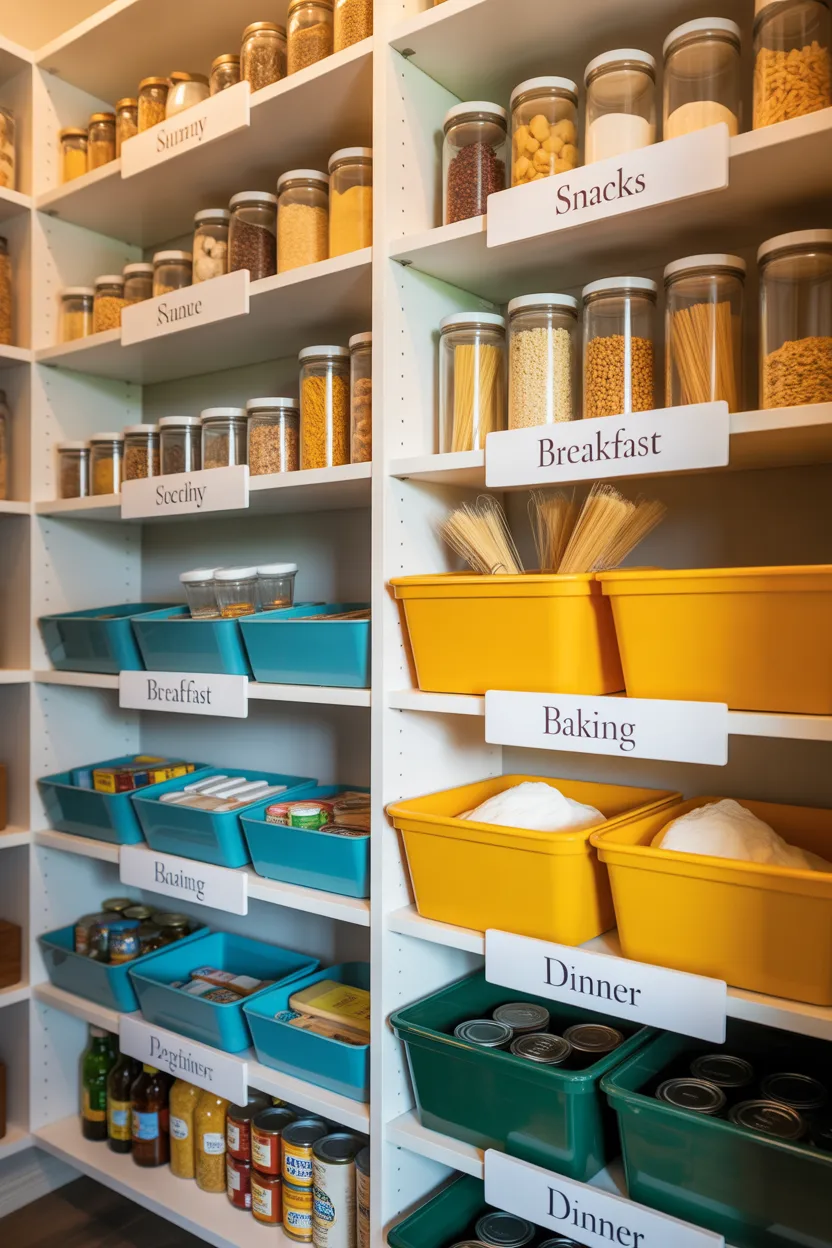
Color coded pantry zones help people find and return items faster. This can mean colored labels, baskets, bin handles, or simple visual markers that separate different categories.
For example, snacks might use one color, baking another, breakfast another, and dinner staples another. If several people use the pantry, this system can make things easier because everyone can follow it at a glance.
This works especially well in busy households. It removes some of the “where does this go” confusion and replaces it with something more visual and obvious.
Color coded zones make pantry organization faster to understand and easier to maintain. It is a fun idea, but it is also genuinely practical.
19. Use Shallow Bins for Small Packets
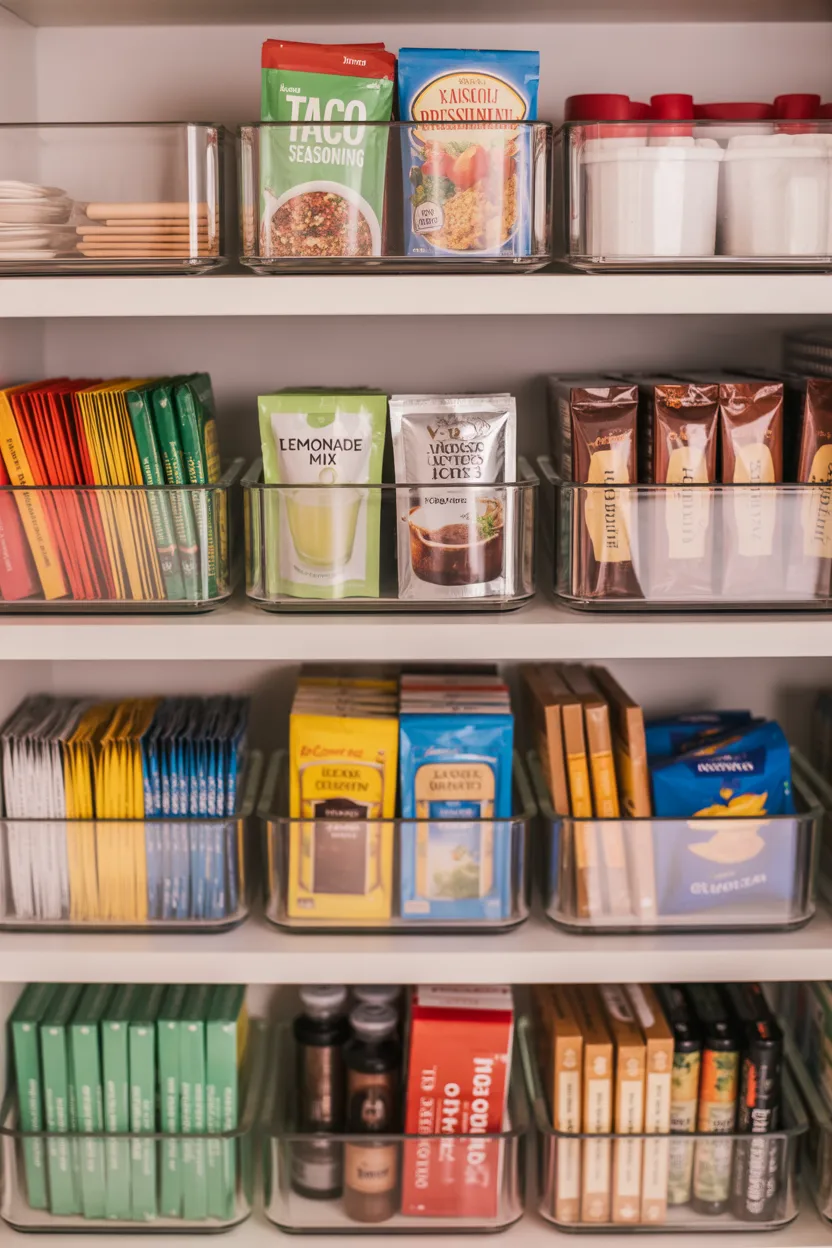
Small packets create clutter faster than almost anything else in a pantry. Seasoning mixes, gravy packets, hot chocolate sachets, instant soups, and drink powders all tend to slide around and pile up in messy little corners.
Shallow bins help keep these items together while still letting you see them clearly. Deep bins can hide packets underneath each other, but shallow ones keep everything visible and easy to sort through.
This is one of those ideas that feels minor until you try it. Then suddenly one of the most annoying pantry problems disappears.
Shallow bins keep small pantry items neat, visible, and easy to access. They also stop those tiny packet avalanches that happen every time you reach for one thing.
20. Add Lighting Inside the Pantry
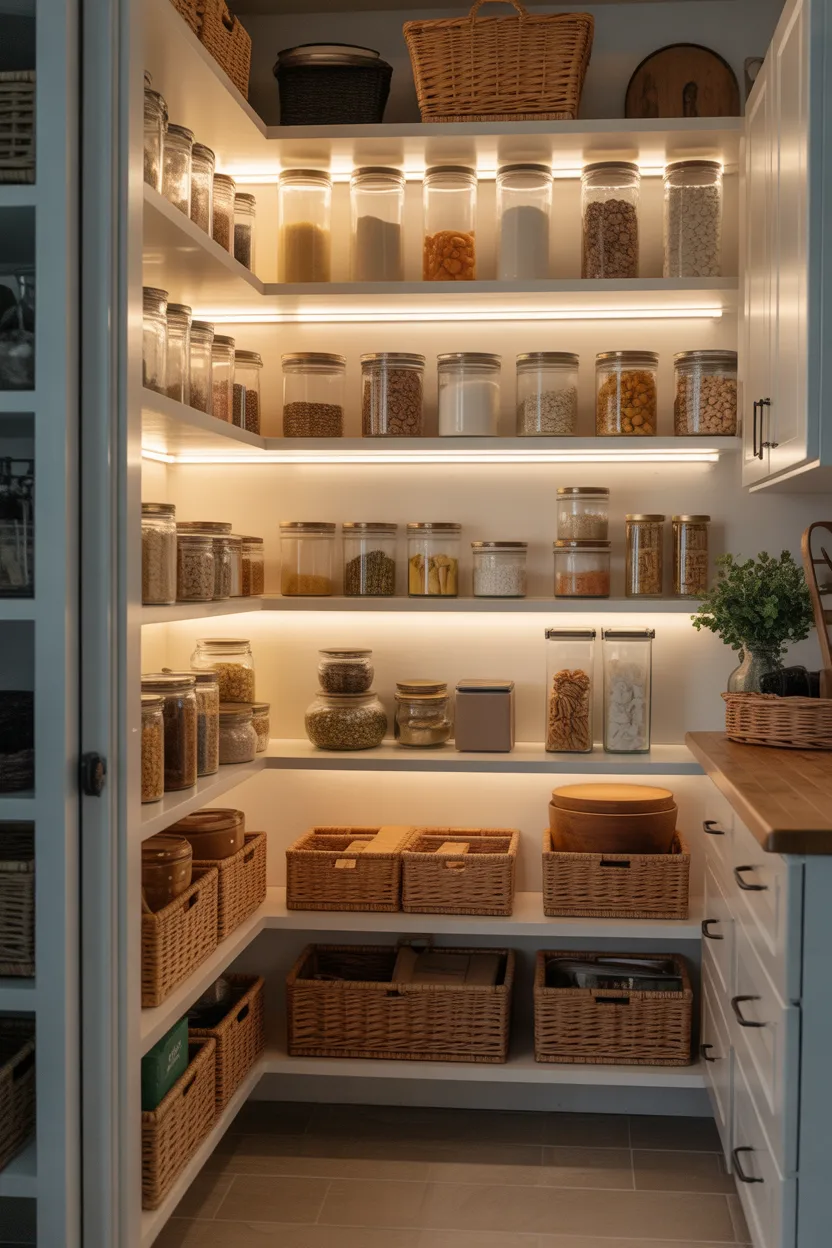
Good lighting can change the entire pantry experience. Even a tidy pantry feels frustrating if you cannot see what sits in the back or on higher shelves.
If your pantry does not have built in lighting, stick on battery lights can work really well. They install easily, brighten dark corners, and make the space feel more welcoming and functional.
Also Read: 21 Guest Bedroom Ideas 2026 That Feel Cozy and Welcoming
I think pantry lighting often gets overlooked because people treat it like a bonus. It is not. If you use the pantry every day, good visibility matters a lot.
Pantry lighting improves access, reduces searching, and makes organization easier to maintain. Plus, a well lit pantry just feels nicer. And yes, that matters too.
21. Decant Open Bags Into Easy Pour Containers
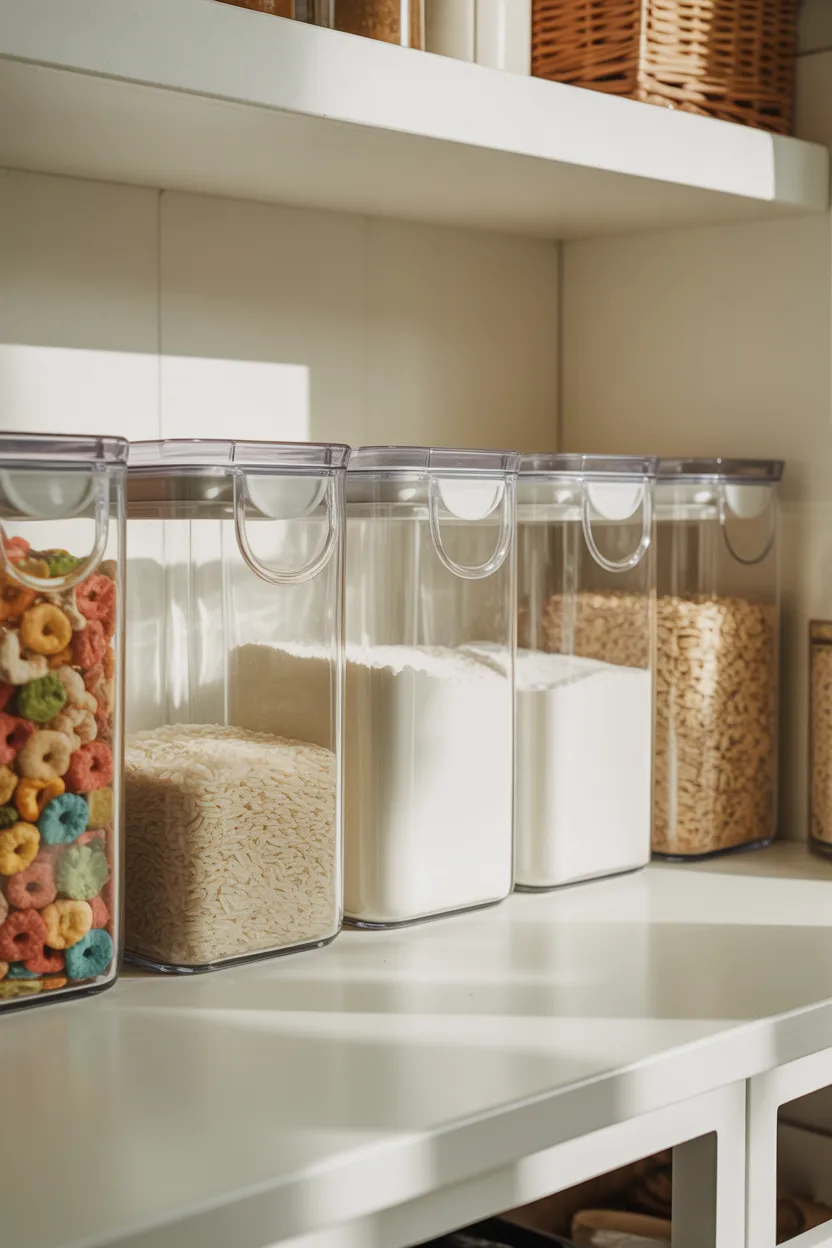
Open bags often create the messiest part of pantry storage. Flour bags puff out awkwardly, rice spills, cereal boxes tear, and sugar somehow ends up everywhere.
Easy pour containers solve those problems by keeping dry foods sealed, upright, and simple to use. You can store rice, flour, cereal, sugar, oats, and snacks in a way that feels cleaner and much more controlled.
This idea works especially well if you cook often and reach for these ingredients regularly. It saves time and reduces those annoying little spills that make shelves sticky or dusty.
Easy pour containers keep open pantry foods fresher, cleaner, and easier to handle. It is such a practical upgrade, and it makes the pantry look better too.
22. Keep a Donate or Use First Basket
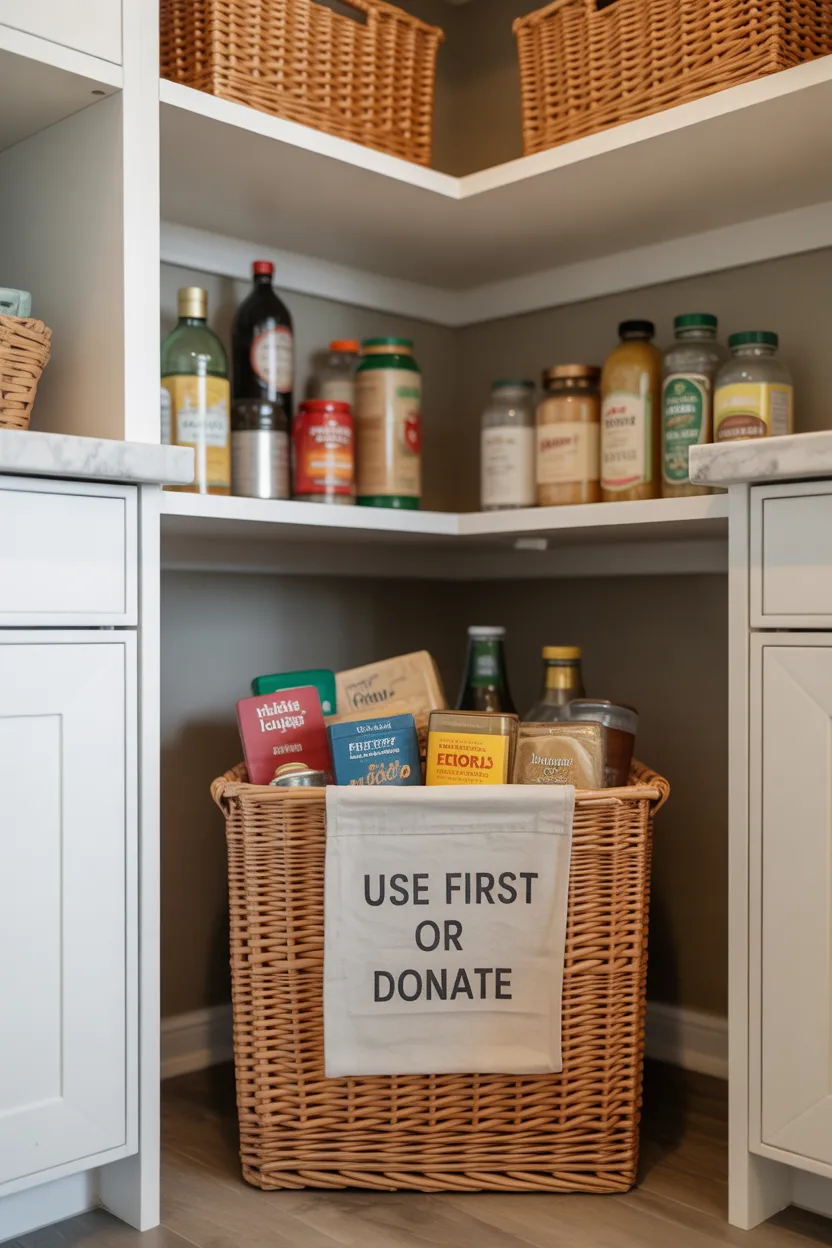
A donate or use first basket helps prevent food waste by making older or less used items more visible. Instead of letting those products disappear in the back, you pull them forward into one clear spot.
You can place pantry items there that need to get used soon, products nearing expiration, or unopened foods you know your household probably will not eat. If something stays untouched, you can donate it before it goes to waste.
I really like this idea because it keeps the pantry honest. It shows you what needs attention instead of letting forgotten items hide until they expire.
A use first basket helps reduce waste and keeps older pantry items in sight. It is a simple system, but it saves money and encourages smarter grocery habits.
23. Rotate Items With a First In First Out System
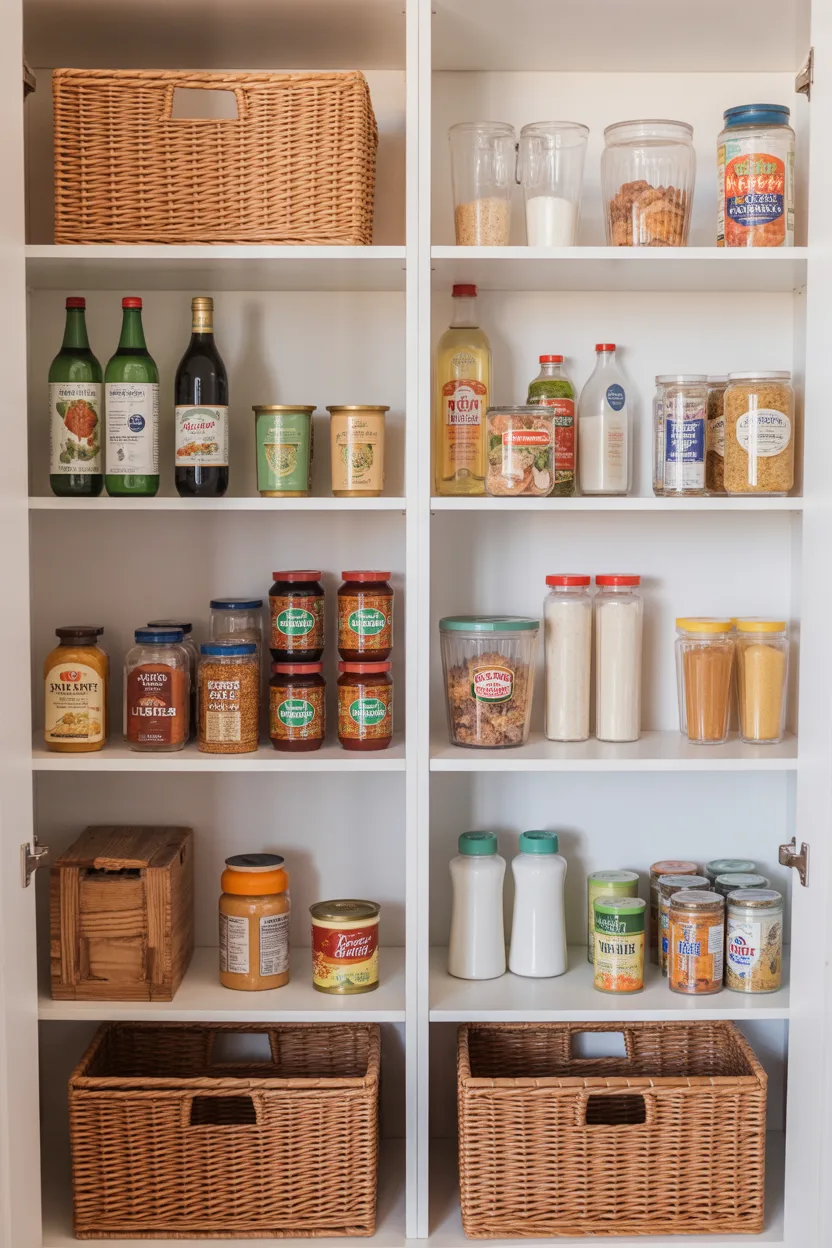
First in, first out means you place newer items behind older ones so the older products get used first. It sounds small, but it makes a big difference over time.
This system works well for canned foods, pasta, grains, sauces, snacks, and boxed goods. When you unpack groceries, just move older items to the front and place new items behind them. That is it.
Also Read: 22 Small Kitchen Ideas 2026 That Feel Smart and Stylish
It only takes a minute, and it helps prevent waste in a very practical way. You keep the pantry moving naturally instead of letting forgotten items sit there forever.
First in, first out rotation helps keep pantry food fresh and usable. Ever found an expired can hiding in the back and wondered how long it had been there? Exactly.
24. Leave a Little Empty Space
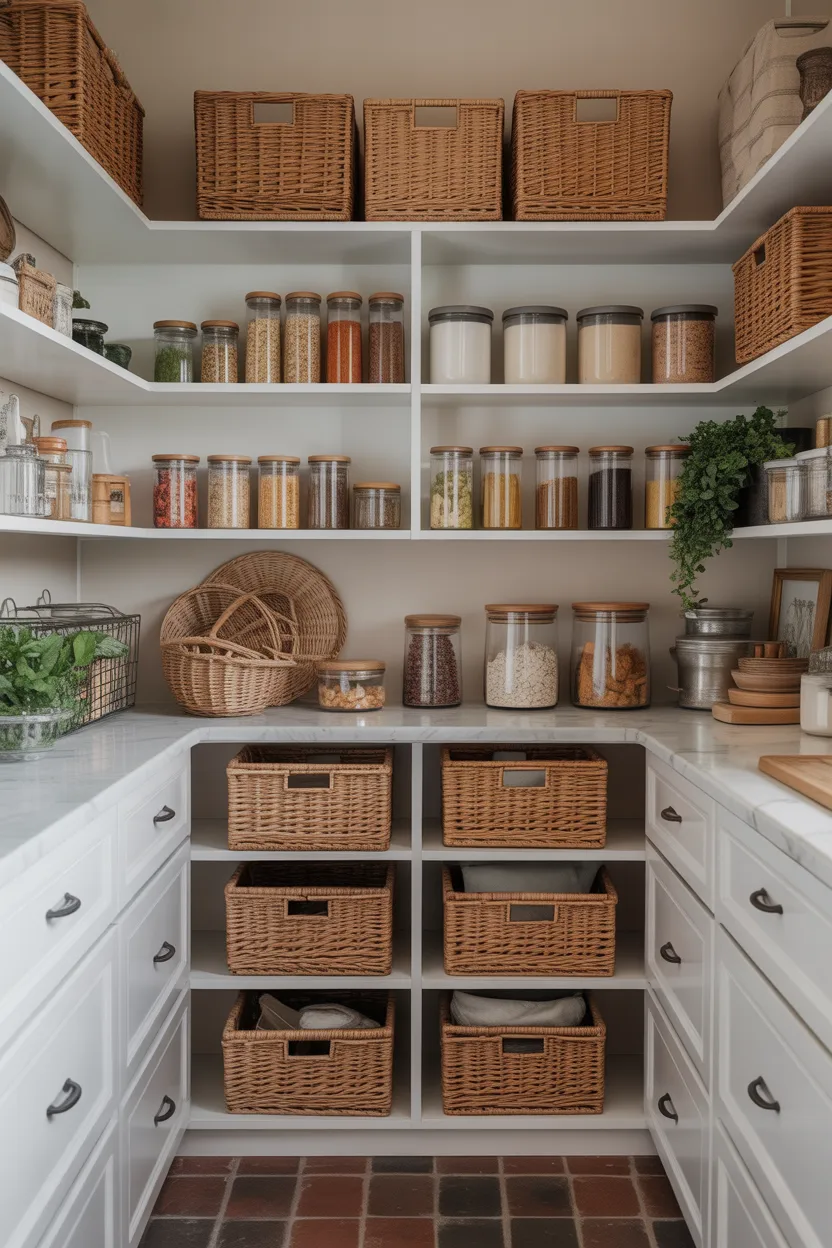
This might sound strange, but a good pantry does not need to be packed to the edges. In fact, a little empty space makes the whole system work better.
When shelves have breathing room, you can see what you have, grab items easily, and put groceries away without forcing everything into odd little gaps. Empty space makes the pantry feel calmer and easier to maintain.
I think people sometimes treat storage like a challenge to fill every inch. That usually backfires. A stuffed pantry looks crowded fast and becomes harder to use.
A little open space keeps your pantry functional, flexible, and easy to manage. Sometimes the smartest storage choice is simply not overloading the shelf.
How to Choose the Best Pantry Organization System
The best pantry organization system depends on how you actually live. A family that buys in bulk needs a different setup than someone who shops weekly. A baker needs different zones than someone who wants easy snack access and fast dinner prep.
Start by paying attention to your routine. Think about what you use most often, what you buy regularly, and where clutter builds up the fastest. Those clues tell you what your pantry actually needs.
Here are a few good questions to ask yourself:
- Do you buy in bulk often?
- Do you need quick access to kid friendly snacks?
- Do you cook from scratch several times a week?
- Do you want better visibility, more storage, or both?
- Do you need a system that looks polished as well as practical?
The best pantry setup supports your real habits, not some perfect fantasy version of your kitchen. In my opinion, that is where people get the best results. Pretty matters, but useful matters more.
Simple Pantry Mistakes to Avoid
Even a beautiful pantry can become frustrating if the system behind it does not make sense. A few common mistakes can make organization harder than it needs to be.
Here are some pantry mistakes worth avoiding:
- Buying containers before measuring shelves
- Creating too many complicated categories
- Overstuffing bins until they are annoying to use
- Ignoring expiration dates
- Hiding daily use items behind backup stock
- Using labels that nobody can read clearly
The goal is not to build a pantry that looks impressive for one photo. The goal is to create a setup you can actually keep up with. If a system feels too fussy, people stop using it properly. And once that happens, the pantry slides right back into chaos.
A good pantry system should feel easy, natural, and realistic to maintain. If it feels like homework, something needs simplifying.
Why Pantry Organization Matters More in 2026
Pantry organization matters more now because people expect their kitchens to work harder. We cook at home more, care more about food waste, and want storage that supports real daily routines.
In 2026, people want kitchens that feel practical, clean, and efficient. That means pantry design focuses more on visibility, flexibility, easy access, and systems that adapt to different households. It is not just about looking neat. It is about making everyday life smoother.
I think that shift makes total sense. Nobody wants to waste money on food they forgot they had. Nobody wants to fight with overflowing shelves every time they make dinner. And honestly, nobody wants a pantry that looks organized but still functions badly. That is just decorative nonsense.
Pantry organization in 2026 focuses on simplicity, function, and smarter daily living. That is why these ideas matter more than ever.
Conclusion
A better pantry can make your whole kitchen feel easier to use. It helps you find what you need faster, waste less food, and keep daily routines from feeling more stressful than they need to be.
These 24 Pantry Organization Ideas 2026 That Make Life So Easy give you plenty of practical ways to improve your space without making things complicated. You do not need to do all of them at once. Start with one or two ideas that match your lifestyle, then build from there.
The best pantry is not the fanciest one. It is the one that works for you every single day. And if it also looks clean and satisfying when you open the door, well, that is a nice little bonus 🙂