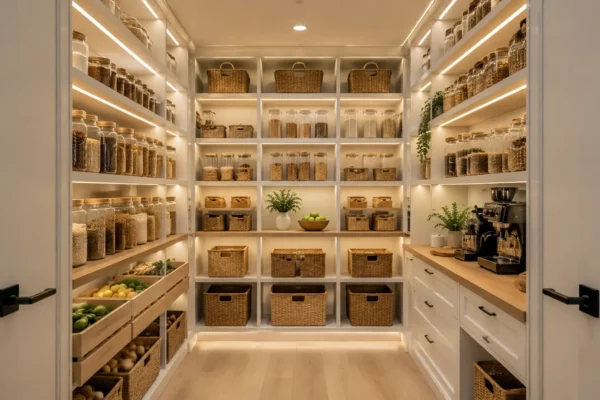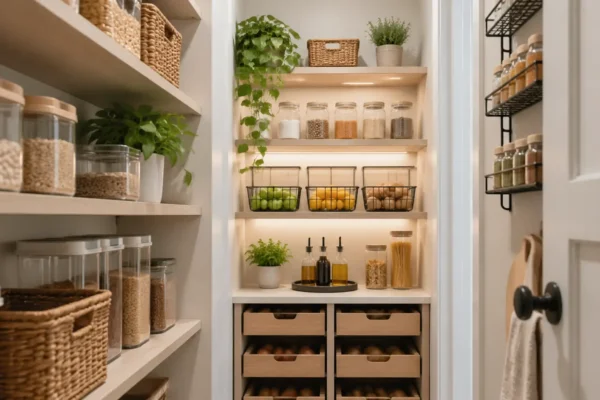

Let’s be honest. A messy pantry can make your whole kitchen feel annoying. You go in for pasta, and somehow a random bag of chips falls out, a half-open flour packet attacks your shirt, and now you are irritated before dinner even starts. That is exactly why I love smart pantry organization. It looks good, sure, but more importantly, it makes daily life way easier.
I have always thought the best pantry setups are the ones that feel practical, not fake. I do not want a pantry that looks like nobody in the house actually eats. I want a pantry that holds real groceries, works for busy days, and keeps everything easy to find. That is what this article is all about.
These kitchen pantry foods ideas for 2026 can help you organize your shelves, make meal prep smoother, waste less food, and stop buying things you already have hiding in the back. Sounds simple, right? It is simple, and that is the beauty of it.
1. Group Foods by Real-Life Use
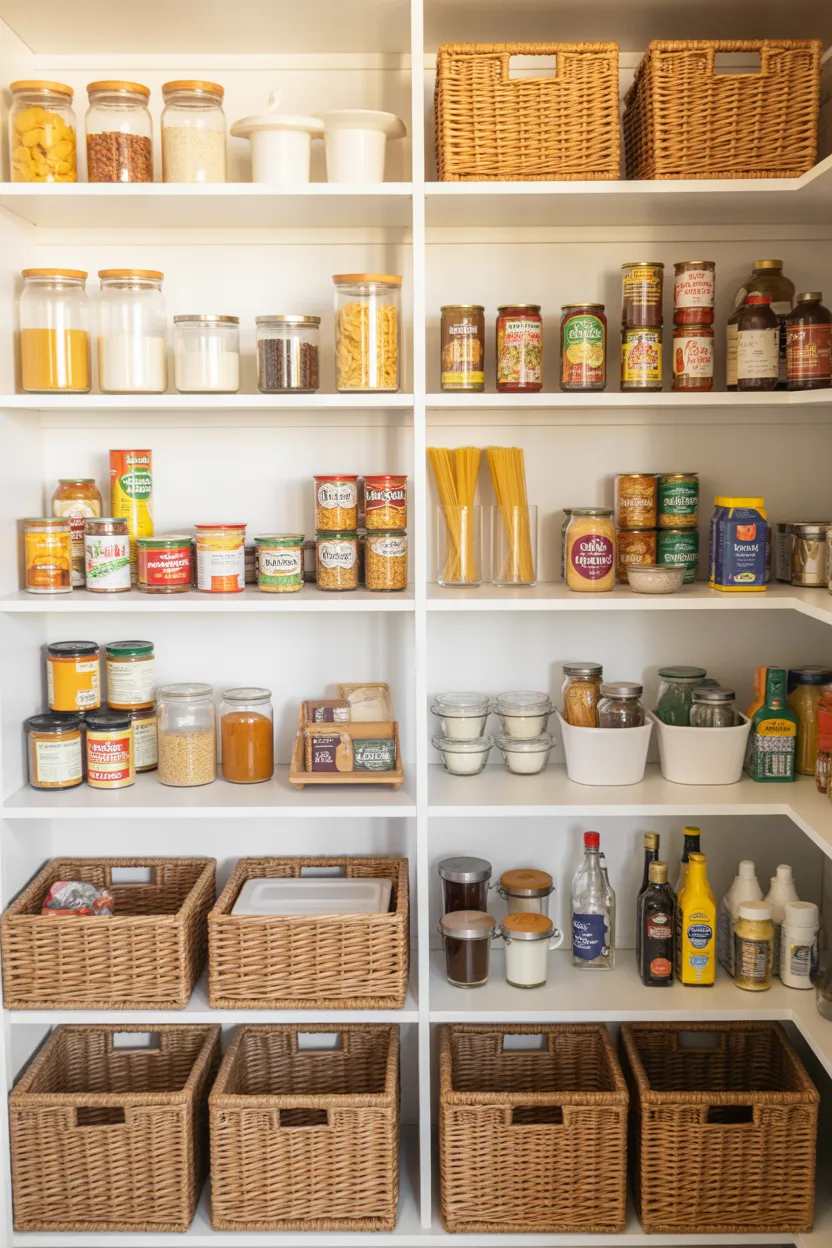
One of the easiest ways to make your pantry feel organized is to group foods by how you actually use them. Not by brand. Not by package size. Not by whatever looked cute on social media last week. Real-life categories work better because your brain already thinks that way.
When you keep breakfast foods together, baking items together, snacks together, and dinner staples together, you save time every single day. You stop opening three shelves just to find one thing. You also make it much easier for everyone else in the house to put groceries away in the right place.
Also Read: 21 Pantry Laundry Room Ideas 2026 That Save Space Beautifully
Here are some smart category examples:
- Breakfast foods
- Baking ingredients
- Pasta and grains
- Canned goods
- Snacks
- Sauces and oils
- Lunchbox foods
- Tea and coffee
I always recommend starting with broad categories first. Once that feels natural, you can make smaller groups if needed. The goal is to make your pantry easier to use, not to turn it into a museum of oat containers. Ever noticed how much calmer cooking feels when everything has an obvious home?
2. Use Clear Containers for Dry Pantry Staples
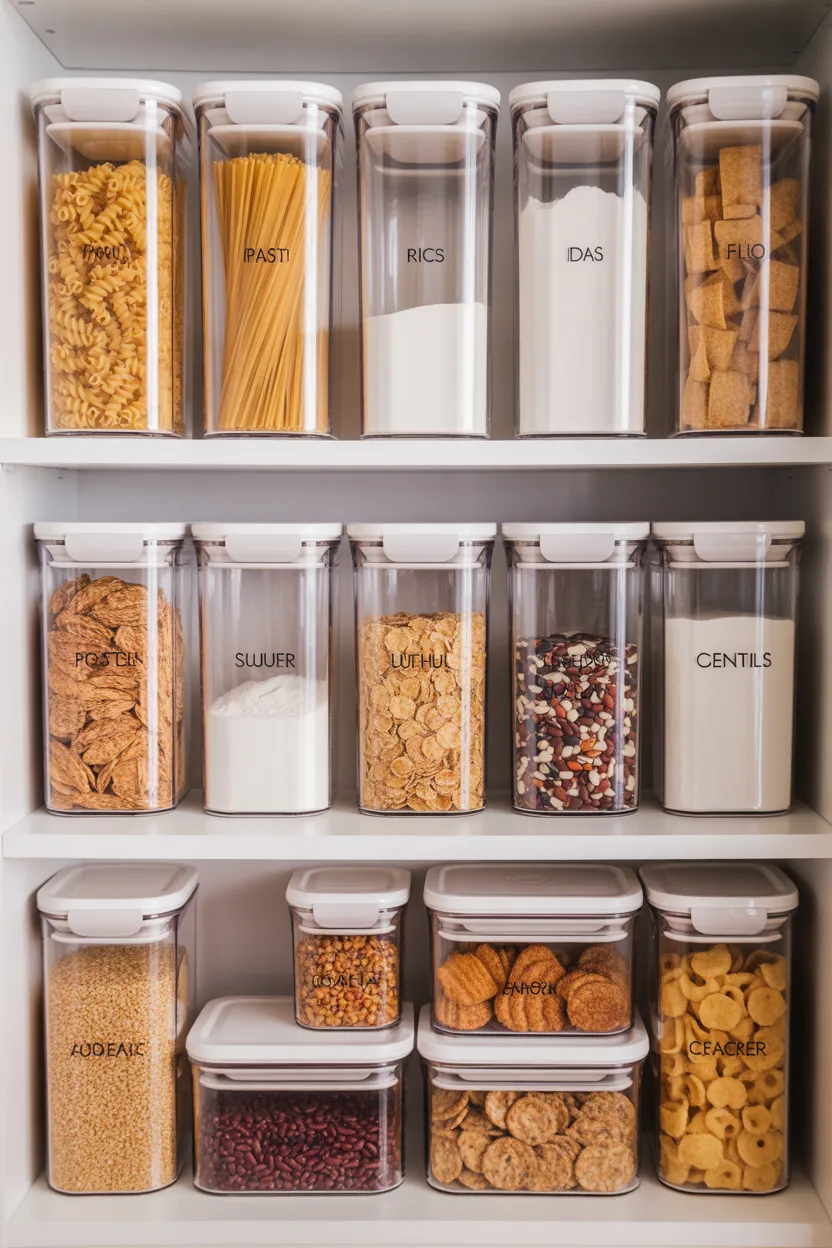
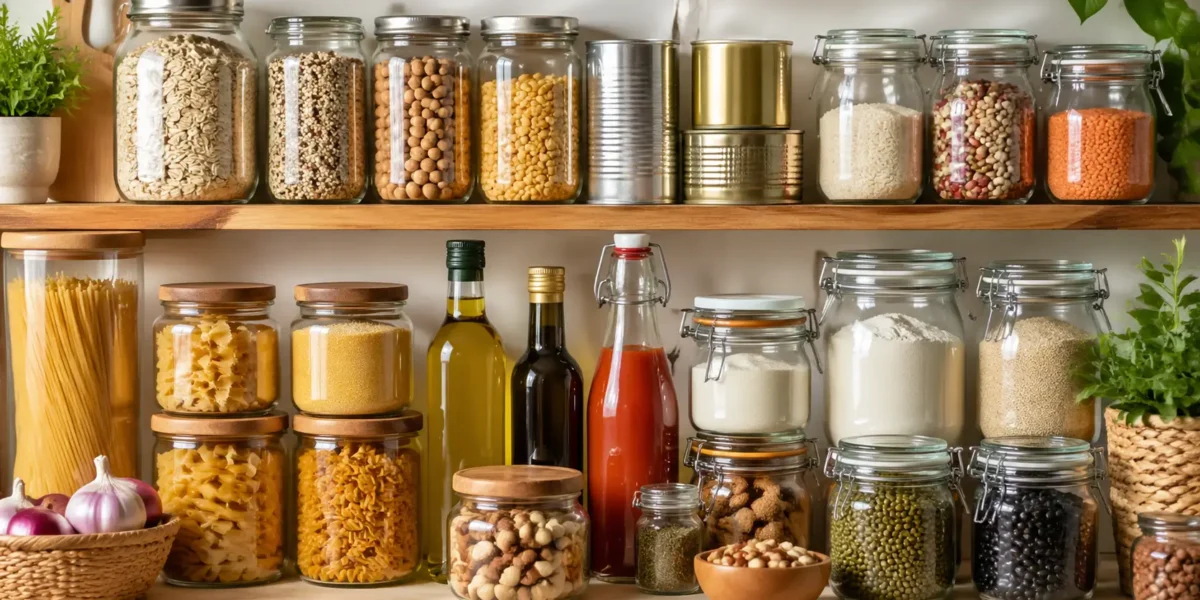
Clear containers are one of those pantry ideas that sound basic until you try them. Then suddenly you wonder why you spent so many years fighting with torn pasta bags and flour packages that never close properly. It is such a simple fix, but it changes everything.
Dry pantry foods like rice, sugar, oats, beans, cereal, pasta, and flour look cleaner and stay easier to manage when you move them into containers. You can see what you have at a glance. You also keep the shelves looking less chaotic, which helps more than people think.
Great foods for clear containers include:
- Rice
- Pasta
- Flour
- Sugar
- Oats
- Lentils
- Beans
- Cereal
- Crackers
I personally love this setup because it cuts visual clutter immediately. Clear storage makes pantry foods easier to track, easier to grab, and easier to refill. Plus, you do not have to guess whether that half-empty bag has enough rice left for dinner. Your eyes do the work for you.
3. Label Everything So Nobody Has to Guess
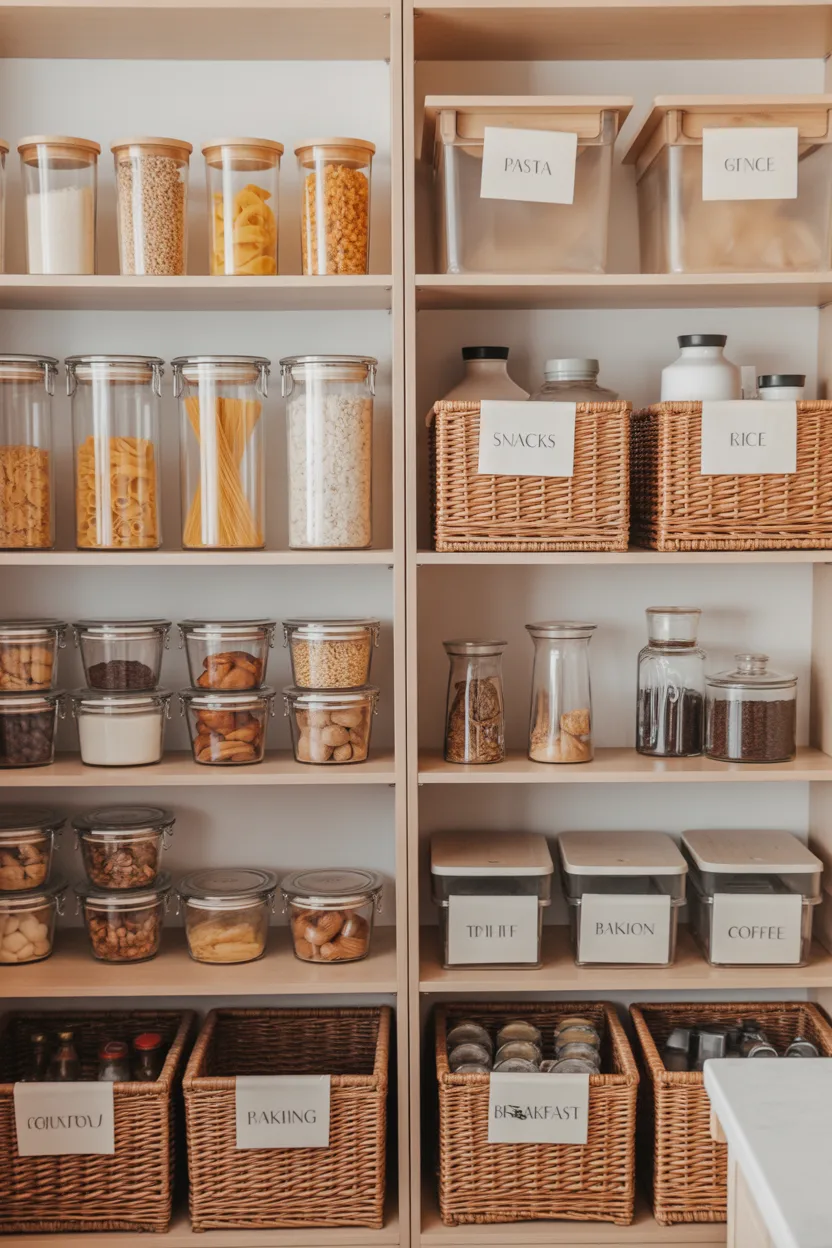
A pantry without labels always starts out looking fine. Then a week later, nobody remembers what is in each jar, things get shoved into random places, and chaos starts creeping back in. Labels stop that mess before it starts.
You do not need anything fancy here. Printed labels look polished, but simple handwritten labels work too. What matters is that every container, bin, or basket clearly tells you what belongs there. That keeps the pantry easy to maintain, even when life gets busy.
You can label:
- Dry food containers
- Snack bins
- Shelf categories
- Basket fronts
- Refill containers
- Backup stock zones
There is something weirdly satisfying about opening a pantry and knowing exactly where everything goes. Labels turn a nice pantry into a functional pantry. And let’s be real, guessing whether a white powder is flour or powdered sugar feels like a game nobody asked to play.
4. Create a Backstock Zone
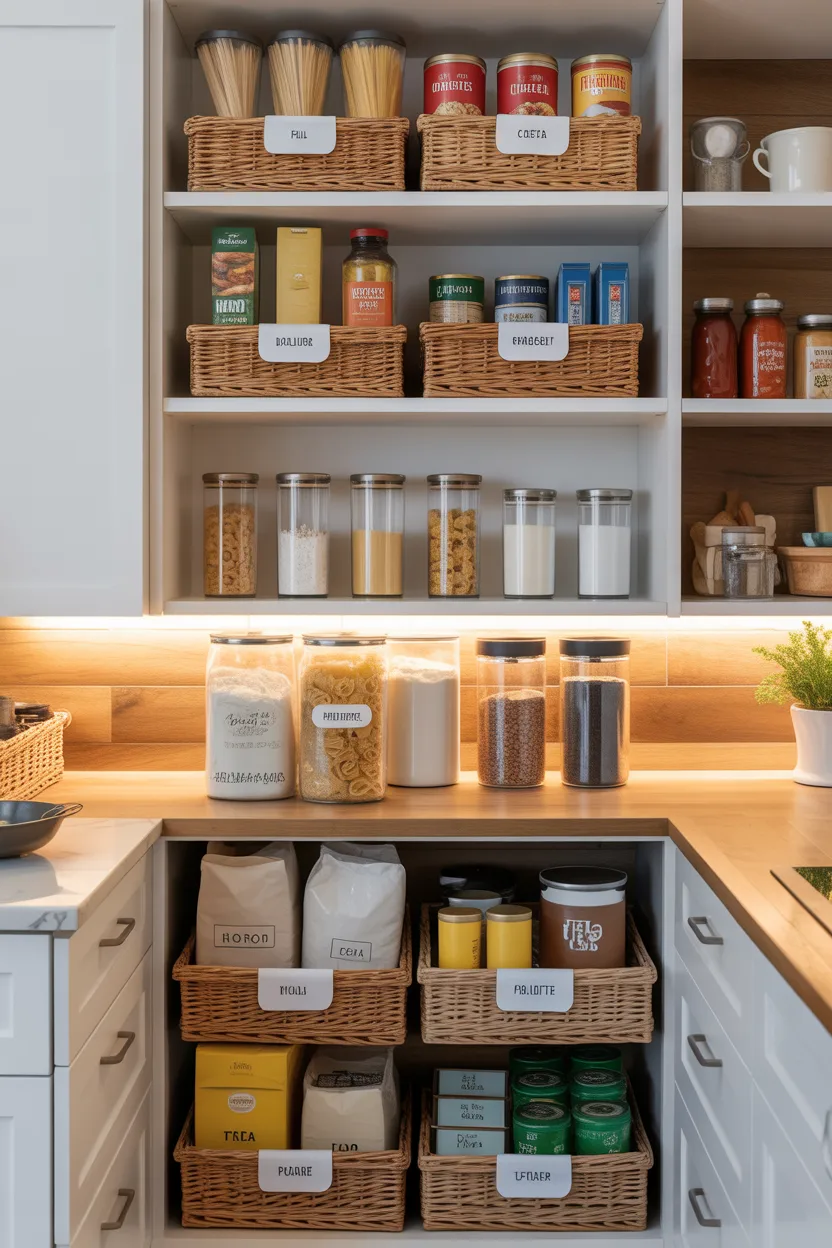
A lot of pantry clutter happens because people mix everyday groceries with backup groceries. So now you have one open cereal box, two unopened boxes, three pasta packs, and four cans of tomatoes all shoved together like they are trying to survive a storm. Not ideal.
A backstock zone solves that problem fast. You keep your daily-use foods on the main shelves and store duplicates, refills, and bulk extras in one separate section. That could be a top shelf, a lower shelf, or one dedicated basket.
Also Read: 22 Hidden Pantry Ideas 2026 That Look Clean and Clever
A backstock zone works well for:
- Extra cereal
- Spare pasta
- Extra rice
- Canned goods
- Refill flour or sugar
- Backup snacks
- Extra coffee and tea
This idea helps you keep the pantry from looking crowded all the time. A backstock section makes your pantry feel cleaner and helps you manage food inventory better. I love this system because it keeps the shelves from looking like a grocery store shelf after a rough weekend.
5. Set Up a Snack Station
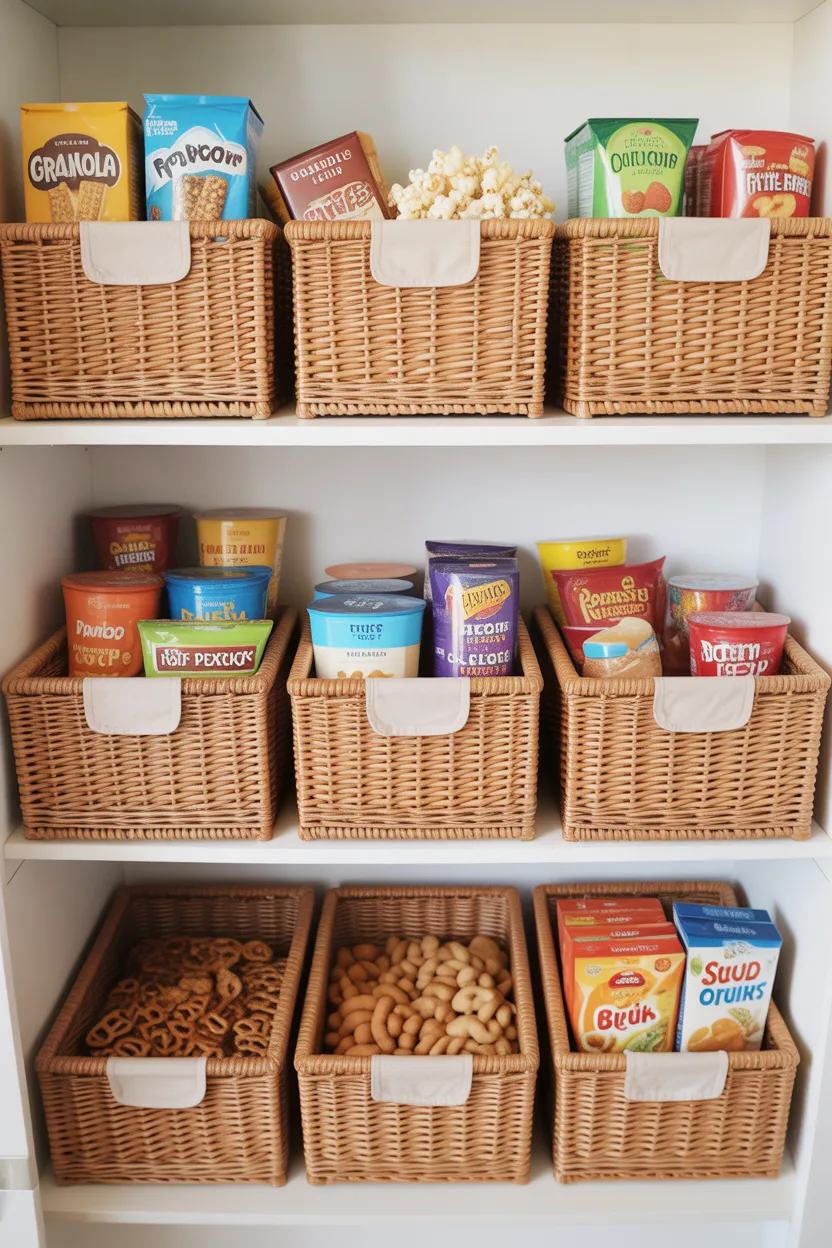
Snacks have a special talent for making a pantry look messy. Tiny wrappers, half-open boxes, random chip bags, granola bars hiding behind soup cans. It gets chaotic fast. That is why a dedicated snack station works so well.
Use one shelf, a few baskets, or a couple of open bins to hold all your snack foods in one area. This keeps things contained and makes grabbing something quick much easier. It also helps with grocery shopping because you can see what is actually running low.
Snack station foods might include:
- Granola bars
- Chips
- Crackers
- Popcorn
- Nuts
- Dried fruit
- Fruit snacks
- Pretzels
I always think snack zones make a pantry feel more user-friendly. A snack station keeps small pantry foods from spreading all over the shelves. And honestly, that alone deserves applause.
6. Give Breakfast Foods Their Own Shelf
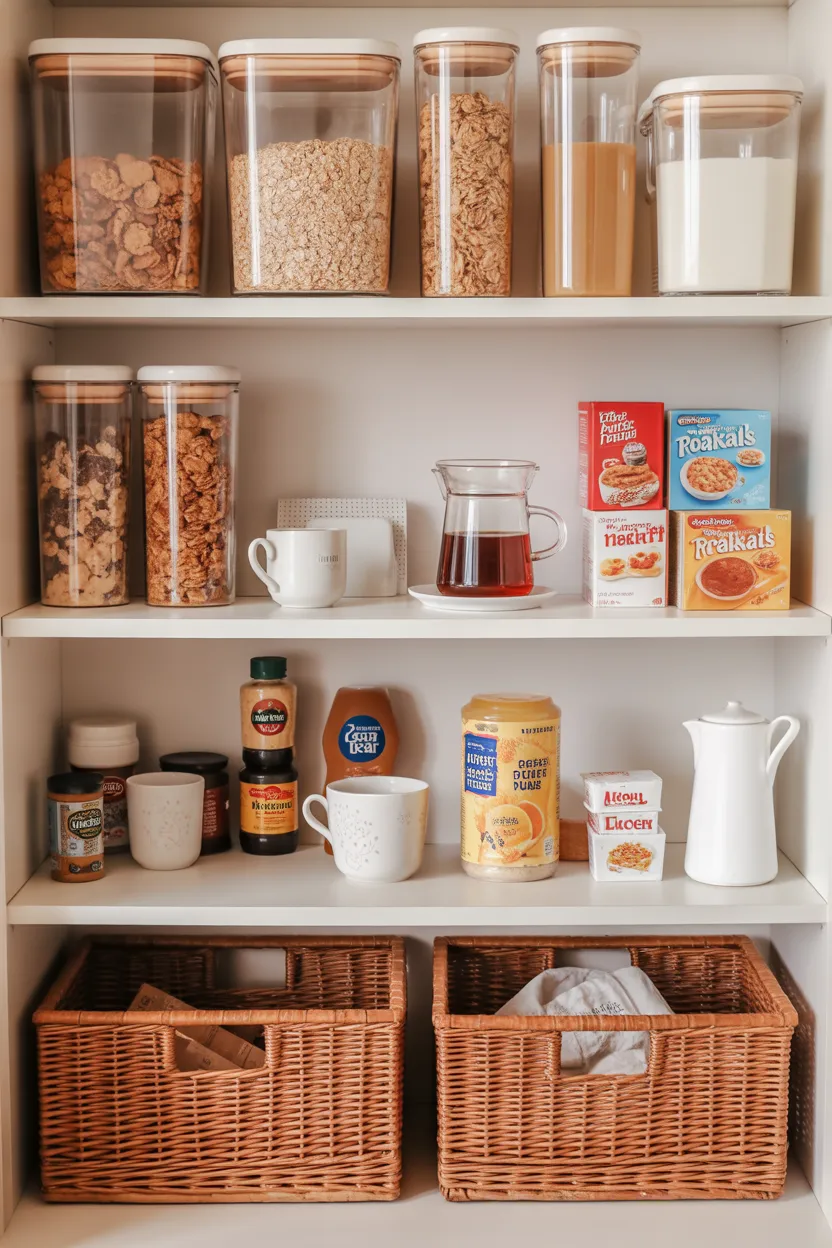
Breakfast usually happens when everyone feels rushed. Nobody wants to search the pantry for oats, cereal, pancake mix, or coffee while trying to wake up and act like a functioning person. A breakfast shelf fixes that morning nonsense.
When you group all breakfast foods together, your routine feels smoother. You know where to reach, what needs restocking, and what you already have. That matters a lot on busy mornings when patience is already hanging by a thread.
Also Read: 25 Cozy Bedroom Ideas 2026 That Feel Warm and Relaxing
A breakfast shelf can include:
- Cereal
- Oats
- Pancake mix
- Syrup
- Coffee
- Tea
- Breakfast bars
- Peanut butter
This idea sounds simple because it is simple. That is what makes it smart. A breakfast pantry zone saves time and makes mornings easier to manage. Why make the first meal of the day harder than it has to be?
7. Organize Baking Ingredients Like a Mini Station
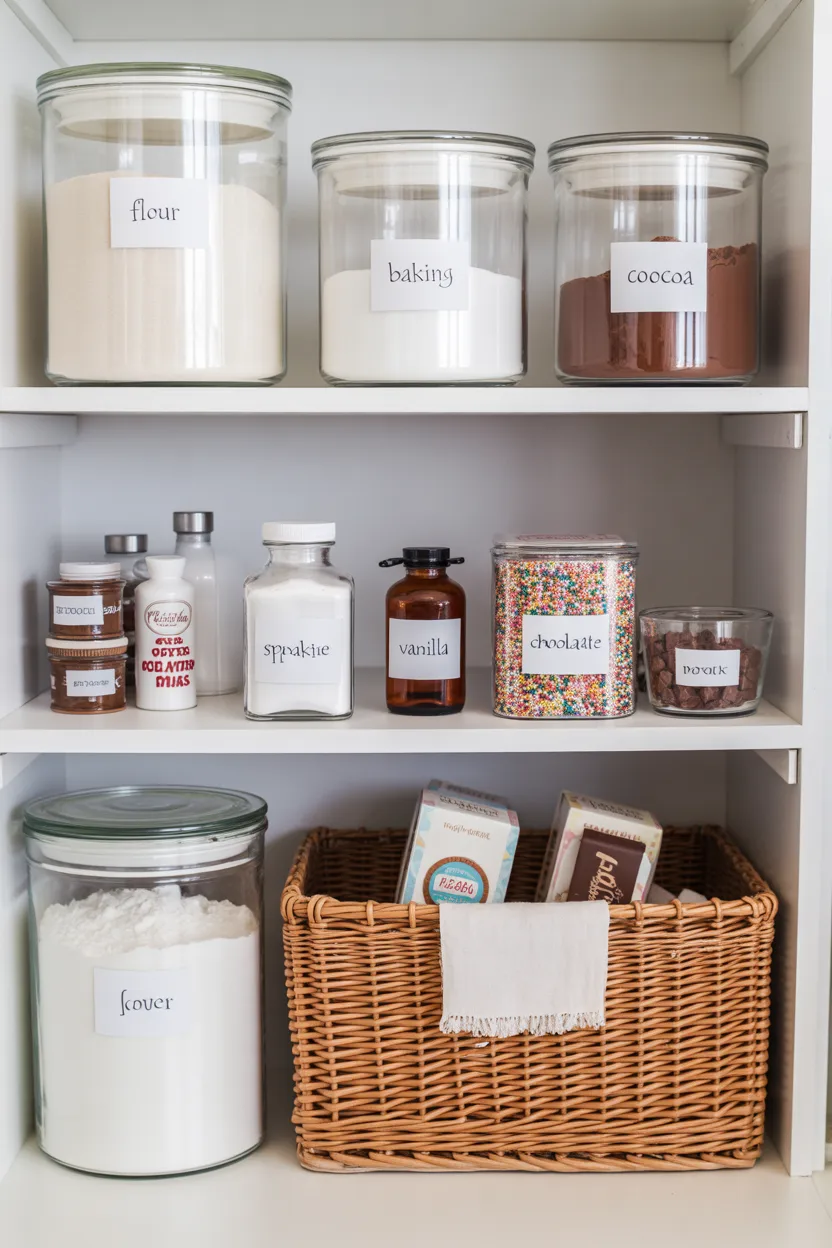
If you bake even once in a while, keeping baking foods together makes a huge difference. I am talking about flour, sugar, baking soda, cocoa powder, vanilla, and all the little things that somehow disappear the second you need them.
A baking station lets you keep those items in one easy-to-reach section. You can use jars, baskets, or shelf risers to make it neat and easy to scan. This setup helps you bake faster and clean up with less frustration.
Your baking station can include:
- Flour
- White sugar
- Brown sugar
- Baking soda
- Baking powder
- Vanilla extract
- Cocoa powder
- Chocolate chips
- Sprinkles
I love baking areas because they make the pantry feel intentional. A dedicated baking section keeps related pantry foods together and cuts down on random searching. There is no joy in making cookies if you spend fifteen minutes looking for the baking powder first.
8. Use Tiered Shelves for Cans and Jars
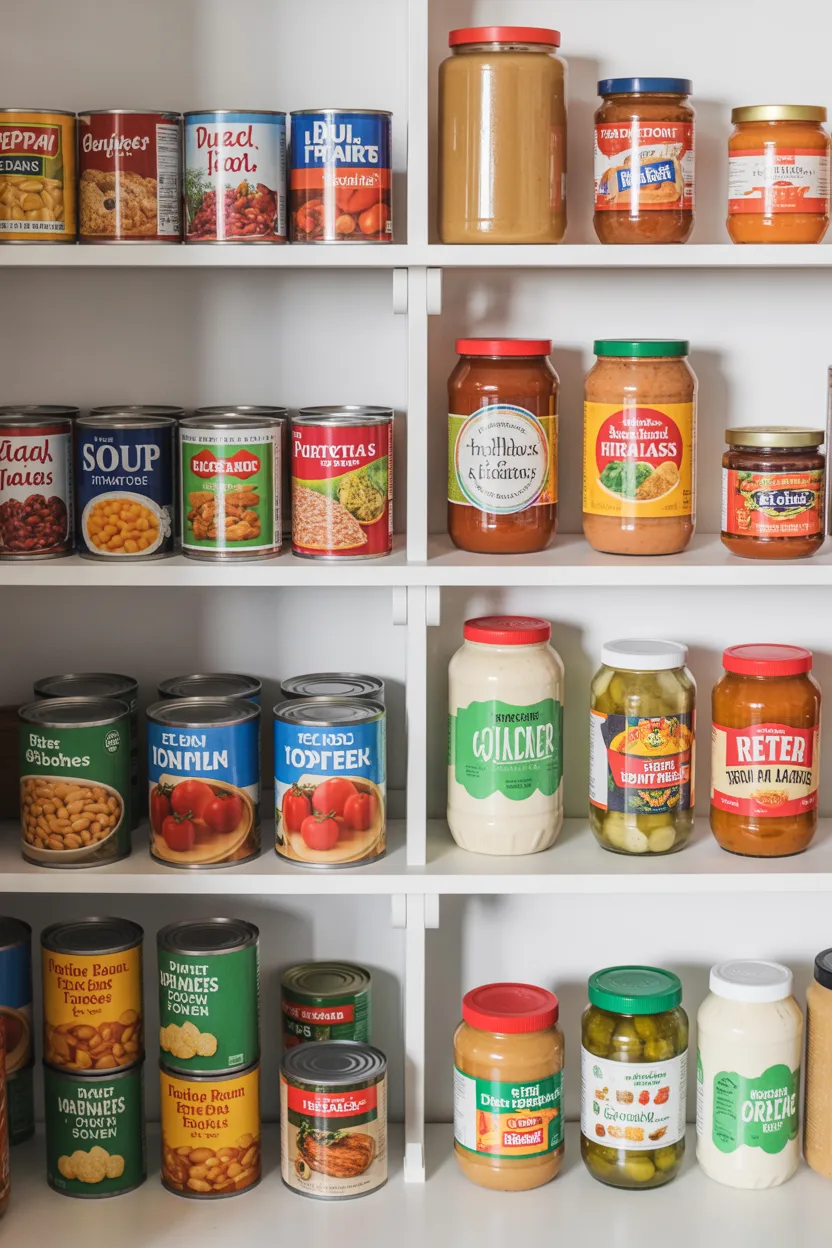
Flat pantry shelves make cans disappear. You line things up, then the second row blocks the third row, and the fourth row becomes a mystery. Next thing you know, you buy more canned beans because you forgot you already had six.
Tiered shelves or risers solve that problem beautifully. They lift the back rows so you can see everything at once. This makes canned goods and jars much easier to organize and much easier to use before they expire.
Tiered shelves work well for:
- Canned beans
- Soup cans
- Canned tomatoes
- Broth
- Jarred sauces
- Nut butters
- Pickles
- Spreads
Better visibility means better pantry habits. When you can see your food, you use your food. It sounds obvious, but people ignore this all the time and then wonder why expired corn is hiding in the back like a secret.
9. Keep Weeknight Dinner Staples Front and Center
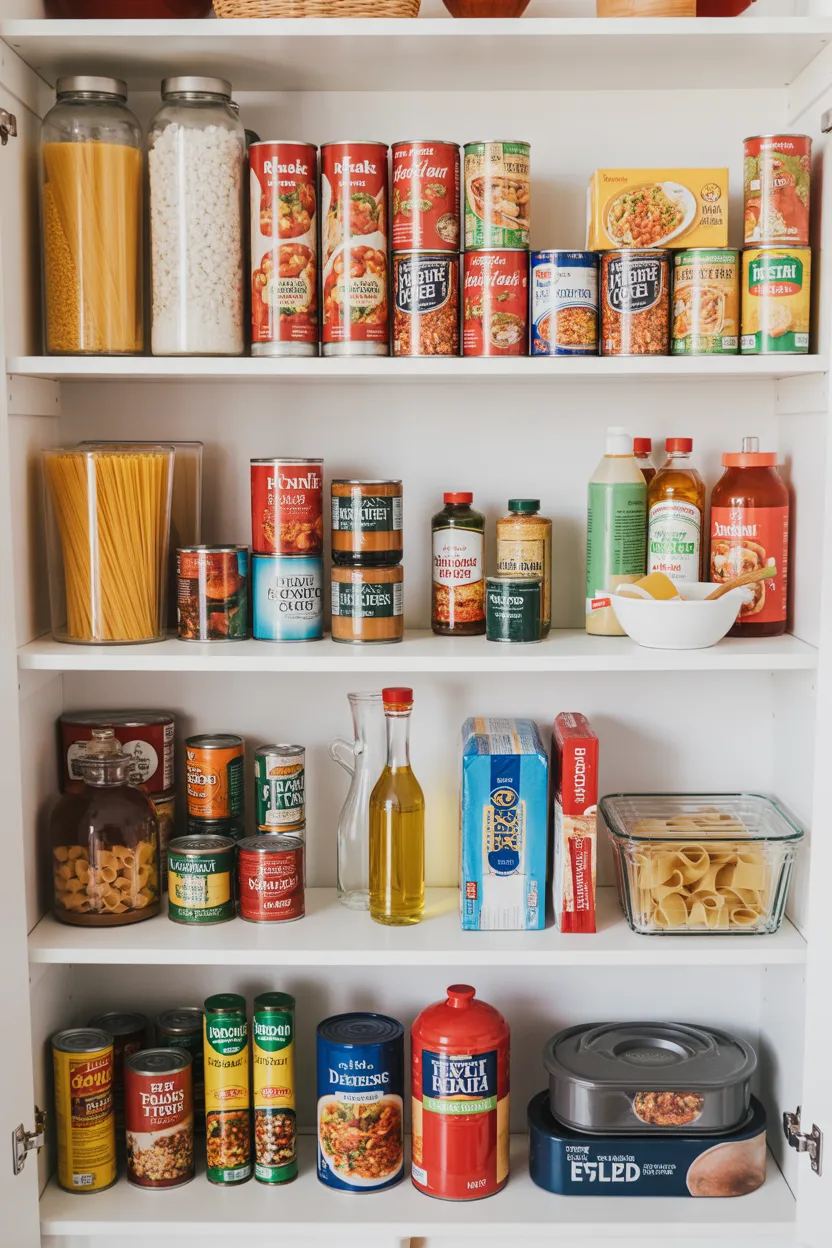
Your most-used pantry foods deserve the best shelf space. That means pasta, rice, canned tomatoes, broth, noodles, beans, oils, and seasoning mixes should not live in some awkward back corner where you need an expedition team to find them.
When you place your main dinner staples at eye level or in easy-reach spots, cooking becomes faster and less annoying. You cut down on time, reduce shelf digging, and make weeknight meals feel more manageable.
Common weeknight staples include:
- Pasta
- Rice
- Beans
- Noodles
- Canned tomatoes
- Broth
- Olive oil
- Seasoning packets
- Taco shells
I always recommend organizing around your actual routine. The foods you use most should sit where you can grab them fastest. It is one of those small choices that improves kitchen flow in a big way.
10. Store Bulk Foods in a Separate Section
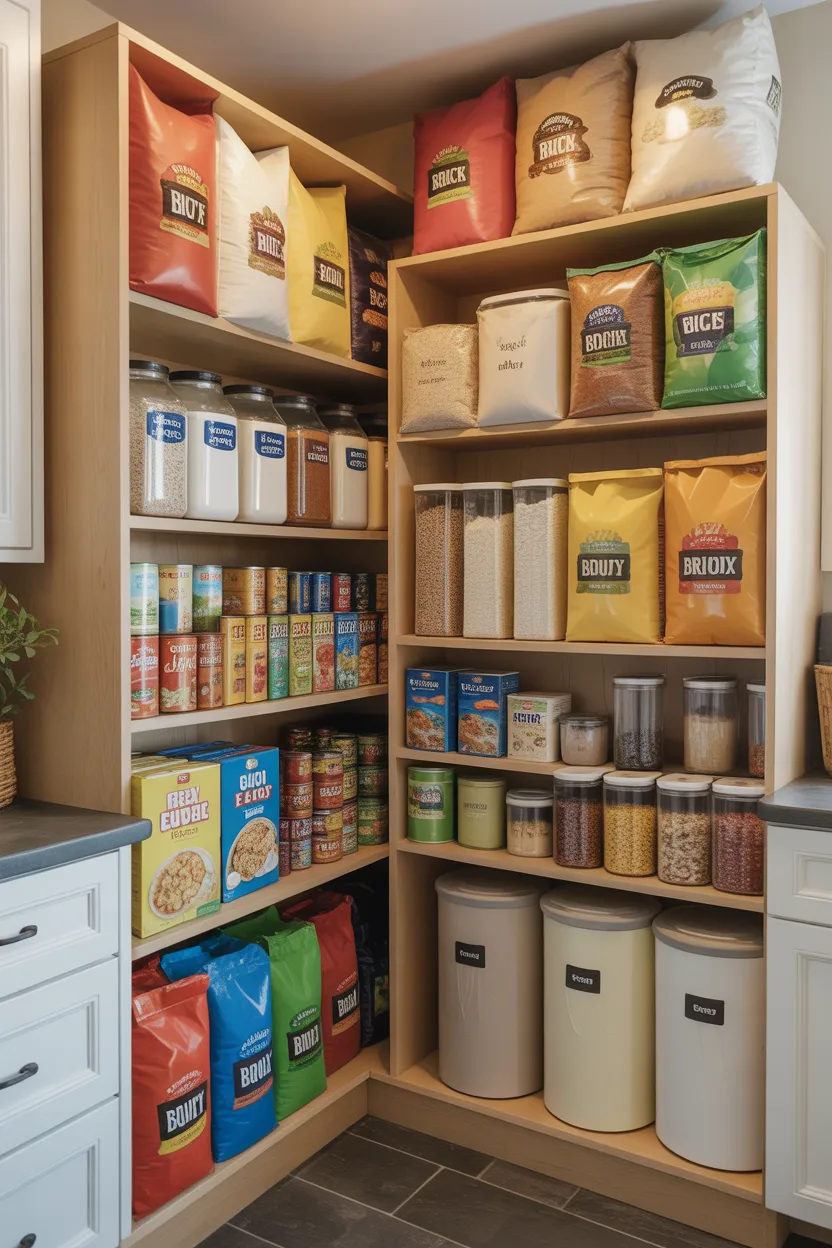
Bulk buying can save money, but only if your pantry can actually handle it. Otherwise you end up with giant bags, oversized boxes, and awkward packages stuffed onto shelves where nothing fits properly. That does not feel organized. That feels like regret.
Set aside one section for larger packages and bulk pantry foods. Keep them away from the everyday shelf setup so they do not crowd the main space. Then refill smaller containers or pull from the bulk zone as needed.
Also Read: 24 Pantry Organization Ideas 2026 That Make Life So Easy
A bulk section can store:
- Large rice bags
- Big flour sacks
- Family-size cereal boxes
- Extra canned packs
- Large snack boxes
- Bulk beans
- Drink mixes
This system works because it separates storage from access. A bulk foods section keeps your main pantry cleaner while still letting you stock up smartly. And yes, it also lowers your chances of a giant rice bag falling onto your foot, which feels like a nice bonus.
11. Use Pull-Out Bins for Small Packets
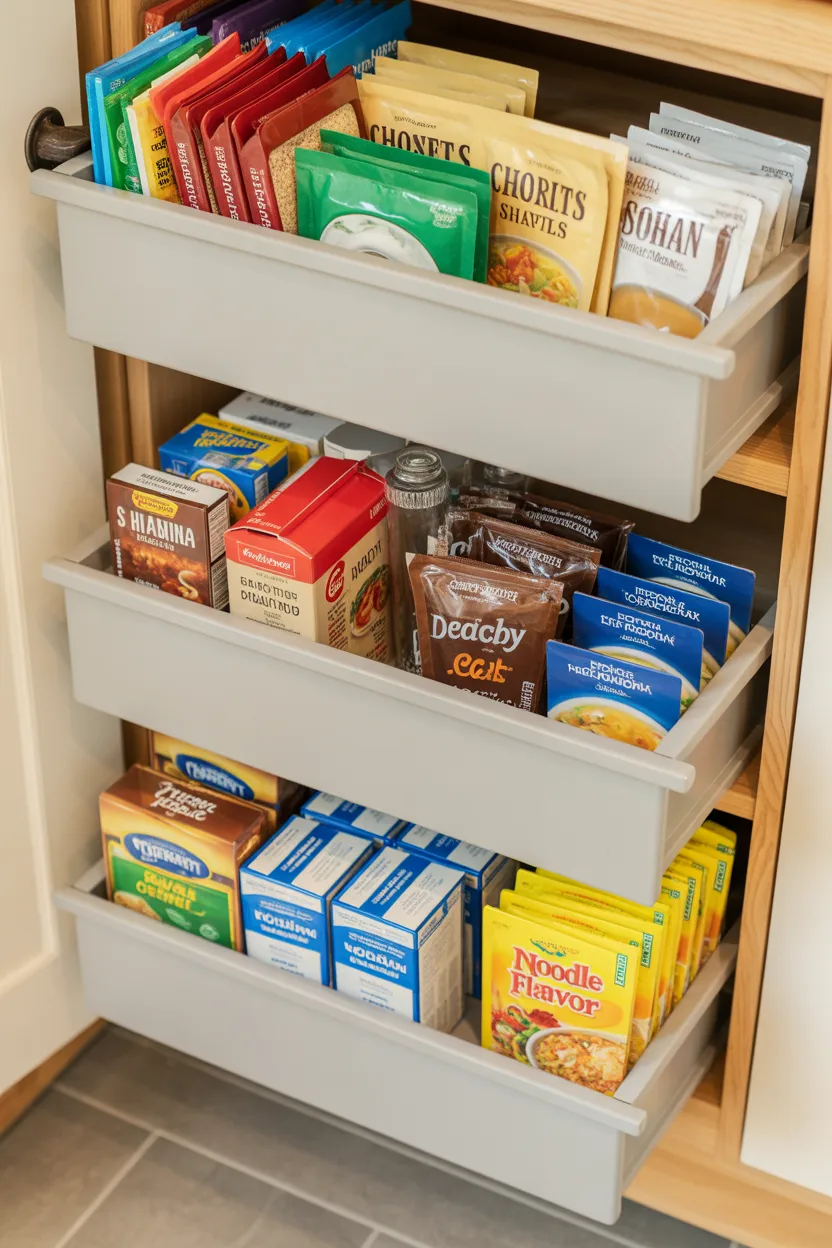
Small packets create clutter faster than almost any other pantry item. Seasoning sachets, instant soup packets, gravy mixes, drink powders, and noodle flavor packets always end up scattered around. They are tiny, slippery, and weirdly committed to making shelves look messy.
Pull-out bins keep those items contained and visible. You can group similar packets together, slide the bin forward, and find what you need in seconds. That is much better than digging around behind flour jars like you are searching for buried treasure.
These items work well in packet bins:
- Instant soup packets
- Seasoning mixes
- Gravy packets
- Noodle flavor sachets
- Hot chocolate packs
- Gelatin boxes
- Drink powders
Small pantry foods need their own storage strategy. Once you give them one place to live, your pantry immediately looks less chaotic and much easier to maintain.
12. Make a Kid-Friendly Food Zone
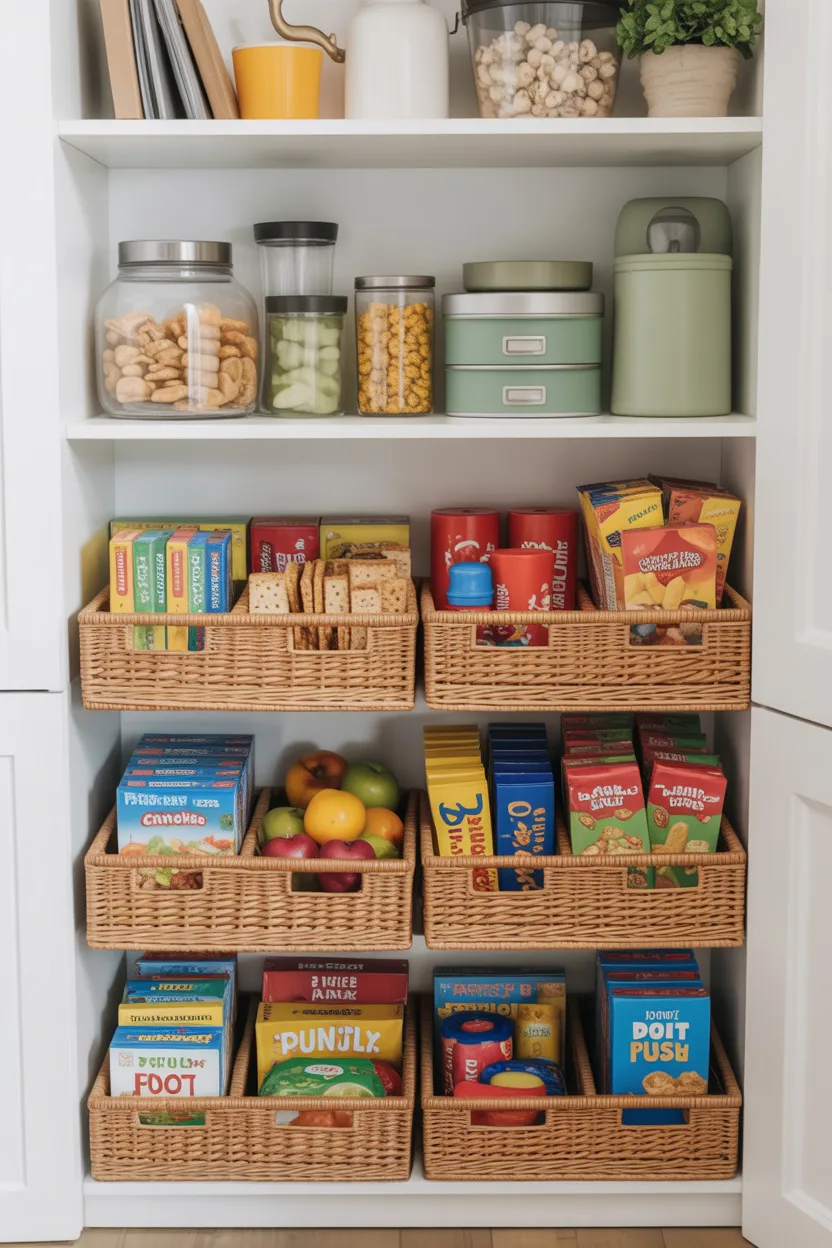
If you have kids, you already know they can turn a pantry upside down in record time. Even when they mean well, they usually pull out five things to get one. A kid-friendly food zone helps stop that daily shelf disaster.
Use a lower shelf or reachable basket for snacks and lunch items they can grab on their own. This creates independence while keeping the rest of the pantry from getting wrecked every afternoon.
A kid-friendly zone can hold:
- Juice boxes
- Crackers
- Fruit snacks
- Granola bars
- Applesauce pouches
- Popcorn
- Lunchbox treats
I like this idea because it feels practical, not precious. A child-access pantry zone makes snacks easier to reach and helps the whole pantry stay more organized. Less chaos, fewer random wrapper explosions, better mood for everyone.
13. Create a Meal Prep Shelf
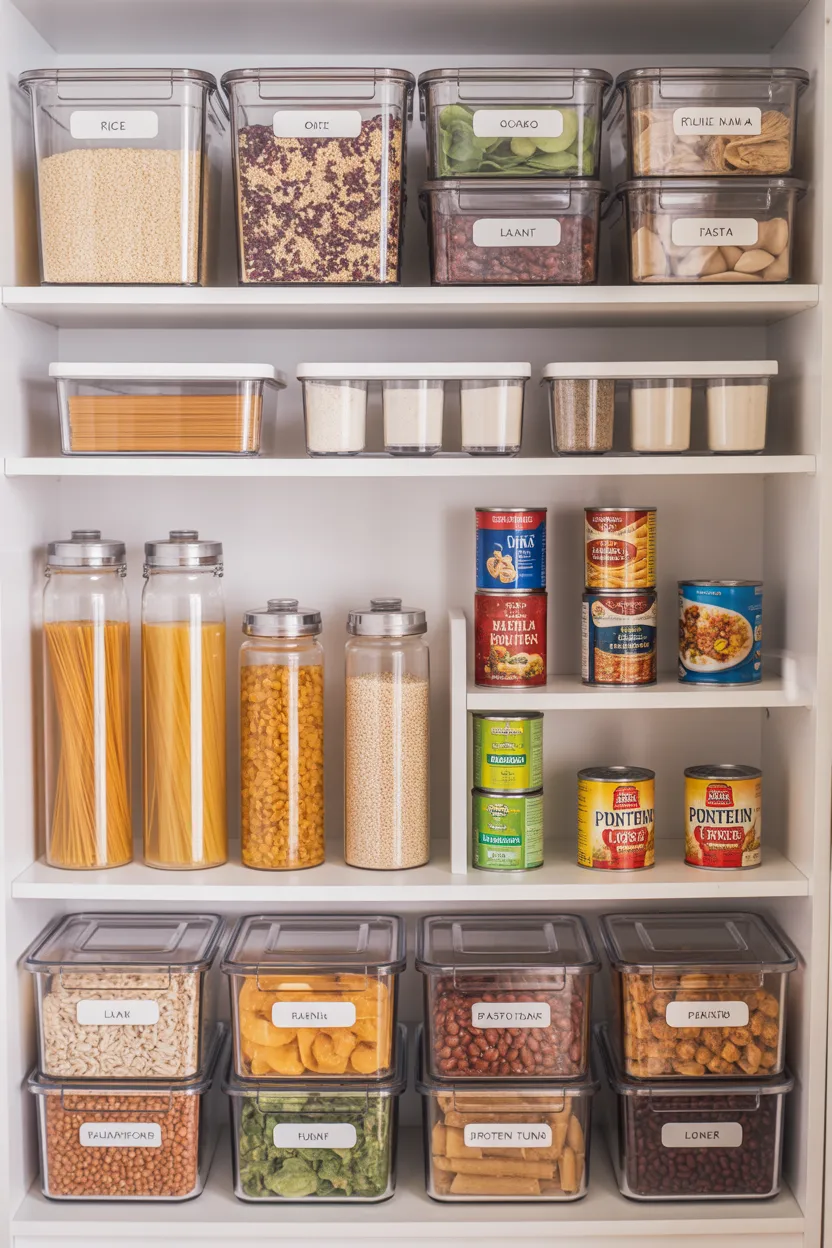
If you prep meals ahead of time, this pantry idea can make your weekly routine a lot smoother. A meal prep shelf groups the foods you use most during batch cooking so you do not have to search across the pantry every time.
You can keep proteins, grains, canned staples, and healthy add-ons together in one area. This helps you move quickly and makes meal planning feel more doable, especially on busy weeks.
A meal prep shelf can include:
- Rice
- Quinoa
- Beans
- Lentils
- Pasta
- Broth
- Canned tuna
- Sauces
- Protein snacks
I really like this setup because it reduces mental clutter. A meal prep shelf keeps pantry foods organized around your routine instead of around random shelf space. Ever had one of those days where deciding what to cook feels harder than actually cooking it?
14. Separate Opened Foods from Unopened Foods
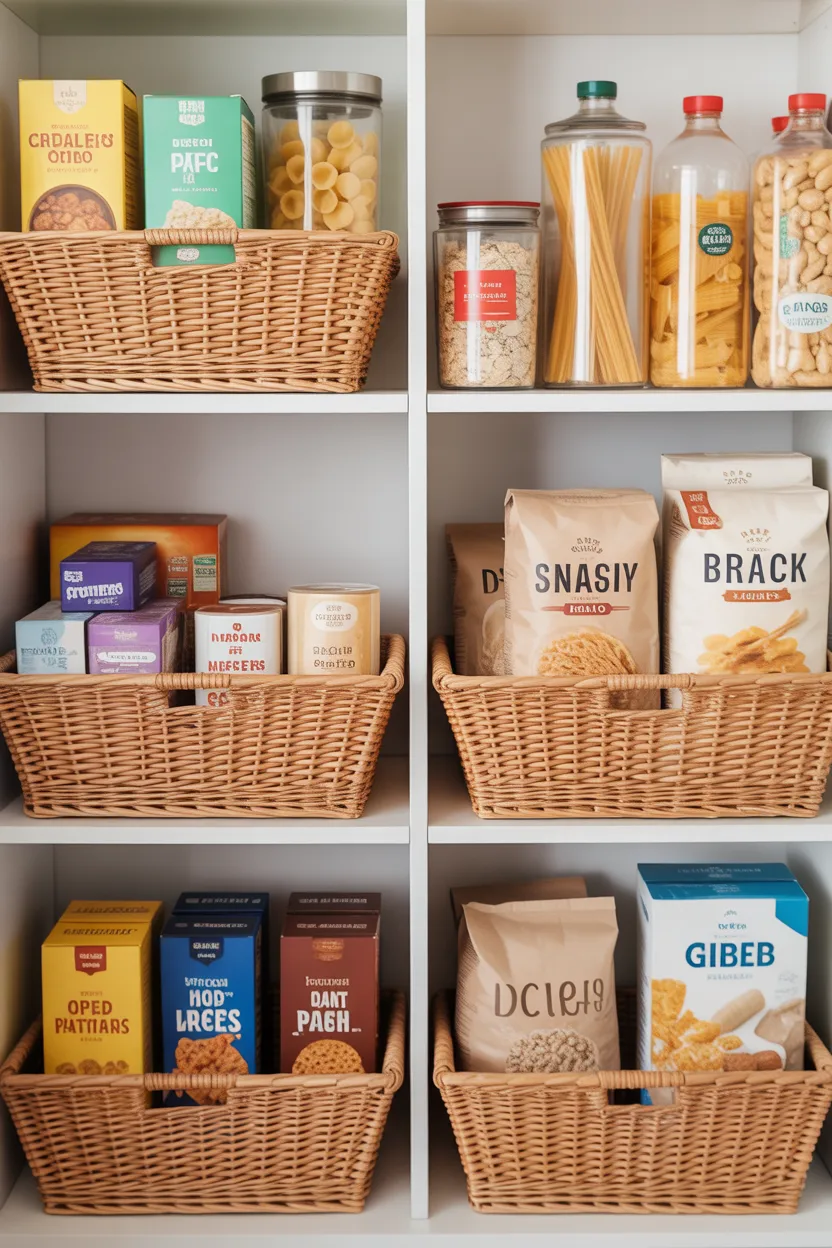
This is one of those little tricks that makes a surprising difference. When opened boxes and sealed backups sit together, you lose track of what needs using first. Then you open something new when the old one was already right there the whole time.
Create one area for opened foods and another for unopened extras. This helps you finish what you started, reduce waste, and make the pantry easier to scan.
Also Read: 21 Dining Room Ideas 2026 That Look Warm and Inviting
Opened food areas work well for:
- Cereal boxes
- Crackers
- Pasta
- Baking items
- Snack bags
- Oats
- Breadcrumbs
Separating opened and unopened pantry foods helps you use groceries more efficiently. It also cuts down on those annoying moments where you find two open boxes of the same crackers and wonder how your pantry became this dramatic.
15. Use Baskets for Category Control
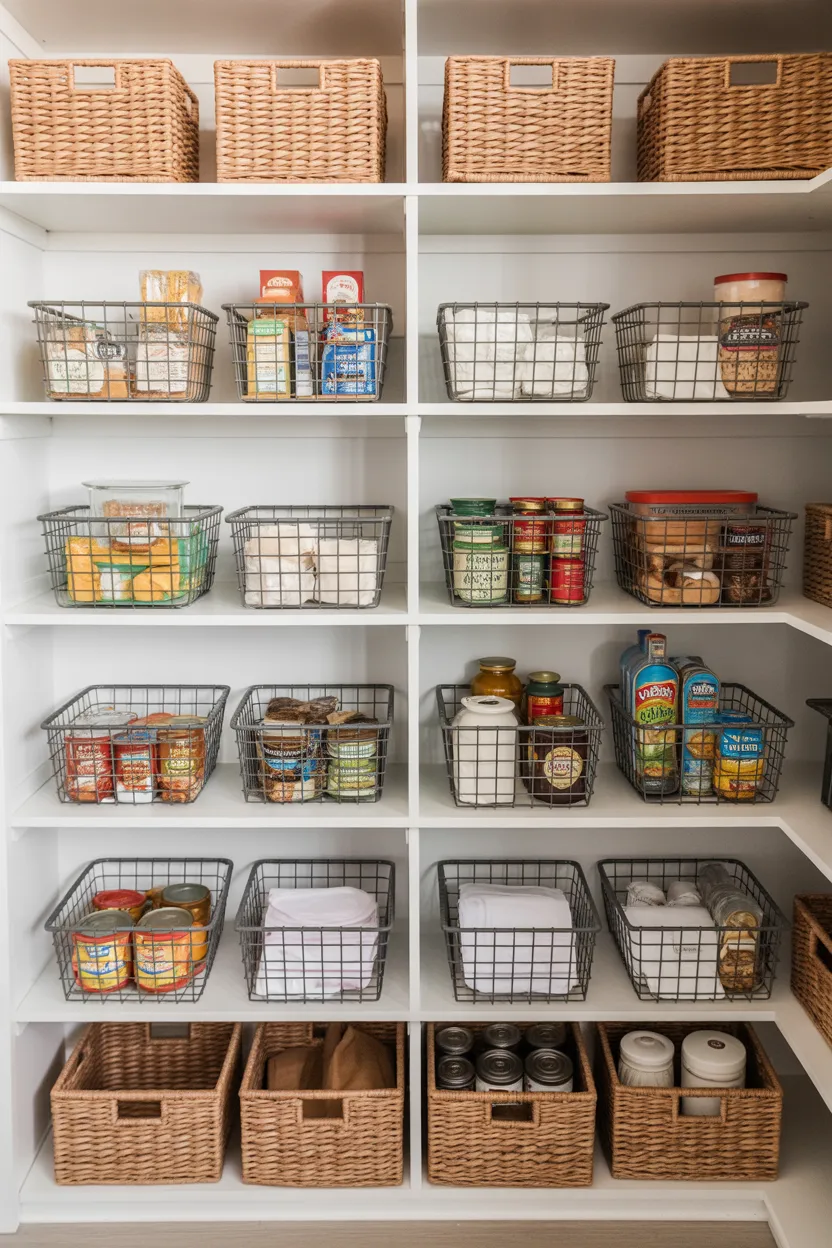
Baskets make pantry shelves feel more structured right away. Even if the shelf itself is deep or awkward, baskets create clear boundaries that keep categories from spreading into each other.
You can assign one basket to snacks, one to pasta, one to baking, one to coffee, and so on. The pantry instantly feels more organized because every type of food has a visible container and a defined space.
Good basket categories include:
- Snacks
- Baking ingredients
- Breakfast foods
- Pasta night items
- Tea and coffee
- School lunch foods
- Canned extras
- Sauce packets
I always recommend baskets for people who want a tidy pantry without a huge makeover. Baskets give pantry foods a home and make shelf resets much easier. You pull one out, fix it, put it back, and move on with your life. Beautiful.
16. Try a First-In, First-Out System
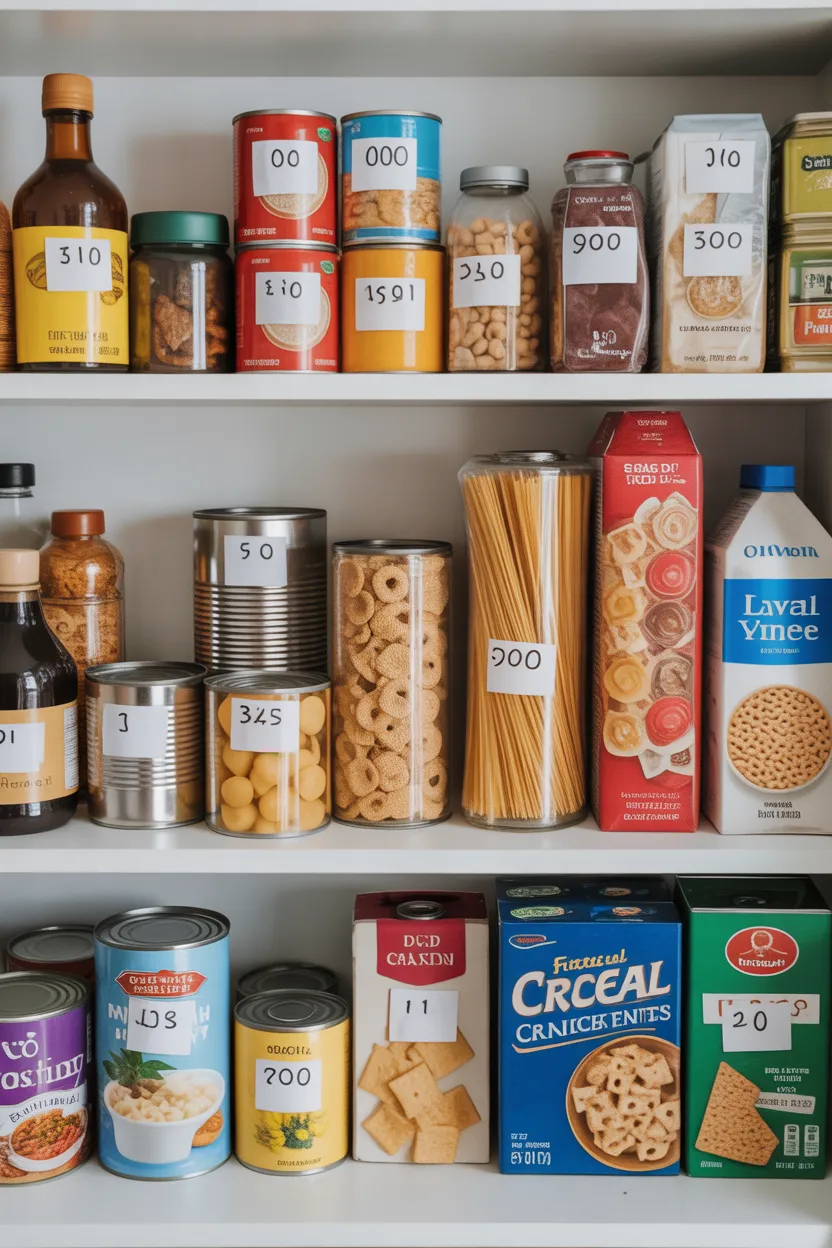
If you want to waste less food, start using the first-in, first-out method. It sounds a little technical, but it is very simple. Put older groceries at the front and newer groceries behind them.
This system works well because it encourages you to use older pantry foods first. That keeps expiration dates from sneaking up on you and helps reduce unnecessary waste.
Also Read: 22 Minimalist Bedroom Ideas 2026 That Feel Calm and Clean
It works especially well for:
- Canned goods
- Pasta
- Rice
- Cereal
- Crackers
- Baking ingredients
- Packaged snacks
I use this idea whenever I restock shelves because it takes almost no extra effort. A first-in, first-out pantry system keeps food moving in the right order. And yes, it also saves you from discovering expired soup from another era.
17. Dedicate One Shelf to Healthy Pantry Foods
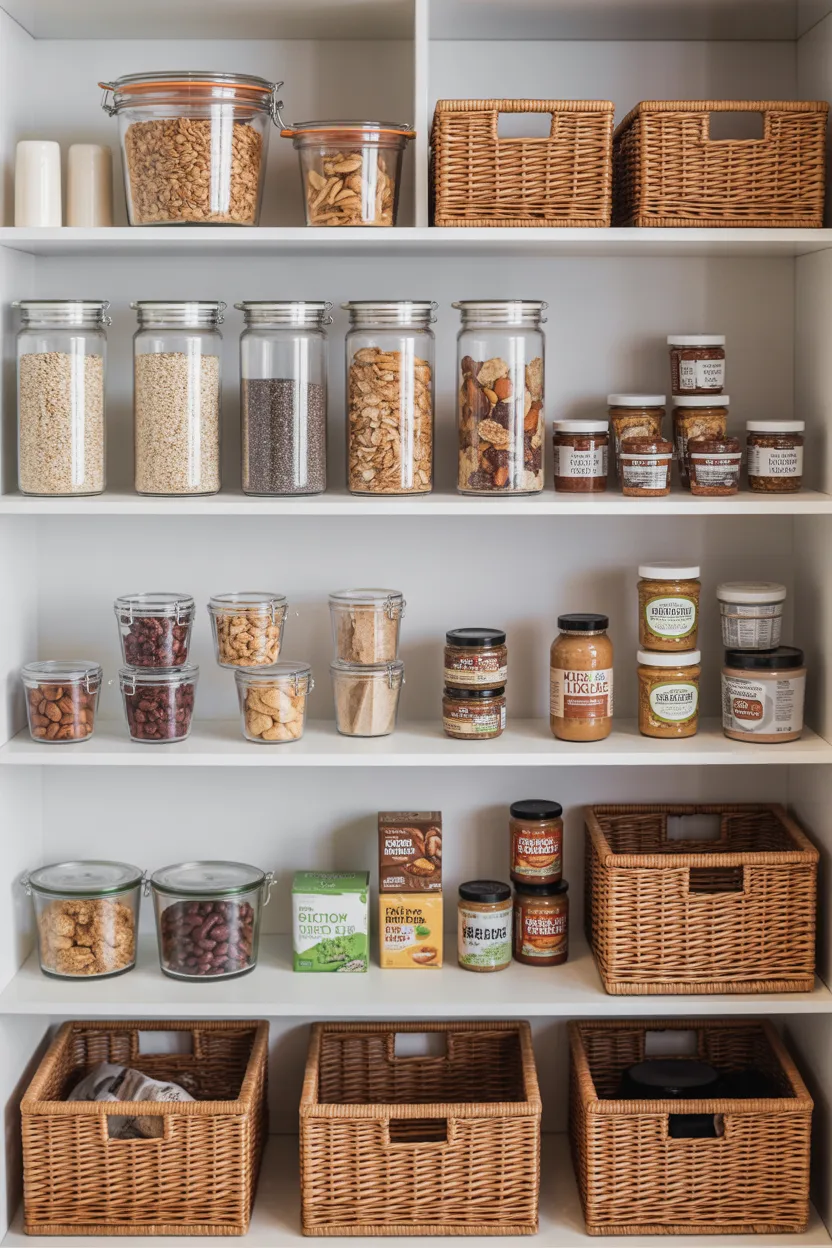
A healthy pantry shelf makes better choices feel easier. When oats, nuts, seeds, dried fruit, nut butter, and protein snacks sit right where you can see them, you reach for them more often. That visibility really matters.
I am not saying your pantry needs to become some joyless temple of chia seeds. I am just saying it helps when the healthier options do not stay buried behind chips and cookies all the time.
A healthy shelf can include:
- Oats
- Chia seeds
- Nuts
- Trail mix
- Dried fruit
- Nut butter
- Whole grain crackers
- Beans
- Protein bars
A healthy pantry zone supports better habits because it keeps good options visible and easy to grab. Small changes like this can quietly improve your whole kitchen routine.
18. Keep Specialty Ingredients in One Spot
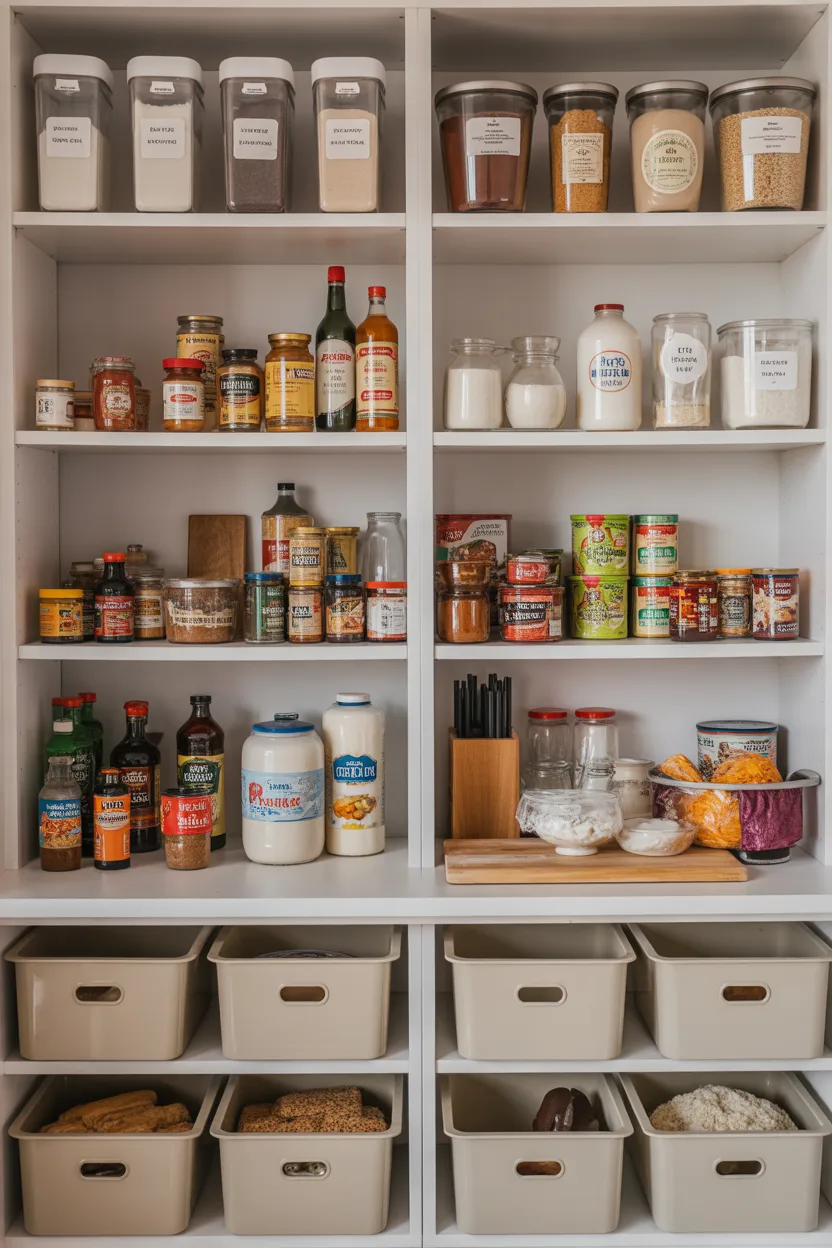
Specialty ingredients always create pantry clutter when they have no set place. You buy rice noodles, curry paste, coconut milk, gluten-free flour, or seasonal baking ingredients, then they drift around the pantry with no real home.
A dedicated specialty section keeps those foods together and out of the way of your daily staples. That helps you find them faster when you need them and stops them from taking over random shelves.
A specialty section might include:
- Gluten-free flours
- Rice noodles
- Curry sauces
- Coconut milk
- Sushi rice
- Seasonal baking ingredients
- Imported sauces
- Specialty grains
I think this idea works especially well for people who cook a mix of different meals throughout the week. Specialty pantry foods stay far more manageable when you group them into one focused section.
19. Add a Pantry Inventory Pad or Note
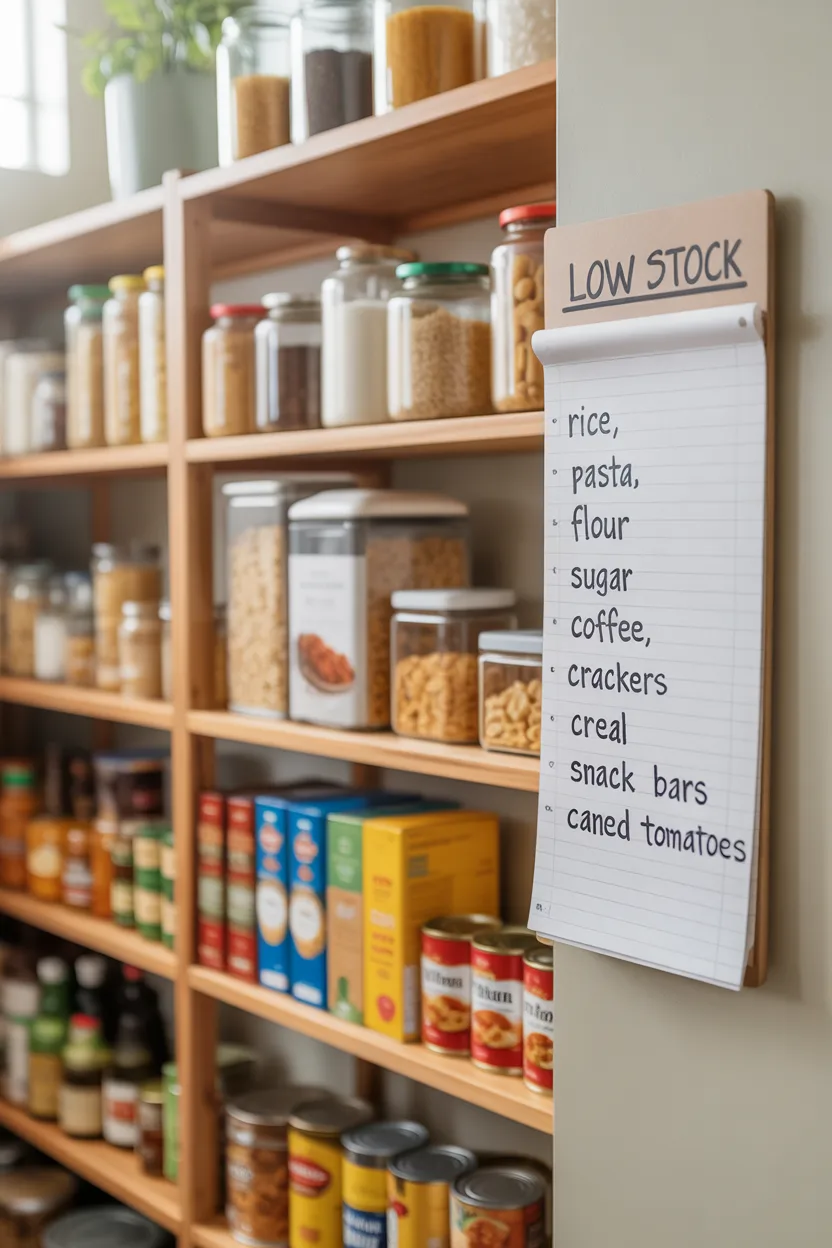
This idea may sound a little extra at first, but it works incredibly well. Keep a notepad, whiteboard, or phone-based pantry list nearby so you can quickly note what runs low.
When you finish the last box of pasta or see that the rice container is almost empty, write it down right away. That small habit makes shopping smarter and cuts down on duplicates.
An inventory note can help you track:
- Rice
- Pasta
- Flour
- Sugar
- Crackers
- Cereal
- Coffee
- Snack bars
- Canned tomatoes
I love this because it connects the pantry to your shopping routine in a very practical way. A pantry inventory list keeps your organization useful instead of just pretty. That matters a lot if you actually want the system to last.
20. Use the Door for Slim Pantry Foods
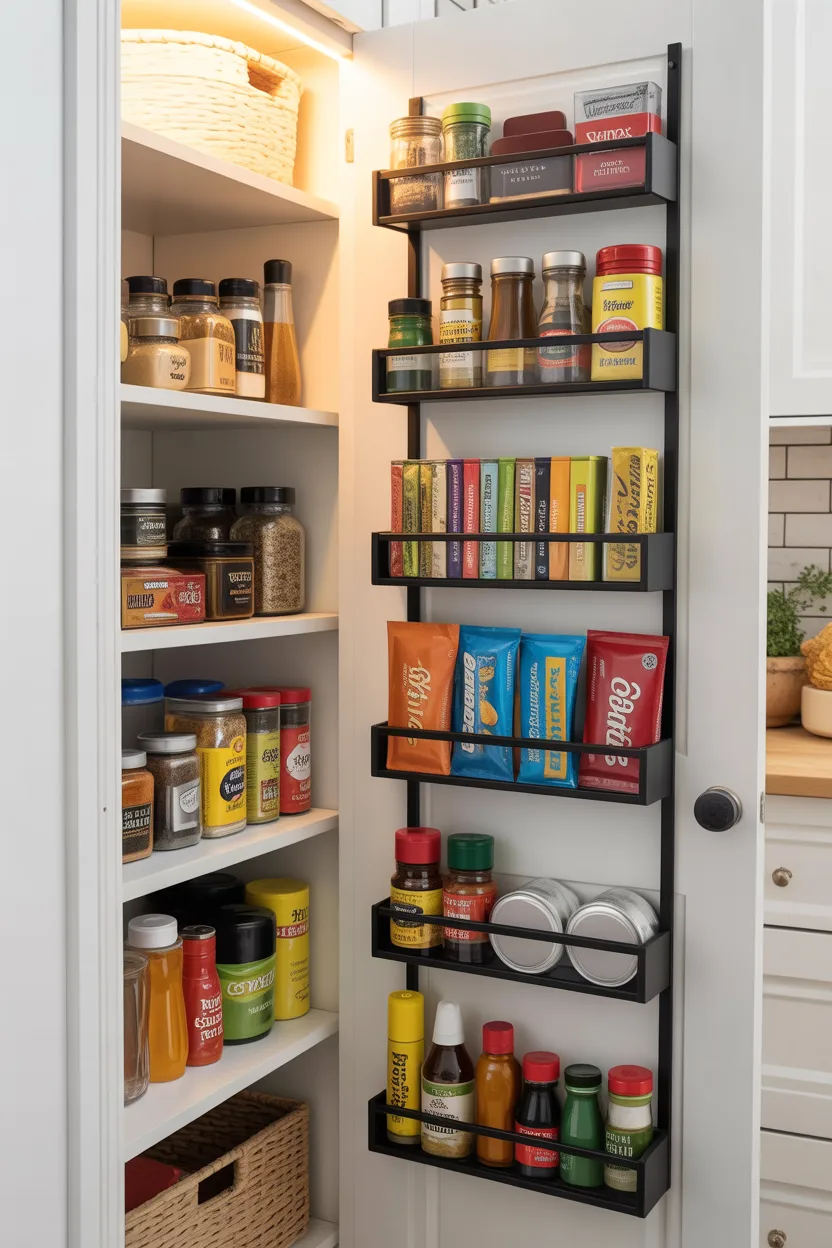
If your pantry has a door and you are not using it, you are leaving storage space behind for no reason. Pantry doors work so well for slim items, small jars, and lightweight foods that do not need deep shelves.
Door organizers or narrow racks can hold all kinds of items while freeing up your main shelves. This works especially well in smaller kitchens where every inch matters.
Pantry door storage can hold:
- Spices
- Tea
- Small jars
- Seasoning packets
- Snack bars
- Drink sticks
- Foil and wrap
- Small condiments
Door storage adds extra function without taking away shelf space. I really like this trick because it feels efficient and low effort, which is honestly the best kind of organizing.
21. Sort Pantry Foods by Shelf Life
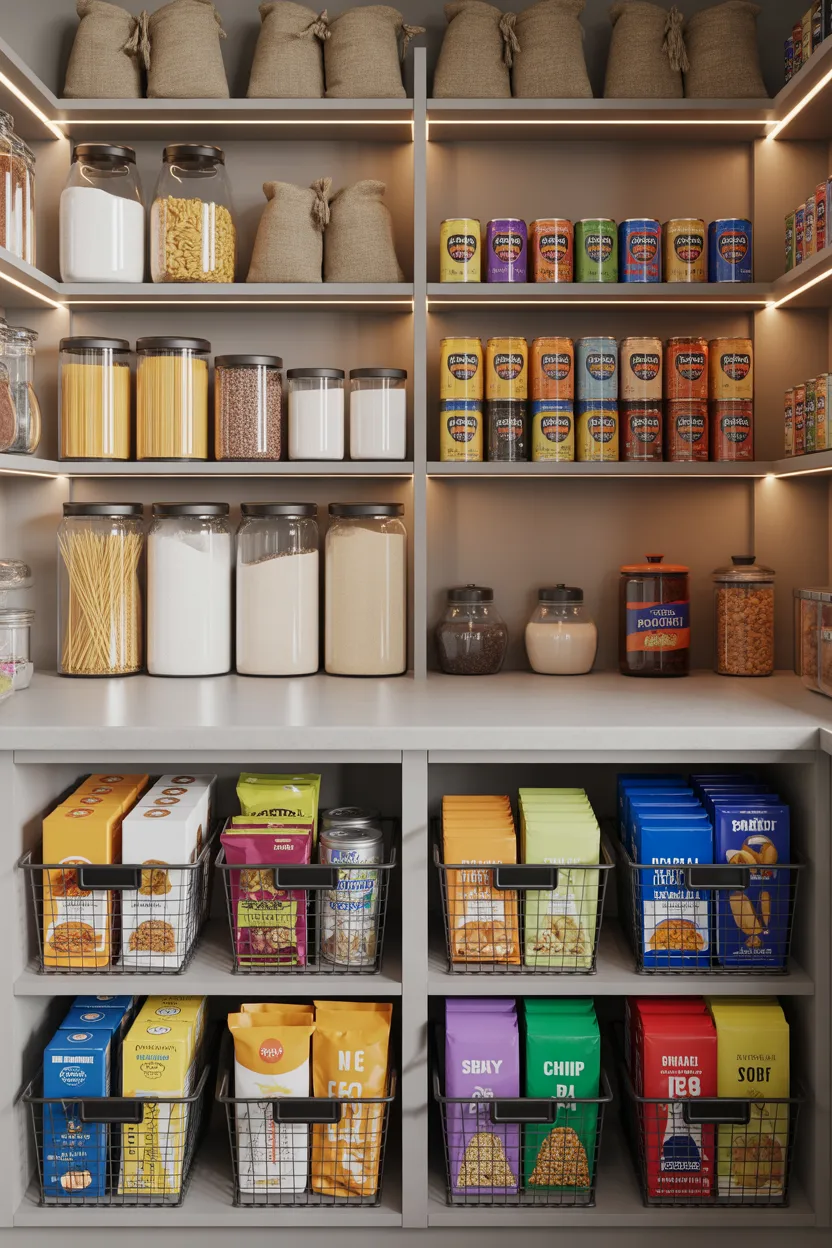
Sorting pantry foods by shelf life helps you keep better track of what needs using sooner. Foods with shorter freshness windows should stay more visible, while long-lasting staples can sit farther back or higher up.
Also Read: 20 Open Kitchen Living Rooms 2026 That Feel Airy and Modern
This kind of setup helps reduce waste and improves planning because you naturally notice the foods that need attention first. It is not complicated, but it makes the pantry work a lot better.
Shorter-use foods might include:
- Open crackers
- Granola
- Cereal
- Nuts
- Chips
- Breakfast bars
- Baking mixes
Longer-life foods might include:
- Rice
- Pasta
- Dry beans
- Flour
- Sugar
- Canned goods
Organizing pantry foods by shelf life helps you use groceries more intentionally. It is one of those behind-the-scenes systems that quietly saves money and keeps the pantry more efficient.
22. Build a Shelf Around Your Most Common Meals
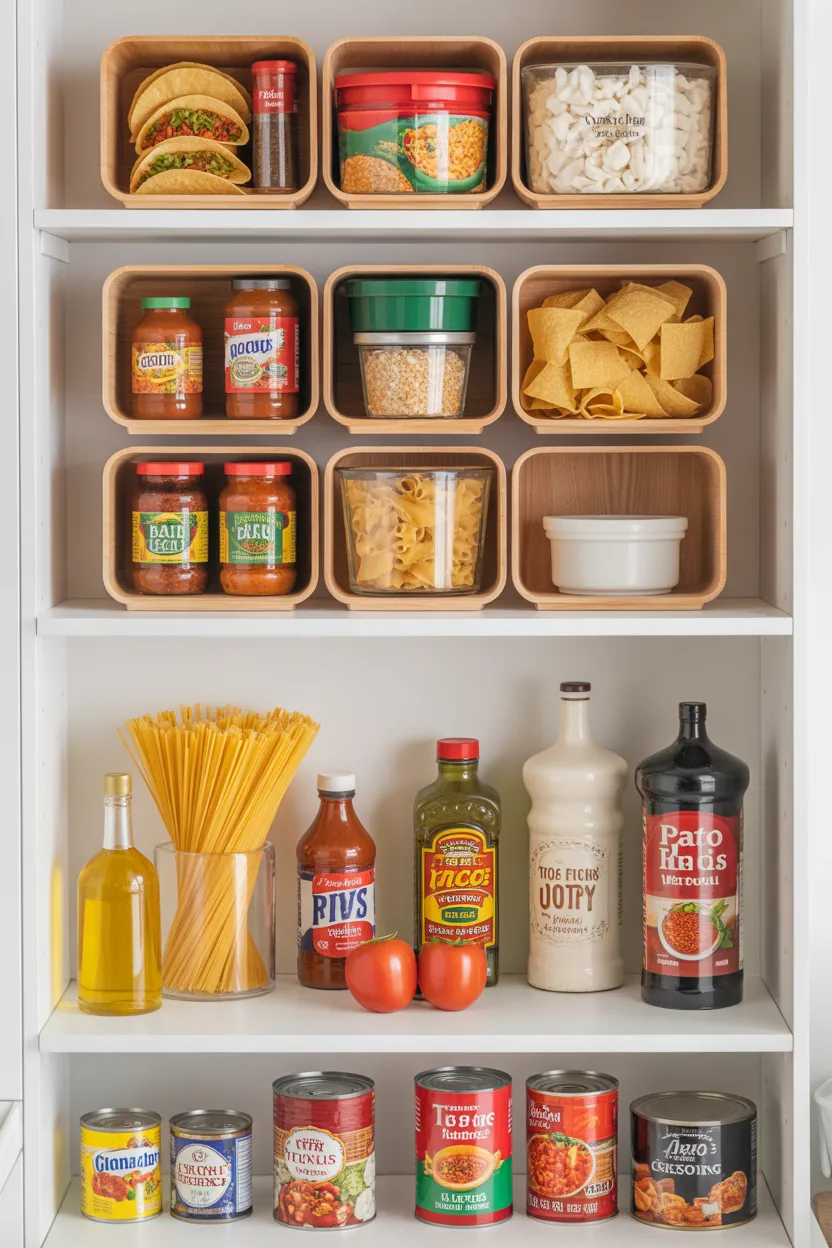
One of my favorite pantry ideas is creating shelves based on actual meals. That means grouping foods together for taco night, pasta night, soup night, ramen bowls, or quick lunch options.
When you keep meal-related ingredients close together, you make cooking faster and cut down on random searching. It is such a smart setup for busy households because it supports how you really cook.
A taco shelf might include:
- Taco shells
- Salsa
- Beans
- Rice
- Corn chips
- Hot sauce
- Taco seasoning
A pasta shelf might include:
- Pasta
- Tomato sauce
- Olive oil
- Breadcrumbs
- Canned tomatoes
- Garlic seasoning
Meal-based pantry organization makes weeknight cooking feel easier and more natural. Why not let your pantry support your favorite meals instead of fighting against them?
23. Keep a Small “Use Soon” Basket
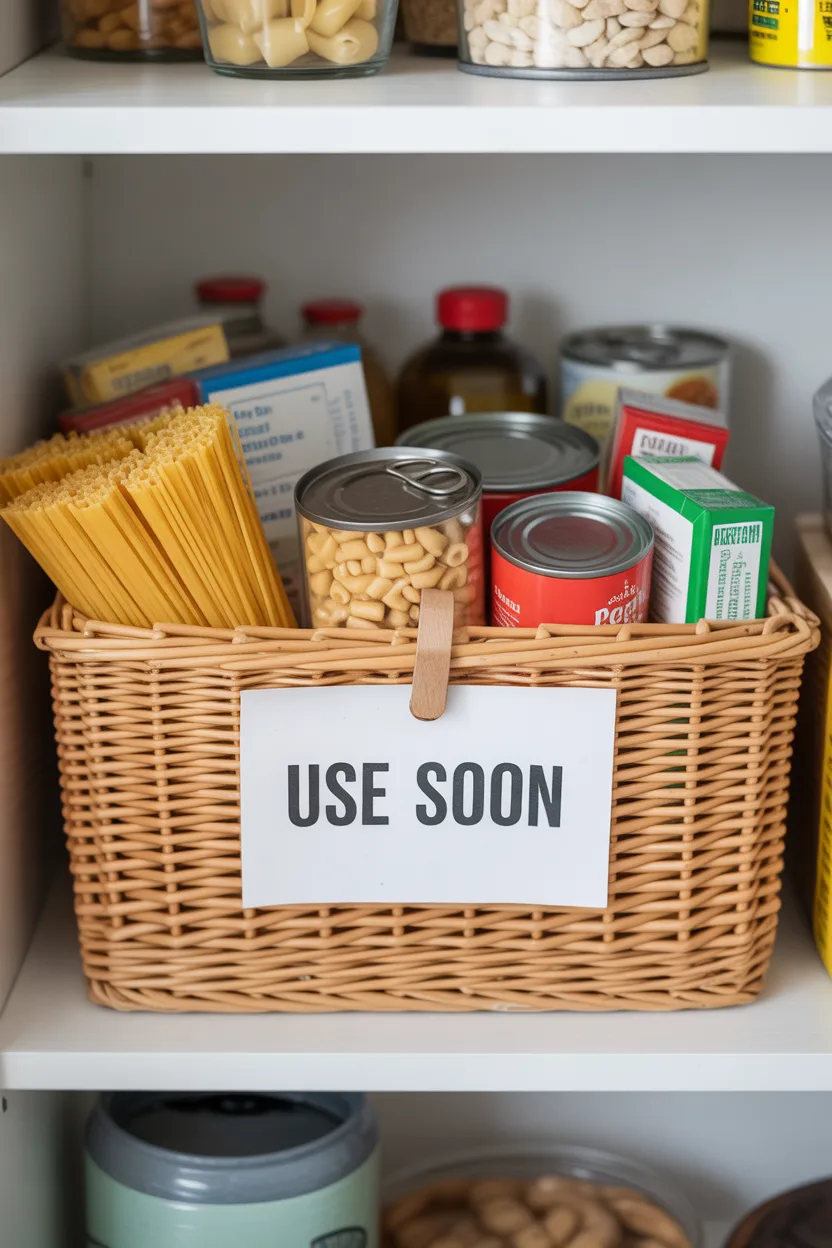
A use-soon basket is one of the most practical pantry ideas on this list. It gives older or nearly finished items one visible place so you remember to use them before they go stale or expire.
This works really well for random leftovers, nearly empty boxes, or foods that got pushed aside over time. Instead of letting those items disappear into the back of the pantry, you pull them forward and give them one more chance.
A use-soon basket can hold:
- Half-used pasta
- Nearly expired crackers
- Open grains
- Older canned goods
- Extra soup packets
- Leftover snack packs
I really like this idea because it feels realistic. A use-soon basket helps reduce food waste without making pantry organization complicated. Sometimes the smartest solutions are the least flashy ones.
24. Edit Your Pantry Every Month
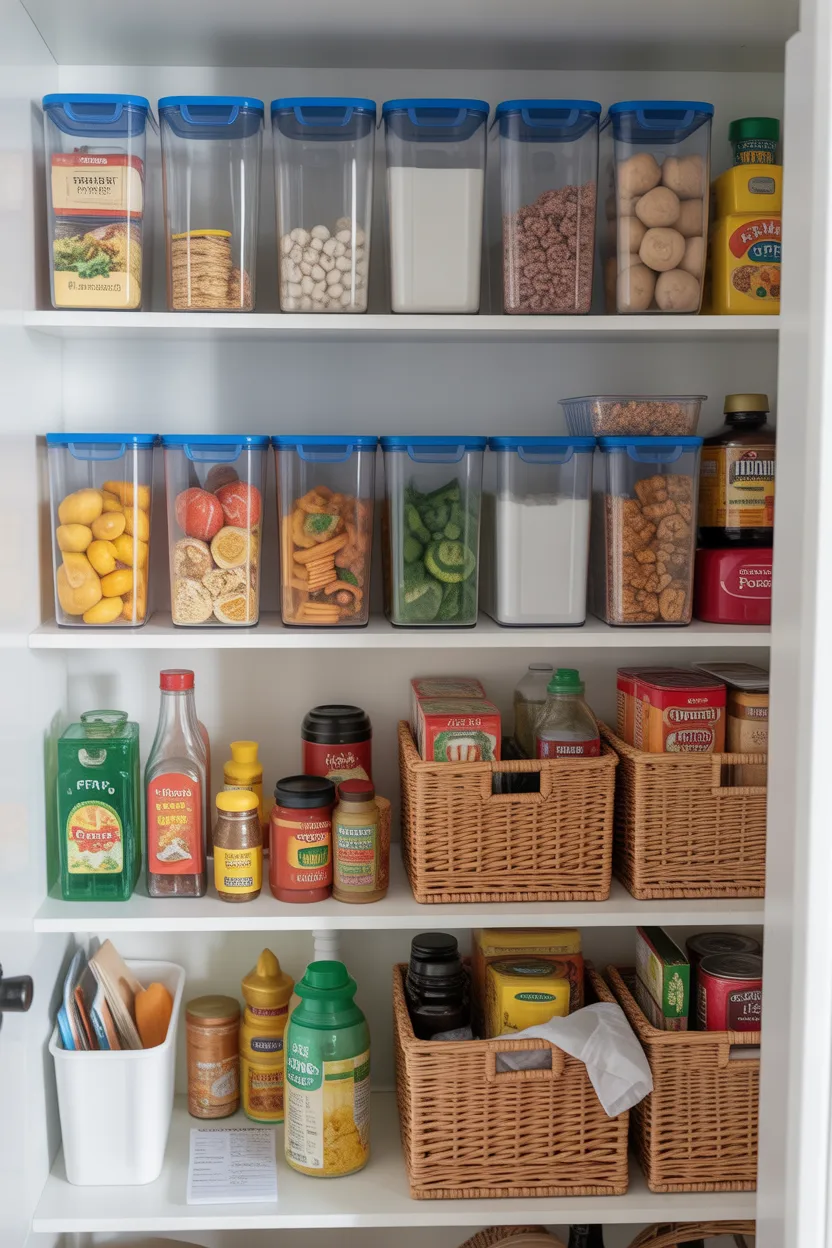
Even the best pantry setup will not stay perfect forever. Groceries come in, routines change, things get used halfway and shoved back, and somehow one shelf turns into complete nonsense again. That is normal.
A quick monthly pantry reset helps you stay ahead of the mess. You do not need a whole day for this. Just spend a little time checking dates, wiping shelves, moving older items forward, and fixing categories.
Also Read: 24 Compact Living Room Ideas 2026 That Make Space Feel Bigger
A simple monthly pantry reset can include:
- Check expiration dates
- Move older foods to the front
- Refill clear containers
- Toss stale items
- Wipe shelves
- Update your grocery list
- Reorganize messy baskets
A monthly pantry edit keeps your food organization working long-term. The setup gives you the foundation, but the habit keeps it useful. That is the part people forget, and then they act shocked when the pantry gets messy again.
Conclusion
A well-organized pantry does so much more than look nice. It saves time, cuts down on food waste, makes shopping easier, and helps your whole kitchen feel calmer. That is a pretty great return for a few smart changes.
The best part is that you do not need a giant pantry or a perfect kitchen to make this work. You just need a system that fits your real life. Start with one or two ideas, build from there, and make the pantry more useful one shelf at a time.
These kitchen pantry foods ideas for 2026 focus on real routines, simple storage, and easy access. That is why they work. Once your pantry starts staying organized, you will wonder why you waited so long to fix it. And yes, you may become oddly proud of your labeled oats and neatly lined-up pasta jars. I support that completely.