

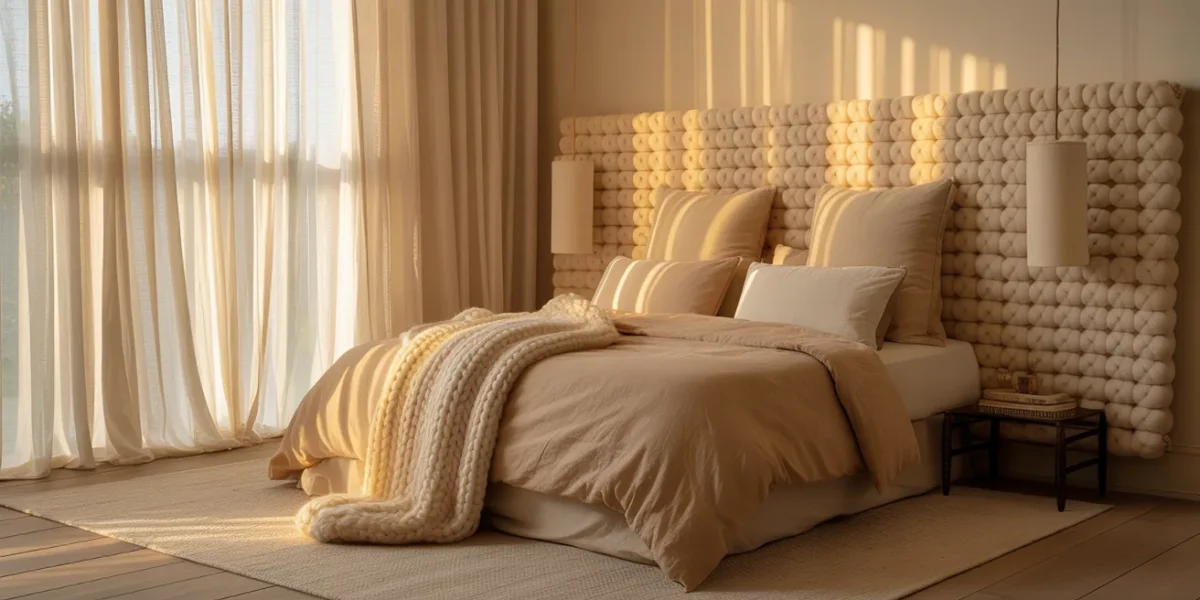
Your bedroom should be the one place in your home that makes you exhale the moment you walk in. Not the room you collapse into out of exhaustion and barely notice — but a space that actually feels designed for rest, comfort, and a little bit of beauty. And yet, so many bedrooms get neglected while the living room gets all the attention and the budget.
I’ve been there. I spent two years sleeping in a bedroom that looked like a furniture showroom reject — mismatched pieces, harsh overhead lighting, and a color on the walls I chose in approximately four minutes. Never again. These 21 bedroom ideas for 2026 cover everything from color palettes to furniture choices, textiles to lighting, so you can finally build the bedroom you actually deserve.
1. Soft, Enveloping Color Palettes
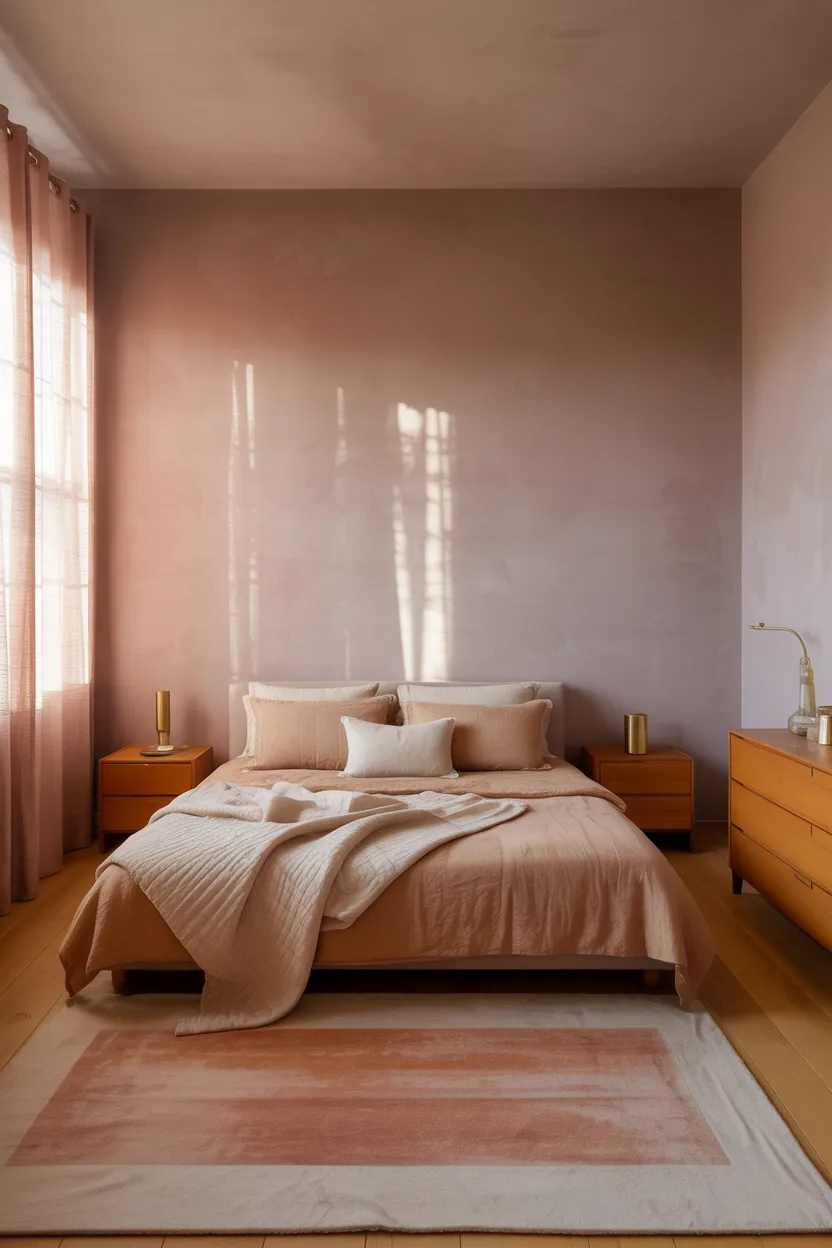
2026 bedroom color trends lean heavily into soft, enveloping tones that make a room feel like a warm hug you never want to leave. Think warm whites, dusty mauves, sage greens, and pale terracotta — colors that calm your nervous system the second you look at them.
Forget stark, bright white walls. They look great in coffee shops but feel cold and clinical in a bedroom. Warm, muted tones create the kind of atmosphere that actually supports rest and makes you want to stay in bed just a little longer than you probably should.
The beauty of soft color palettes is their flexibility. A dusty mauve wall plays beautifully with warm wood furniture, cream linen bedding, and brass hardware. Sage green works effortlessly alongside natural rattan, white cotton, and aged terracotta accents. These colors don’t demand attention — they simply make everything around them feel better.
Also Read: 22 Living Room Ideas 2026 That Feel Fresh and Stylish
Start with your walls, then build your textiles and furniture choices outward from that base color. When every element shares the same warm, muted undertone, the room develops a sense of cohesion that feels intentional and deeply calming without requiring a design degree to pull off.
2. The Bouclé Headboard Moment
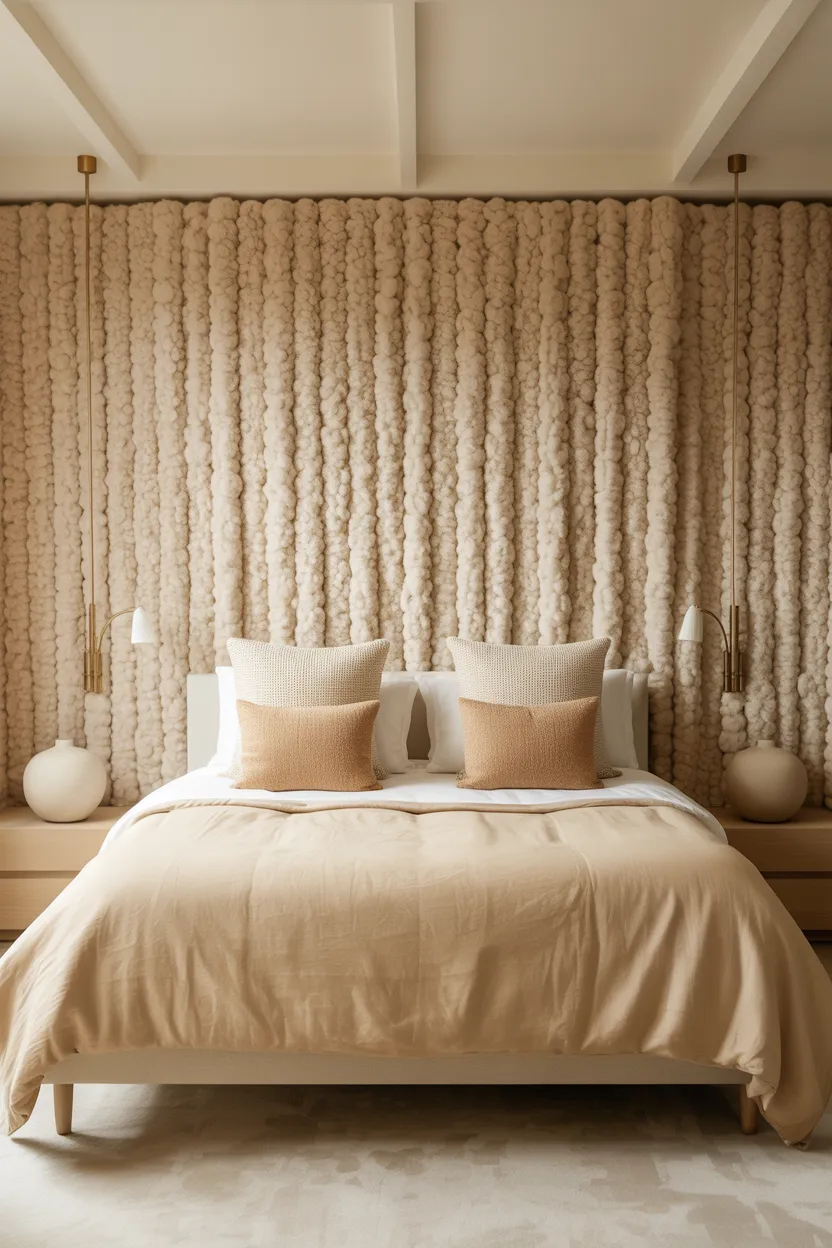
If you haven’t considered a bouclé upholstered headboard yet, 2026 is officially your year. Bouclé fabric — that gorgeous, loopy, textured weave — adds instant warmth and luxury to any bedroom without requiring a full renovation or a terrifying budget.
A floor-to-ceiling bouclé headboard in warm cream or soft caramel instantly becomes the room’s focal point. It draws your eye immediately, adds serious texture to what would otherwise be a flat wall, and makes the entire bed feel like a destination rather than just furniture you sleep on.
What makes bouclé so compelling is how it interacts with light. During the day, natural light catches every loop and curve of the fabric, creating subtle shadow and depth across the surface. At night, warm lamplight makes it glow softly and beautifully. You get two completely different moods from one single piece.
Pair a bouclé headboard with simple linen bedding in warm, earthy tones and keep the surrounding furniture clean and understated. The headboard does the heavy lifting — everything else just needs to support it without competing. This is one of those design decisions that genuinely transforms a bedroom overnight, no pun intended.
3. Linen Bedding as a Non-Negotiable
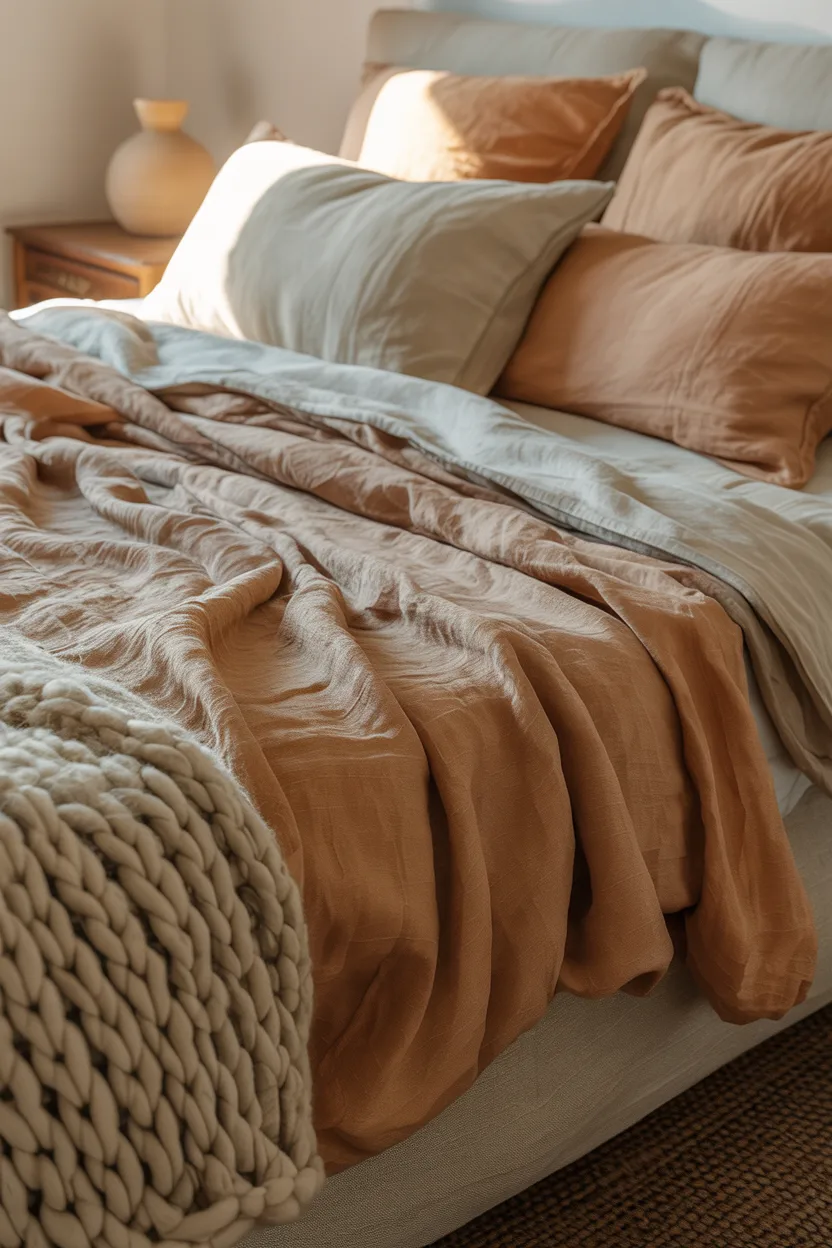
I cannot stress this enough — linen bedding changes everything. It breathes, it gets softer with every single wash, and it looks effortlessly beautiful even when it’s completely rumpled. Especially when it’s rumpled, honestly. That casual, lived-in look is exactly what makes linen so irresistible.
Linen bedding in earthy tones layers beautifully and creates that coveted relaxed-luxury aesthetic that hotels charge premium rates to deliver. Warm sand, dusty sage, faded terracotta, soft blush — all of these work magnificently in linen because the natural texture of the fabric adds depth to even the simplest color.
Also Read: 22 Family Backyard Layout Ideas 2026 for Easy Fun Days
IMO, this is the single highest-impact, most affordable bedroom upgrade you can make right now. A quality linen duvet cover and matching pillowcases will outlast cheaper synthetic alternatives by years, look better every time you wash them, and make your bed feel like somewhere you genuinely want to spend time.
Layer your linen bedding with a chunky knit throw blanket draped casually across the foot of the bed and a mix of pillow sizes in complementary tones. The combination of linen, cotton, and knit textures together creates a bed that looks warm, layered, and deeply inviting from across the room.
4. Warm, Layered Lighting
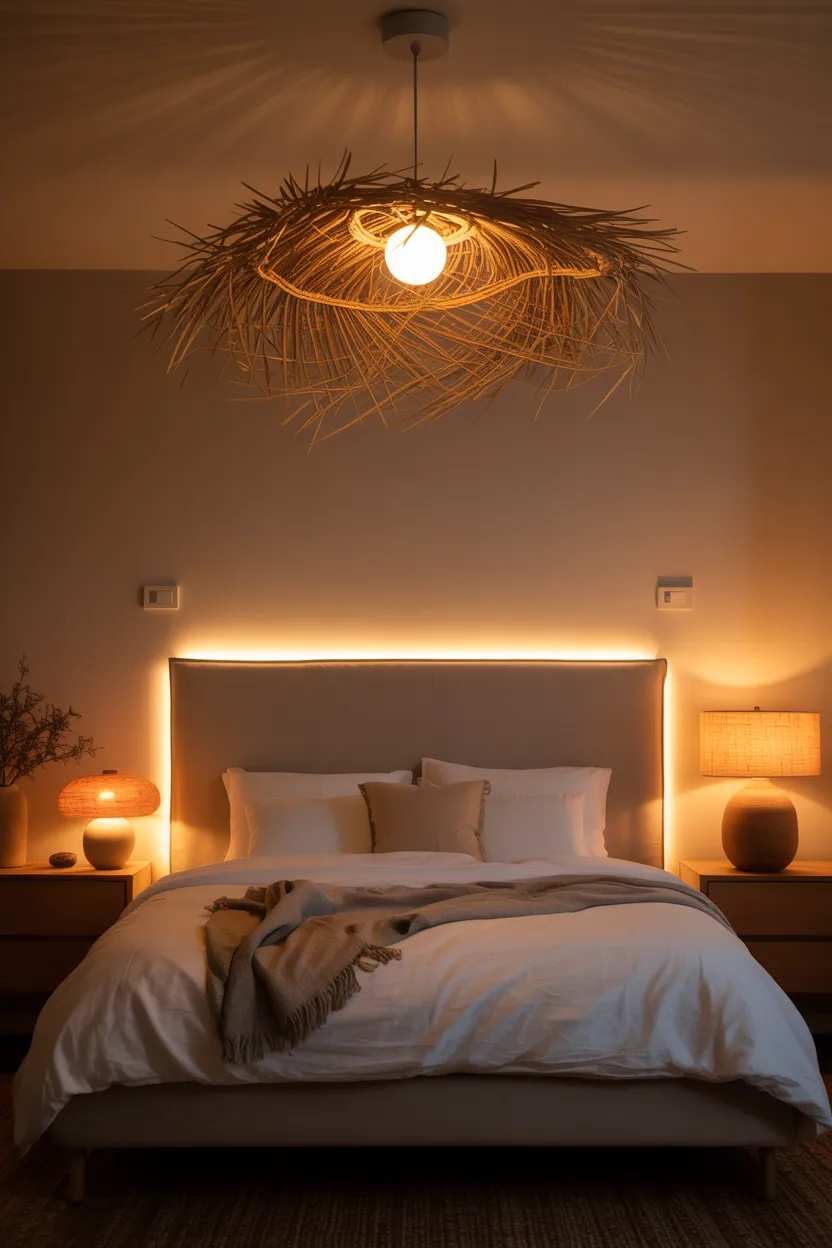
Overhead lighting in a bedroom is, frankly, a crime against comfort. One harsh ceiling light flattens the entire space, kills any sense of atmosphere, and makes your bedroom feel more like a changing room than a sanctuary. Layered lighting creates mood, warmth, and the kind of atmosphere that makes you want to stay in bed reading for three hours on a Sunday morning.
Here’s a layered bedroom lighting setup that actually works:
- Warm-toned bedside table lamps for intimate reading light
- A statement pendant light or chandelier for soft ambient glow
- Recessed LED strips behind the headboard for gentle accent lighting
- A dimmer switch controlling everything for full mood flexibility
- A small decorative lamp on a dresser or shelf for additional warmth
Each lighting layer serves a different purpose and a different time of day. Bright enough in the morning to help you function, warm and dim in the evening to signal to your brain that sleep is coming. Get rid of that harsh ceiling fixture and never look back.
The type of bulb matters just as much as the fixture itself. Always choose warm white bulbs in the 2700K range for bedrooms. Cool white bulbs belong in kitchens and bathrooms — not anywhere near a space designed for rest and relaxation.
5. Platform Beds With Low Profiles
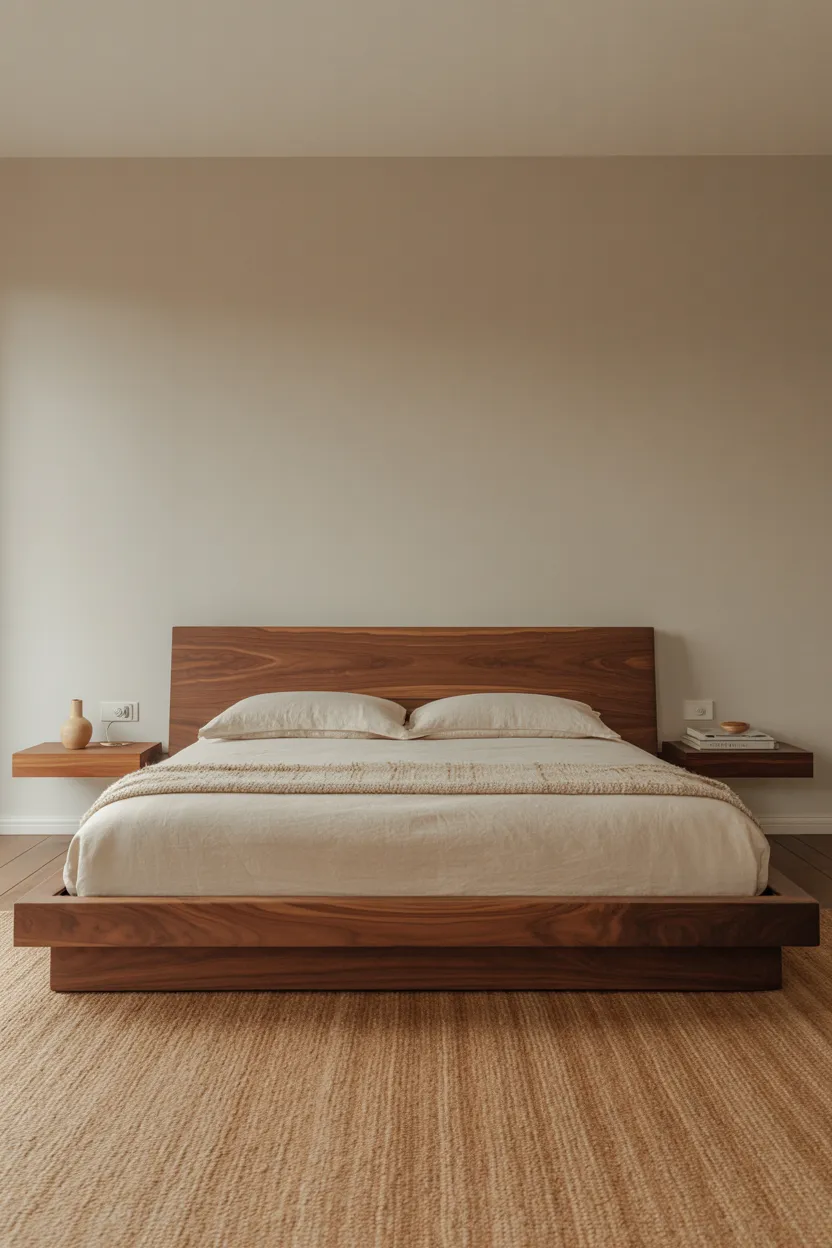
Low-profile platform beds continue their strong run into 2026 and they deserve every bit of the attention they get. They make ceilings feel dramatically higher, rooms feel more spacious, and the overall aesthetic feel grounded, calm, and completely intentional.
A solid wood platform bed in walnut or oak, sitting close to the floor with clean lines and no fussy decorative details, anchors a bedroom in the best possible way. There’s something about the low, horizontal line of a platform bed that makes a room feel settled and purposeful rather than cluttered and busy.
Platform beds also work beautifully with the warm minimalism aesthetic that defines 2026 bedroom design. The low profile means the bed doesn’t dominate the room visually — it sits within the space rather than commanding it, leaving room for other elements like lighting, art, and textiles to breathe.
Also Read: 21 Garden Wood Fence Ideas 2026 That Look Warm and Pretty
If you’ve been sleeping on a tall, chunky bed frame for years, switching to a low platform bed will genuinely surprise you. The room feels bigger, calmer, and more considered almost immediately. It’s one of those changes that sounds subtle but delivers a result that’s anything but.
6. Cozy Reading Nook in the Bedroom Corner
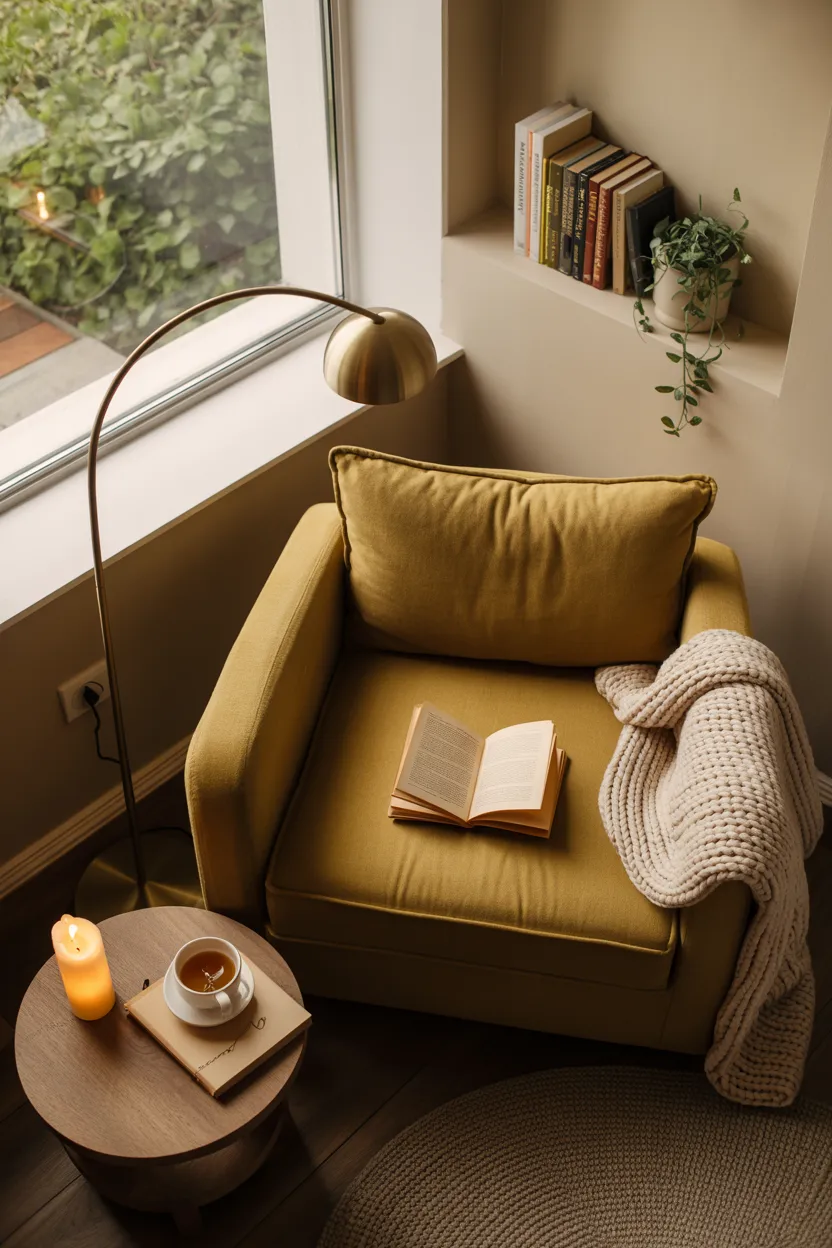
Why reserve reading nooks exclusively for living rooms? A dedicated reading corner in your bedroom transforms otherwise dead space into the most loved spot in your entire home. That empty corner beside the window that currently holds a chair you throw clothes on deserves better.
All you need to create a genuinely great bedroom reading nook is:
- A comfortable armchair or small loveseat in a soft, inviting fabric
- A floor lamp positioned directly beside it for focused reading light
- A small side table for your book, a warm drink, and a candle
- A cozy throw blanket draped over the arm within easy reach
- A small bookshelf or wall-mounted shelves within arm’s reach
That corner becomes your favorite place in the entire house once it exists. I created one in my own bedroom last year and I genuinely use it more than my sofa. There’s something about a reading nook inside a bedroom that feels more private, more personal, and more indulgent than any other reading spot in a home.
The key is making it feel genuinely comfortable rather than decorative. Choose a chair you can actually sink into, position the lamp so it lights the page without creating glare, and keep a small selection of books you actually want to read within reach. Function first, beauty second — though honestly, when you get both right, the result is pretty spectacular.
7. Japandi Bedroom Aesthetic
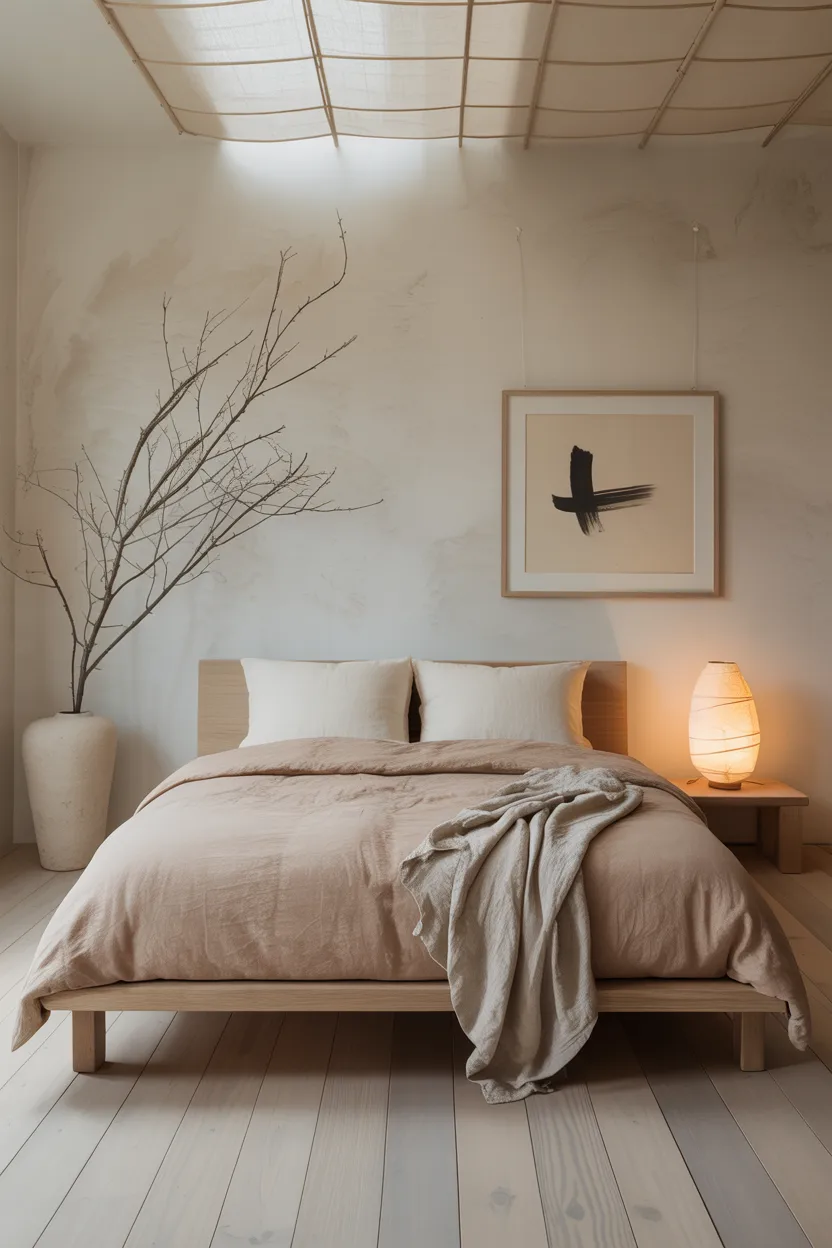
Japandi design works perhaps even better in a bedroom than anywhere else in the home. The entire philosophy — functional simplicity, natural materials, quiet beauty, and intentional restraint — aligns perfectly with everything a bedroom should feel and do.
Think low wooden bed frames with clean, honest joinery. Neutral linen bedding in warm oatmeal or soft white. A single sculptural ceramic lamp on a minimal wooden nightstand. One carefully chosen piece of art on an otherwise bare wall. Nothing in the room competes for your attention, and everything serves the single purpose of making rest feel effortless.
Also Read: 24 Zen Garden Ideas 2026 That Feel Calm and Peaceful
The natural material palette of Japandi design also contributes to a genuinely calming bedroom environment. Pale ash wood, natural linen, stone accents, woven rattan — these materials carry a quiet organic warmth that synthetic alternatives simply cannot replicate regardless of how well they’re styled.
What I love most about Japandi bedrooms is that they age beautifully. They don’t look dated in three years because they never chased a trend in the first place. They just look like good taste, consistently, year after year. That kind of design longevity is genuinely rare and genuinely worth pursuing.
8. Textured Walls That Add Depth
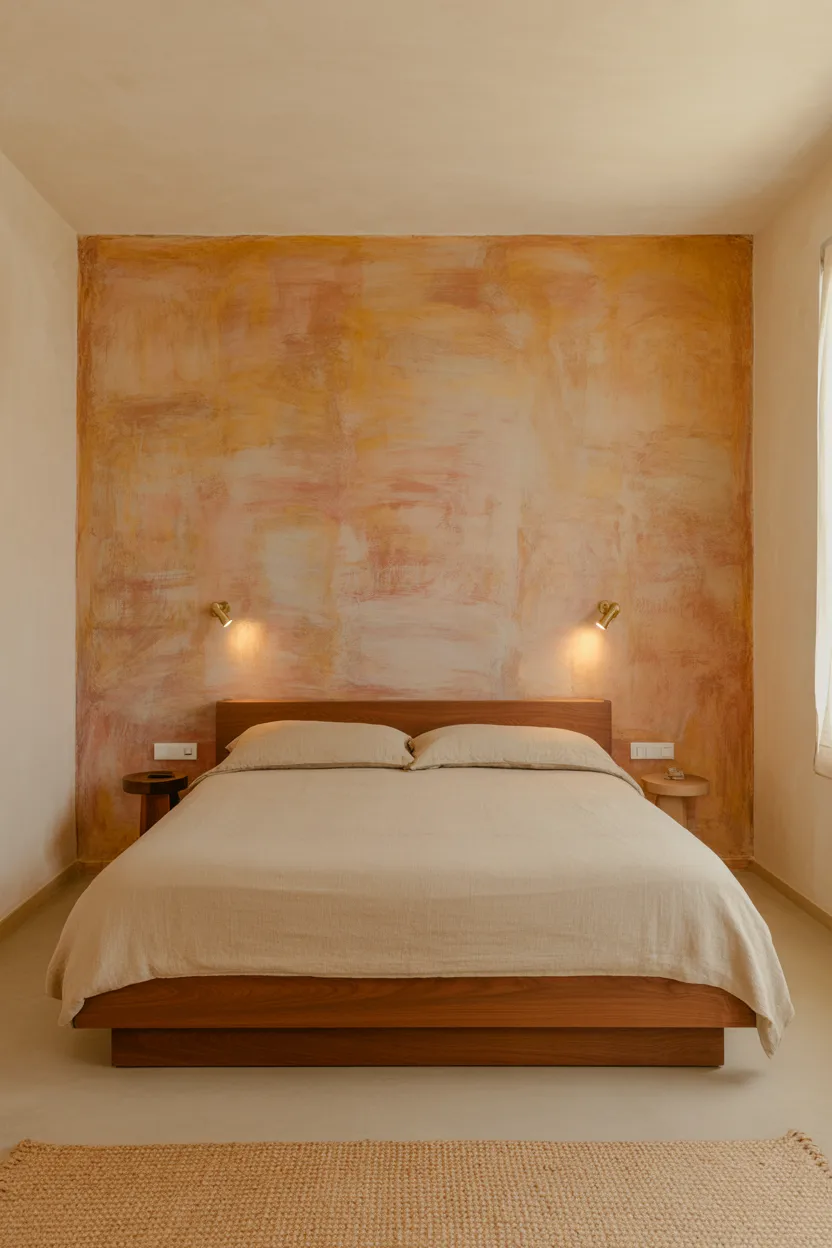
Flat painted walls get the job done, but textured walls take a bedroom from ordinary to genuinely beautiful in a way that photographs can’t fully capture. Limewash paint, Venetian plaster, and decorative panel walls all add tactile depth and visual richness that changes character as natural light moves across the surface throughout the day.
An accent wall behind the bed in limewash paint — in a tone like dusty rose, warm sand, or aged terracotta — creates a soft, organic backdrop that breathes and shifts with the light. In the morning it looks one way, in the afternoon another, and in warm lamplight at night it glows in a way that feels almost magical for a painted wall.
Venetian plaster takes more skill and budget to apply but delivers an extraordinary result. The polished, marbled surface catches light in a completely unique way and adds a quiet luxury to a bedroom that no wallpaper or flat paint can match. If your budget allows for it, consider hiring a skilled plasterer for the wall directly behind your bed.
Even decorative wooden panels — simple vertical or horizontal slats in a warm wood tone — add architectural texture and warmth to a bedroom wall. They work especially well in Japandi and warm minimalist bedrooms where the natural material language of wood feels completely at home.
9. Sustainable and Natural Materials
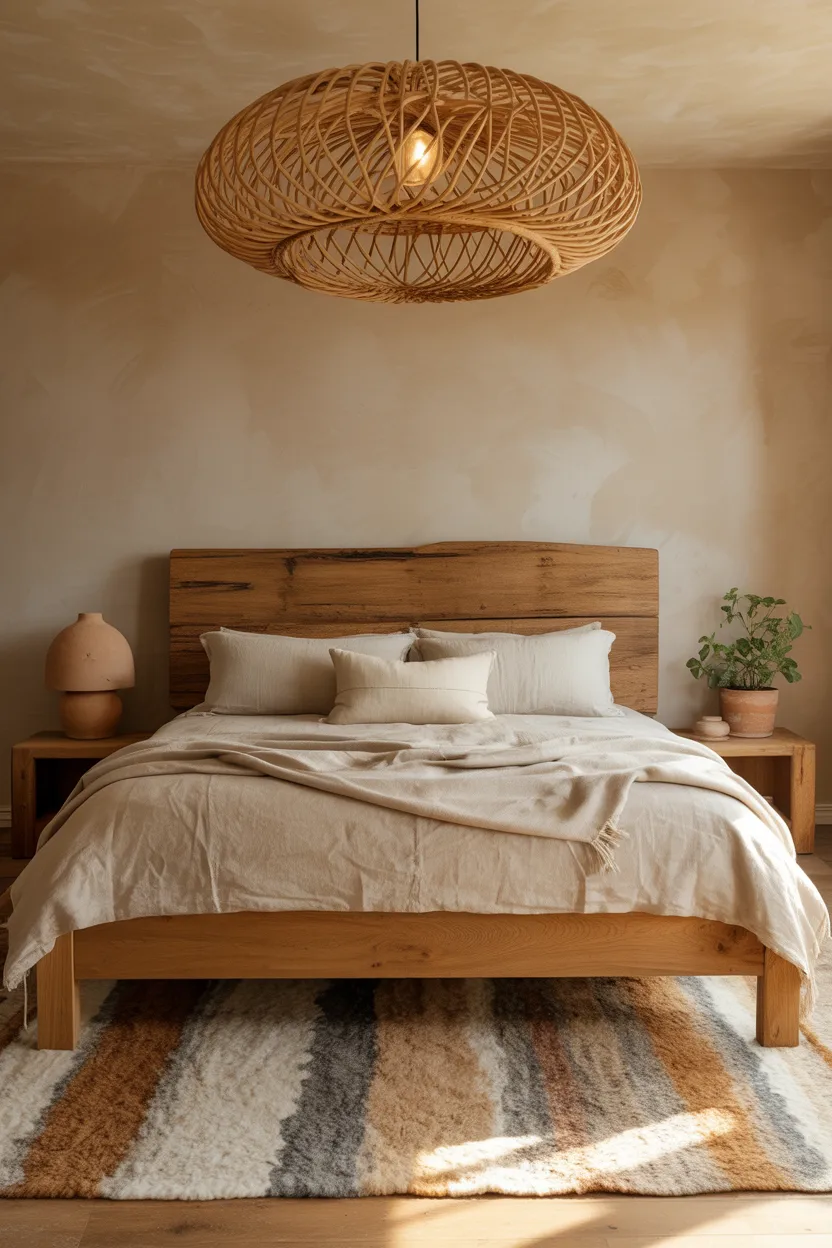
Natural materials in a bedroom — wood, linen, cotton, rattan, stone — create an environment that genuinely supports rest. There’s something deeply calming about surrounding yourself with materials pulled from the natural world rather than manufactured in a factory and finished with synthetic coatings.
Swap synthetic fabrics for natural linen and cotton wherever possible. Choose a solid wood bed frame over engineered composites that off-gas chemicals into your sleeping environment. Add a rattan pendant light or a hand-woven wall hanging that brings organic texture into the space. Each individual swap feels small, but together they accumulate into a bedroom that genuinely breathes differently.
Sustainable materials also tend to age more beautifully than their synthetic counterparts. Solid wood develops character over time. Linen softens and improves with every wash. Natural stone accents carry unique variations that mass-produced ceramic pieces never replicate. You invest once in quality natural materials and they reward you for years.
Beyond aesthetics, choosing sustainable materials for your bedroom matters. You spend roughly a third of your life in this room. The materials surrounding you during those hours directly affect your air quality, your comfort, and — honestly — your wellbeing. Natural materials in a bedroom aren’t just a design choice. They’re genuinely a quality of life choice.
10. Statement Pendant Light Above the Bed
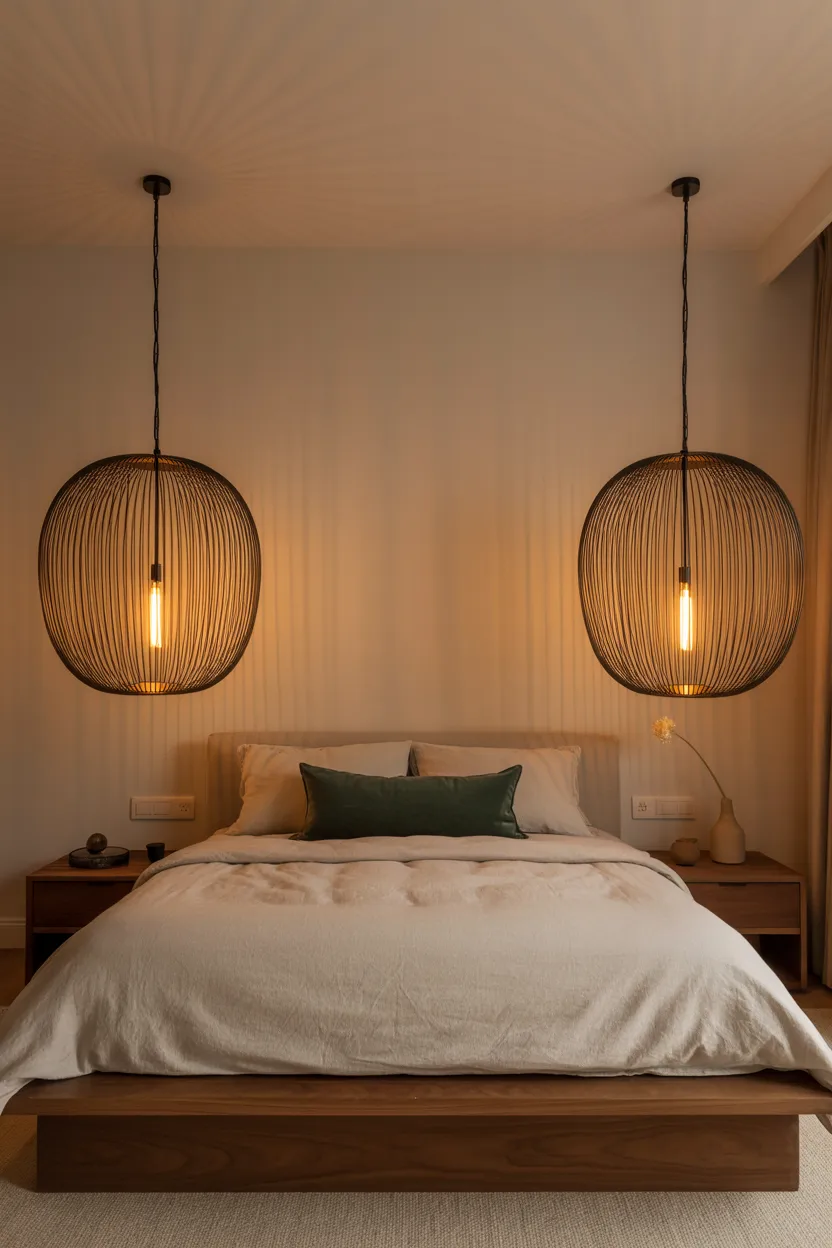
Bedside table lamps are great, but a statement pendant light centered above the bed adds architectural drama and visual interest that transforms the entire room’s atmosphere. It draws the eye upward naturally, creates an immediate focal point, and often eliminates the need for lamps crowding and cluttering your nightstands.
Sculptural rattan pendants work beautifully in warm, natural bedrooms. Aged brass cage lights add an industrial-meets-luxury edge to darker, moodier spaces. Simple oversized linen drum shades create a soft, diffused glow perfect for minimalist and Japandi-inspired bedrooms. The key is choosing a pendant that feels deliberate within the room’s overall aesthetic rather than random.
Hang your pendant lights low enough to feel intimate and personal but high enough to clear your head comfortably when you sit up in bed. Typically, the bottom of the shade should sit around 18 to 24 inches above your mattress surface. This height creates the perfect relationship between light source and sleeping space.
Also Read: 23 Outdoor Yoga Space 2026 Ideas That Feel Peaceful
If you’re hanging two pendants — one on each side of the bed instead of using bedside lamps — make sure they’re on dimmer switches. The ability to shift from bright enough to read by to soft enough to fall asleep easily is what separates a well-designed bedroom lighting plan from one that just looks good in photographs.
11. Curtains That Pool on the Floor
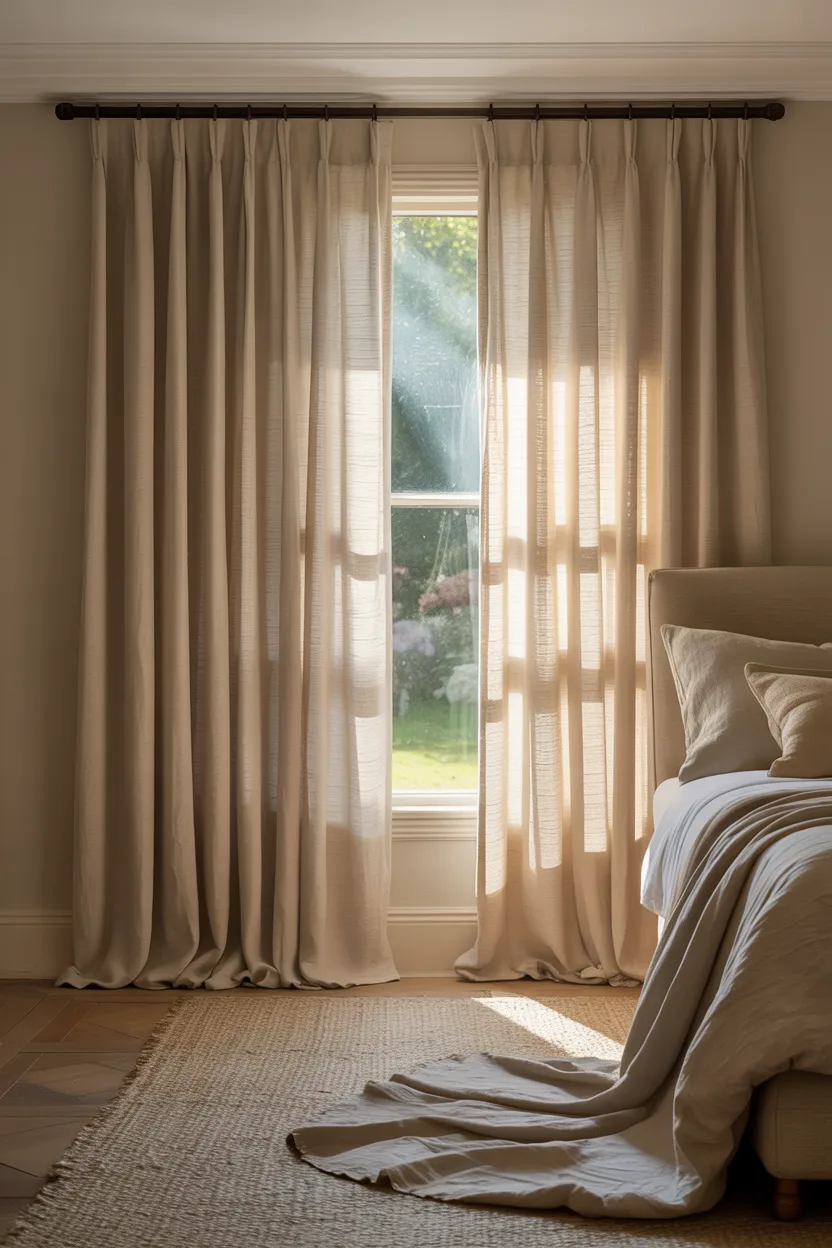
Floor-length curtains that pool slightly on the floor add an undeniable sense of luxury, softness, and considered design to any bedroom. They frame windows with drama, make ceilings feel dramatically taller, and soften the hard edges of walls and furniture in a way that nothing else quite manages.
Hang your curtain rod as close to the ceiling as physically possible — not just a few inches above the window frame. This single, completely free design trick transforms the perceived height and scale of your entire bedroom instantly. It’s genuinely one of the most impactful changes you can make without touching paint or furniture.
Choose curtain fabrics that suit the bedroom’s light needs and aesthetic. Heavy linen or velvet curtains in deep tones create a cocooning, blackout effect perfect for dark, moody bedrooms. Sheer linen panels in warm ivory or natural white filter light beautifully while maintaining a soft, dreamy quality that works in almost any bedroom style.
Let the curtains pool on the floor by two to three inches rather than cutting them to sit exactly at floor level. That deliberate pool of fabric reads as luxurious rather than like a measuring mistake. It’s a detail that separates a bedroom that looks styled from one that looks like you simply hung curtains without thinking about it.
12. A Dramatic Dark Bedroo
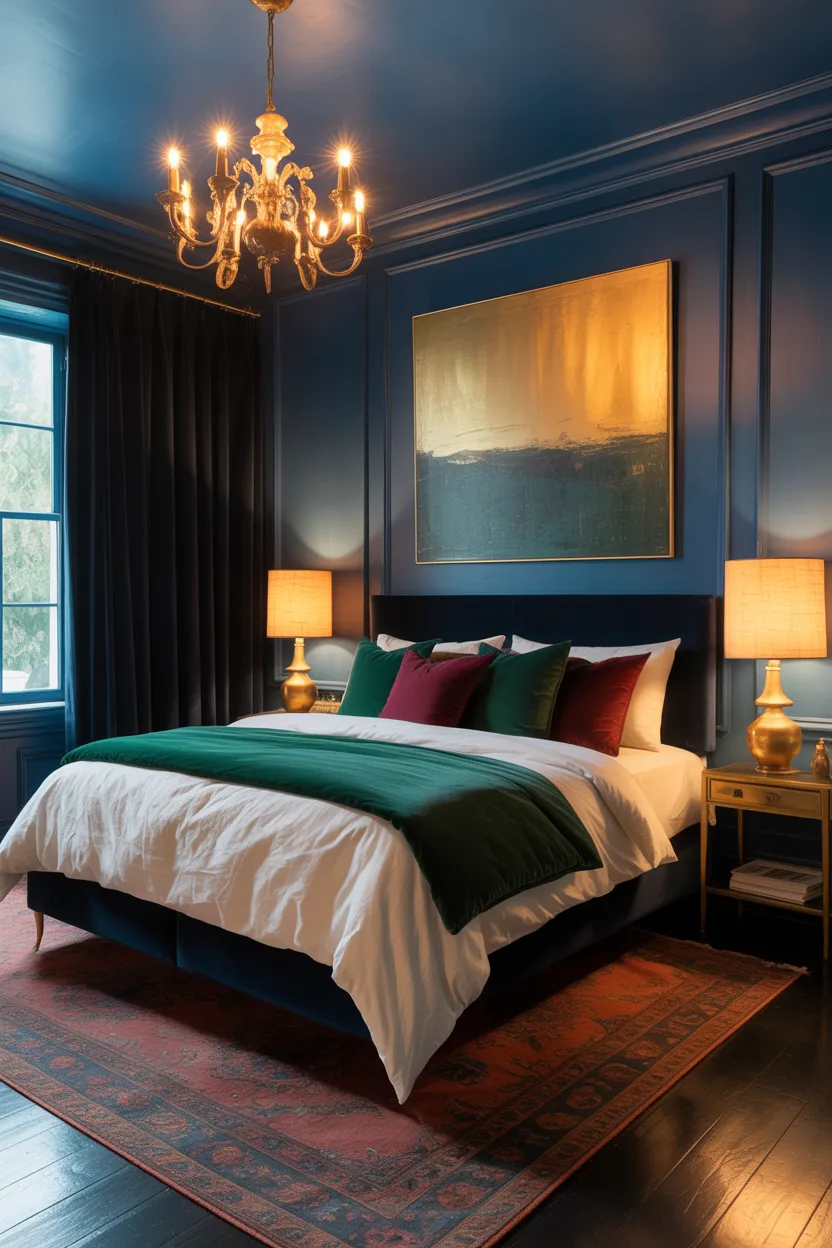
Dark bedrooms used to make people genuinely nervous. The fear of making a room feel small, cold, or cave-like kept most people reaching for pale, safe wall colors that technically worked but never really excited anyone. Deep, moody tones — navy blue, forest green, charcoal, deep plum — create an incredibly immersive, cocoon-like atmosphere that is, in my opinion, perfect for sleep and genuine relaxation.
The key to making a dark bedroom feel sumptuous rather than oppressive lies entirely in the materials and lighting you pair with the dark walls. Warm brass hardware and fixtures pull gold warmth from dark backdrops beautifully. Soft velvet textures in jewel tones absorb light in a way that feels rich rather than heavy. Warm, dim lighting at the right points in the room creates depth and intimacy rather than darkness.
A deep navy bedroom with warm brass pendant lights, ivory linen bedding, a chunky cream wool throw, and a large vintage-style rug in warm reds and golds feels like the most sophisticated hotel suite you’ve ever stayed in. The dark walls recede and the warm elements glow against them, creating a room that feels both dramatic and deeply comfortable. 🙂
Also Read: 24 Low Maintenance Garden Ideas 2026 That Still Look Amazing
Don’t let anyone talk you out of a dark bedroom if it’s something you’re genuinely drawn to. The people who make this design decision almost universally love the result. It’s the people standing on the outside looking at a paint chip who feel nervous — not the people actually living inside the finished room.
13. Organic and Curved Furniture Shapes
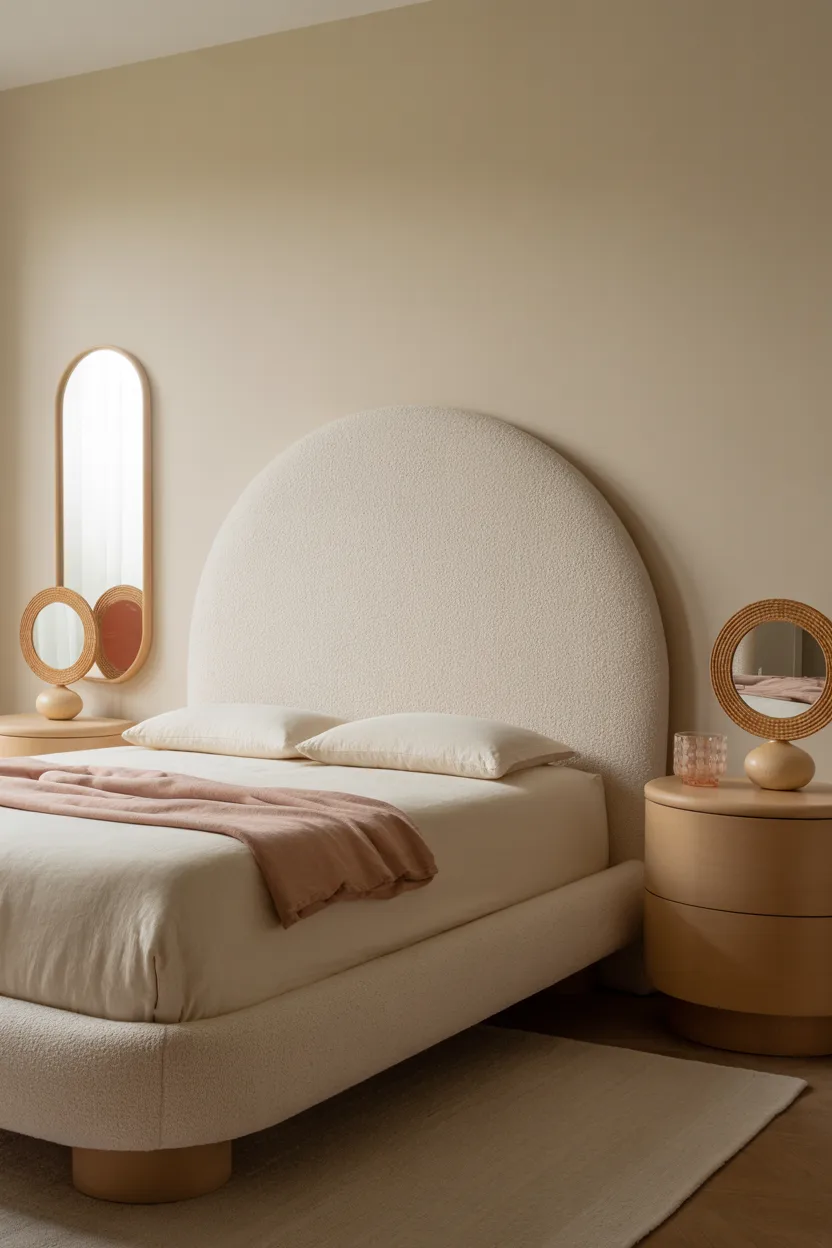
Sharp edges and rigid geometric lines belong in offices and boardrooms, not in spaces designed for rest. Organic, curved furniture shapes — rounded nightstands, oval mirrors, arched headboards, and softly curved dressers — soften a bedroom and create a gentle, flowing atmosphere that feels genuinely restful.
A curved wooden nightstand beside a simple platform bed looks quietly sophisticated without requiring any additional styling effort. The rounded form does the visual work on its own. Add a round mirror above it and a small ceramic lamp with an organic silhouette, and you have a bedside vignette that looks genuinely beautiful without trying too hard.
Arched headboards deserve special mention because they add architectural interest to the bed in a way that rectangular headboards simply don’t. The arch draws the eye upward, creates a soft frame around the sleeping space, and photographs magnificently. Paired with a limewash accent wall and warm linen bedding, an arched headboard transforms a bed into a genuine design moment.
The broader point here is that a bedroom full of hard, angular furniture creates a visual tension that works against rest. Softening even a few key pieces — choosing curved over rectangular where possible — changes the entire energy of the room in a way that feels subtle but registers deeply on a subconscious level.
14. Maximizing Small Bedroom Spaces
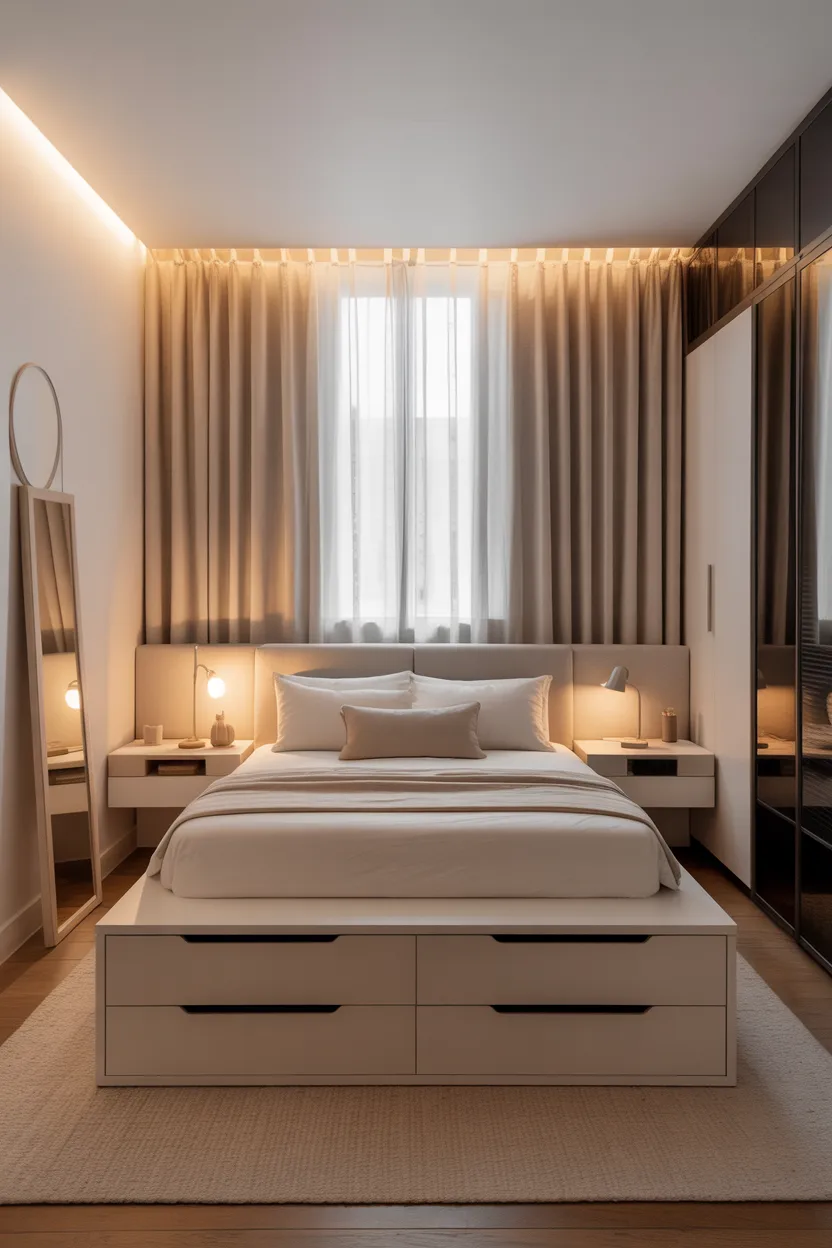
Small bedrooms need smart design far more urgently than large ones do. Without intentional planning, a small bedroom quickly becomes cluttered, cramped, and frustrating to live in. Built-in storage, under-bed drawers, wall-mounted shelving, and multi-functional furniture keep small bedrooms feeling spacious, calm, and genuinely liveable rather than like a well-decorated cupboard.
Here’s what works brilliantly in small bedroom spaces:
- A bed frame with built-in storage drawers underneath for hidden, accessible storage
- Wall-mounted floating nightstands that free up valuable floor space visually
- A full-length mirror positioned to reflect light and visually double the room’s depth
- Curtains hung high and wide to maximize the perceived size of windows
- A slim wardrobe with mirrored doors that serves double duty as storage and space expander
- Light, warm wall colors that push walls outward rather than closing them in
Every design decision in a small bedroom should serve at least two purposes. Storage that looks beautiful. Furniture that functions smartly. Lighting that creates the illusion of space. Small bedrooms reward thoughtful design more generously than any other room in the home.
15. Biophilic Touches for Better Sleep
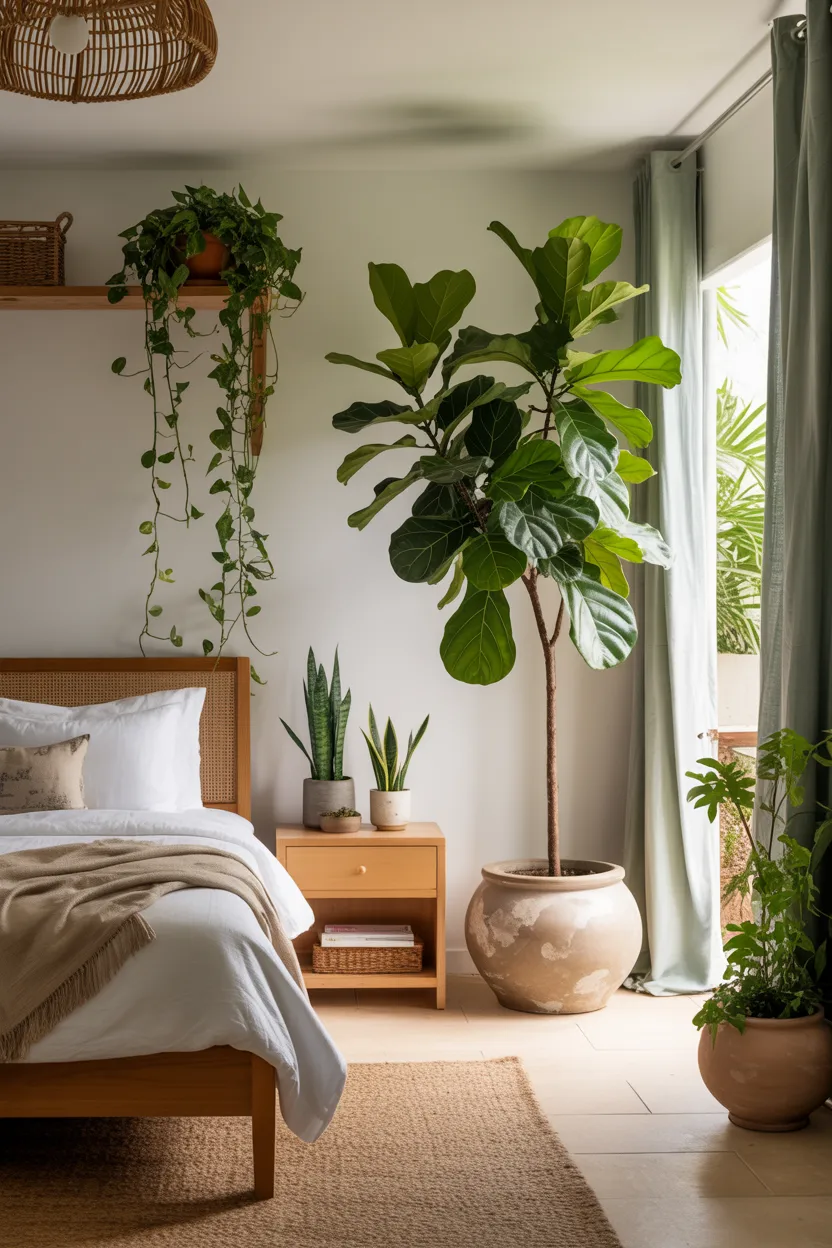
Plants in a bedroom improve air quality, reduce stress, and add natural beauty that no manufactured object can replicate regardless of how carefully it’s designed or how much it costs. A few well-chosen plants transform a bedroom from a place you merely sleep into a place you genuinely want to spend time in.
Good bedroom plant choices that actually thrive in lower light conditions include:
- Snake plants — low maintenance, air purifying, and architecturally beautiful
- Pothos — trailing, lush, incredibly forgiving of neglect
- Peace lilies — beautiful white blooms, shade tolerant, and genuinely calming
- Small fiddle leaf figs — dramatic, sculptural, and undeniably statement-making
- ZZ plants — nearly indestructible and elegantly glossy
FYI, you don’t need a green thumb to keep bedroom plants alive. You just need to choose plants that match your actual care level honestly rather than your aspirational care level. One thriving plant beats five struggling ones every single time.
Also Read: 21 Outdoor Meditation Space 2026 Ideas for Daily Calm
Beyond plants, biophilic design in a bedroom extends to natural materials, organic shapes, and views of the outdoors. Position your bed to face a window with a garden or tree view if possible. Use natural wood, stone, and linen throughout. Even small gestures toward the natural world create measurable improvements in how restful a bedroom feels.
16. Wabi-Sabi Inspired Bedroom Design
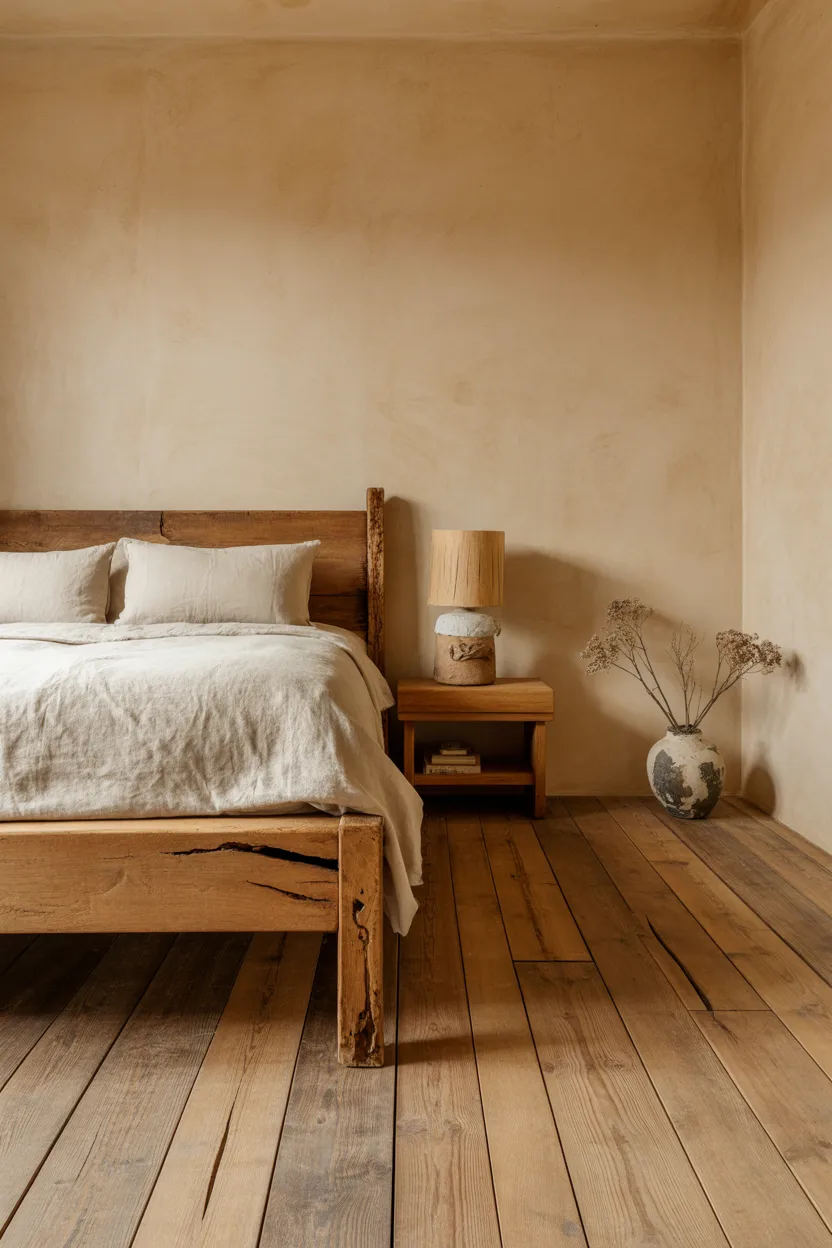
Wabi-sabi — the Japanese philosophy of finding beauty in imperfection and embracing the natural cycle of growth and decay — translates with surprising elegance into bedroom design for 2026. Raw textures, natural imperfections, aged materials, and a deep intentional simplicity define this aesthetic in a way that feels both ancient and completely current.
A wabi-sabi bedroom might feature a handmade ceramic lamp with visible thumb marks in the clay, a linen duvet with natural color variations running through the weave, a wooden floor with visible knots and grain that nobody sanded away, and walls with an imperfect plaster finish that shifts and breathes rather than presenting a flat, uniform surface.
Nothing in a wabi-sabi bedroom pretends to be perfect. And that’s precisely what makes it feel so genuinely beautiful and so deeply human. In a world increasingly dominated by mass production and flawless finishes, a bedroom that celebrates imperfection feels radical and deeply comforting at the same time.
This aesthetic also takes enormous pressure off the design process. You stop looking for perfect and start looking for real. That vintage wooden nightstand with a small chip on the corner? It belongs here. The handmade ceramic vase that sits slightly lopsided? It’s perfect exactly as it is. Wabi-sabi gives you permission to find beauty in honesty, and that’s a genuinely liberating design philosophy to build a bedroom around.
17. Scent as Part of the Bedroom Design
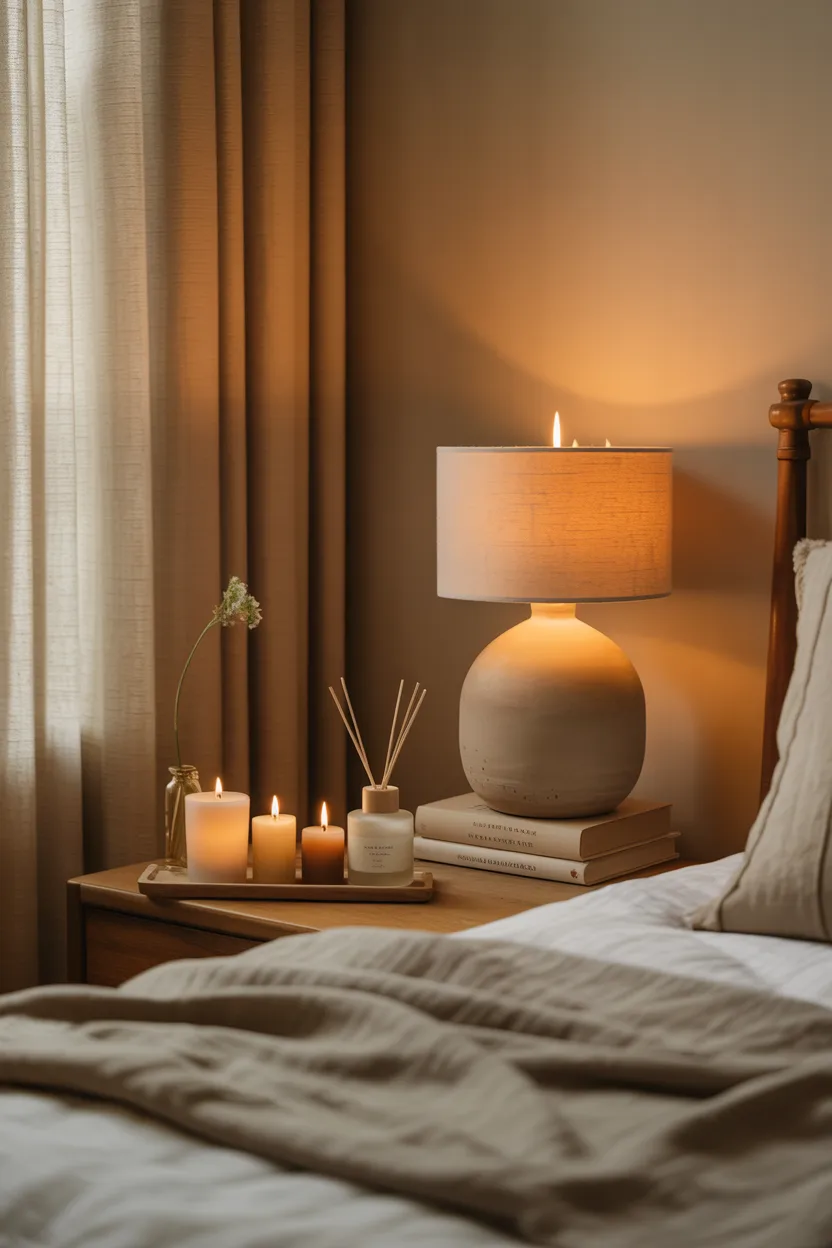
This idea doesn’t show up on enough bedroom design lists, and it absolutely should because it matters more than most people realize. Scent plays a powerful role in how a bedroom feels — arguably as powerful as color, lighting, or furniture in shaping the overall sensory experience of the space.
A consistently beautiful bedroom scent created through quality candles, reed diffusers, or linen sprays in calming notes like lavender, sandalwood, cedarwood, or bergamot establishes a sensory environment that genuinely and measurably supports rest and relaxation. Scent triggers emotional responses faster than any other sense. The right scent tells your brain and nervous system that this space is safe, calm, and designed for rest.
Choose one or two complementary scent notes and stay consistent with them throughout your bedroom. Consistency matters because your brain begins to associate that particular scent combination with sleep and relaxation over time, strengthening the signal every time you encounter it. It’s essentially training your nervous system to wind down automatically when you enter the room.
Your bedroom should engage all five senses thoughtfully — not just the visual ones. Beautiful to look at, warm and soft to touch, calm and clean to smell, quiet enough to hear your own thoughts. When you design for all five senses rather than just the one, you create a bedroom experience rather than just a bedroom aesthetic.
18. Artisanal Bedroom Accents
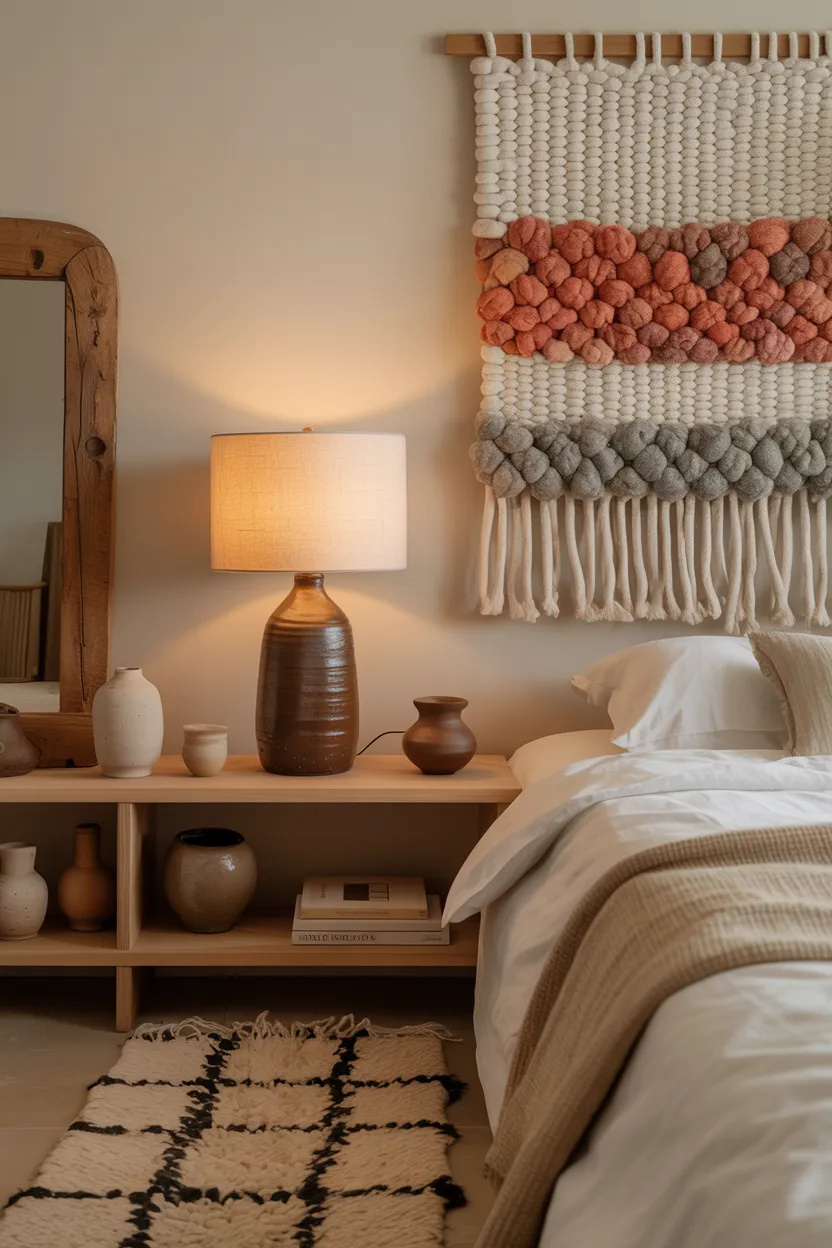
Handcrafted, artisanal objects bring irreplaceable warmth and individual character to a bedroom that mass-produced décor from large retail chains simply cannot replicate regardless of how beautifully it photographs on their website. A handmade ceramic lamp base, a hand-woven wall hanging in natural cotton, a locally crafted wooden mirror frame — these objects carry the energy and intention of the human hands that made them.
Shop local markets, independent makers, small online shops, and estate sales for bedroom accents that carry genuine character. The pieces you find through these channels will mean more to you personally, look more visually interesting within the room, and outlast mass-produced alternatives in both quality and relevance.
Also Read: 22 Mediterranean Garden Style 2026 That Feels Like Vacation
A handmade ceramic bedside lamp with an organic, asymmetric form beside a simple linen-covered bed creates a quiet beauty that a factory-produced lamp with perfect symmetry never achieves. The slight imperfection, the unique glaze variation, the visible evidence of human craft — these qualities make an object genuinely interesting rather than simply functional.
Artisanal accents also make excellent conversation pieces when people see your bedroom. There’s a significant difference between pointing to a décor item and saying “I got it from a big chain store” versus “I found this at a local ceramicist’s market stall.” One of those stories adds depth to the object and to the room. The other doesn’t.
19. Monochromatic Bedroom Palettes
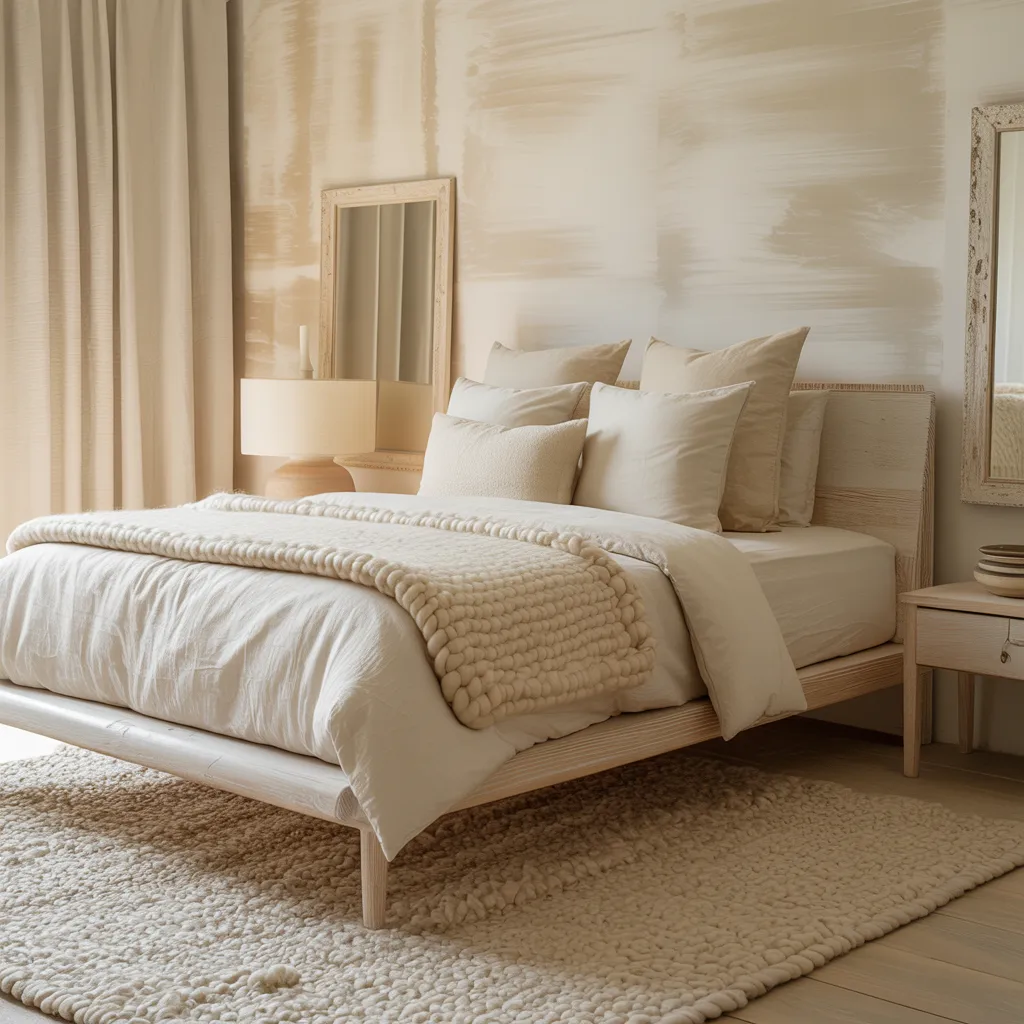
A monochromatic bedroom — built entirely from one color family expressed across varying tones, depths, and textures — creates an incredibly sophisticated, calming, and visually cohesive space. It sounds restrictive at first but actually gives you enormous creative freedom within a clearly defined and harmonious palette.
Try building an entire bedroom in warm whites and creams. Walls in warm white. Linen bedding in natural cream. A bouclé headboard in warm ivory. A wool rug in soft sand. Wooden furniture in pale ash. Curtains in antique white linen pooling on a bleached oak floor. The variation in texture across all these warm neutral tones keeps the room visually rich and layered while the unified color story keeps the overall atmosphere utterly serene and completely restful.
The same approach works beautifully in other color families. A bedroom built entirely in varying tones of sage green — from pale mint walls to deep eucalyptus velvet cushions, with every green in between represented in different materials and textures — feels like sleeping inside a quiet forest clearing. Cohesive, immersive, and genuinely beautiful.
The secret to making monochromatic bedrooms feel dynamic rather than flat is texture variation. When your colors all share the same family, the visual interest must come from material contrast. Smooth linen beside chunky wool. Matte plaster walls beside glossy ceramic accents. Rough natural wood beside soft velvet. Texture does the heavy lifting that color contrast normally handles, and it does it beautifully.
20. Bedroom Gallery Wall Done Beautifully
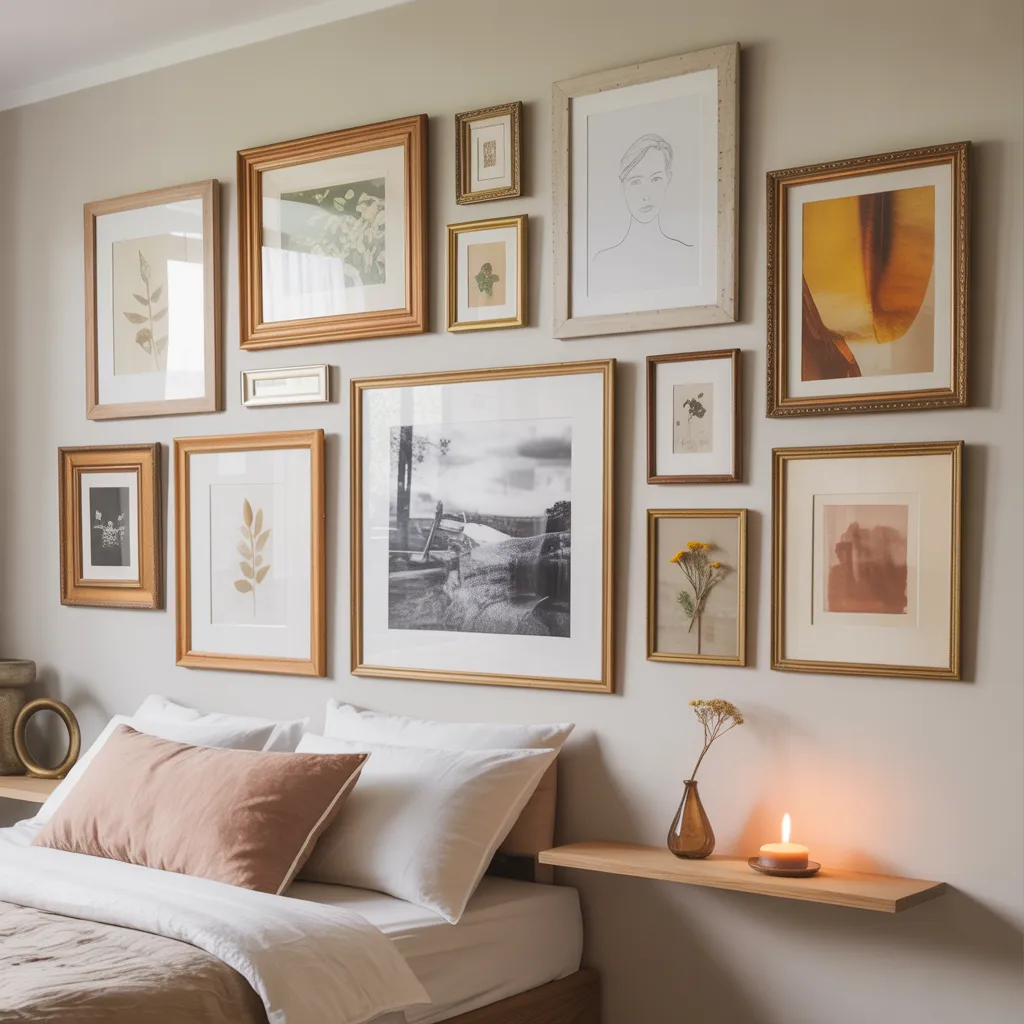
A gallery wall in a bedroom works best when it feels personal, calm, and quietly intimate rather than bold, busy, or visually overwhelming like a gallery wall in a living or dining room might intentionally be. The bedroom version should feel like looking at a soft, curated dream — personal, gentle, and beautifully considered.
Soft botanical prints, black and white personal photographs, simple line drawings of meaningful places or people, small abstract works in muted tones, and pressed flower or leaf art all work magnificently in a bedroom gallery wall context. Every piece should feel personally meaningful rather than decoratively generic.
Keep the color palette of all your chosen artwork consistent with the room’s overall tones. If your bedroom palette runs warm and earthy, choose artwork with warm undertones. If your bedroom is soft and cool, select pieces with the same temperature. A gallery wall where every piece shares a tonal relationship with the room feels curated and intentional. One where the artwork ignores the room’s palette feels like an afterthought.
Frame selection matters significantly in a bedroom gallery wall. Choose frames in one or two complementary materials — warm oak wood and aged brass work beautifully together, for example — rather than mixing multiple frame types randomly. Consistency in framing creates cohesion across even the most eclectic collection of artwork and makes the overall display feel considered rather than haphazard.
21. The Power of a Truly Excellent Rug
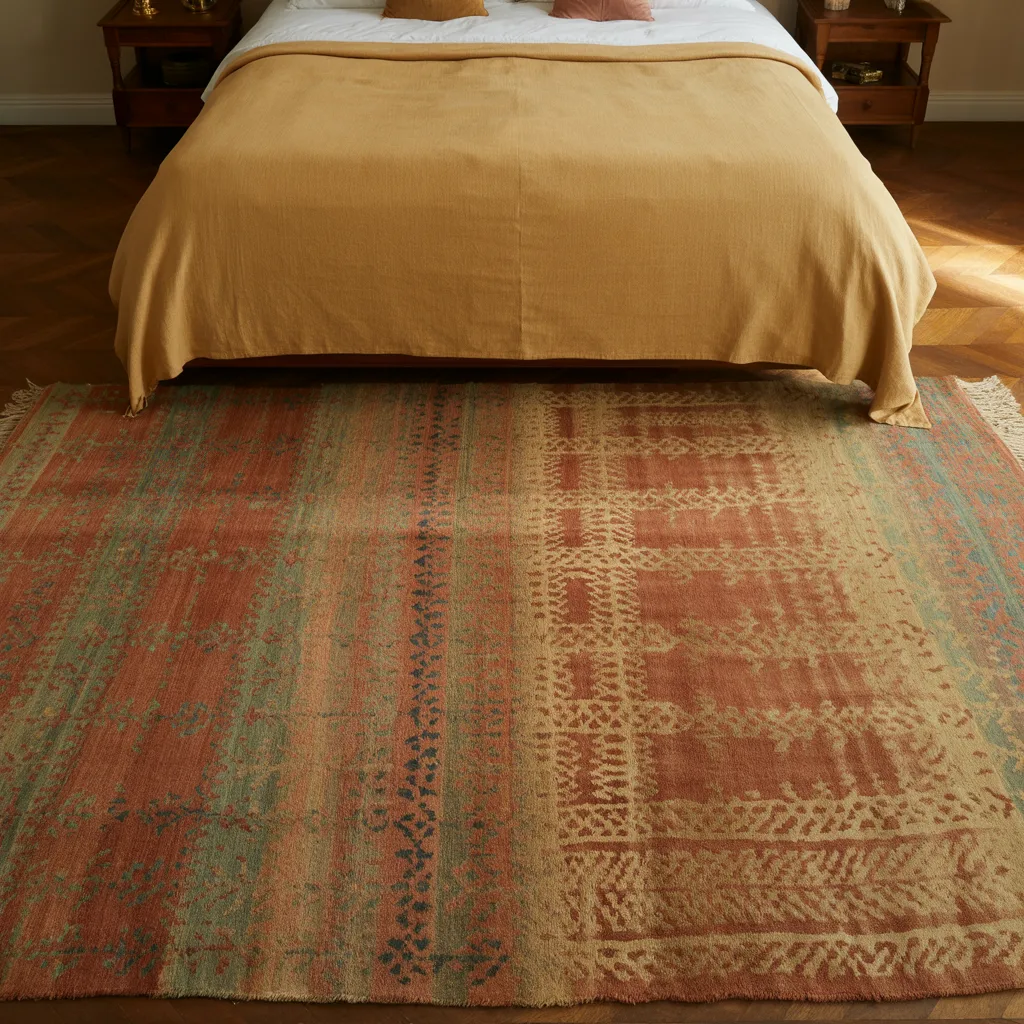
Every bedroom genuinely needs a rug, and the right rug transforms the entire feel of the space in a way that goes far beyond aesthetics. There’s something profoundly satisfying about stepping out of bed on a cold morning and landing on something warm, soft, and beautiful rather than cold hardwood or chilly tile.
Choose a rug large enough so that both sides of the bed and the foot of the bed all sit comfortably on its surface. This sizing rule is critically important and universally ignored, which is why so many bedrooms look slightly off without the homeowner being able to identify exactly why. A rug that stops short of the bed’s sides makes even a beautifully designed bedroom feel poorly planned and visually disconnected.
For texture, consider a high-pile wool rug that feels genuinely luxurious underfoot first thing in the morning. A hand-knotted Moroccan rug in warm neutrals adds pattern and character without overwhelming the room. A simple flat-weave cotton rug in a subtle tone-on-tone pattern works beautifully in minimalist spaces where texture elsewhere in the room provides sufficient visual interest.
Go generous with your rug budget if you can only prioritize one element of your bedroom redesign. A spectacular rug beneath an otherwise modest bed and simple furniture creates a bedroom that looks and feels elevated. An expensive bed on a cheap, undersized rug creates a bedroom that feels like it’s missing something important — because it genuinely is.
Making It All Work Together
Here’s the honest truth — you don’t need all 21 ideas happening simultaneously in your bedroom. That approach produces a room that feels like a design experiment rather than a sanctuary, and the whole point of a bedroom is that it feels like yours.
Choose five ideas that genuinely excite you and build your bedroom thoughtfully around those specific choices. Maybe it’s the bouclé headboard, the layered lighting setup, the linen bedding, a dark moody wall color, and a reading nook in that neglected corner. That combination alone creates a bedroom most people only ever see in design magazines.
The best bedroom ideas for 2026 share one quality — they prioritize how the room makes you feel over how it photographs. Cozy, beautiful, personal, and deeply restful wins every single time over perfectly styled but emotionally empty. Your bedroom is the first thing you see in the morning and the last thing you see at night. It should make both of those moments genuinely wonderful. And if it doesn’t quite yet? Well, now you’ve got 21 very good places to start.

2 Comments