

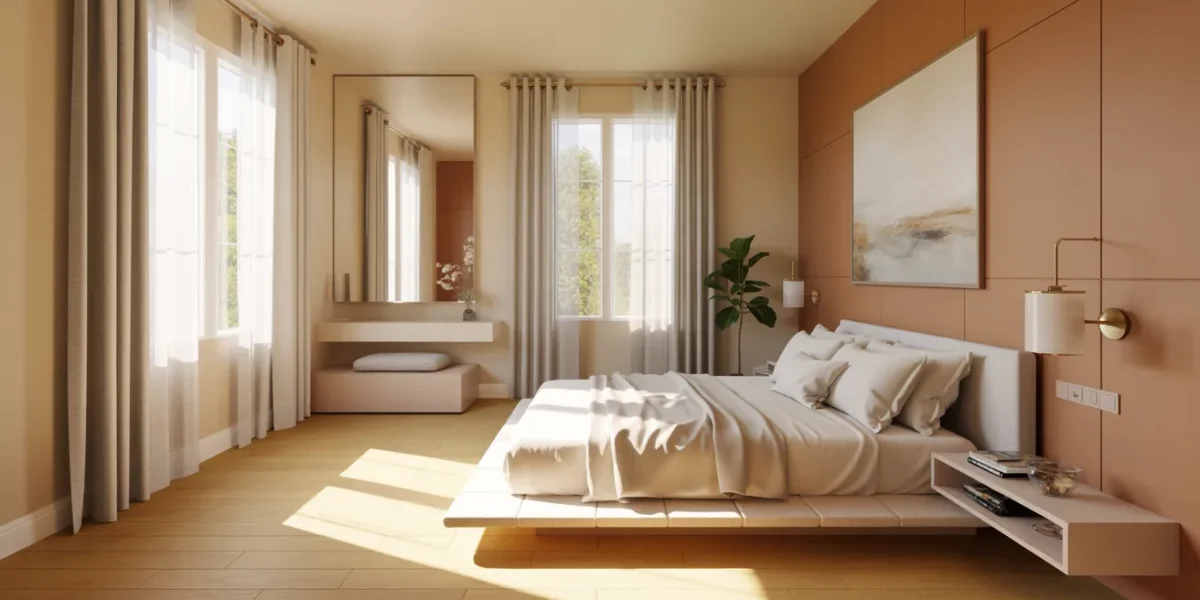
Small bedrooms have a reputation for being frustrating, limiting, and honestly a little soul-crushing when you have no idea where to start. But here’s what most people completely miss — a small bedroom isn’t a design problem. It’s a design challenge, and those are actually way more interesting to solve than people give them credit for. I’ve personally lived in a bedroom so small that opening the wardrobe door meant standing on the bed first, so trust me when I say I’ve tested most of these ideas out of genuine necessity rather than casual curiosity. This guide gives you 22 genuinely effective small bedroom ideas for 2026 that make your space look and feel significantly bigger without touching a single wall.
1. Choose a Light and Airy Color Palette
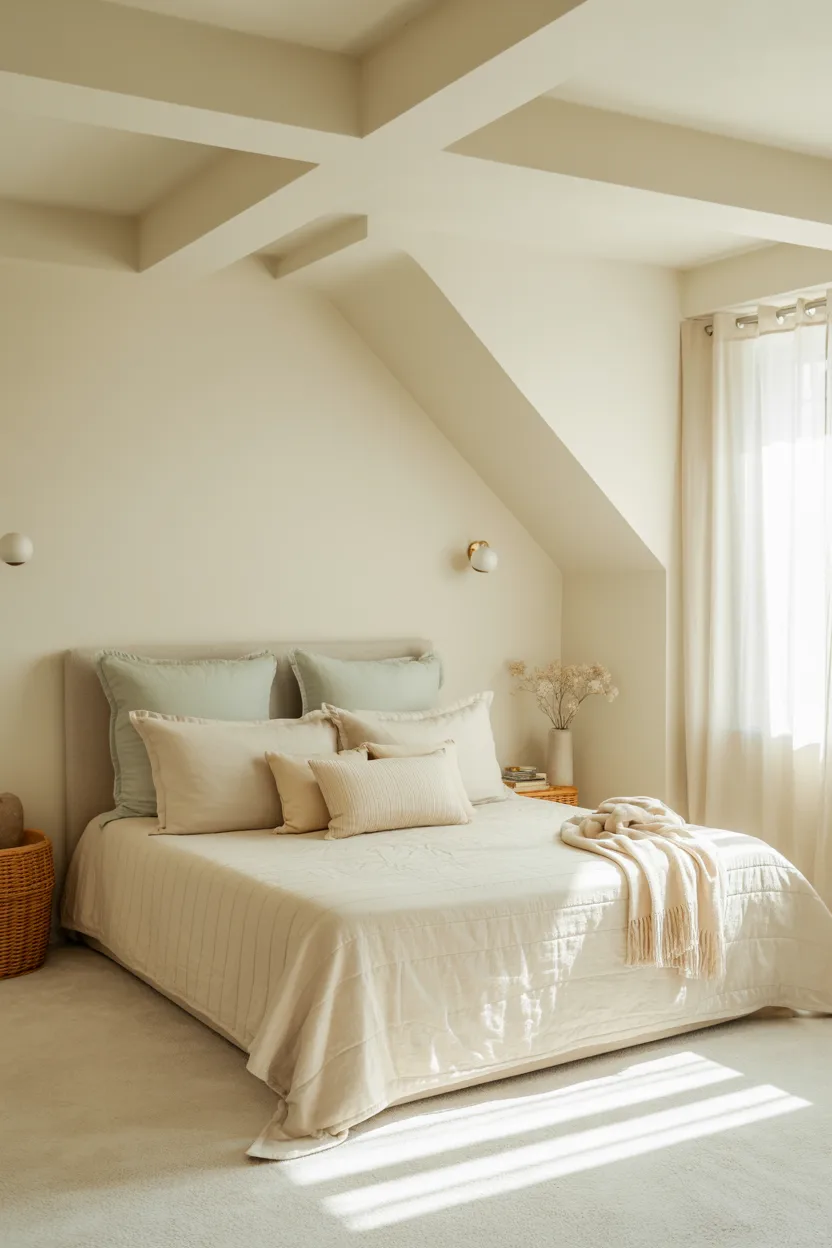
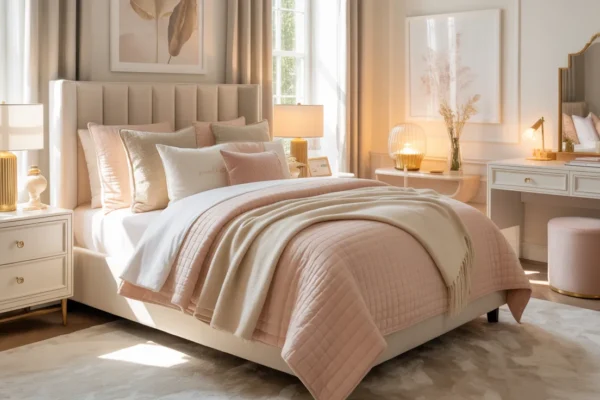
Light colors are the oldest trick in the small bedroom playbook, and they work every single time without fail. Soft whites, warm creams, pale sage greens, and gentle blush tones reflect natural light around the room rather than swallowing it whole. The result is a space that feels open, breathable, and considerably larger than its actual dimensions ever suggest.
Dark colors do the complete opposite. They absorb light and pull the walls inward, which feels wonderfully cozy in a large room and genuinely suffocating in a small one. Save the dramatic charcoal and deep navy for accent cushions and throws rather than painting entire walls with them.
Also Read: 20 Modern Bathroom Ideas 2026 That Feel Clean and Relaxing
The ceiling matters just as much as the walls here, and most people completely ignore it. Painting the ceiling the same tone as the walls removes the visual boundary overhead and creates a sense of continuous space rather than a room with a lid on it.
- Soft white and warm cream open the space up almost immediately
- Pale sage green adds freshness without adding any visual weight
- Light blush tones feel modern, warm, and airy at the same time
- Paint the ceiling the same color as the walls to eliminate harsh visual boundaries overhead
IMO, the ceiling color trick is the single most underrated small bedroom idea that almost nobody actually tries. The difference it makes to the perceived height of a room is genuinely surprising the first time you experience it.
2. Use Mirrors Strategically
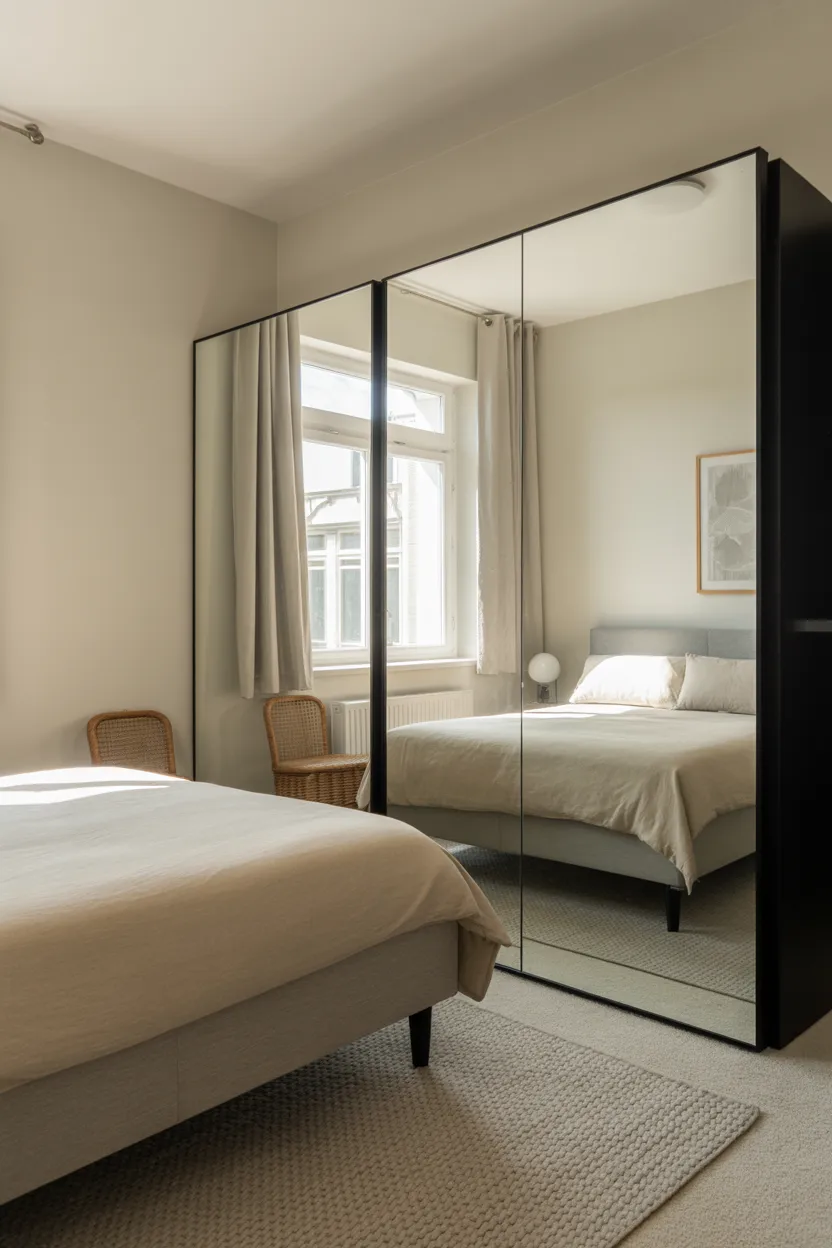
Mirrors are essentially free square footage, and every small bedroom needs at least one large one working hard somewhere in the space. A full-length mirror or a large wall-mounted mirror reflects both natural and artificial light back across the room, doubling the perceived brightness and creating the convincing illusion of additional depth behind the glass surface.
Placement matters just as much as size when it comes to mirrors in small bedrooms. Position a large mirror directly opposite a window and watch what happens to the room during daylight hours. The outdoor light and any greenery beyond the window reflects straight back into the space and makes the room feel connected to something larger than itself.
The mirrored wardrobe door approach is another genuinely effective option that serves two purposes simultaneously. You get the functional wardrobe storage you need and the reflective surface that visually expands the room without requiring any additional wall space or floor space to achieve the effect.
- Mount a large mirror on the wall directly opposite the main window
- Use mirrored wardrobe doors to reflect the entire room back on itself
- A full-length leaning mirror in a corner adds depth without requiring wall anchors
- One large mirror always beats five small ones when it comes to creating a sense of space
3. Invest in a Storage Bed Frame
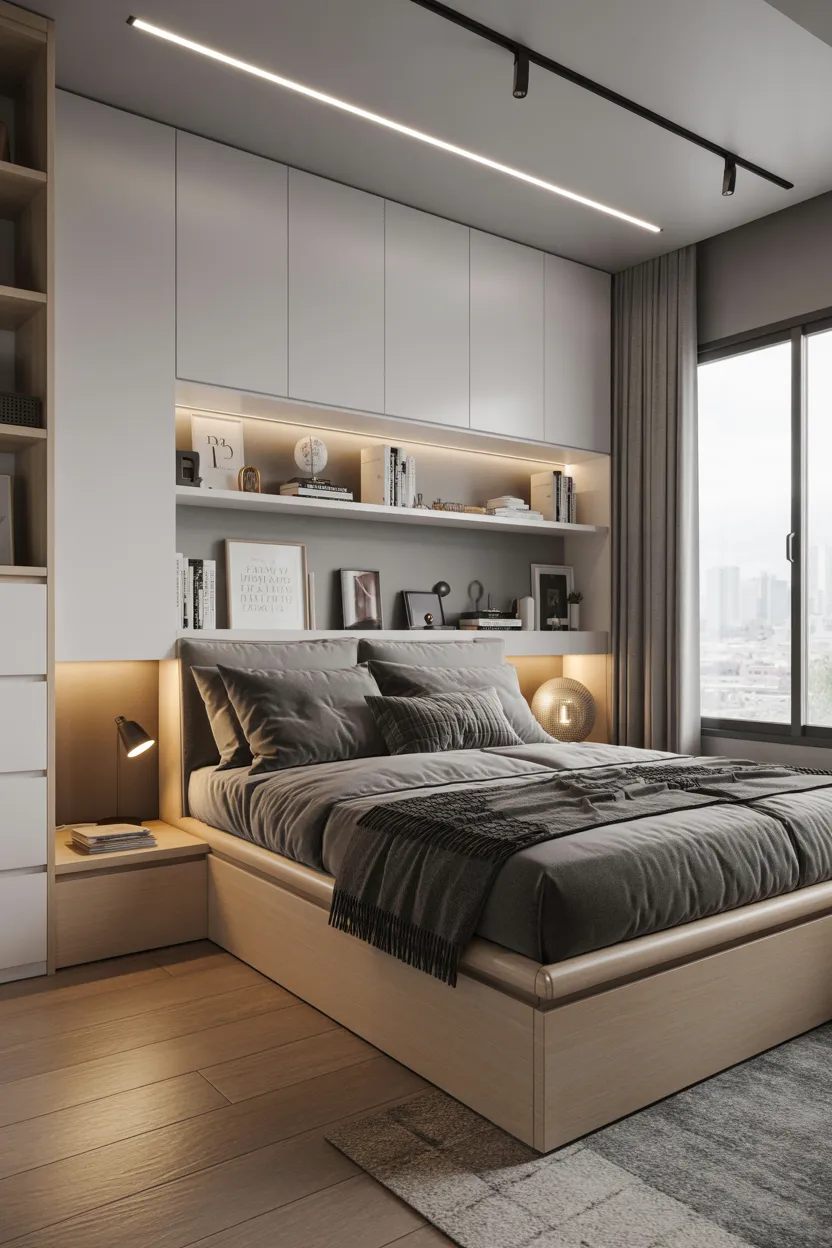
If your small bedroom currently has open space beneath the bed collecting dust bunnies and forgotten items from three years ago, you’re wasting the most valuable storage real estate in the entire room. A storage bed frame with built-in drawers or a hydraulic lift mechanism transforms that completely dead space into genuinely useful storage that removes the need for additional furniture pieces elsewhere in the room.
Fewer furniture pieces in a small bedroom means more visible floor space, and more visible floor space means the room reads as considerably larger to anyone who walks through the door. It’s a direct and immediate cause-and-effect relationship that delivers results every single time.
The hydraulic ottoman lift bed is particularly impressive in a small bedroom because the entire mattress lifts to reveal a cavernous storage area beneath that can hold seasonal clothing, extra bedding, luggage, and anything else that currently lives in places it really shouldn’t. You reclaim the room visually and practically in one single furniture decision.
Also Read: 20 Girls Bedroom Ideas 2026 That Feel Cute and Stylish
- Ottoman lift beds offer the largest storage capacity of any bed frame type available
- Drawer beds work brilliantly for items you access on a regular basis
- Choose a bed frame in a light finish so it doesn’t visually dominate the room
- Low-profile storage bed frames make ceilings feel higher simply by comparison
4. Mount Your Lighting on the Walls
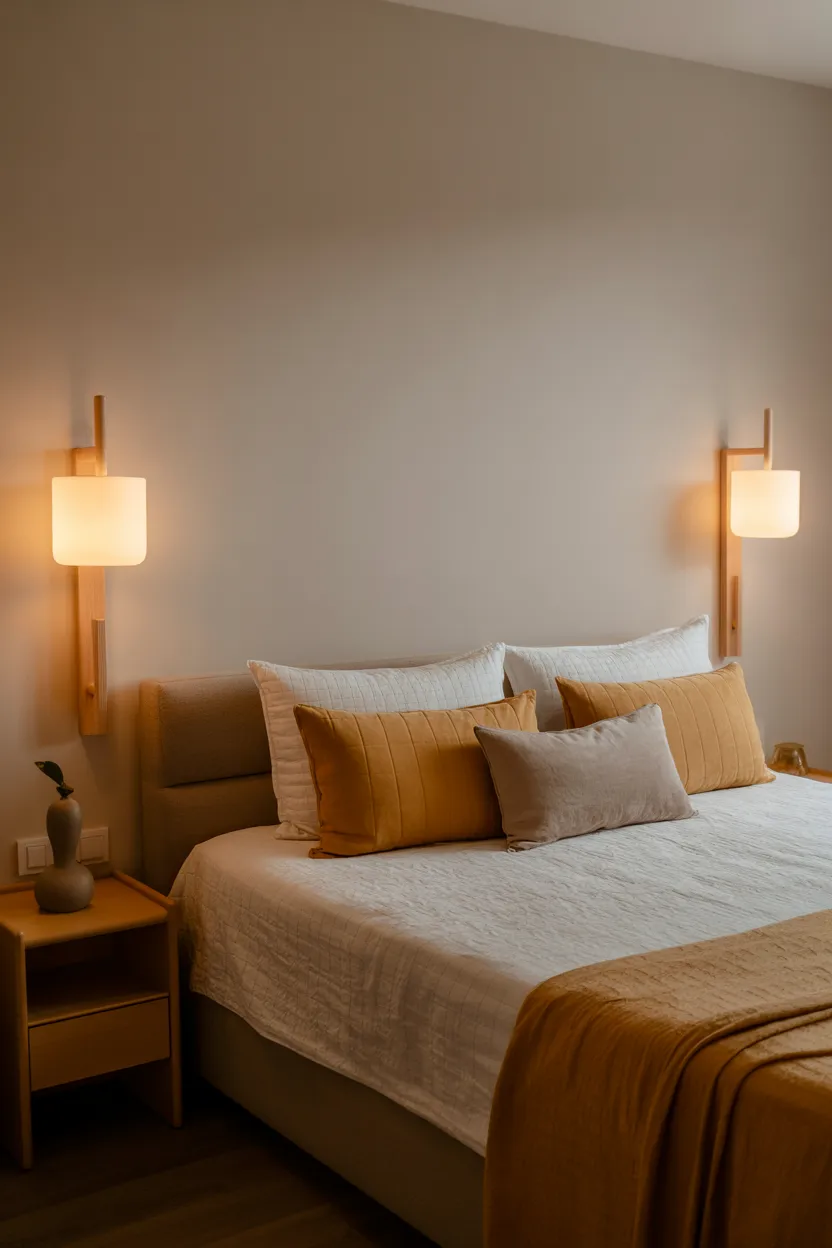
Bedside table lamps are charming and familiar, but in a small bedroom they consume precious surface space on nightstands that could hold genuinely useful items you actually reach for daily. Wall-mounted sconces or swing-arm wall lights free up every single inch of your bedside table surface while delivering the exact same quality of light you’d get from a floor-standing or table lamp taking up space below.
This one change makes a small bedroom feel more considered and intentional in its overall design. It communicates that every decision in the room was made deliberately rather than by default, and that shift in perception elevates the entire space visually without requiring any significant investment.
Swing-arm sconces are particularly practical because you can direct the light exactly where you need it depending on whether you’re reading, getting dressed, or winding down for the evening. That flexibility from a wall-mounted position is something a standard table lamp sitting fixed on a nightstand simply cannot offer.
- Swing-arm sconces let you direct light precisely where you need it at any time
- Hardwired wall lights always look cleaner and more intentional than plug-in versions
- Choose warm bulbs between 2700K and 3000K for a genuinely relaxing bedroom atmosphere
- Mount sconces at eye level when sitting up in bed for the most practical everyday positioning
5. Install Floor-to-Ceiling Curtains
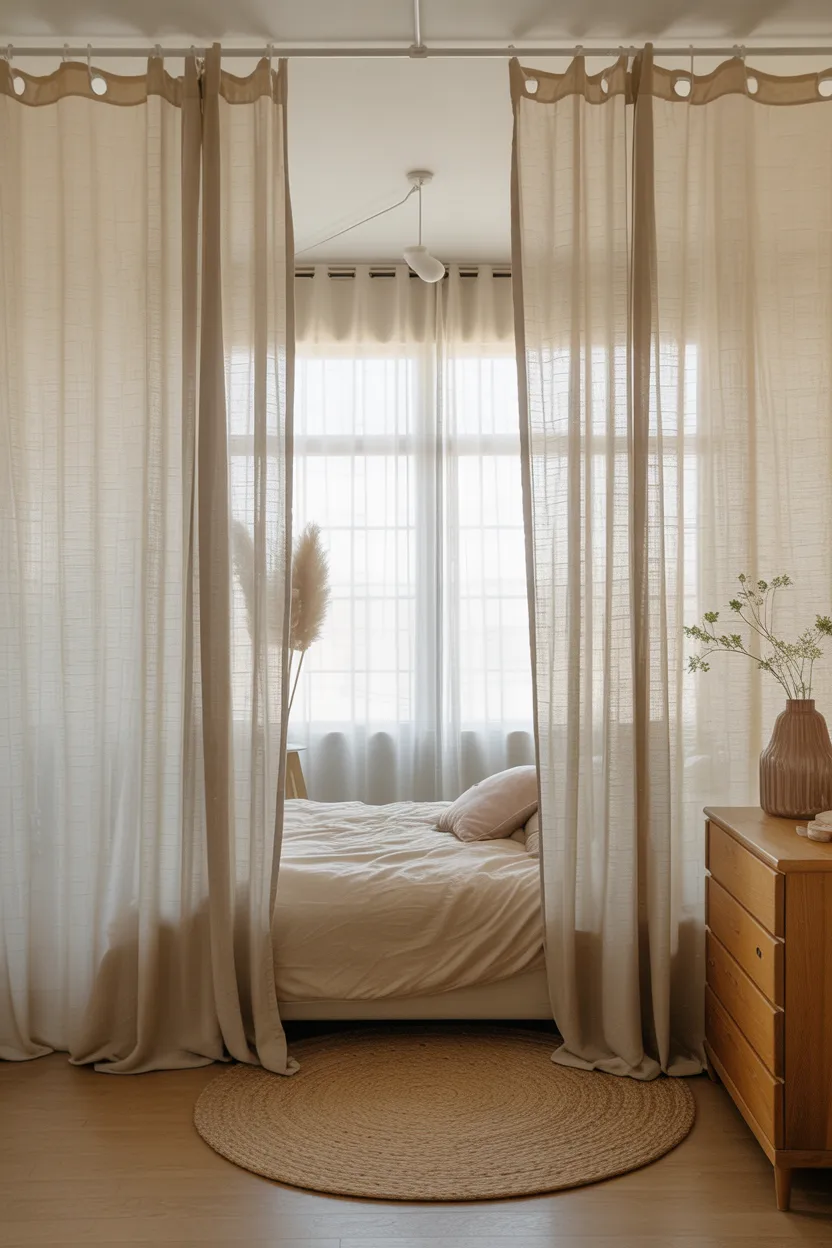
Here’s something that genuinely surprises people the first time they try it in a small bedroom. Hanging curtains as high as possible — at ceiling height rather than just a few inches above the window frame — makes the ceiling feel dramatically taller and the room feel proportionally more generous as an immediate result.
Most people hang curtains just a couple of inches above the window frame out of habit, which essentially emphasizes exactly how small and low the window actually is. Ceiling-height curtains do the complete opposite. They pull the eye upward along their full length, create strong vertical lines that elongate the wall, and make the window look far more impressive and substantial than its actual dimensions would ever suggest on their own.
The fabric choice matters significantly too. Heavy, dark curtains absorb light and close the room in, which is the last thing a small bedroom needs. Light, sheer fabrics that allow natural light through even when fully closed maintain brightness throughout the day and contribute to that open, airy feeling the room needs to feel larger.
Also Read: 23 Master Bedroom Ideas 2026 That Feel Calm and Luxe
- Hang curtain rods as close to the ceiling line as physically possible regardless of window size
- Choose light, sheer fabrics that allow natural light through even in their closed position
- Stick to solid colors or very subtle patterns to avoid adding unnecessary visual noise
- Floor-length curtains that just graze the floor look the most polished and deliberate
6. Choose Multi-Functional Furniture
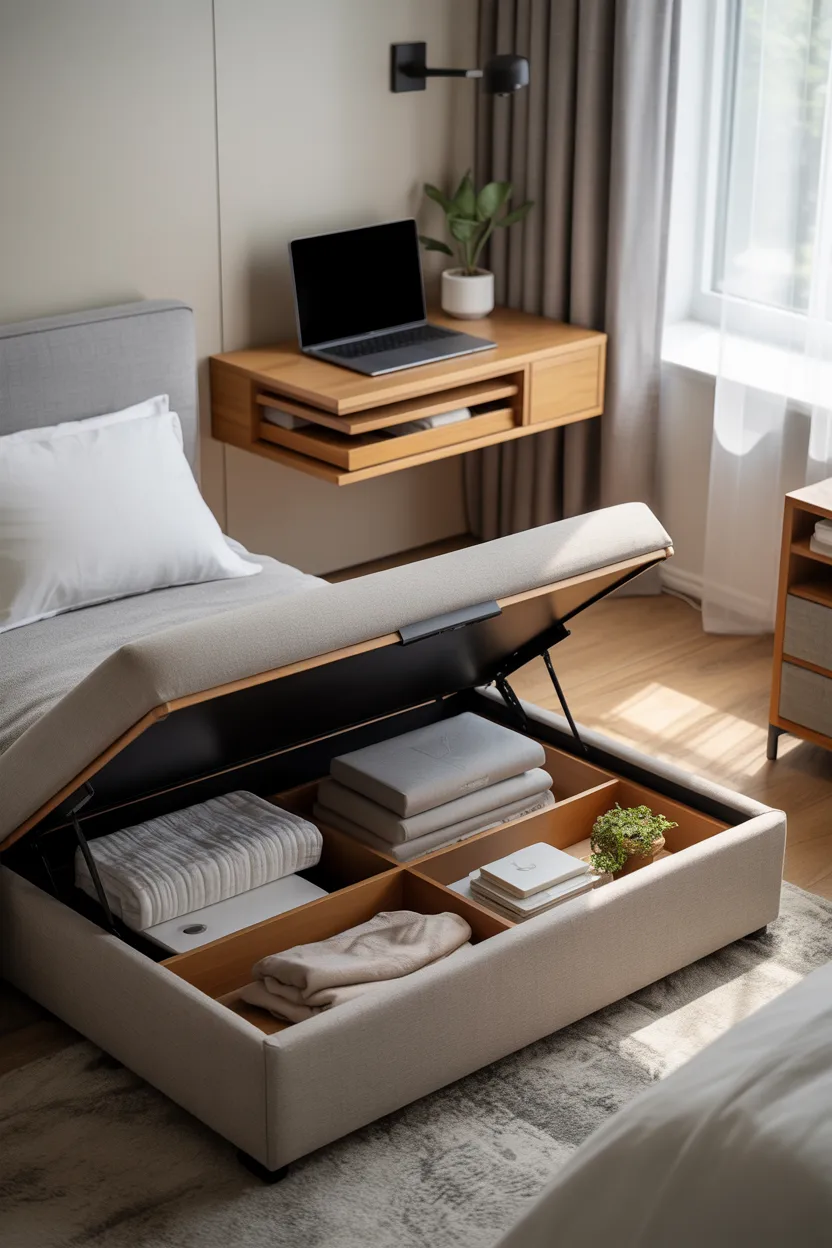
Every single piece of furniture in a small bedroom needs to earn its place by doing more than one job well. Multi-functional furniture is the absolute backbone of every well-designed small bedroom, and 2026 is delivering some genuinely impressive and attractive options in this category that don’t look like they came from a college dorm catalog.
A storage ottoman at the foot of the bed, a desk that folds completely flat against the wall when not in use, a bedside table with deep drawers rather than a single shallow shelf, a bench with hidden storage beneath the seat — these pieces replace what would otherwise require multiple separate furniture items and all the floor space they collectively consume.
The mindset shift required here is simple but powerful. Stop asking “does this piece do what I need?” and start asking “how many things does this piece do?” Every additional function a single piece of furniture performs is another piece you don’t need to bring into the room, and every piece you exclude keeps more floor visible and the room feeling more spacious.
- Ottoman benches at the foot of the bed provide seating and hidden storage simultaneously
- Fold-down wall desks create a functional workspace that disappears completely when not in use
- Nightstands with shelves and drawers replace the need for a separate bookcase entirely
- A vanity with integrated storage removes the need for a separate mirror and separate drawer unit
7. Keep the Floor as Clear as Possible
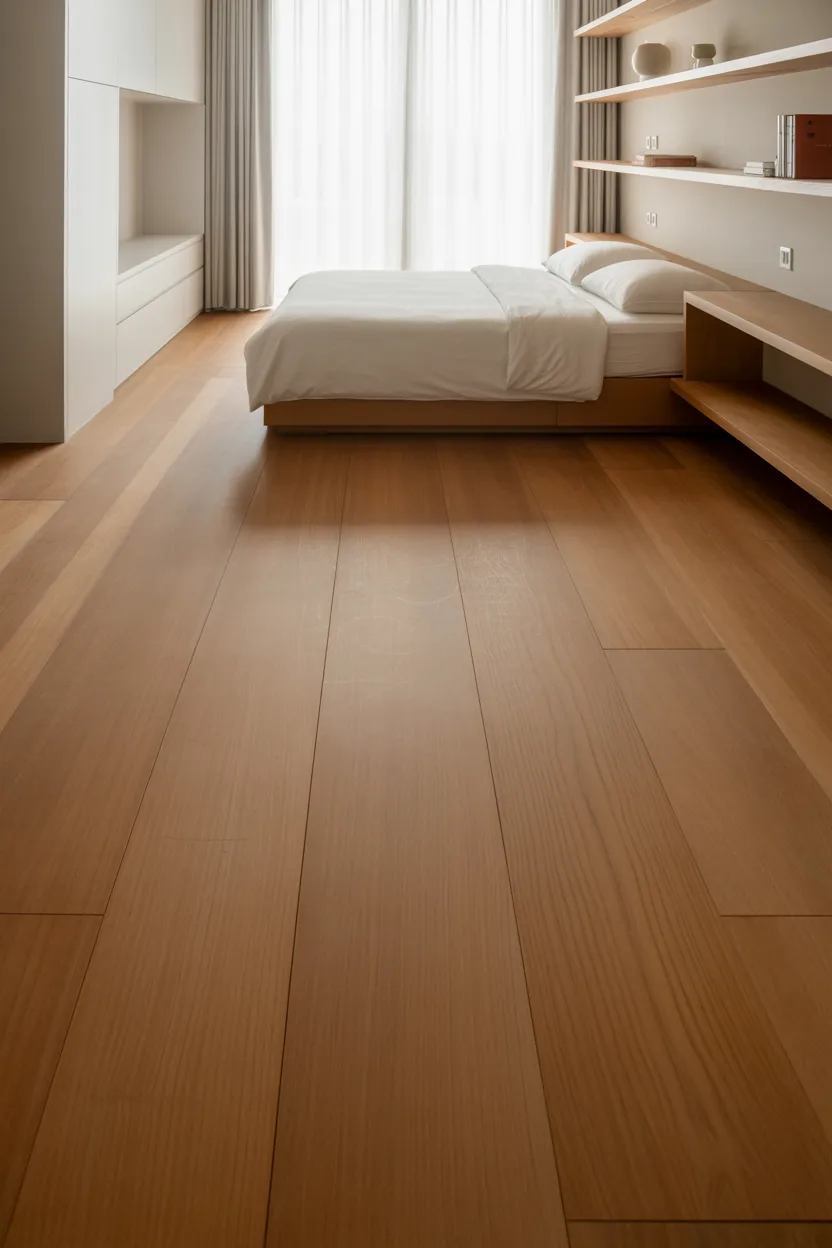
This sounds almost insultingly simple, but the amount of visible floor space in a small bedroom directly and immediately determines how large the room feels to anyone standing in it. The more floor you can actually see, the bigger the space reads to the human eye. That’s not an opinion — it’s just how visual perception works.
Every single item sitting on the floor — whether it’s a laundry basket, extra shoes lined up by the door, a gym bag slumped in the corner, or a floor lamp taking up a corner — visually shrinks the room in proportion to its footprint. Elevate, mount, hang, or store everything you possibly can so the floor remains as clear and continuous as possible throughout the space.
The psychological impact of a clear floor in a small bedroom is significant and immediate. The room feels calmer, more organized, and genuinely more spacious even before you change a single other thing. It costs nothing and delivers results the moment you do it.
- Use wall hooks for bags, belts, and accessories instead of placing anything on the floor
- Store shoes inside wardrobe drawers or on internal shoe racks rather than beside the door
- Choose a wall-mounted clothes rail instead of a freestanding rack consuming floor space
- Keep the area under the bed either fully enclosed with storage or completely clear
8. Use Vertical Space Aggressively
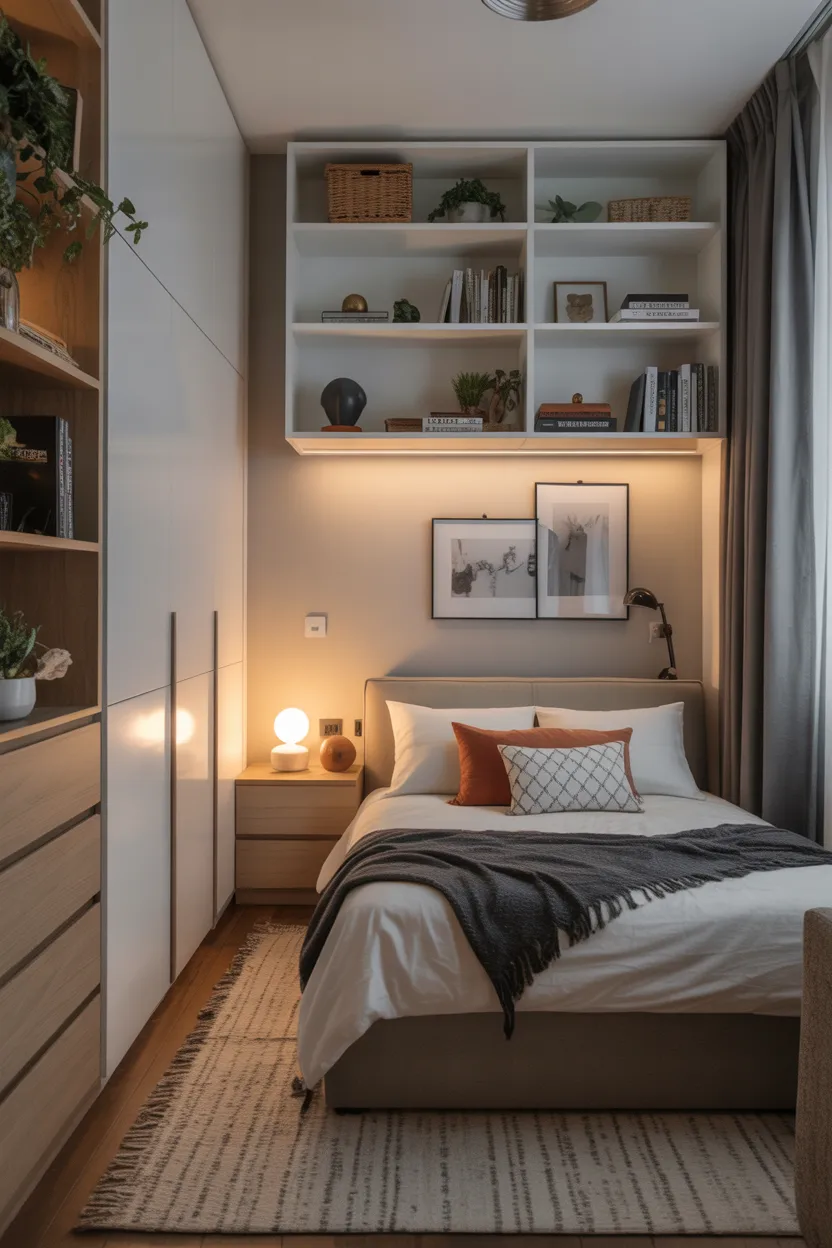
Most people living in small bedrooms think horizontally when they desperately need to start thinking vertically. The wall space above eye level in a small bedroom is almost always completely untapped, and it represents significant storage and display potential that costs very little to access beyond some wall anchors, a level, and a few shelving brackets.
Floor-to-ceiling bookshelves, high-mounted floating shelves for items you access infrequently, tall wardrobes that extend all the way to the ceiling with zero wasted gap above them — all of these use the vertical dimension of the room rather than competing for the already limited and precious floor space below.
Also Read: 24 Kitchen Designers Ideas 2026 That Feel High End
The visual benefit extends beyond just storage too. Tall elements in a small room draw the eye upward and create a sense of height that makes the ceiling feel further away than it actually is. That upward movement in a room is one of the most effective tools for making a small space feel less confined and more expansive.
- Install floating shelves as high as feels practical for seasonal or infrequently used items
- Choose wardrobes that extend fully to the ceiling with no gap left above the top
- Stack storage vertically in columns rather than spreading it horizontally across the floor
- Tall, narrow furniture always performs better in a small bedroom than wide, low alternatives
9. Try a Platform Bed With No Headboard
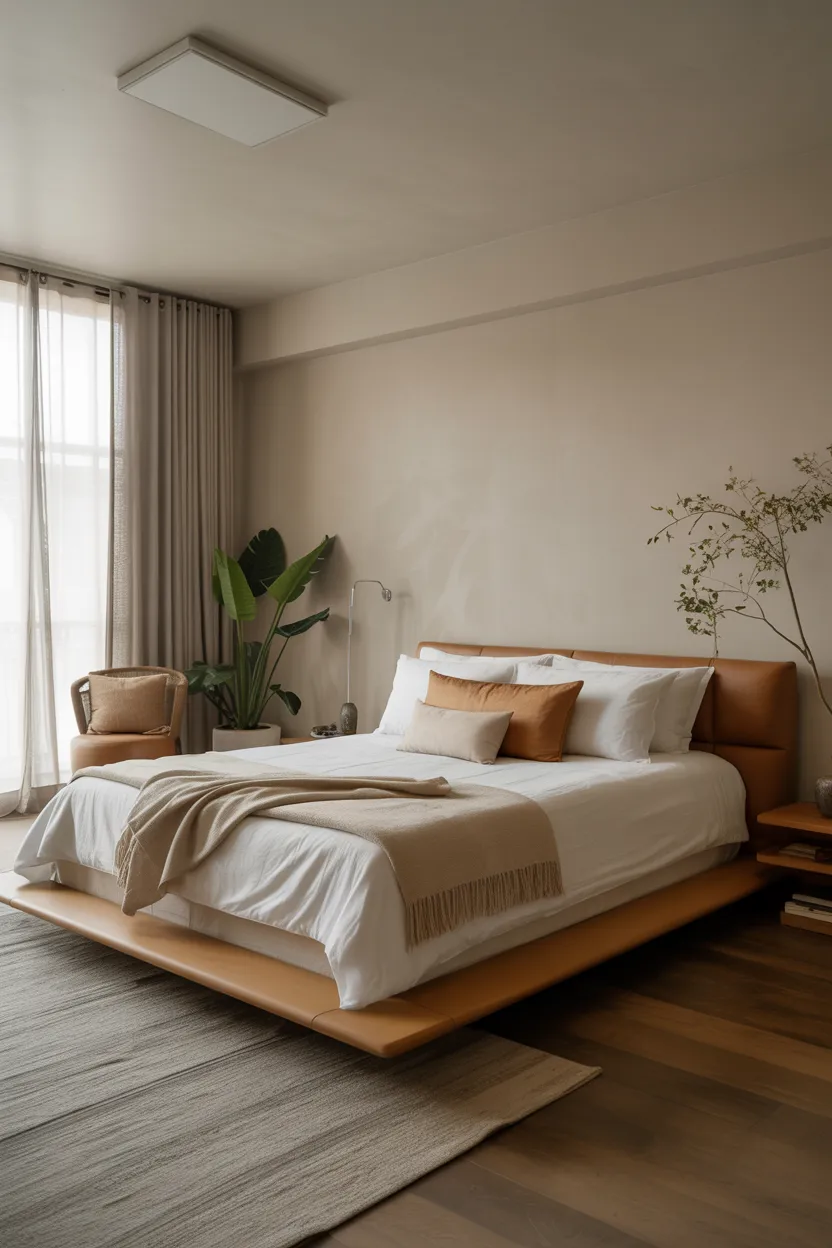
Standard bed frames with tall, upholstered headboards consume visual space aggressively in a small bedroom and push the ceiling downward in the process. A low-profile platform bed with either no headboard at all or a very slim, minimal one keeps the sightlines across the room completely open and unobstructed, making the space feel less crowded and considerably more breathable throughout.
The lower the bed sits relative to the floor, the higher the ceiling appears by comparison. That direct relationship between furniture height and perceived ceiling height is something most people never consciously register but feel immediately and strongly when they walk into a well-designed small room where someone understood this principle.
A platform bed also tends to look cleaner and more modern than a traditional raised bed frame, which suits the 2026 aesthetic for small bedrooms particularly well. Pair it with simple bedding in a light tone and the bed becomes part of the room rather than the dominant object that everything else orbits around uncomfortably.
10. Install Built-In Wardrobes
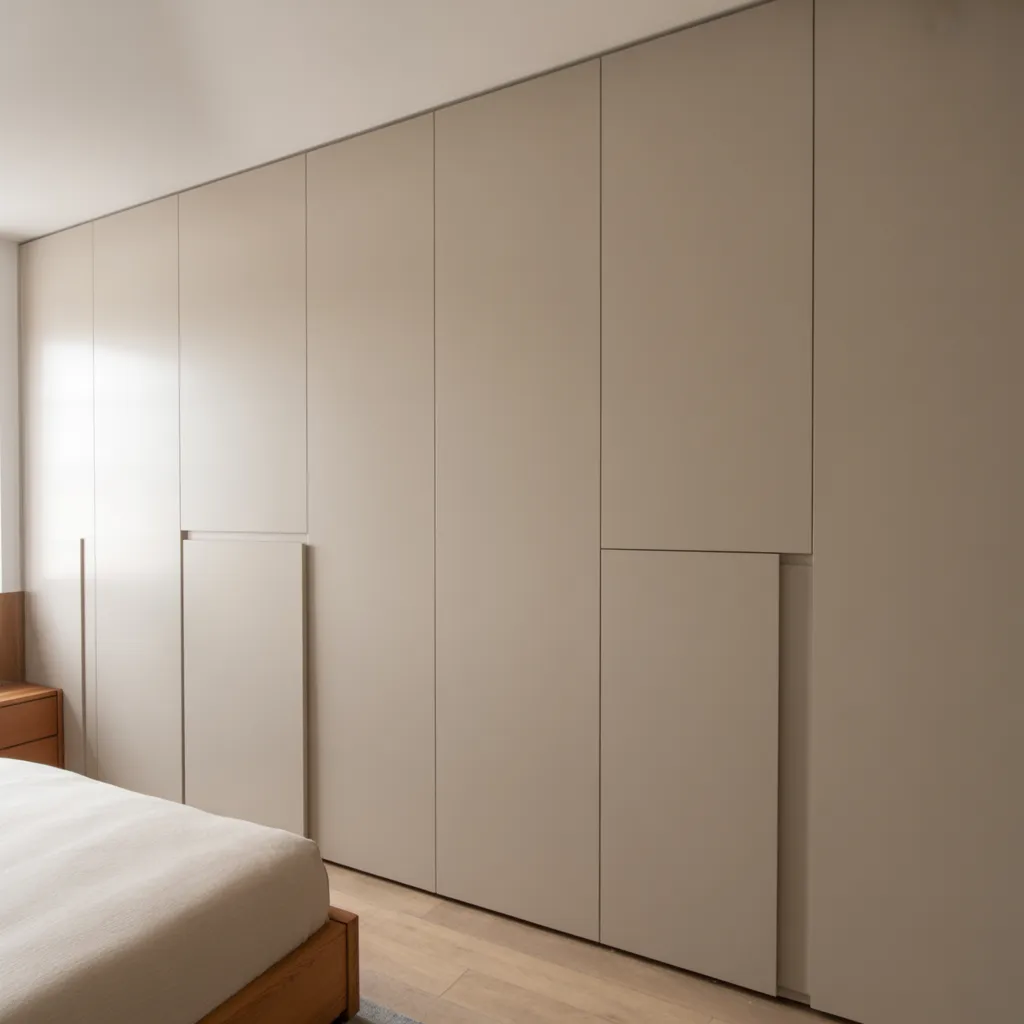
Freestanding wardrobes in a small bedroom stick out from the wall, create awkward gaps at the sides and top, and generate corners that collect clutter while reducing the usable floor space around them. Built-in wardrobes sit completely flush with the wall, use every available inch of height from floor to ceiling, and make the room feel significantly more spacious by eliminating those awkward protruding edges and wasted corners entirely.
The seamless appearance of built-in storage also makes the room feel more cohesive and architecturally considered. Everything integrates into the structure of the space rather than sitting on top of it as separate objects that the eye reads as clutter even when they’re technically organized.
Also Read: 21 Bedroom Ideas 2026 That Look Cozy and Beautiful
Sliding doors on built-in wardrobes deserve a special mention here because they eliminate the swing space that hinged doors require. In a small bedroom where every inch genuinely counts, not needing clearance in front of the wardrobe for a door to open outward makes a meaningful practical difference to how you move through the space daily.
- Sliding doors eliminate the swing clearance that hinged wardrobe doors always require
- Floor-to-ceiling built-ins maximize every available inch of vertical storage in the room
- Paint them the same color as the walls for a truly seamless, space-expanding visual effect
- Include internal organizers to maximize storage capacity without adding external furniture
11. Pick Furniture With Exposed Legs
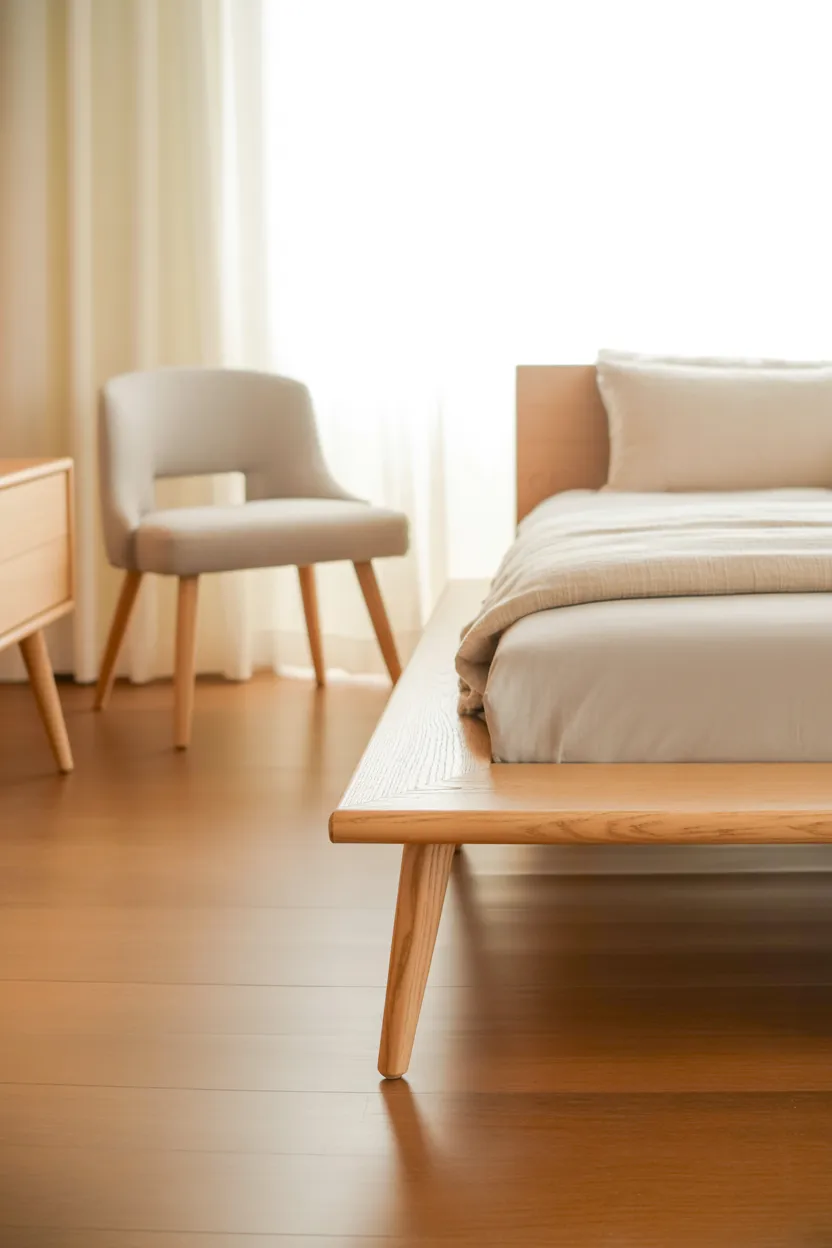
Furniture that sits directly and solidly on the floor blocks the sightline at the lowest level of the room and makes the space feel heavier, more crowded, and more static than it needs to feel. Furniture with slim, exposed legs allows the eye to travel beneath each piece and across the continuous floor surface, which creates a sense of visual flow and makes the room feel lighter and more open as a result.
A bed frame with slim metal legs, a bedside table that sits on tapered wooden legs, a small occasional chair with thin legs — each individual piece lifts itself off the floor and contributes to a collectively airier, more spacious feeling throughout the entire room. The cumulative effect of several pieces all sitting on exposed legs rather than flat bases is genuinely impressive in a small bedroom. 🙂
The floor reads as one continuous, uninterrupted plane rather than a surface broken up by solid furniture bases, and that continuity communicates space in a way that solid-base furniture simply cannot achieve regardless of its color or finish.
12. Use Consistent Flooring Throughout
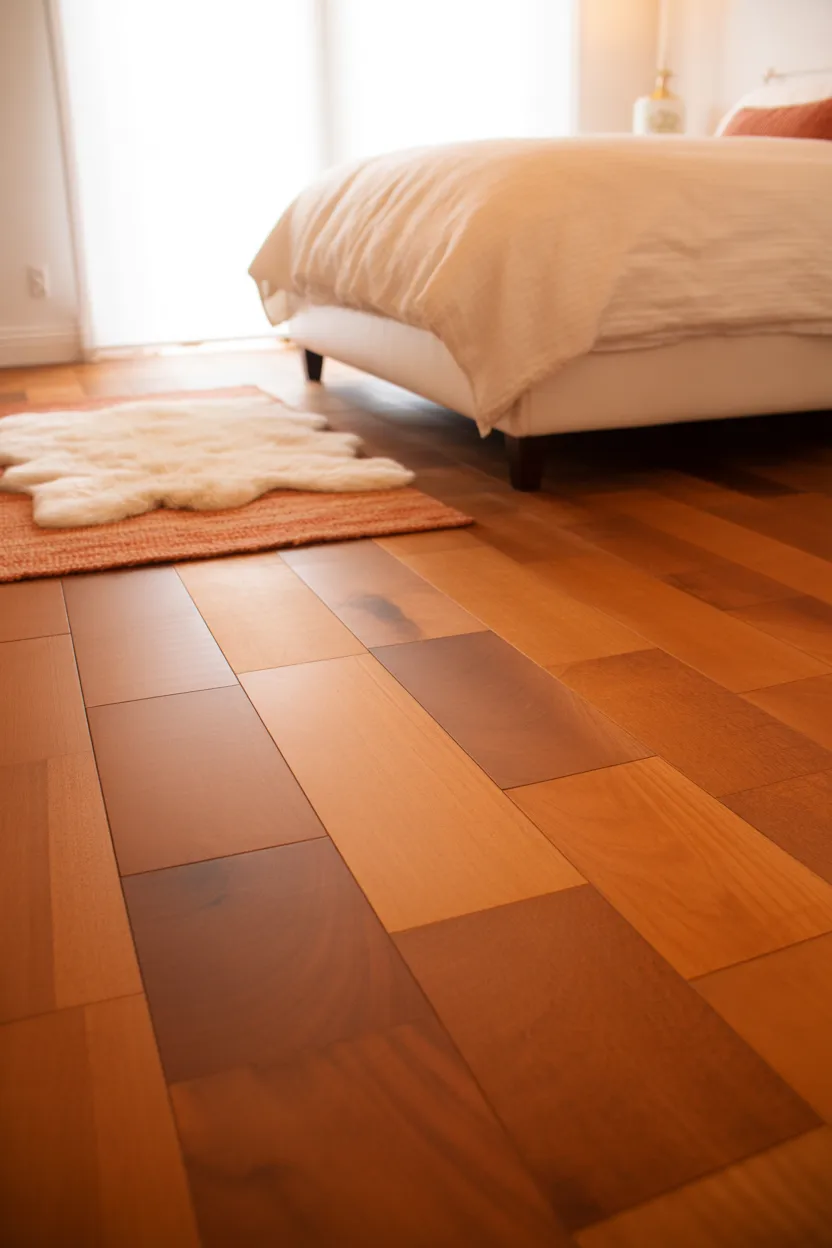
If your small bedroom currently has a large area rug covering the majority of the floor, consider removing it temporarily and observing how the room feels without it. A single, consistent flooring material running wall to wall without any interruption makes the floor read as one continuous, unbroken plane, which significantly expands the perceived size of the space in a way that divided flooring never achieves.
Also Read: 22 Living Room Ideas 2026 That Feel Fresh and Stylish
Area rugs chop the floor into sections, and sectioned floors always feel smaller and more fragmented than continuous ones. The eye registers each zone separately and reads the room as a collection of smaller areas rather than one generous, open space.
If you love the warmth and texture that a rug brings to a bedroom — and honestly, who doesn’t — choose a smaller one that sits only partially beneath the bed rather than covering the majority of the visible floor area. You keep the warmth and texture while preserving the visual continuity of the floor around it.
13. Add a Window Seat With Hidden Storage
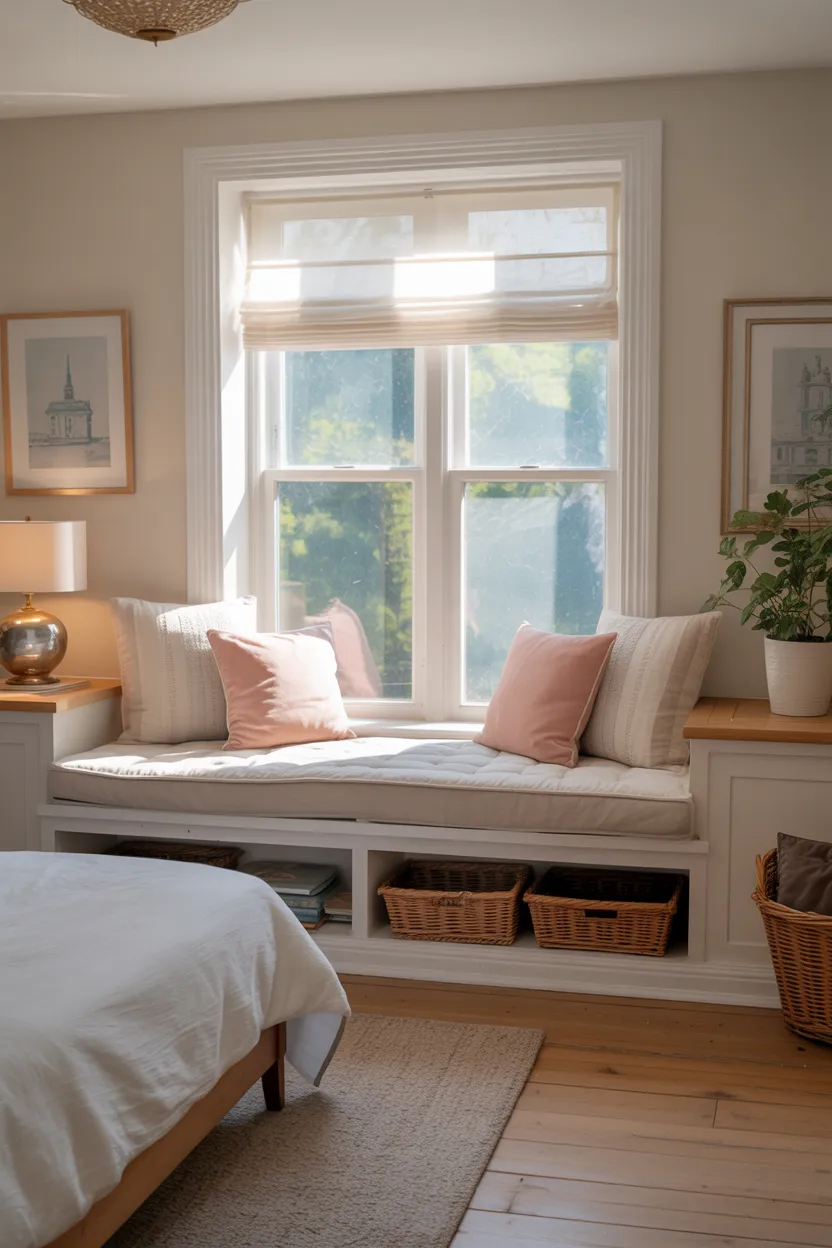
If your small bedroom has even one window with wall space beneath it that currently serves no purpose, a built-in window seat with hidden lift-up storage inside transforms that completely unused architectural area into a functional, beautiful feature that delivers seating, storage, and genuine charm all from one compact installation.
Window seats also shift the visual focus of the room toward the window and the natural light streaming through it, which draws the eye outward rather than inward. That outward shift makes the space feel less contained and more connected to the world beyond the four walls, which is exactly the psychological effect a small bedroom needs to feel less confined.
The storage capacity inside a well-built window seat is also significantly larger than it looks from the outside. Bedding, seasonal items, spare pillows, and anything else that currently takes up wardrobe space can live comfortably inside a window seat without the room showing any evidence of it whatsoever.
14. Decorate With Vertical Stripes
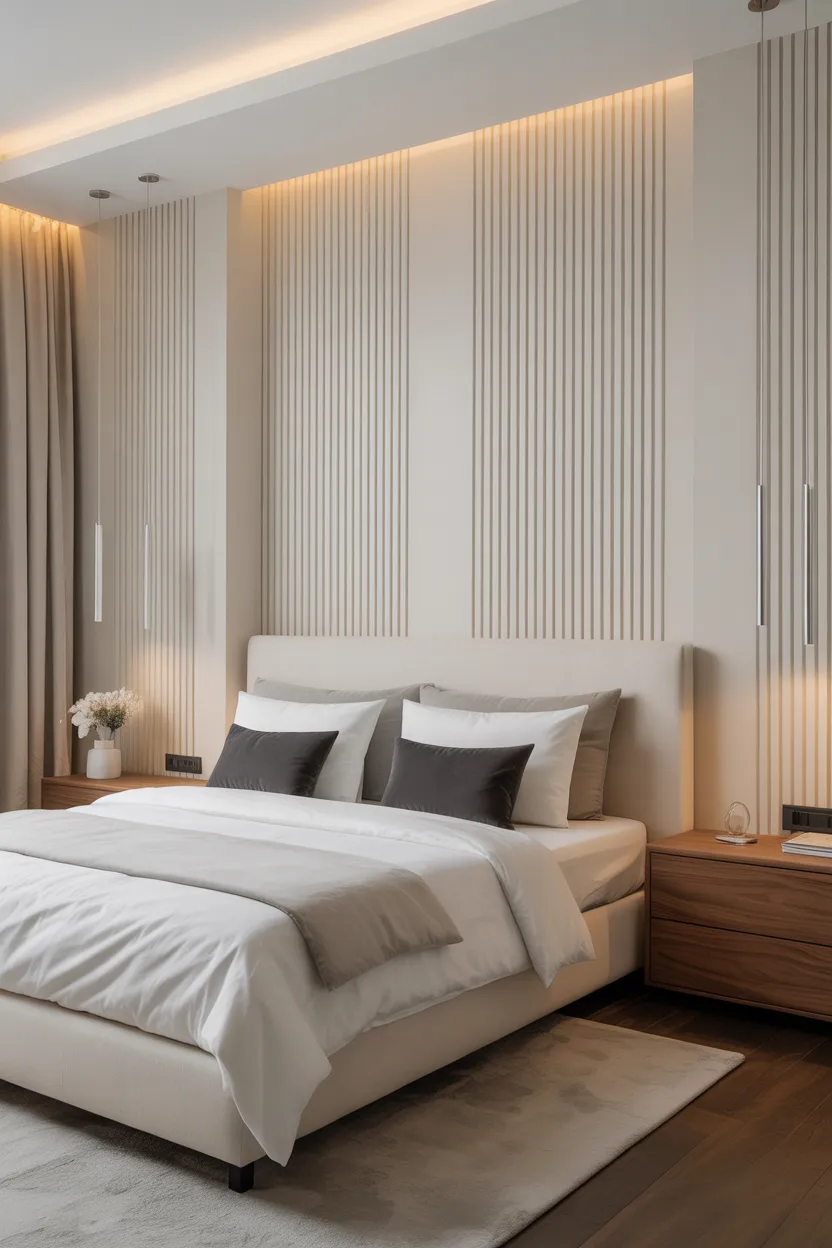
Vertical stripes on a wall or through carefully chosen wallpaper draw the eye upward along their full length and create a convincing optical illusion of a taller ceiling and a more generous room height than actually exists in the space. This sounds almost too straightforward to work until you try it and witness the result for yourself.
Keep the stripes subtle and tonal rather than bold and highly contrasting for the best result in a small bedroom. Thin, tone-on-tone vertical stripes create the desired height illusion without making the room feel like it’s wearing a sports uniform. FYI, vertical shiplap paneling achieves the exact same effect with the added benefit of physical texture that flat painted stripes can’t replicate.
Also Read: 22 Family Backyard Layout Ideas 2026 for Easy Fun Days
The key is verticality rather than any specific pattern or material. Anything that creates consistent vertical lines across a wall sends the eye upward and makes the ceiling feel further away, and a ceiling that feels further away makes a small bedroom feel meaningfully more spacious than its actual dimensions.
15. Choose a Wall-Mounted Headboard
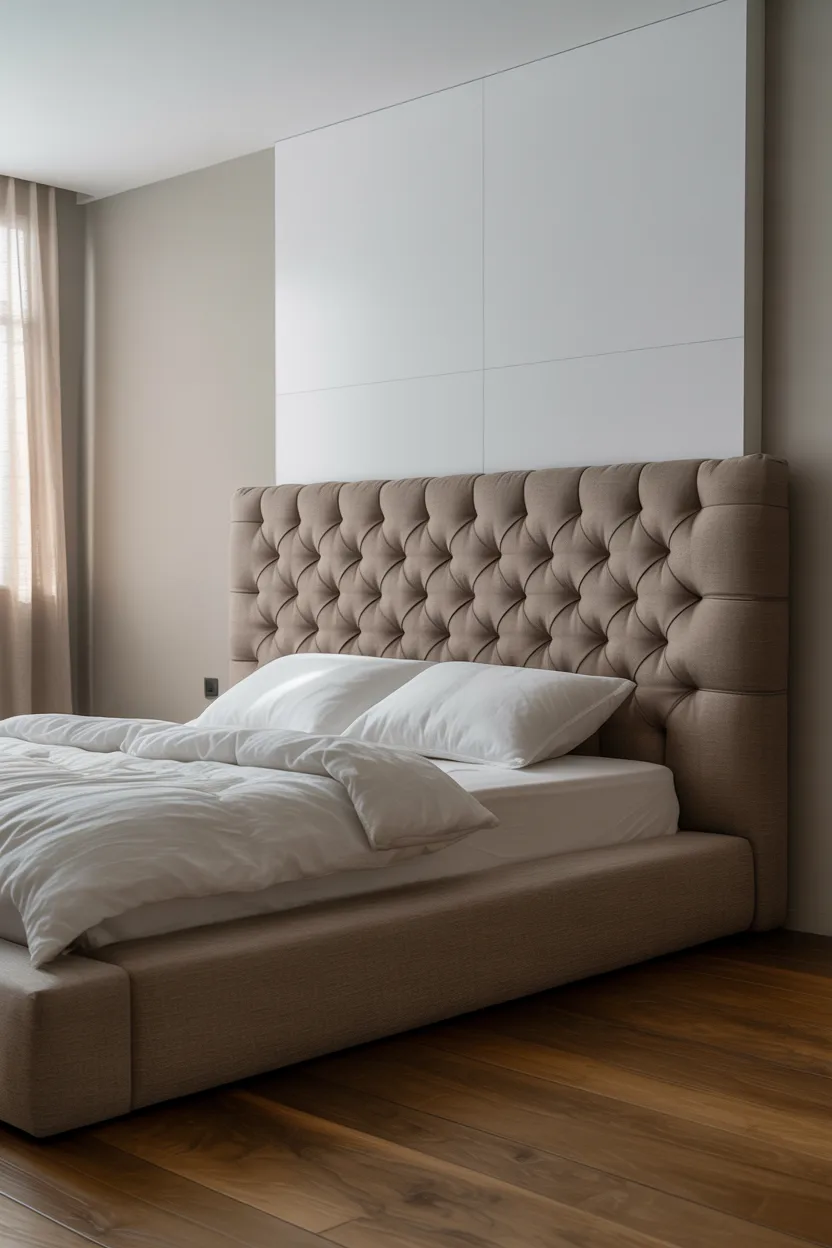
A wall-mounted headboard performs every visual function of a traditional headboard without consuming any floor space in the process. It attaches directly to the wall surface and leaves the floor completely clear beneath and around the bed, which makes the bed itself feel less physically bulky and the room feel more open and generous in the space surrounding it.
Upholstered wall-mounted headboards are particularly popular within 2026 small bedroom design because they add softness, tactile texture, and a strong sense of luxury without the physical footprint that comes with a full bed frame featuring an integrated or attached headboard. The bed looks elevated and intentional while the floor beneath remains fully visible and clear.
You can also use a wall-mounted headboard to add color or pattern to the room in a concentrated, contained way. A bold fabric or textured upholstery on the headboard creates a focal point that draws attention to the bed rather than to the size of the room around it.
16. Use Recessed Shelving Inside the Walls
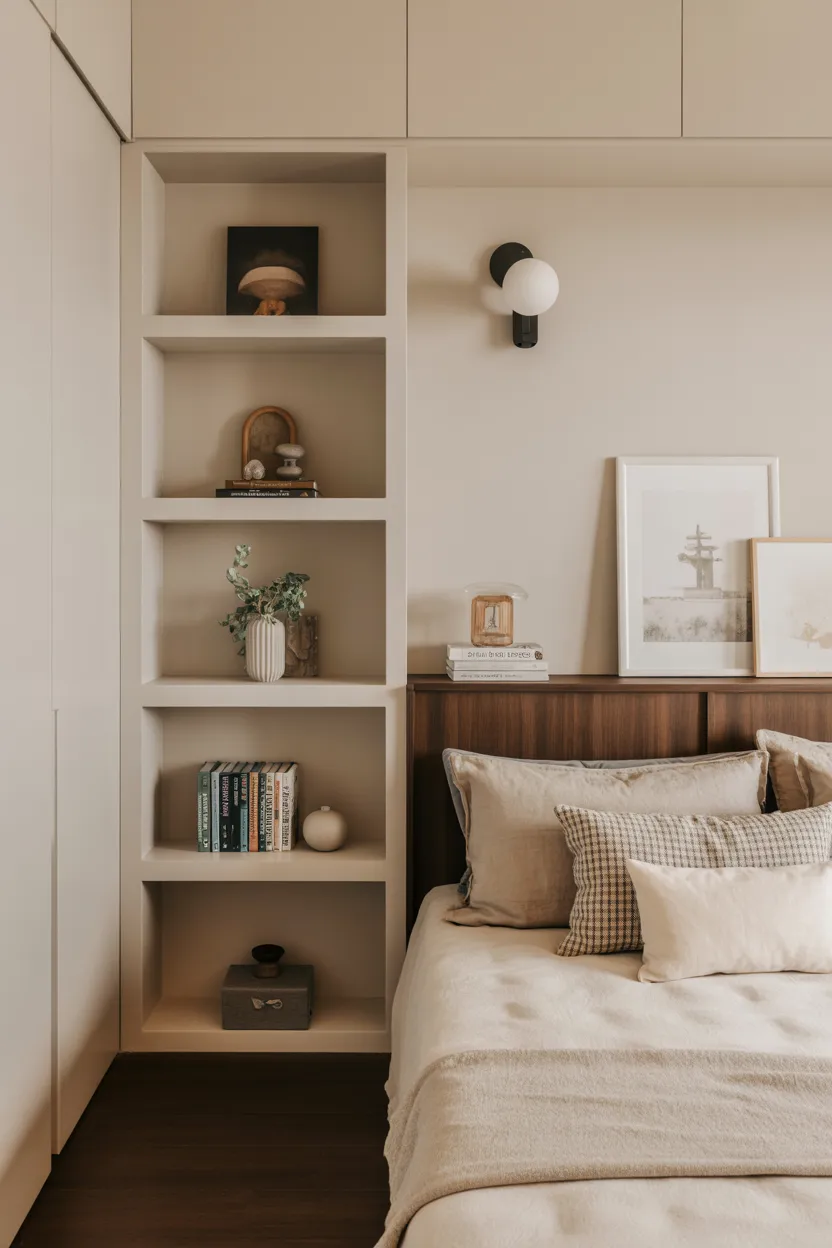
If your small bedroom is going through a renovation, recessed shelving built directly into the wall cavity creates meaningful storage without consuming any floor space or protruding into the room at all. The shelves sit completely flush with the wall surface and hold books, plants, and objects without pushing any furniture further into the already limited room space.
Even a single recessed niche positioned beside the bed can completely replace the need for a bedside table. A built-in shelf at the right height, a recessed charging point in the wall beside it, and a small reading light integrated above — that combination gives you everything a traditional nightstand provides without occupying a single square inch of floor space around the bed.
Also Read: 21 Garden Wood Fence Ideas 2026 That Look Warm and Pretty
The visual result is also cleaner and more architectural than any freestanding furniture alternative. Recessed shelving looks like the room was designed with intention from the very beginning rather than furnished as an afterthought, and that sense of considered design makes the space feel more premium and more spacious simultaneously.
17.Maximize Natural Light at Every Opportunity
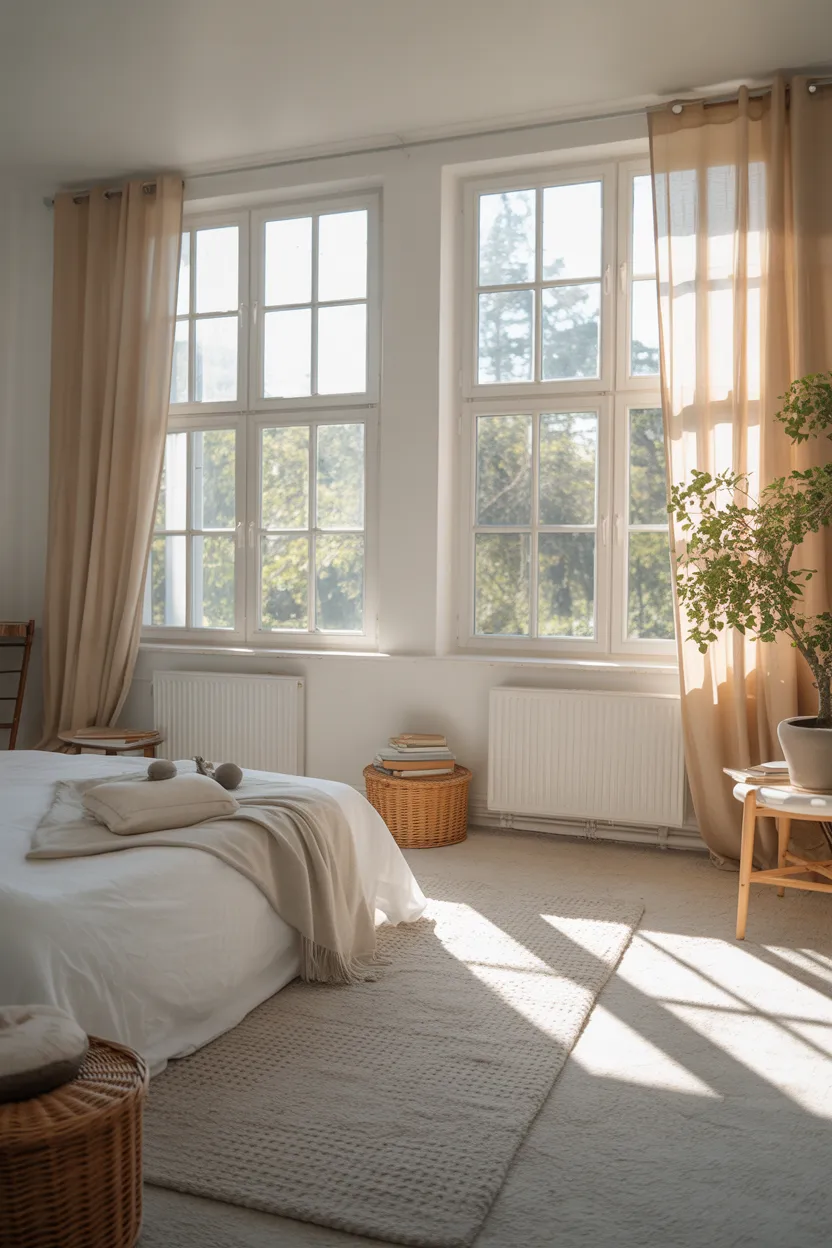
Natural light does more for the perceived size of a small bedroom than almost any other single design decision you can make. A bright room always reads as larger than a dim room of identical physical dimensions, and maximizing every available source of natural light should sit near the very top of your priority list when improving a small bedroom.
Heavy, light-blocking window treatments are one of the most common ways people accidentally make their small bedrooms feel smaller without realizing the connection. Replacing thick curtains with sheer linen panels or lightweight cotton immediately floods the room with more daylight and shifts the entire atmosphere of the space.
- Remove heavy window treatments and replace them with sheer linen or lightweight cotton options
- Keep windowsills completely clear of objects to allow maximum light penetration into the room
- Use satin or soft gloss paint finishes on window frames to bounce additional light inward
- Position mirrors directly opposite windows to reflect and genuinely amplify the available daylight
18. Go Monochromatic With Your Color Scheme
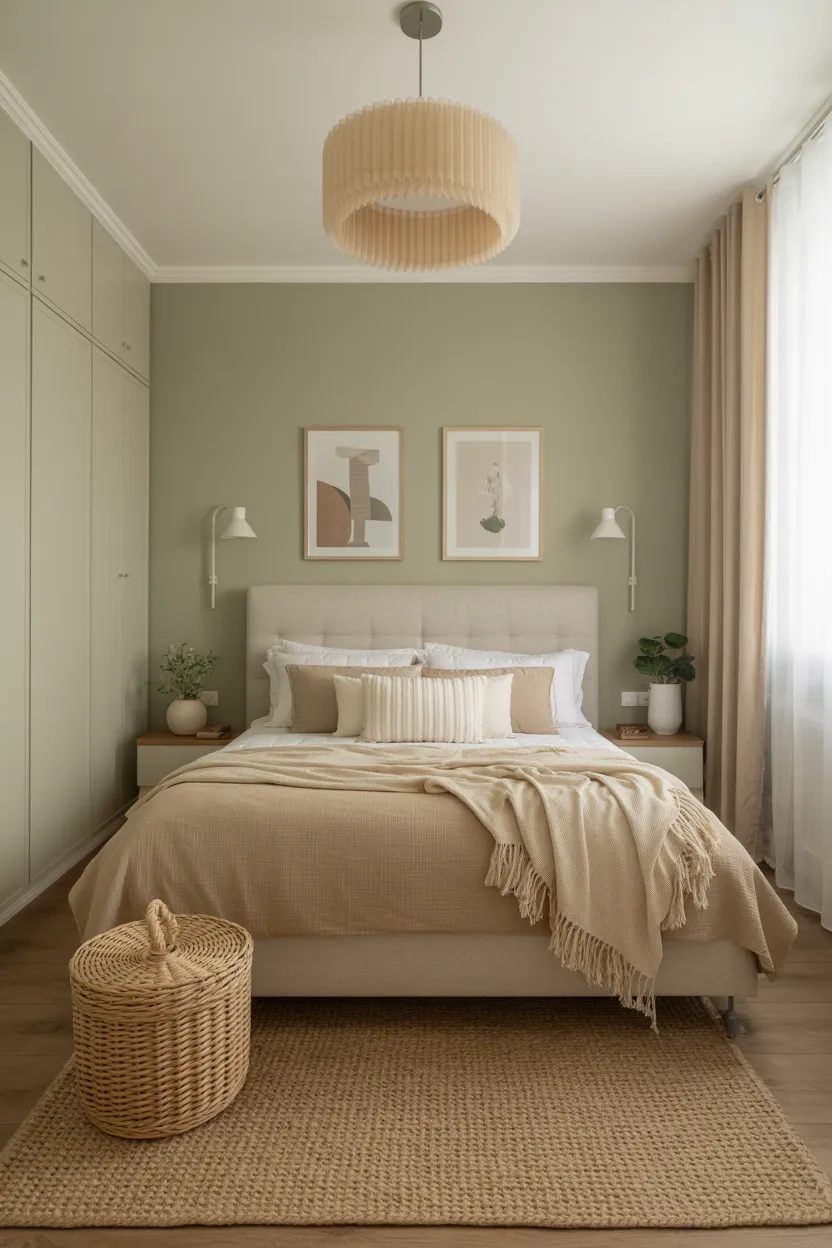
A bedroom decorated in multiple competing colors feels busier and considerably smaller than one built around a single cohesive tone throughout. A monochromatic color scheme — one color expressed thoughtfully through different shades, textures, and finishes — creates a visually unified space that feels calm, open, and meaningfully larger than its actual size suggests.
The reason this works so well in a small bedroom is that the eye doesn’t have to jump between competing colors or reconcile contrasting elements across the room. Everything reads as connected and continuous, and connected spaces always feel larger than fragmented ones regardless of their physical dimensions.
Also Read: 24 Zen Garden Ideas 2026 That Feel Calm and Peaceful
Choose your base tone and carry it through the walls, bedding, curtains, and key furniture pieces with consistency. Vary the textures across each surface to maintain visual interest without introducing color contrast that breaks the room into separate competing zones that each feel smaller than the whole.
19. Hang Artwork Large Rather Than Small
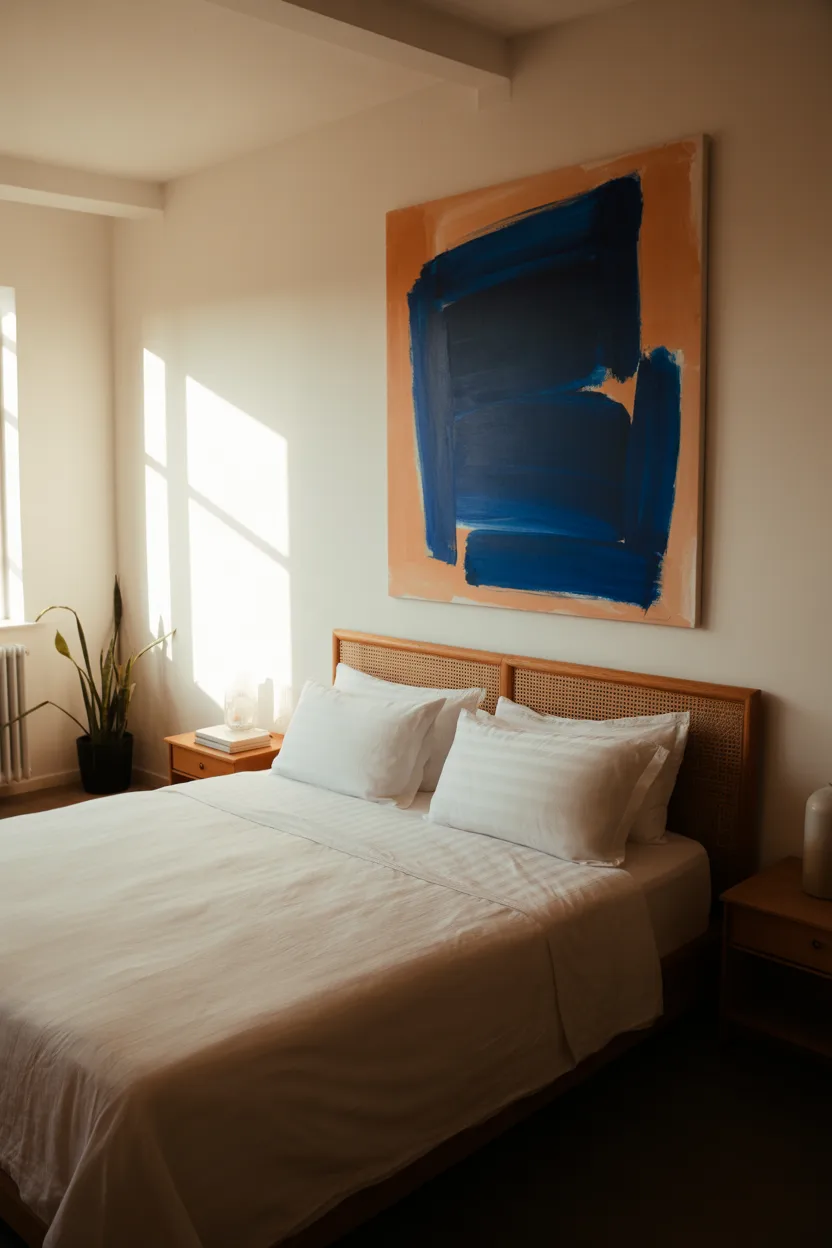
Multiple small pieces of artwork scattered across a small bedroom wall create visual fragmentation that makes the space feel choppy, busy, and considerably more crowded than it actually is. One large piece of artwork or a single oversized print makes a far stronger visual statement and keeps the wall feeling open, intentional, and architecturally considered rather than cluttered with competing small images.
Scale up rather than down when selecting wall art for a small bedroom. A single large canvas or oversized framed print anchors the room and draws the eye in a focused, deliberate way that a gallery wall of small individual frames simply cannot achieve in a limited space where every visual decision carries significant weight.
The large artwork approach also creates a natural focal point that gives visitors somewhere specific to look when they enter the room. A clear focal point directs attention purposefully rather than letting it scatter across the room and land on its boundaries and limitations.
20. Keep Furniture Color Close to the Wall Color
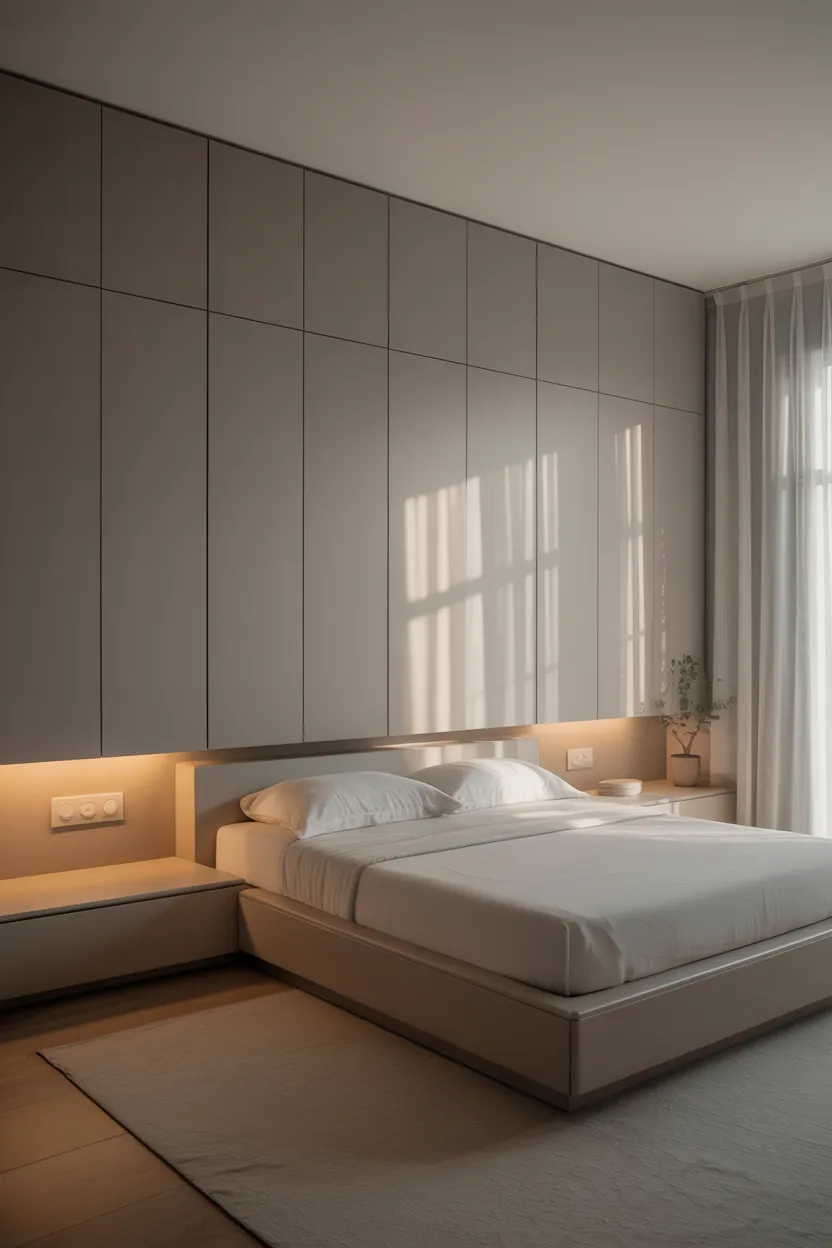
When furniture blends tonally into the wall directly behind it, the eye genuinely struggles to read the furniture as a separate object occupying distinct space in the room. Choosing furniture in a color that sits close to your wall color creates a tonal camouflage effect that makes the furniture feel integrated into the architecture of the room rather than placed inside it as a separate, space-consuming object.
A white wardrobe against a white wall essentially disappears visually and allows the room to read as more open than it actually is. A dark wardrobe against a white wall jumps forward dramatically, demands immediate attention, and makes the room feel smaller in proportion to how strongly the piece contrasts against its background.
This principle applies to every piece of furniture in the room. The more each piece blends into the wall behind it, the more the room reads as a single, open space rather than a collection of individual objects competing for visual dominance in a limited area.
21. Add Ambient Lighting Behind the Bed
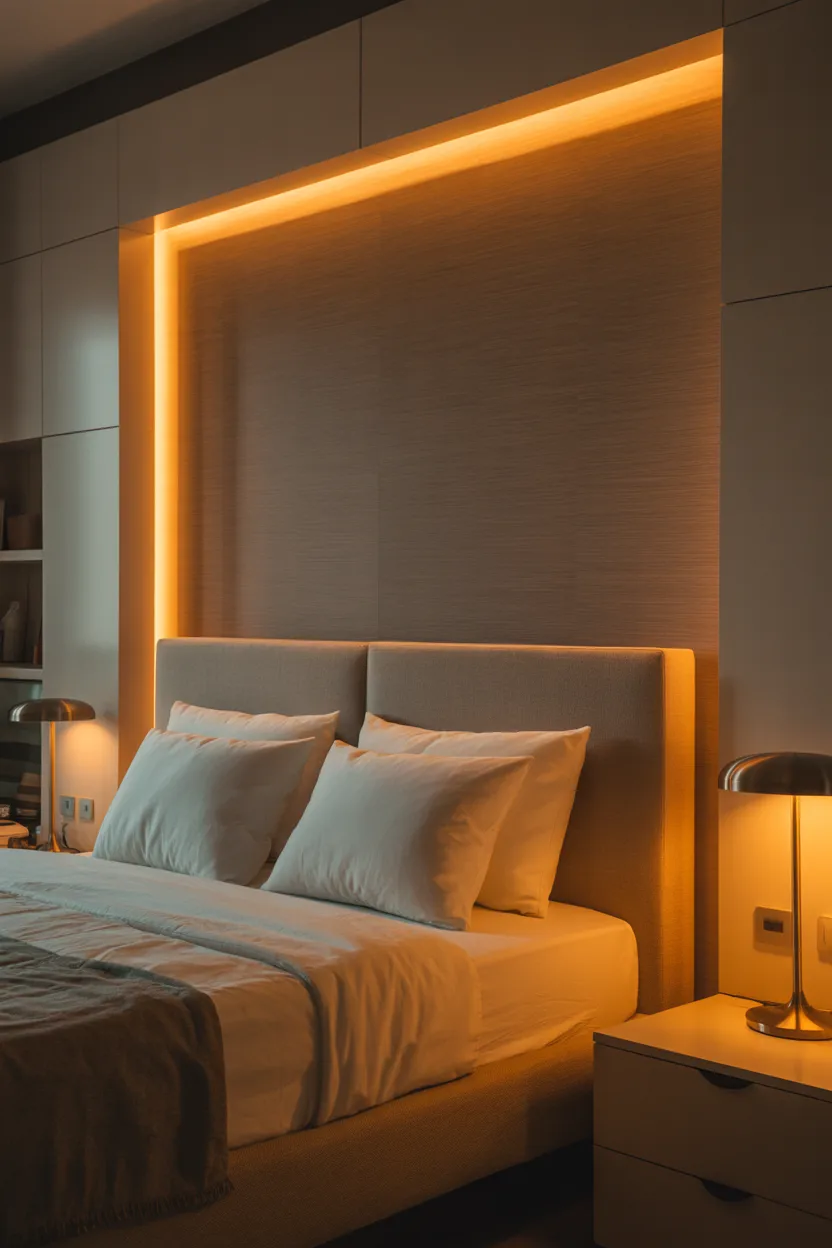
LED strip lighting installed behind the headboard or along the wall surface directly behind the bed creates a soft, warm glowing halo effect that adds genuine depth and visual dimension to the room without occupying any physical space whatsoever in the process. The light suggests space behind and around the bed that the eye interprets as depth even when that depth doesn’t literally exist in the architecture.
This effect works particularly well in small bedrooms because it creates a compelling focal point that pulls attention toward the bed and away from the walls that define the room’s boundaries and limitations. The warm glow softens those boundaries after dark and makes the room feel less like a box and more like a genuinely considered, atmospheric space.
Also Read: 23 Vertical Garden Ideas 2026 for Small Spaces That Wow
The installation is also simpler and more affordable than most people expect. Adhesive LED strip lights with a warm color temperature sit behind the headboard and connect to a simple plug or smart switch. The result looks far more expensive and intentional than the actual effort and cost involved in creating it.
22. Edit Your Belongings Ruthlessly
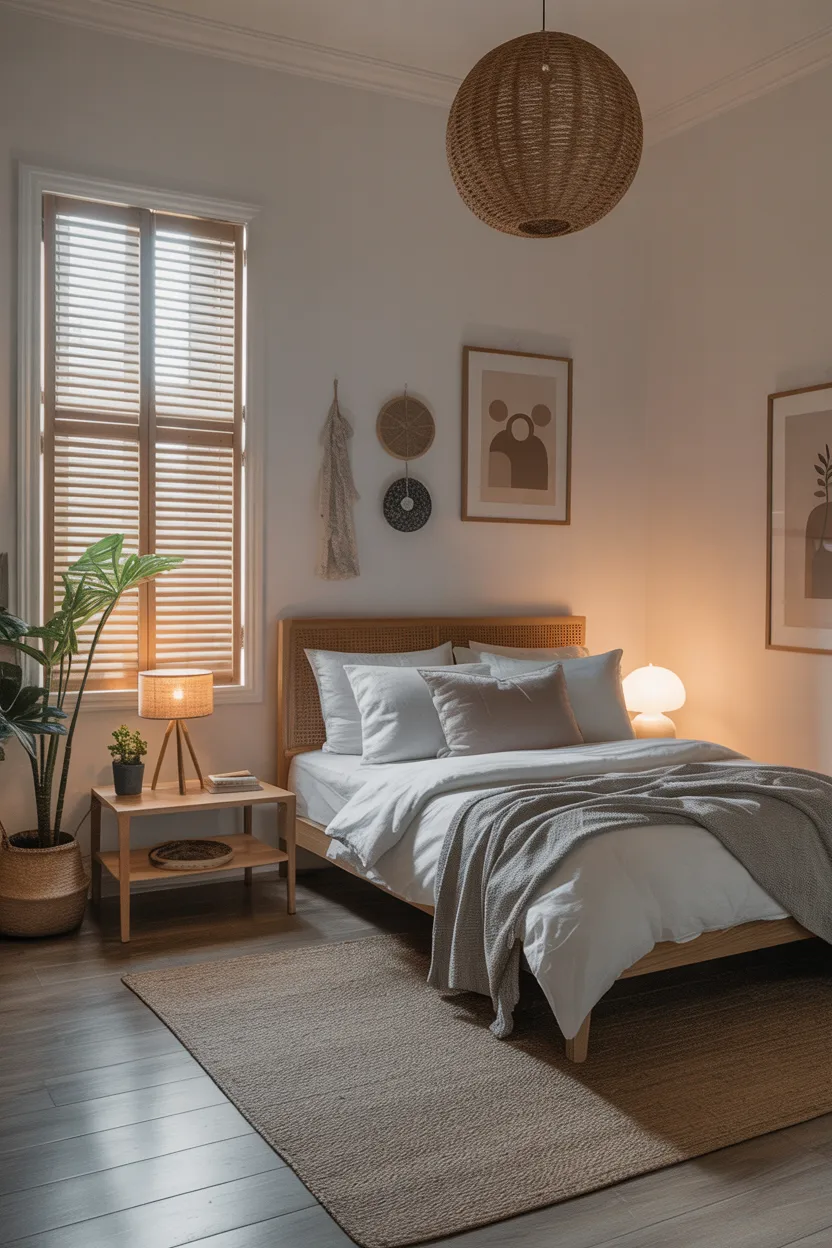
No design trick on this entire list compensates for genuine, persistent overcrowding. The single most powerful small bedroom idea for 2026 — or honestly any year — is simply choosing to own fewer things inside the space. Every object in a small bedroom competes for visual attention, and visual attention is a finite resource that runs out extraordinarily fast in a limited space surrounded by walls on all four sides.
Edit your bedroom belongings down to what you genuinely use, genuinely love, and genuinely need in that specific room. Everything else finds a home somewhere else in your living space or leaves your home entirely. A small bedroom with intentional, carefully curated contents always feels larger, calmer, and more restorative than a small bedroom stuffed with everything you own simply because it has a door you can close on it.
The editing process itself is also liberating in a way that no furniture purchase or paint color ever quite manages to be. Removing things from a small bedroom delivers an immediate, visible result that no addition ever replicates. Sometimes the most powerful design move you can make in a small space is subtraction rather than addition.
Making the Most of Every Square Foot
There you have it — 22 small bedroom ideas for 2026 that genuinely make your space look and feel bigger without requiring structural changes, enormous renovation budgets, or a design degree you don’t have time to pursue. From strategic mirror placement and ceiling-height curtains to storage bed frames and monochromatic color schemes, every single idea here works toward the same shared goal: giving your small bedroom more room to breathe and more space to feel like an actual retreat.
Start with two or three ideas that feel most immediately achievable and build from that foundation outward. Small changes compound quickly in a small space, and the difference between a cramped, frustrating bedroom and a calm, spacious-feeling one often comes down to a handful of deliberate decisions made consistently across the room rather than one dramatic overhaul.
Your small bedroom genuinely deserves to feel like a retreat rather than a storage unit you happen to sleep in. Now you have exactly what you need to make that happen.

1 Comment