

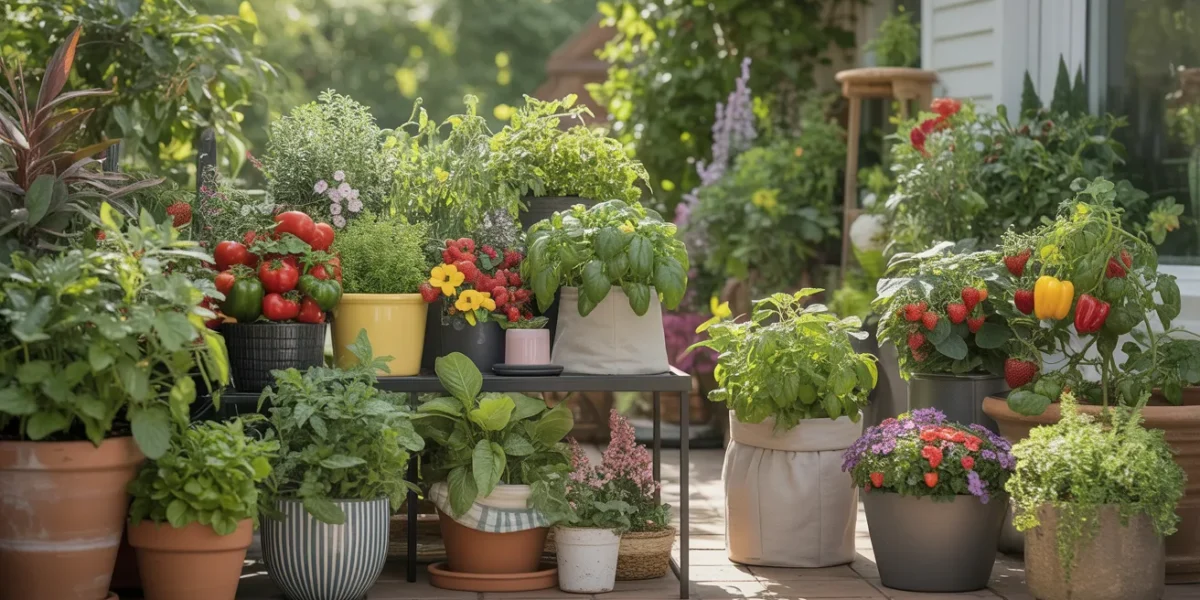
Container gardening makes life easier. You do not need a huge backyard, fancy raised beds, or a full gardening toolkit that makes you feel like you signed up for a farming documentary. You just need a few good containers, the right plants, and a spot with decent light. That is what makes this style of gardening so appealing in 2026.
I genuinely love container gardening because it feels flexible and forgiving. You can grow herbs outside your kitchen, strawberries on a balcony, peppers on a patio, or flowers by the front door without turning the whole yard into a project. If you want a garden that looks beautiful and stays manageable, these container gardening ideas for easy growing can help you get there.
1. Grow a Simple Herb Trio Near the Kitchen
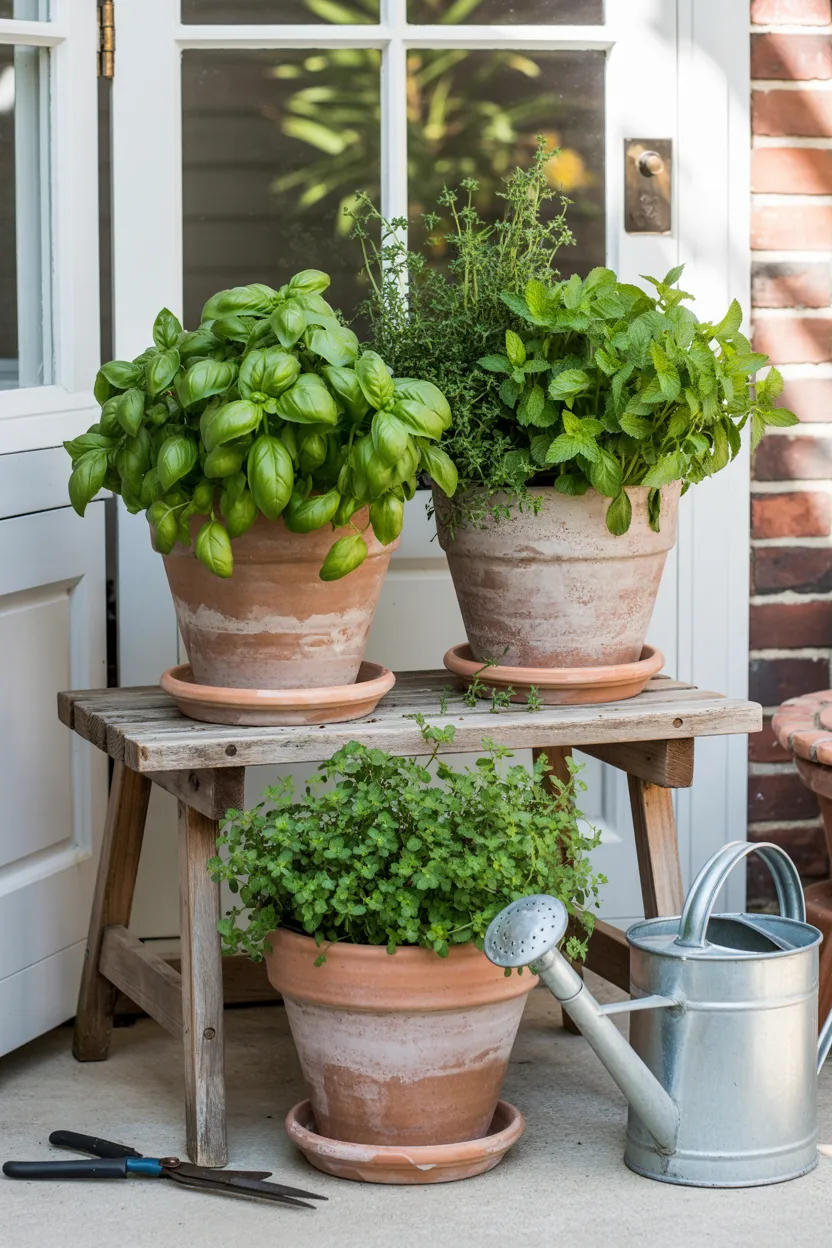
If you want the easiest place to start, start with herbs. A few pots filled with basil, parsley, and mint can completely change how useful your outdoor space feels. You step outside, clip what you need, and suddenly dinner feels fresher without much effort.
I always recommend keeping herbs close to the kitchen. That small detail matters more than people think. When herbs sit right near the back door, patio steps, or a sunny kitchen window, you actually use them. When they sit all the way across the yard, they become that thing you meant to check three days ago.
Also Read: 22 Mediterranean Garden Style 2026 That Feels Like Vacation
A simple herb trio also looks neat and organized. You can line up matching pots for a clean look or mix rustic containers if you want a more relaxed garden style. Either way, herbs are one of the easiest and most rewarding container plants you can grow.
Best Herbs for Containers
Some herbs handle containers especially well and stay productive with basic care. These are great choices for beginners and busy gardeners.
- Basil for pasta, salads, and summer flavor
- Parsley for everyday cooking and fresh green color
- Mint for tea, drinks, and desserts
- Chives for a mild onion taste
- Thyme for low-maintenance growing
- Rosemary for a stronger, woody herb option
One thing I always mention is this: keep mint in its own pot. Mint spreads fast and takes over space quickly. It is basically the bossy neighbor of the herb world.
2. Use Tiered Plant Stands for Small Spaces
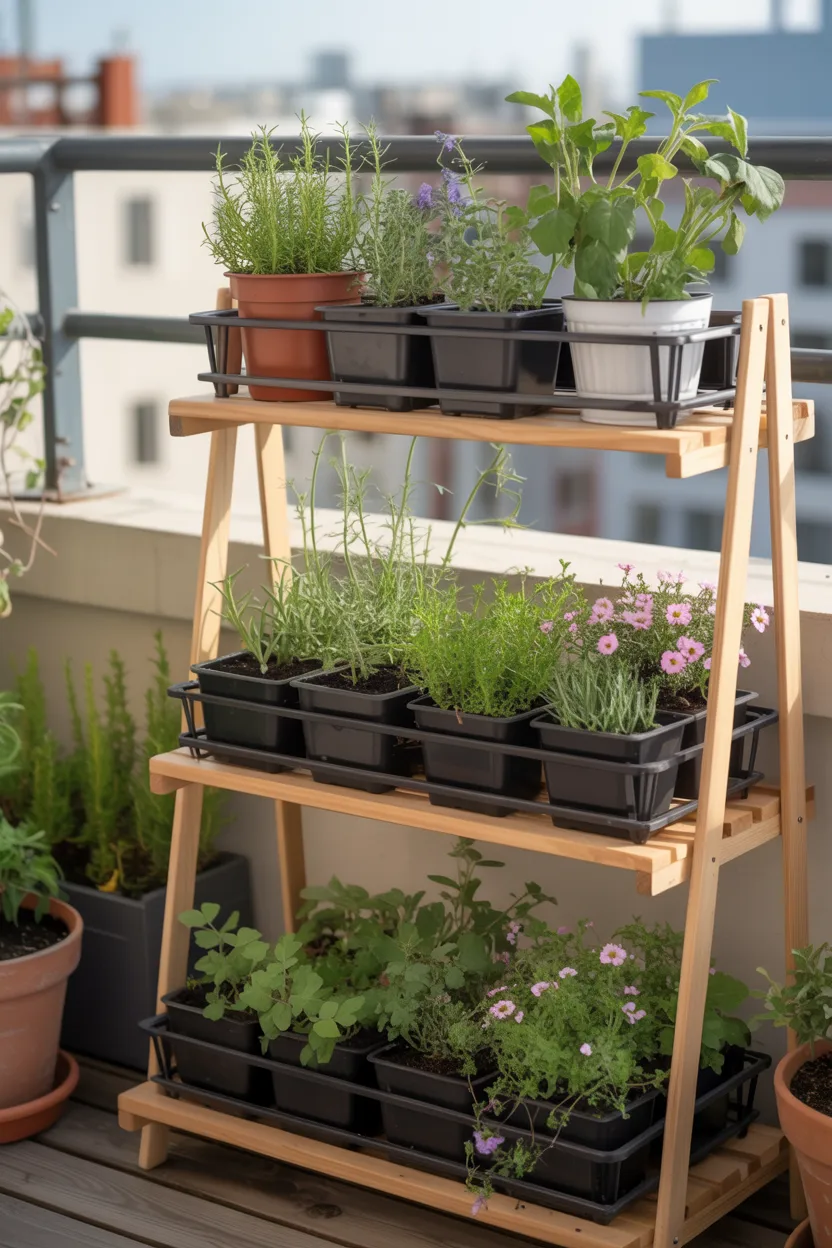
If your space feels tight, go upward instead of outward. Tiered plant stands help you fit more containers into small patios, balconies, and porches without making the area feel crowded. That vertical layout can completely change how much growing room you think you have.
I like this idea because it solves two problems at once. It creates extra planting space, and it makes the whole setup look more intentional. A cluster of pots on the ground can look messy fast, but a tiered arrangement feels tidy and styled.
You can place sun-loving plants on the top shelves and more shade-tolerant plants lower down. That makes your setup more efficient, and it gives each plant a better chance to grow well. Tiered container gardening works especially well for herbs, lettuce, strawberries, and small flowers.
Also Read: 21 Outdoor Meditation Space 2026 Ideas for Daily Calm
Why Tiered Displays Work
Tiered displays do more than save room. They make your plants easier to access and easier to enjoy.
Some of the biggest benefits include:
- Better use of vertical space
- Improved airflow around containers
- Easier harvesting and watering
- A more polished, decorative look
- More room for mixing herbs, flowers, and small edibles
Wood stands create a warm natural look, while black metal stands feel more modern. Bamboo styles give you a lighter, casual vibe. Pick one that fits your outdoor style and the look of your home.
3. Create a Salad Garden in Pots
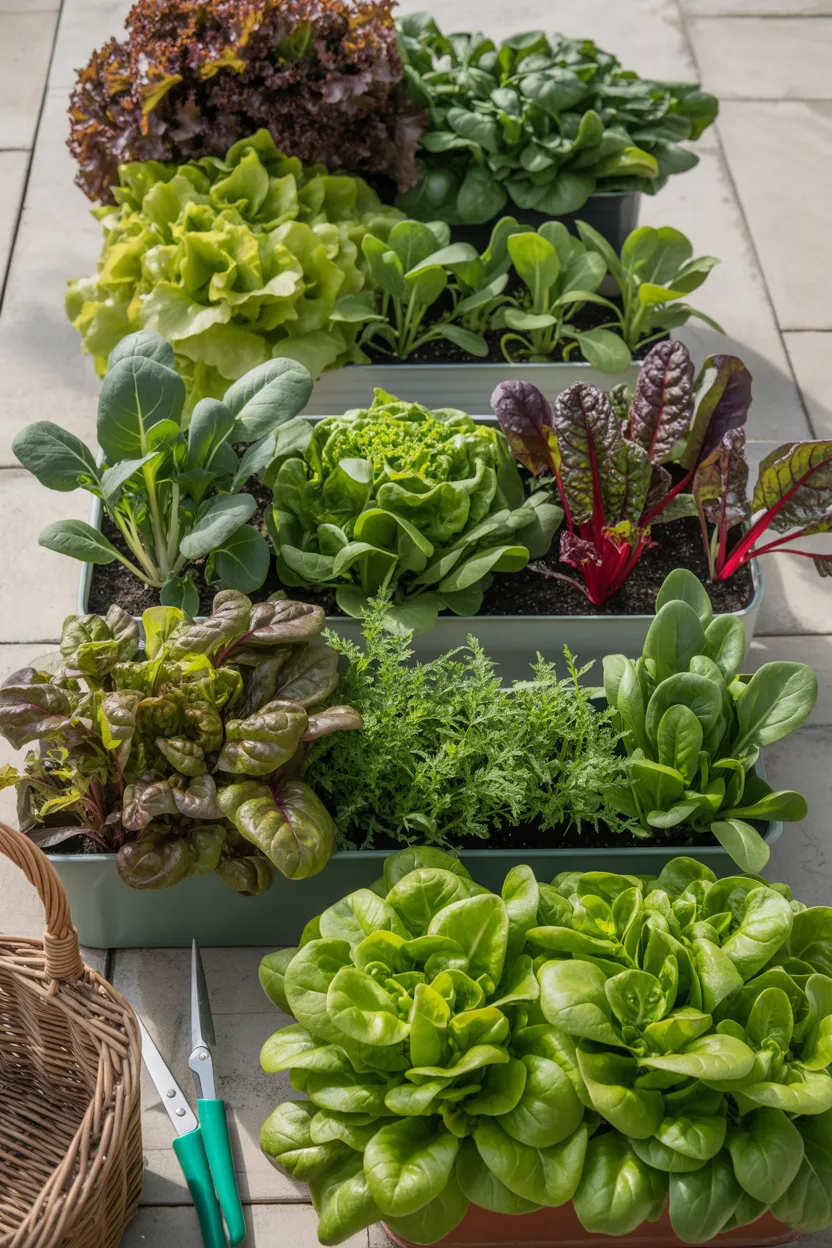
A container salad garden is one of the smartest ideas for easy growing. You do not need deep beds or a lot of room, and you can harvest fresh greens often. That means fewer grocery store lettuce bags turning limp in the fridge while you pretend you will use them tomorrow.
Wide, shallow containers work well for salad crops because many leafy greens have shallow root systems. Lettuce, spinach, arugula, and baby kale all grow nicely in pots when you give them consistent moisture and a good potting mix. This is one of the easiest ways to grow food in a small space.
I love this kind of setup because it gives quick results. Fast-growing greens make gardening feel rewarding early, and that early success keeps people motivated. When you can snip leaves for lunch in a few weeks, it feels worth the effort.
Also Read: 24 Low Maintenance Garden Ideas 2026 That Still Look Amazing
Great Crops for a Container Salad Garden
These greens perform well in containers and give you a nice mix of flavor and texture:
- Leaf lettuce
- Spinach
- Arugula
- Baby kale
- Swiss chard
- Green onions
Harvest outer leaves first so the plants keep producing. That simple habit helps you get more from each container and keeps the whole setup productive for longer.
4. Mix Flowers and Vegetables Together
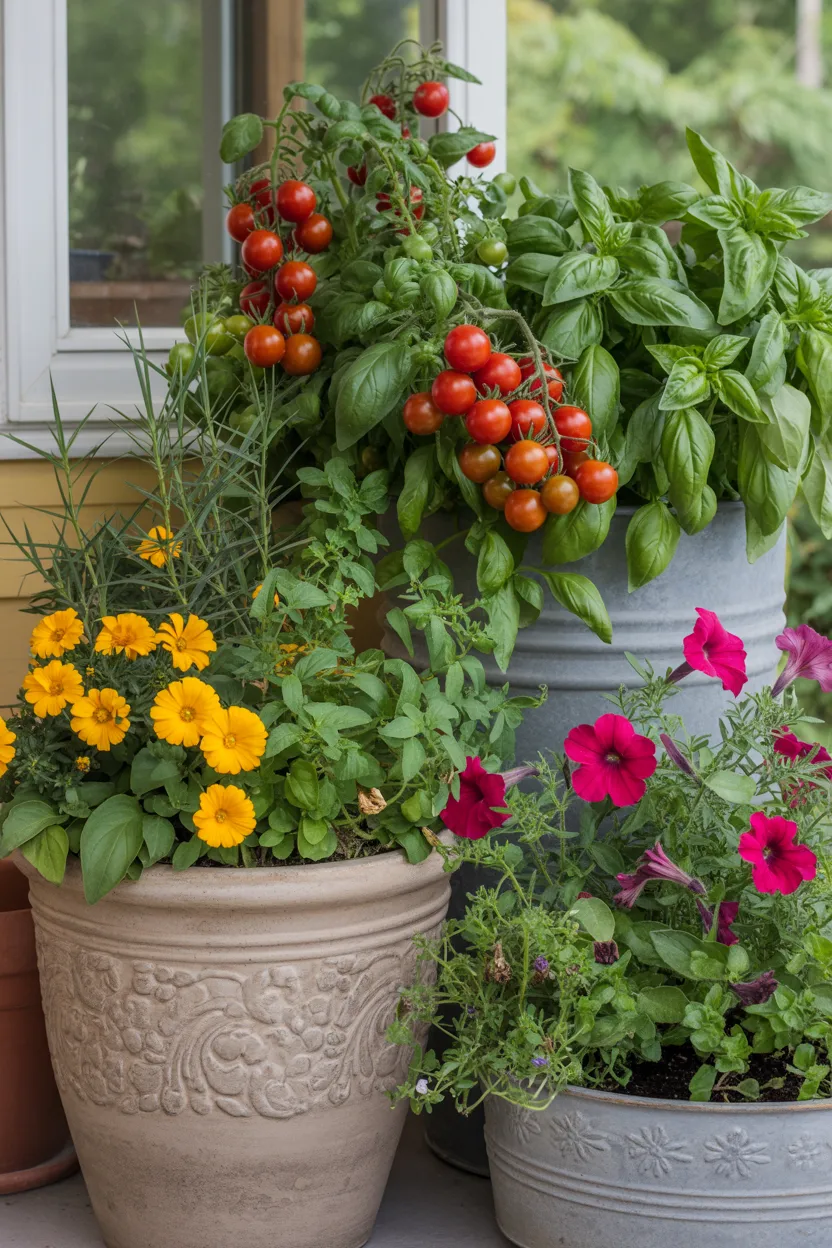
Container gardens look better when they feel layered and alive. One of the best ways to do that is by mixing flowers and vegetables in the same setup. You get practical growing space and beautiful color at the same time.
This idea works especially well on patios and front porches where you want the containers to look decorative. Tomatoes with basil and marigolds look charming. Peppers mixed with petunias or nasturtiums add color and soften the look of edible plants. A mixed container garden feels fuller, more welcoming, and much more interesting.
Flowers also serve a useful purpose. Some attract pollinators, and others make the whole area feel more vibrant. That combination of beauty and function makes this one of my favorite container gardening styles.
Easy Flower and Veggie Pairings
Here are some combinations that usually look great together:
- Cherry tomatoes, basil, and marigolds
- Peppers and petunias
- Lettuce and pansies
- Kale and ornamental cabbage
- Strawberries with trailing flowers
This kind of planting makes containers feel less plain. You get food, color, texture, and a more styled look without needing a huge garden plan.
5. Use Grow Bags for Easy Veggie Success
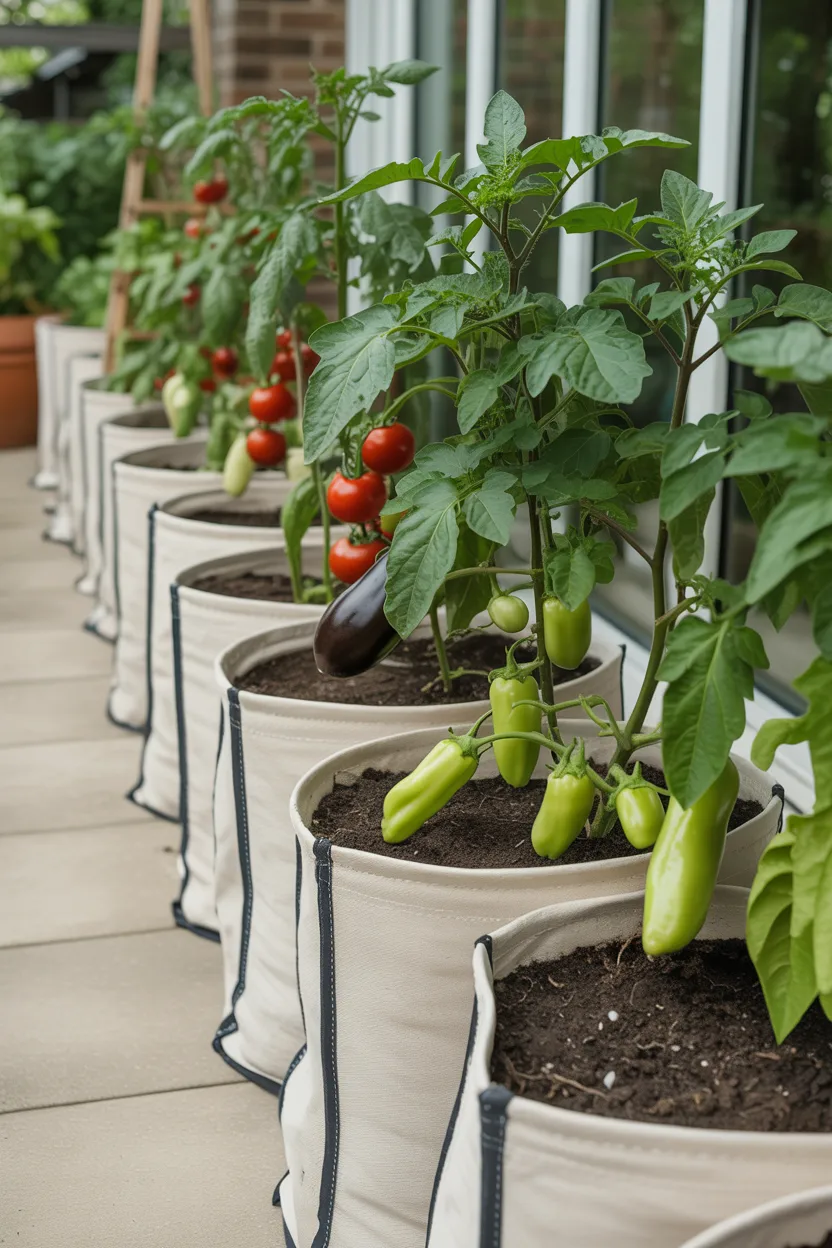
Grow bags make vegetable gardening easier than many people expect. They are simple, affordable, lightweight, and surprisingly effective. If you want to grow vegetables without buying a bunch of heavy pots, grow bags are a really practical option.
I like them because they give roots good airflow and help prevent the circling root problem you often get in hard containers. They also store easily when the season ends. That matters if you do not want your shed or patio cluttered with empty pots for half the year.
Grow bags work especially well for warm-season crops. They heat up fast, drain well, and give large vegetables enough room to grow if you choose the right size.
Also Read: 23 Outdoor Yoga Space 2026 Ideas That Feel Peaceful
Best Plants for Grow Bags
These crops usually do very well in fabric grow bags:
- Tomatoes
- Potatoes
- Peppers
- Eggplant
- Bush beans
- Compact zucchini in larger bags
The main thing to remember is watering. Grow bags dry out faster than solid containers, especially in hot weather. Check them often and stay ahead of dryness before your plants start acting offended.
6. Plant Strawberries in Hanging Baskets
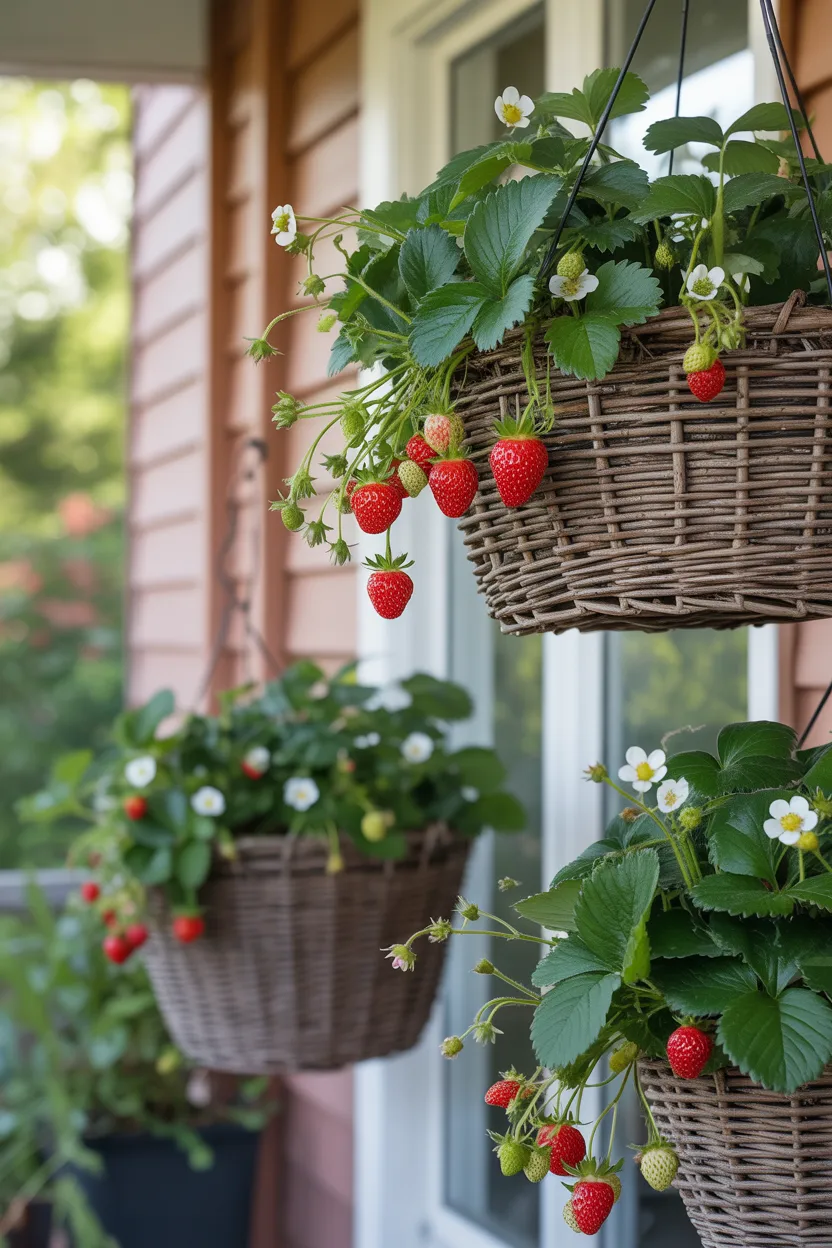
Strawberries and hanging baskets make such a good match. The berries hang cleanly, the plants stay off the ground, and the whole setup looks charming. It is one of those ideas that feels both practical and pretty, which is exactly what a good container garden should be.
This works especially well if you garden in a small space. Hanging baskets free up patio and balcony room while still giving you an edible crop. Strawberries grow beautifully in hanging containers when they get sun, water, and regular feeding.
I also like this option because harvesting becomes easier. You can see the fruit clearly, reach it quickly, and avoid many of the issues that come with berries touching damp soil.
Tips for Better Strawberry Baskets
To get the best results, focus on a few simple care habits:
- Use a basket with good drainage
- Choose everbearing or day-neutral varieties
- Water regularly in warm weather
- Feed during the growing season
- Place the basket in full sun
Strawberries in baskets bring a cheerful look to porches and balconies. They feel useful, decorative, and just plain satisfying.
7. Build a Tomato Container Corner
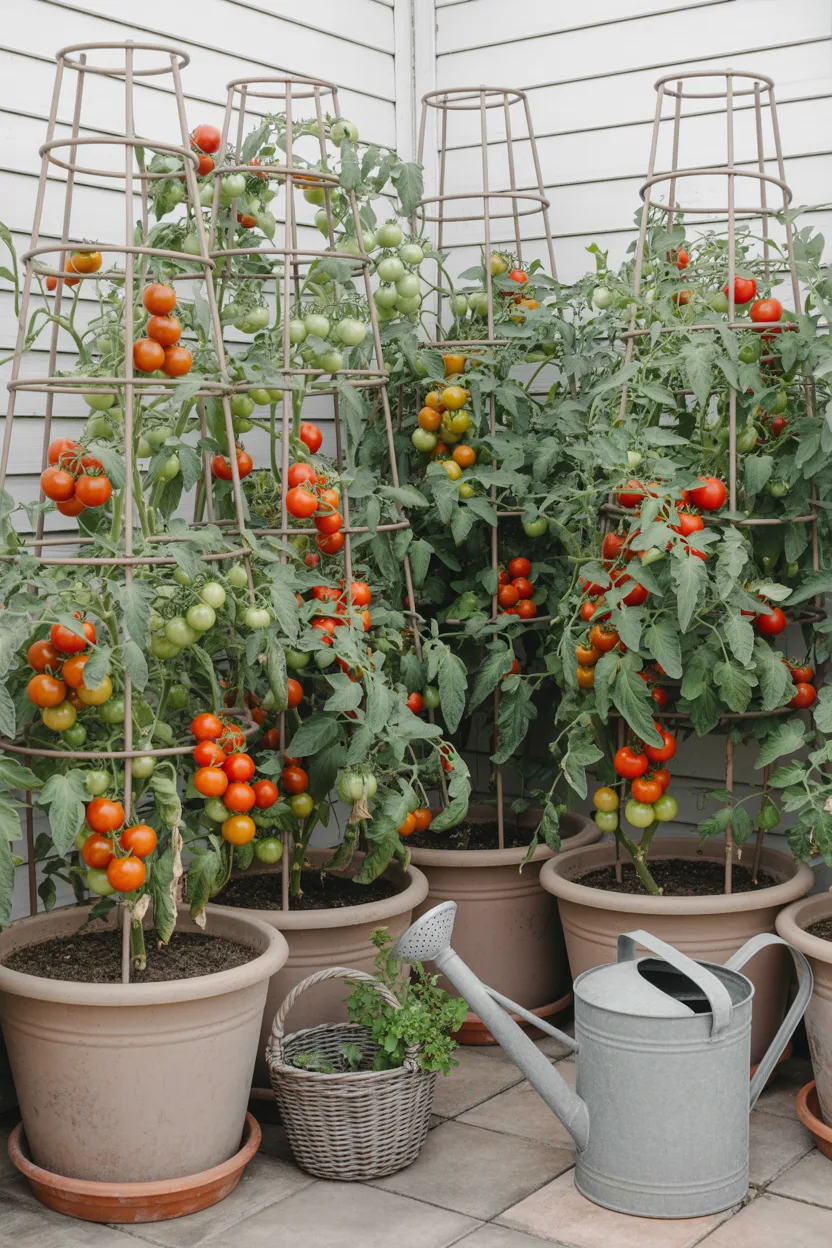
Tomatoes deserve their own space because people love growing them, and for good reason. Homegrown tomatoes taste better, smell better, and make you feel strangely proud every single time you pick one. A dedicated container tomato corner can turn a sunny patio into a productive mini garden.
The key is choosing large containers. Tomatoes need root space, steady moisture, and support. If you try to grow a full tomato plant in a tiny pot, it will let you know exactly how bad that decision was. Large containers give tomatoes the room they need to grow strong and produce more fruit.
Also Read: 20 Courtyard Water Feature Ideas 2026 That Feel Luxurious
I always suggest adding support early. Put in a cage or stake when the plant is still young. Waiting until the plant gets huge usually ends in a wrestling match you will not enjoy.
Container Tomato Basics
To keep container tomatoes healthy and productive, focus on these essentials:
- Use large pots
- Choose quality potting mix
- Water consistently
- Give plants full sun
- Add support early
- Feed regularly through the season
Cherry tomatoes and compact patio varieties are especially good for containers. They tend to produce heavily and feel less fussy for beginners.
8. Try a Pollinator Pot Garden
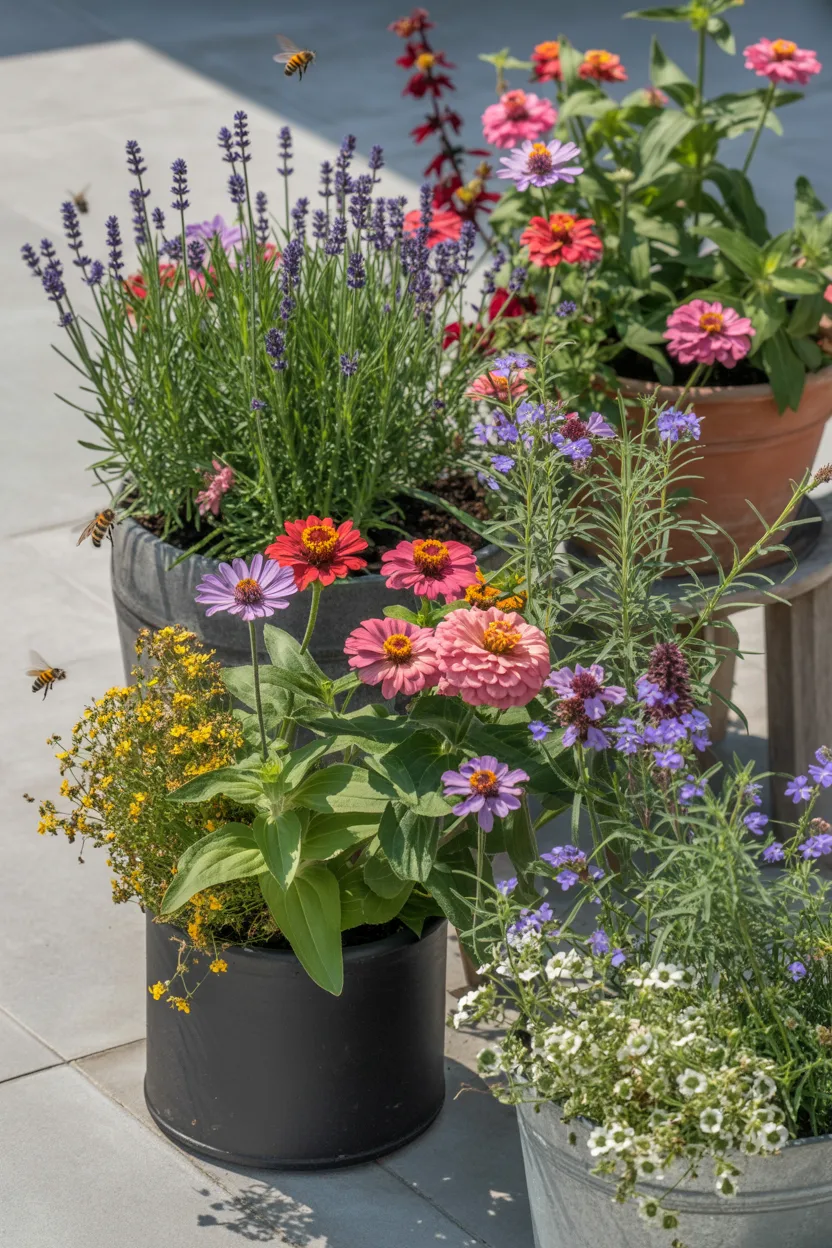
A pollinator pot garden adds life to your outdoor space. When bees and butterflies start visiting your containers, the whole area feels more active and natural. Even a small grouping of flower pots can help support pollinators while making your patio look more colorful.
This idea works best in a sunny spot where you can group several flowering containers together. That cluster effect helps pollinators notice the plants more easily. Pollinator-friendly container gardens bring movement, color, and ecological value to small spaces.
I really like this setup near seating areas because it makes the space feel more relaxed and alive. Watching butterflies around your flowers while you drink coffee outside is a pretty solid gardening reward.
Also Read: 22 Tropical Garden Design Ideas 2026 That Feel Like Paradise
Good Pollinator Plants for Containers
These plants do well in pots and attract helpful pollinators:
- Lavender
- Salvia
- Zinnias
- Cosmos
- Verbena
- Calibrachoa
Try to avoid heavy pesticide use around these plants. If the goal is to attract pollinators, you want the space to stay safe for them too.
9. Use Self-Watering Pots for Low-Stress Care
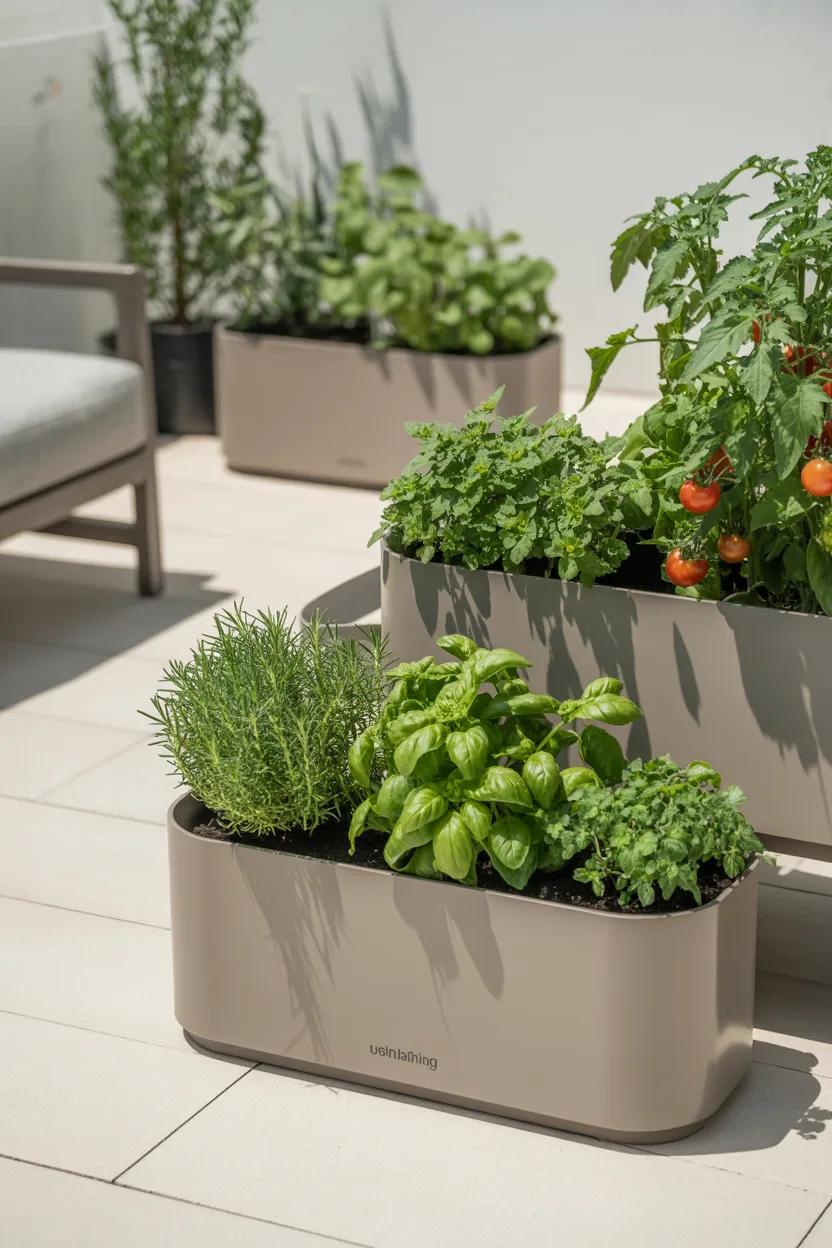
Self-watering pots can make a huge difference if you forget to water sometimes. I am not judging. Most gardeners miss a day here and there, especially in summer when containers seem to dry out the second you look away. That is where these pots really help.
They store water in a lower reservoir and let the soil draw moisture up as needed. That helps keep conditions more even, which matters for plants that hate drying out completely. Self-watering pots reduce stress and make container gardening much easier to manage.
They are especially useful for herbs, salad greens, and thirsty summer crops. While they do not remove the need for care, they take some pressure off your daily routine.
Also Read: 22 Japanese Garden Ideas 2026 That Feel Calm and Beautiful
Best Uses for Self-Watering Containers
These plants and setups often benefit the most:
- Herbs in hot sunny spots
- Lettuce and leafy greens
- Patio tomatoes
- Balcony planters
- Flower boxes that dry out quickly
If you travel often or just want a lower-maintenance setup, this is a smart upgrade.
10. Make a Color-Themed Flower Pot Collection
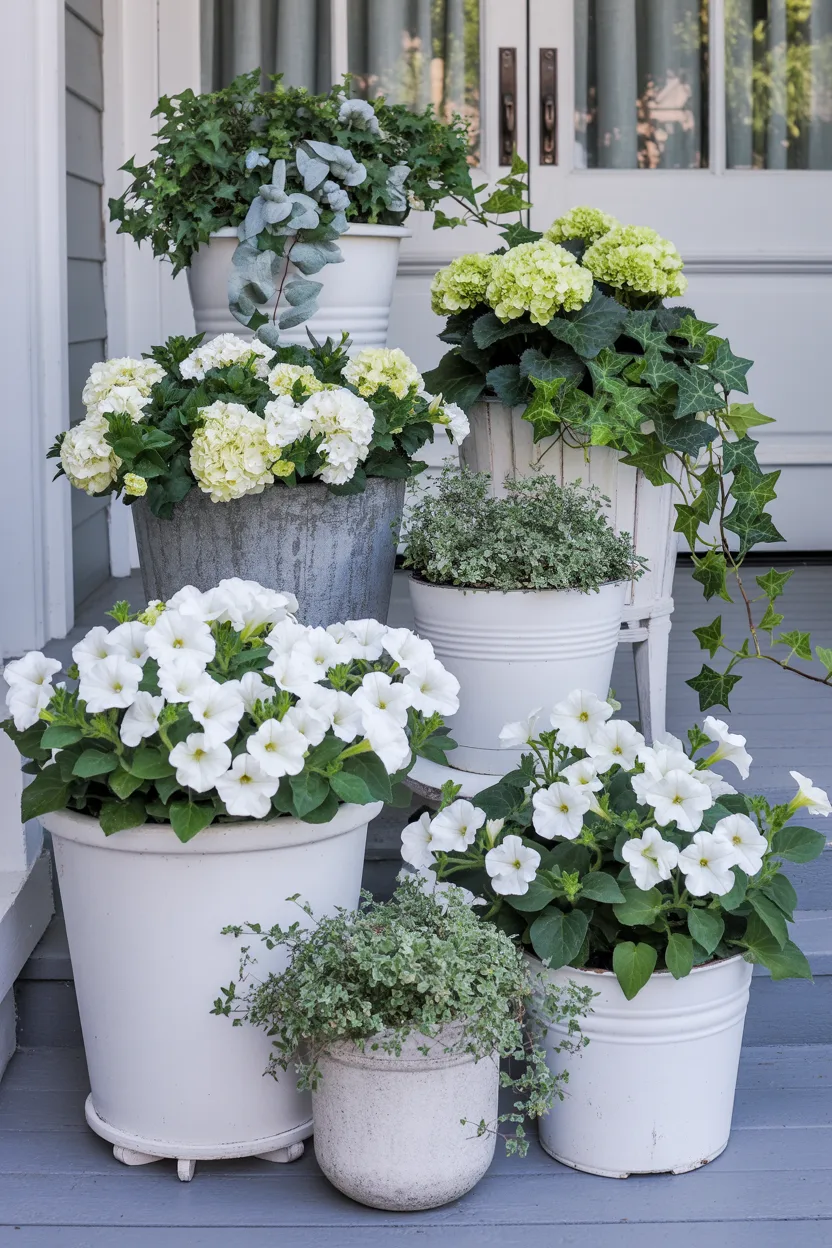
A color-themed container collection can make your whole garden look more stylish without requiring a massive number of plants. Instead of mixing every shade together, choose a focused palette and build around it. That one design choice can make a small area feel polished fast.
I love this idea for front porches and patios because it creates a strong visual impression right away. White and green feels calm and clean. Pink and purple feels soft and cottage-like. Orange and yellow feel bright and cheerful. A color-based container garden helps your space look intentional and well designed.
Also Read: 21 Outdoor Breakfast Patio 2026 Ideas for Cozy Mornings
This idea works well even if you only have a few pots. The coordinated look does a lot of the work for you.
Popular Color Themes for 2026
These color combinations feel especially fresh and versatile:
- White and green for a clean classic style
- Pink and purple for a romantic garden feel
- Orange and yellow for warm energy
- Blue and silver for a cooler, calm look
When you repeat colors across containers, the whole garden feels more connected. That simple trick makes a big difference.
11. Grow Peppers in Sunny Patio Pots
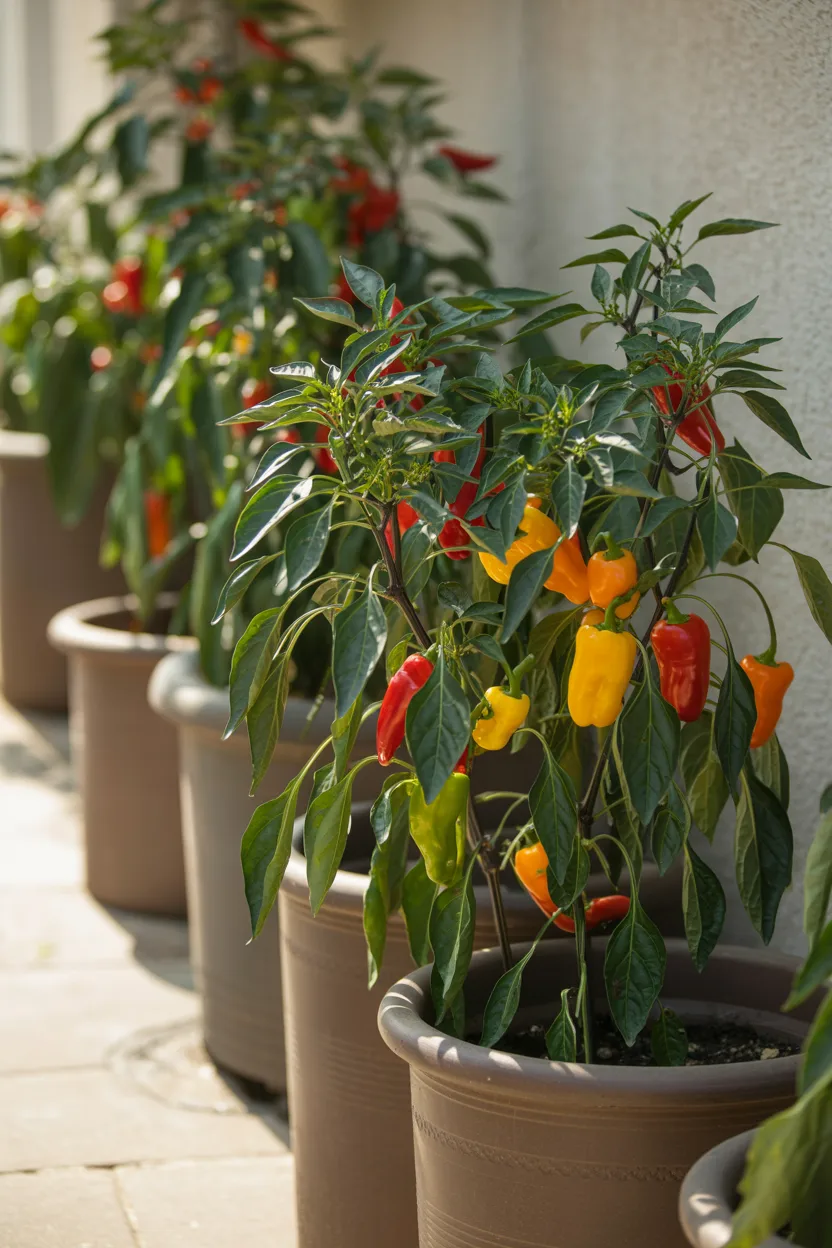
Peppers are perfect for container gardens because they stay fairly compact, love warm weather, and produce colorful fruit. They also look good while growing, which is always a bonus when your garden sits where people can see it.
Both sweet peppers and hot peppers do well in containers if you give them enough sun. They need warmth, regular watering, and feeding through the season. Peppers thrive in pots when you place them in a bright, sunny area and keep their care consistent.
I like peppers because they feel manageable. They do not sprawl everywhere, and they give you a good harvest in a relatively tidy form. That makes them ideal for patios and decks.
Why Peppers Make Great Container Plants
Peppers have several qualities that make them easy to grow in pots:
- Compact growth
- Colorful fruit
- Attractive leaves
- Good production in heat
- Easy care once established
They also pair nicely with herbs and flowers, so you can make the container both useful and decorative.
12. Add a Rolling Container Garden
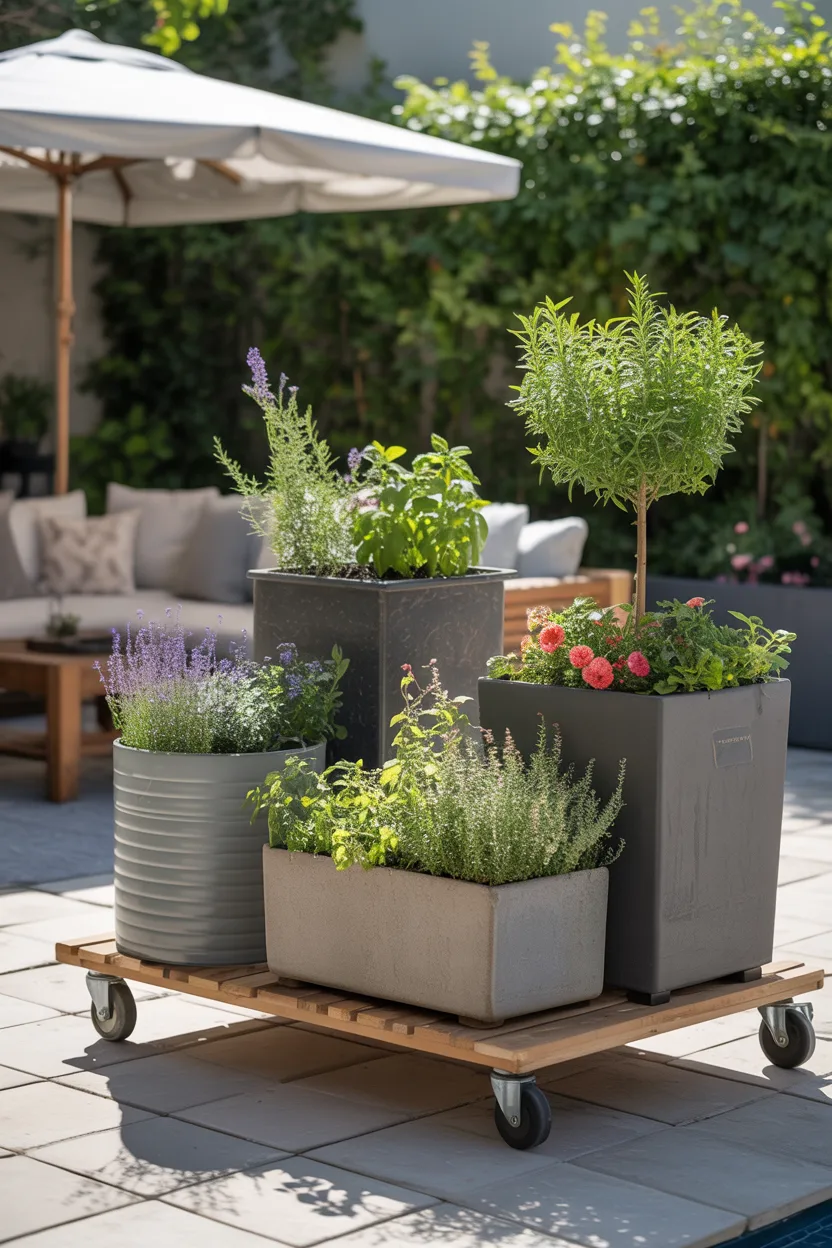
A rolling container garden gives you flexibility, and that flexibility becomes more useful than people expect. If the light shifts during the day, move the pots. If strong weather rolls in, move them again. If you want to clear space for guests, just wheel the containers aside.
This setup works well with heavy planters, fruit trees, and larger vegetables that you do not want to lift all the time. Rolling plant caddies and wheeled containers make large container gardens easier to manage.
I think this idea is especially smart for patios with changing sunlight. Some homes get morning sun in one area and afternoon sun in another. Moveable containers let you take advantage of that without committing each plant to one permanent spot.
Also Read: 23 Garden Wall Ideas 2026 That Instantly Upgrade Your Yard
Best Plants for Moveable Containers
These are great options for rolling setups:
- Citrus trees
- Tomatoes
- Herbs
- Geraniums
- Dwarf shrubs
- Tender tropical plants
This small change can make your container garden feel much more practical from season to season.
13. Create a Kids’ Container Garden
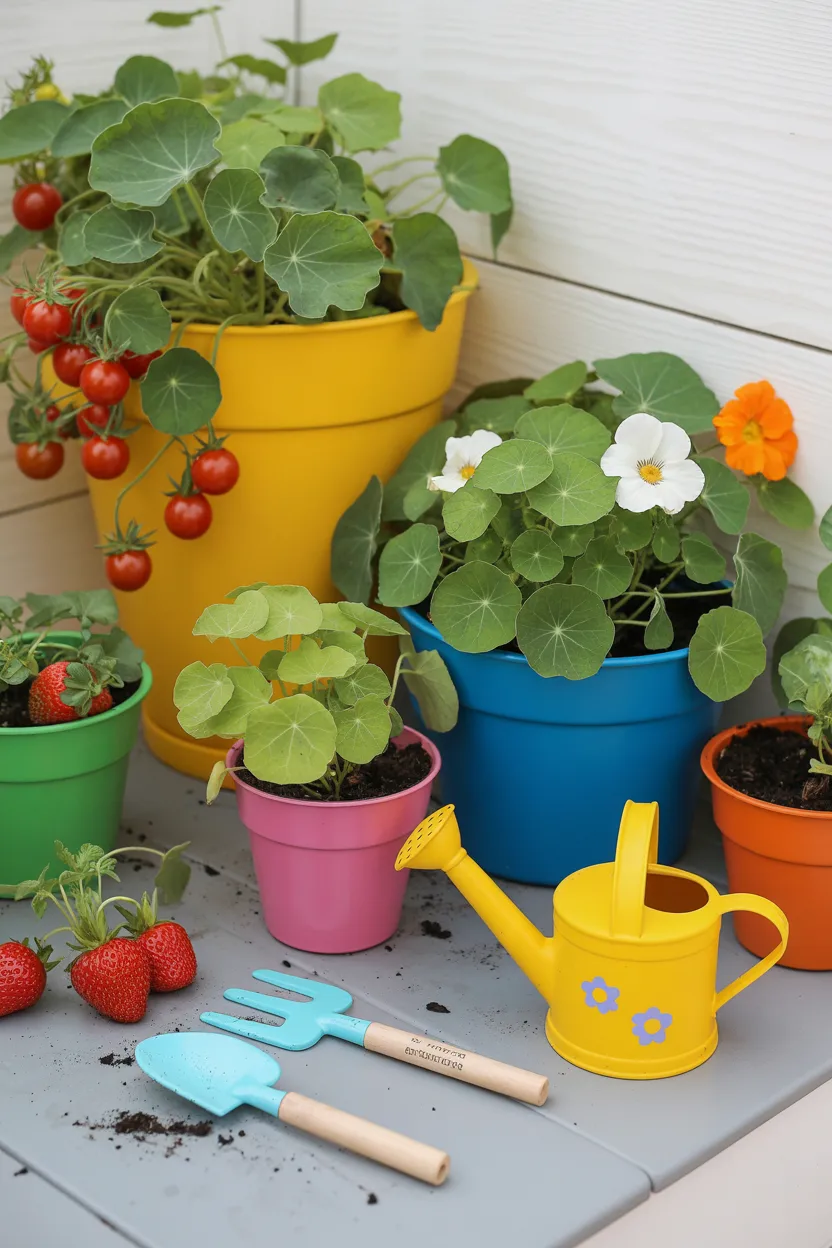
A kids’ container garden makes gardening feel fun, hands-on, and much less intimidating for children. Pots are easier to manage than large beds, and they give kids a clear sense of ownership. One pot can become their little project, which keeps them more interested.
Choose bright containers and fast, rewarding plants. Kids usually enjoy crops they can harvest quickly or plants that visibly change in a short time. Container gardening is a simple way to help children learn how plants grow without overwhelming them.
I always think this works best when you let kids make some choices. Let them pick a pot color, choose between a few easy plants, and help with watering. That keeps the process playful instead of turning it into a chore.
Easy Plants for Kids to Grow
These plants tend to work well for beginners and younger gardeners:
- Radishes because they grow quickly
- Cherry tomatoes because they are fun to pick
- Strawberries because kids actually get excited about them
- Nasturtiums because they grow fast and look cheerful
- Sunflowers in large pots for dramatic height
Watching a child proudly show off one tomato like they just won an award is one of the better parts of gardening, honestly.
14. Use Window Boxes for Instant Growing Space
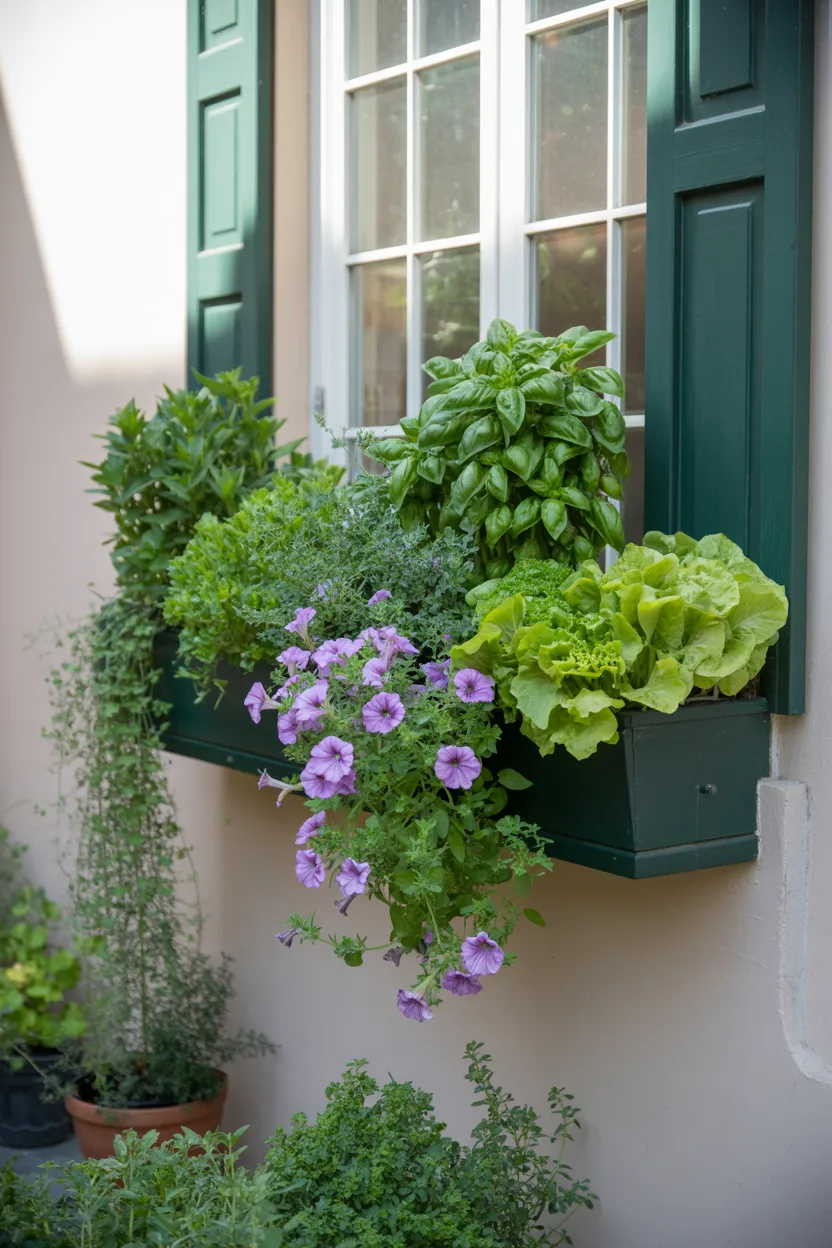
Window boxes add charm and useful planting space at the same time. They can hold herbs, flowers, greens, or a simple mixed arrangement. If you do not have much floor space, this idea helps you use walls and ledges more effectively.
I like window boxes because they make the outside of a home look more alive. Even a plain wall or simple window can feel warmer and more welcoming once you add greenery. Window boxes turn overlooked spaces into practical growing areas.
They work well for apartments, townhouses, and smaller homes where every bit of planting room counts. Just make sure the boxes get enough light for whatever you want to grow.
Also Read: 25 Outdoor Party Lounge 2026 Ideas for Fun Nights
What to Grow in Window Boxes
These plants usually do well in window box setups:
- Basil
- Parsley
- Thyme
- Lettuce
- Pansies
- Trailing petunias or ivy
Drainage matters a lot here. A cute window box still needs proper setup if you want healthy roots and happy plants.
15. Try Dwarf Fruit Trees in Large Pots
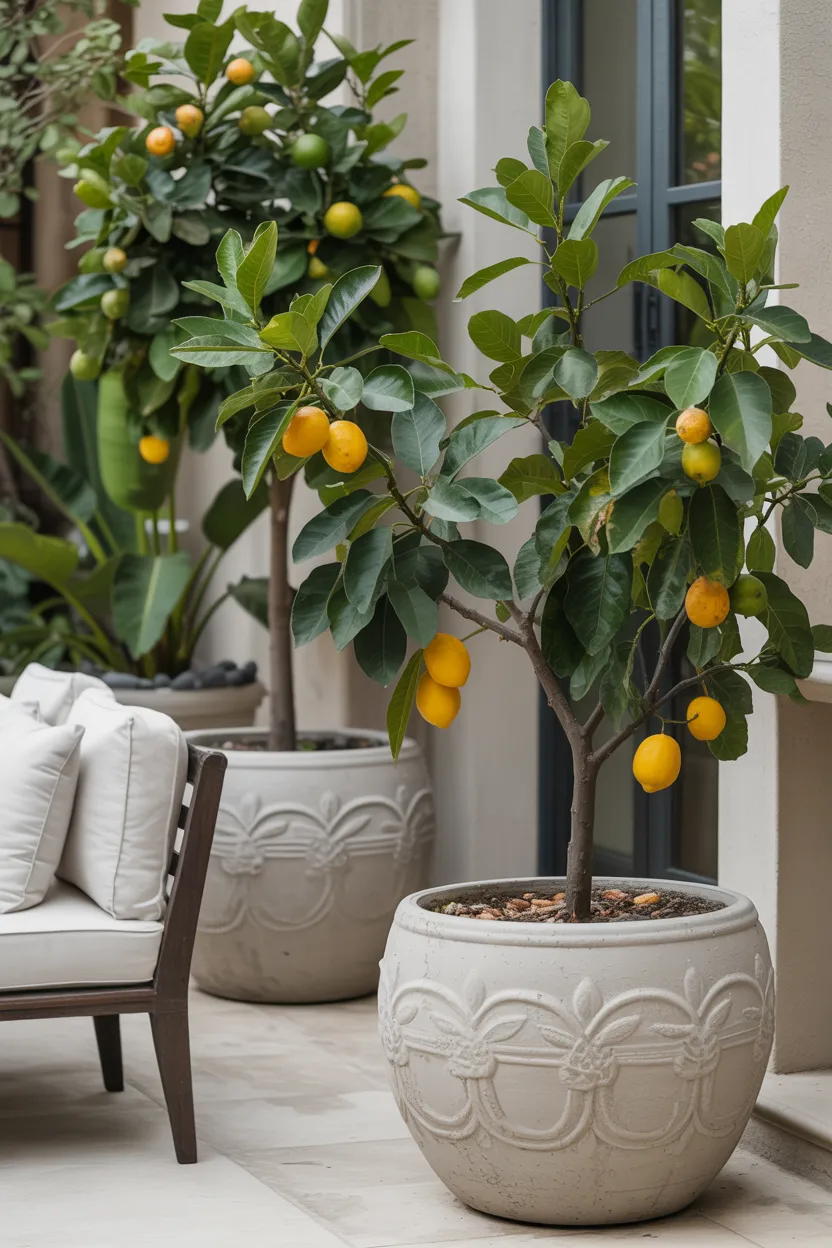
Dwarf fruit trees bring height, structure, and a more established garden feel to container spaces. They also make patios look more finished and a little more luxurious. A well-grown citrus tree in a pot has that effect. It just does.
The key is choosing the right tree. You want a dwarf variety suited to containers, not a regular fruit tree forced into a pot and expected to stay cheerful about it. Dwarf fruit trees can grow successfully in large containers when you give them enough room, drainage, and feeding.
This idea works especially well for lemons, limes, figs, and certain compact apple varieties depending on your climate. It gives your space a nice mix of beauty and usefulness.
Keys to Success With Fruit Trees in Pots
Keep these basics in mind:
- Use a large sturdy container
- Choose a well-draining potting mix
- Feed regularly during active growth
- Prune to maintain size and shape
- Protect the tree during cold weather if needed
Fruit trees in containers require more attention than herbs or flowers, but the payoff looks great and feels rewarding.
16. Grow a Tea Garden in Containers
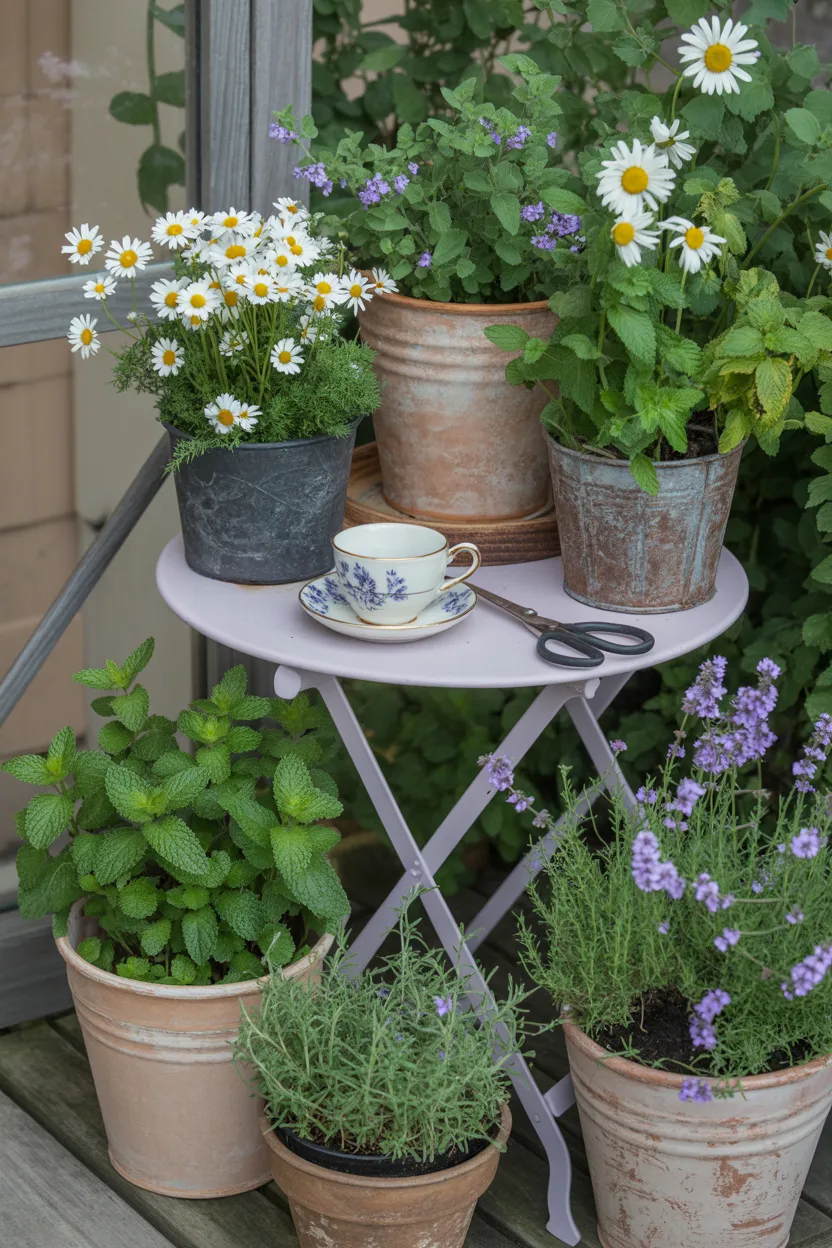
A container tea garden feels calm, practical, and a little special. You can grow herbs and flowers that you later use for homemade tea blends, which makes your garden feel more personal. It is not just decorative. It gives you something you can actually use.
I love this idea because it turns a small growing space into a sensory one. You get fragrance, texture, beauty, and a purpose beyond basic landscaping. Tea gardens work really well in containers because many tea herbs stay compact and thrive in pots.
This setup also fits nicely near seating areas. Snipping mint or lemon balm from your own containers for a fresh cup of tea feels surprisingly satisfying.
Plants for a Simple Tea Garden
These herbs and flowers work well for beginner-friendly tea gardens:
- Chamomile
- Mint
- Lemon balm
- Lavender
- Thyme
- Stevia in suitable climates
Always make sure you correctly identify edible plants and use clean growing practices if you plan to harvest them for tea.
17. Combine Tall, Medium, and Trailing Plants
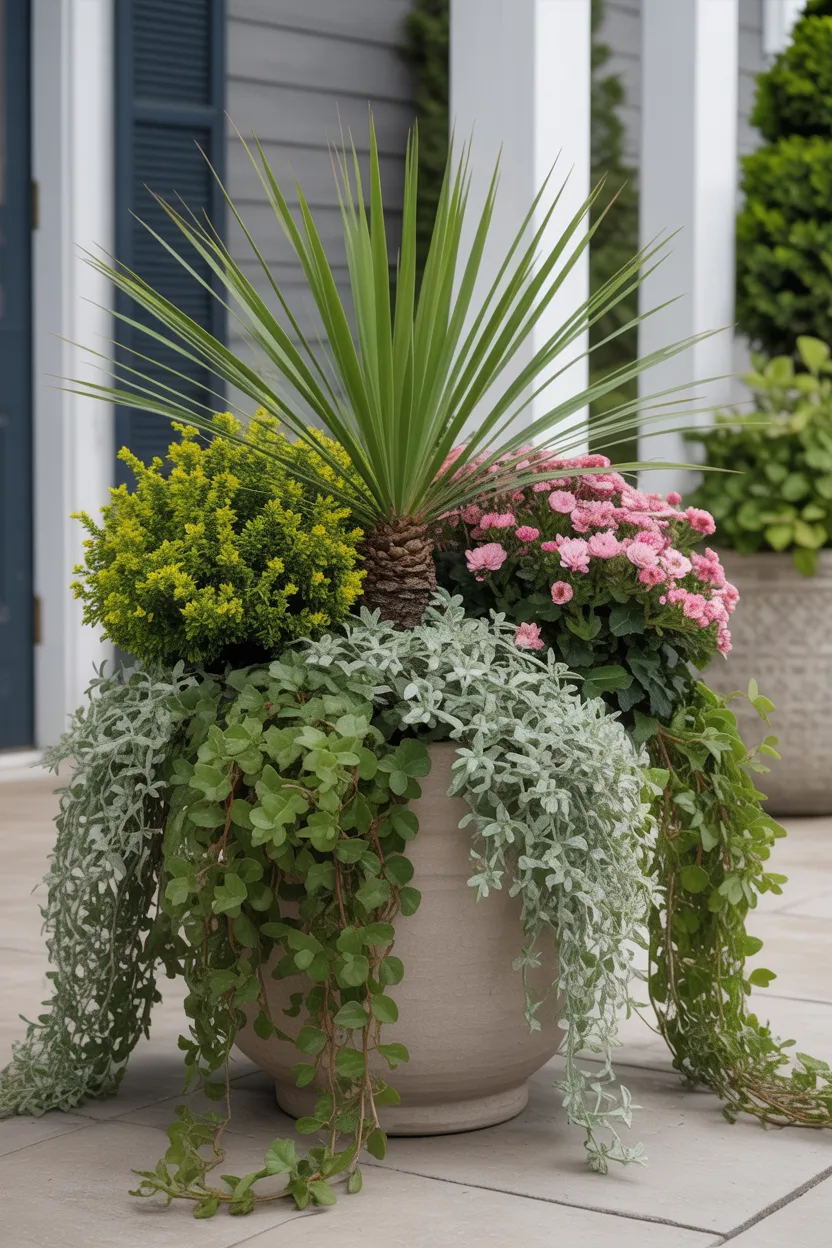
This is one of the easiest ways to make a container look full and professional. Instead of planting one thing in the middle and hoping it somehow becomes stunning, create layers. Use one tall plant, one mounding or medium-height plant, and one trailing plant around the edges.
That layered method adds height, shape, and movement. Gardeners often call it the thriller, filler, and spiller formula. Fancy name, simple idea. Layered containers look richer, more balanced, and much more designed.
I use this approach whenever I want one pot to make a stronger visual impact. It works for flowers, foliage plants, and even edible combinations.
Easy Thriller, Filler, Spiller Combos
Here are a few combinations that work nicely:
- Spike grass, petunias, and trailing ivy
- Dwarf canna, coleus, and sweet potato vine
- Pepper plant, basil, and nasturtium
- Lavender, calibrachoa, and creeping Jenny
Once you start using layered combinations, single flat containers can feel a little dull by comparison.
18. Use Recycled Containers With Style
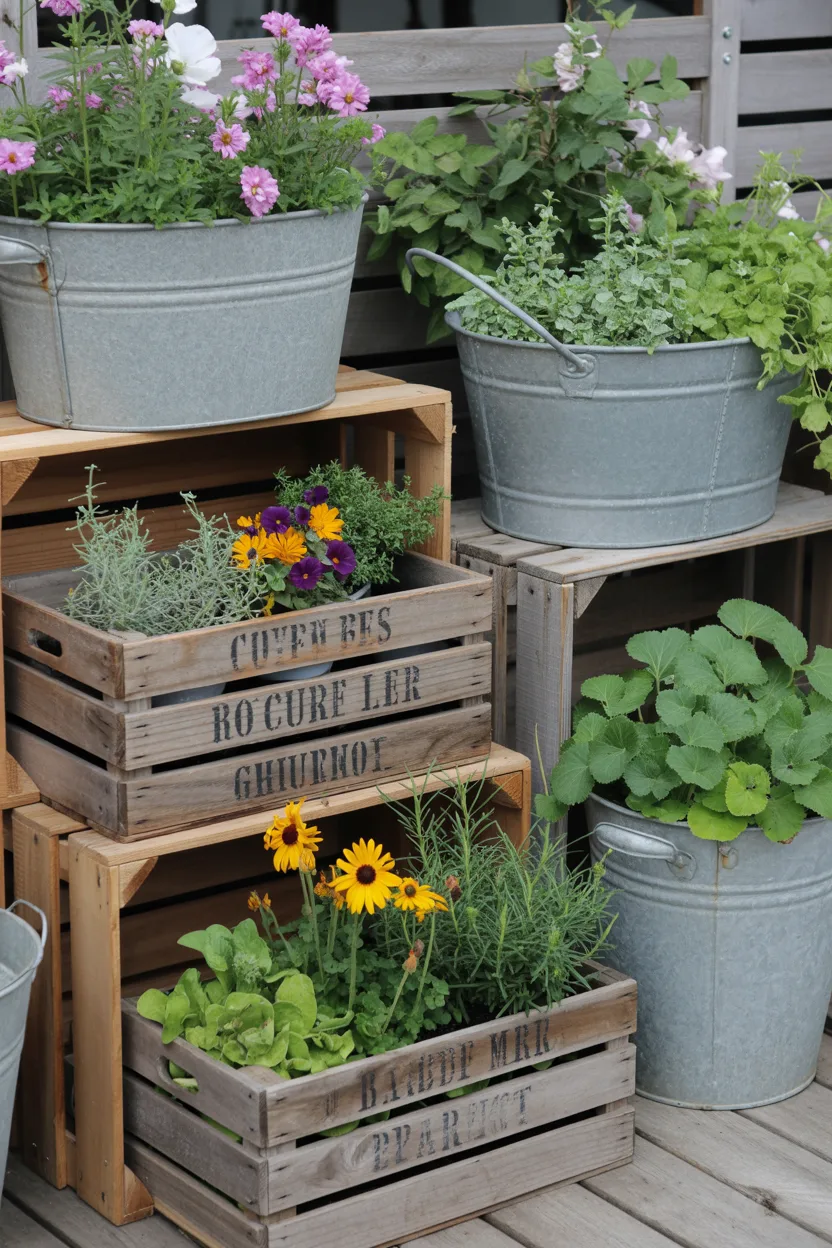
Recycled containers can save money and add character to your garden. Old tubs, wooden crates, buckets, baskets, and similar items can become planters when you prep them properly. This approach works especially well if you like rustic, cottage, or collected-looking spaces.
I enjoy this idea because it makes the garden feel more personal. Not everything has to come straight from a garden center looking perfectly matched. Sometimes the containers with the most personality create the best overall look. Repurposed planters bring charm and creativity to container gardening.
That said, use a little restraint. Not every object needs a second life as a pot. Some things look charming, and some things look like you gave up halfway through decorating.
Recycled Items That Can Work as Planters
These can work well if you add proper drainage:
- Metal tubs
- Wooden boxes
- Old colanders
- Buckets
- Ceramic bowls
- Vintage-style crates
Drainage holes are essential. If water cannot escape, roots struggle, and the whole container setup goes downhill quickly.
19.
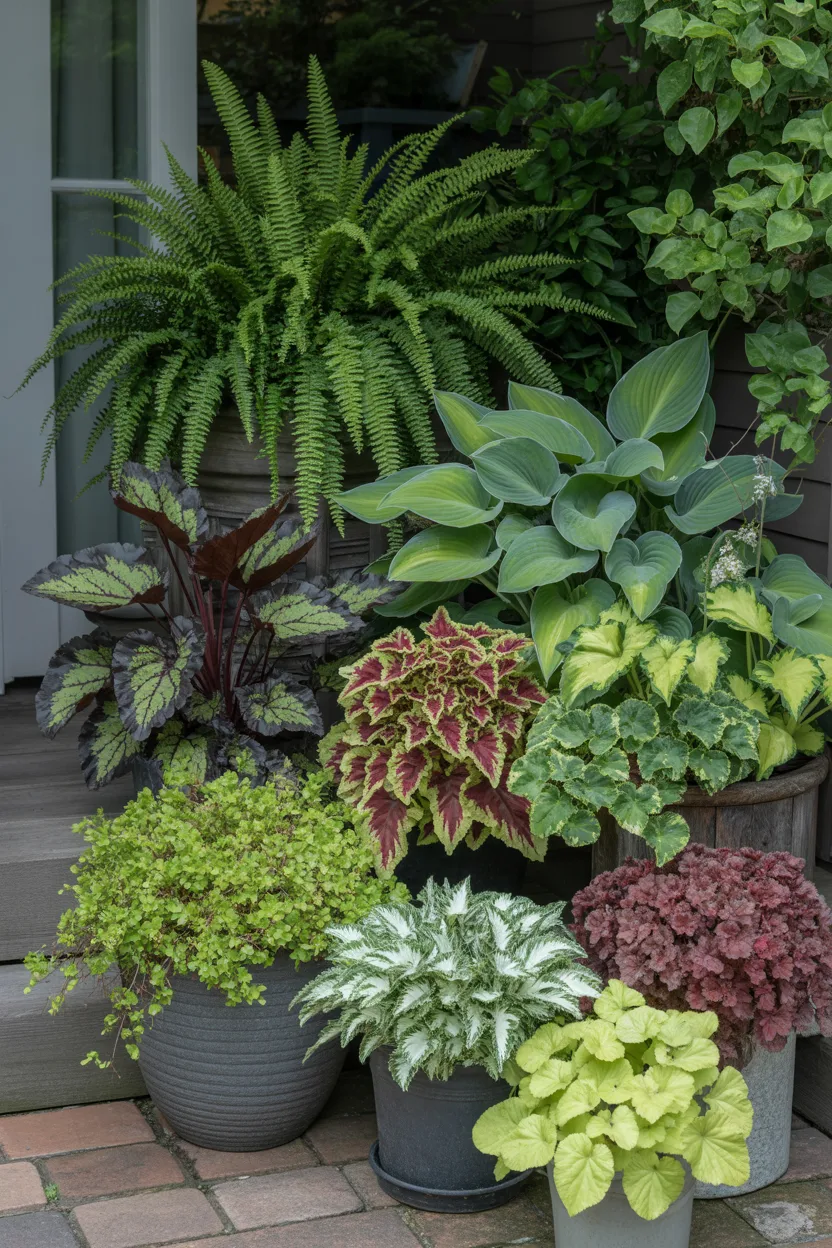
A shady patio or covered porch can still become a beautiful container garden. Not every plant needs blazing afternoon sun, and some actually perform better with gentler light. If your growing space gets partial shade, you still have plenty of good options.
I like shade container gardens because they often feel cooler, calmer, and more relaxing than bright full-sun spaces. They lean into texture, foliage, and rich color instead of relying only on bold blooms. Shade-friendly container gardens make overlooked spaces feel lush and inviting.
This type of setup works especially well near seating areas, entryways, and side yards where sunlight stays limited.
Great Plants for Shady Containers
These plants usually perform well in lower-light conditions:
- Ferns
- Hostas
- Coleus
- Begonias
- Impatiens
- Heuchera
Mix different leaf sizes and colors to create depth. In shade gardens, foliage does a lot of the design work.
20. Design a Seasonal Rotation Pot Garden
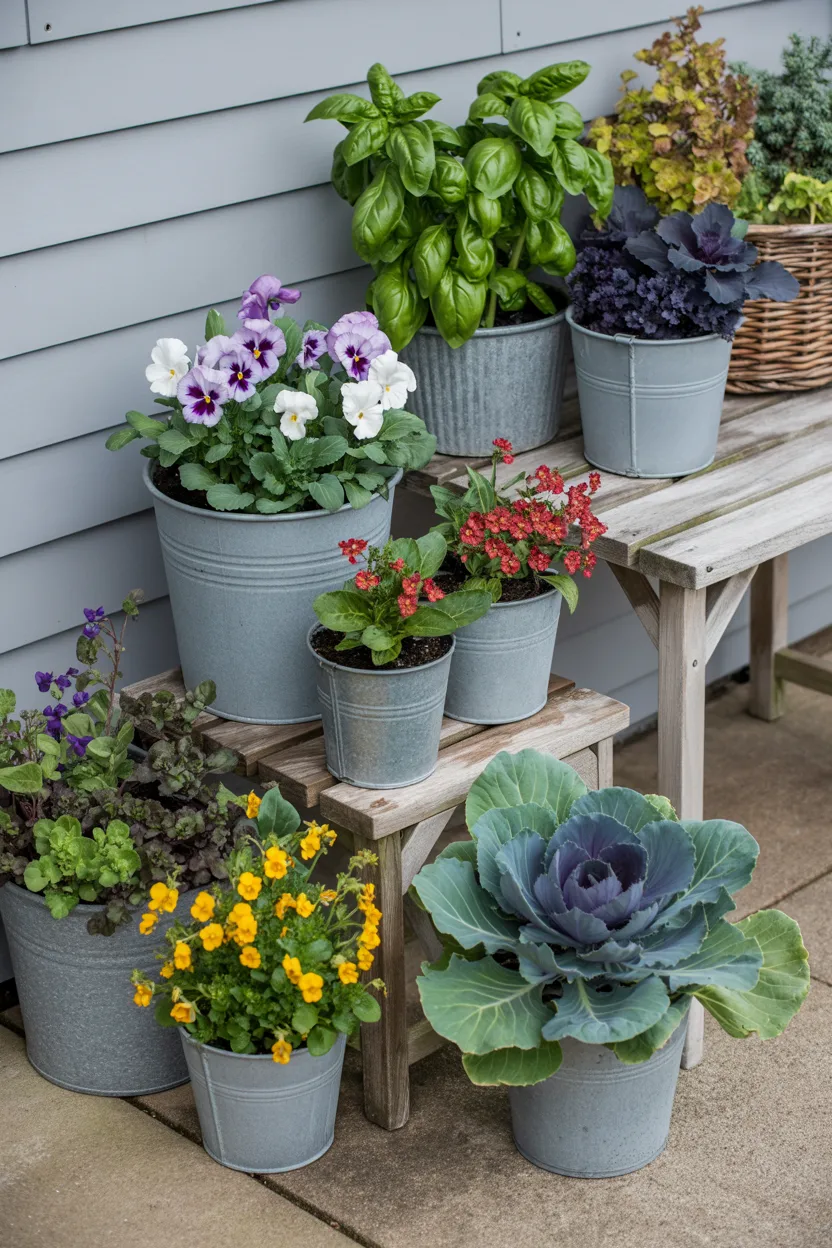
One of the smartest container gardening ideas for 2026 is seasonal rotation. Instead of planting a container once and leaving it alone for the whole year, switch the contents as the seasons change. That keeps your garden productive and attractive for longer.
This works especially well if you want to make the most of a small number of pots. You can grow cool-season greens in spring, herbs and peppers in summer, and decorative edible plants in fall. Seasonal rotation helps you get more value and more beauty from every container.
I really like this idea because it keeps the garden interesting. The space evolves through the year instead of staying stuck in one look. That makes even a small patio feel more active and cared for.
Simple Seasonal Rotation Example
Here is one easy rotation plan you can follow:
- Spring: lettuce, parsley, pansies
- Summer: basil, peppers, petunias
- Fall: kale, violas, ornamental cabbage
That kind of planning keeps containers from sitting empty and helps your garden stay useful beyond one short season.
Easy Tips That Make Container Gardening Better
No matter which container gardening idea you choose, a few basics make everything work better. These simple habits can improve growth, reduce stress, and help your containers stay healthy through the season.
Use the Right Potting Mix
Do not fill containers with regular yard soil. It compacts too easily and does not drain well in pots. A high-quality potting mix gives roots better airflow, drainage, and growing conditions.
Pick the Right Pot Size
Bigger containers usually make life easier. They hold moisture longer, give roots more room, and support better growth. Small pots can work, but they dry out quickly and often limit plant performance.
Water Consistently
Container plants depend on you. They dry out faster than in-ground plants, especially in summer. Check soil regularly and water before plants reach the point where they start drooping like they are filing a formal complaint.
Feed Regularly
Nutrients wash out of pots faster than they do in garden beds. Use a balanced fertilizer, compost tea, or slow-release feed depending on your plants and your routine.
Pay Attention to Sunlight
Plant tags give you a guide, but your actual space matters more. Watch how light moves across your patio or balcony during the day. That helps you place each container more wisely.
Common Container Gardening Mistakes to Avoid
Even easy gardening comes with a few classic mistakes. The good news is that most of them are very fixable once you know what to watch for.
One of the biggest problems is poor drainage. If water sits in the bottom of a container, roots can rot quickly. Another common issue is choosing pots that are too small, especially for vegetables that need more root space to stay productive.
People also tend to crowd plants together because the container looks a little empty at first. I get it. We all want that lush full look right away. But overcrowded pots often lead to weaker growth, less airflow, and more stress for the plants.
Here are some common mistakes to avoid:
- Using containers without drainage holes
- Overcrowding plants
- Choosing pots that are too small
- Letting soil dry out too often
- Skipping regular feeding
- Ignoring sunlight needs
- Starting with too many containers at once
Start with a manageable number of pots and build from there. That approach saves money, cuts down on stress, and gives you a better chance of success.
How to Choose the Best Container Gardening Idea for Your Space
The best container garden is the one that actually fits your space and your routine. That sounds obvious, but a lot of people choose plants based on what looks pretty online and then wonder why the setup becomes a struggle a week later.
Take an honest look at your light, available space, and maintenance style. If your patio gets intense sun all day, go with sun-loving vegetables, herbs, and flowers. If the area stays shady, lean into foliage plants and shade-friendly blooms. Matching the idea to your real conditions gives you much better results.
It also helps to think about your goals. Do you want food, decoration, or both? Do you want a low-maintenance setup or a more hands-on hobby? Asking those questions makes it easier to choose the right direction.
Here are a few helpful questions to ask yourself:
- How much sunlight does my space get each day
- Do I want herbs, vegetables, flowers, or a mix
- How often can I realistically water
- Do I want portable containers
- Do I care more about harvest or appearance
That quick self-check can save you a lot of frustration and help you build a container garden that feels enjoyable instead of exhausting.
Final Thoughts
Container gardening makes growing feel more approachable, more flexible, and far less overwhelming. You do not need a giant yard or a complicated setup to create something useful and beautiful. A few smart containers, the right plant choices, and some steady care can completely transform a small outdoor space.
Whether you start with a simple herb trio, a strawberry basket, a tomato corner, or a full seasonal rotation plan, the goal stays the same. Make gardening easy enough that you actually enjoy it. That is what makes container gardening such a strong choice in 2026.
Start small, pay attention to what works, and let your garden grow with you. Before long, you will have a space that looks better, feels more alive, and gives you fresh ingredients or flowers right outside your door. And honestly, that is a pretty great payoff for a few pots and a little effort.

1 Comment