

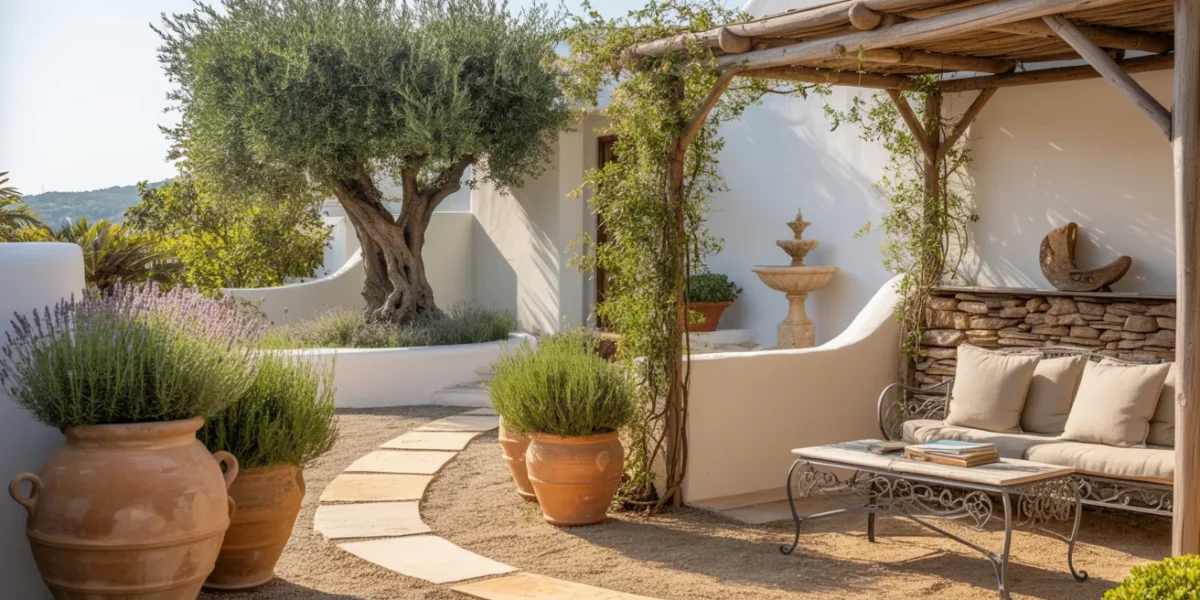
Have you ever walked into a yard and immediately wanted to sit down with a cold drink? That specific feeling defines a true Mediterranean garden style setup. The space feels warm and totally lived in. You never get the sense that the plants are too precious to touch. Formal landscaping often feels incredibly stiff, but this approach feels like an actual outdoor living room.
You absolutely do not need an Italian villa to pull this look off. Normal suburban backyards work just fine. You just need a solid mix of Mediterranean garden ideas based on natural textures and drought-tolerant landscaping. Let’s walk through the most practical ways to give your outdoor space that permanent vacation energy.
1. Use Gravel Paths for That Relaxed Coastal Look
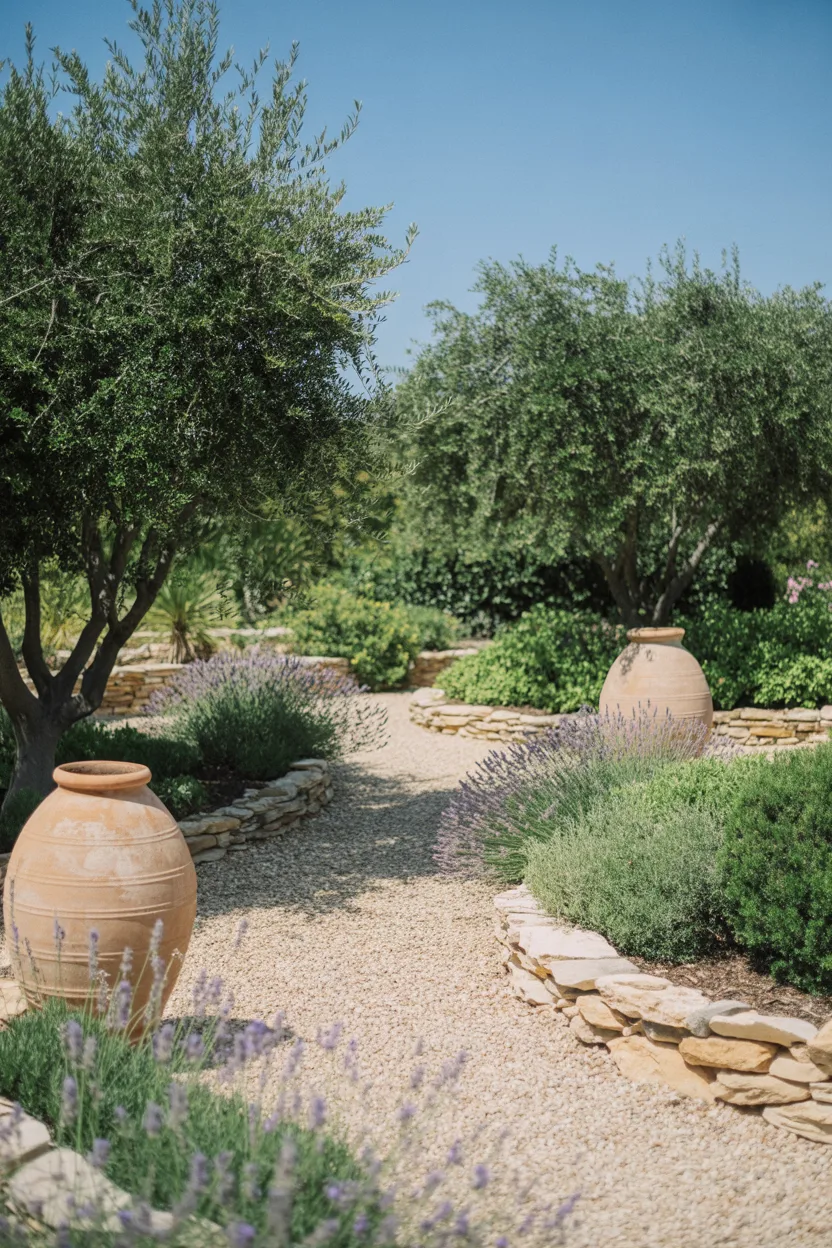
Gravel paths physically change how you walk through a yard. You naturally slow down. That soft crunch under your boots creates a sensory experience that solid concrete completely misses. Laying down loose stones instantly makes the property feel organic.
Poured concrete gets harsh when it covers too much square footage. A Mediterranean style garden relies on gravel because the edges stay a little messy. I actually prefer materials that shift over time. Loose pebbles look fantastic pushed right up against old clay pots or stone retaining walls.
Also Read: 21 Outdoor Meditation Space 2026 Ideas for Daily Calm
You can use gravel in a few specific ways:
- Wide walkways connecting different yard zones
- Full courtyard floors to replace thirsty lawns
- Soft borders ringing your raised vegetable beds
- Drainage bases placed directly under lounge chairs
- Contrasting ground cover surrounding your focal plants
Stick to warm sandy tones. Pure white gravel creates a blinding glare in the afternoon heat. I always look for dusty tan or pale gray shades because those muted colors absorb the light perfectly.
Framing the walkway keeps the loose stones from spilling everywhere. You can use simple brick edging. Planting low-growing herbs along the border works even better since it gives the path boundaries without looking like a rigid commercial property.
2. Add Terracotta Pots in Different Sizes
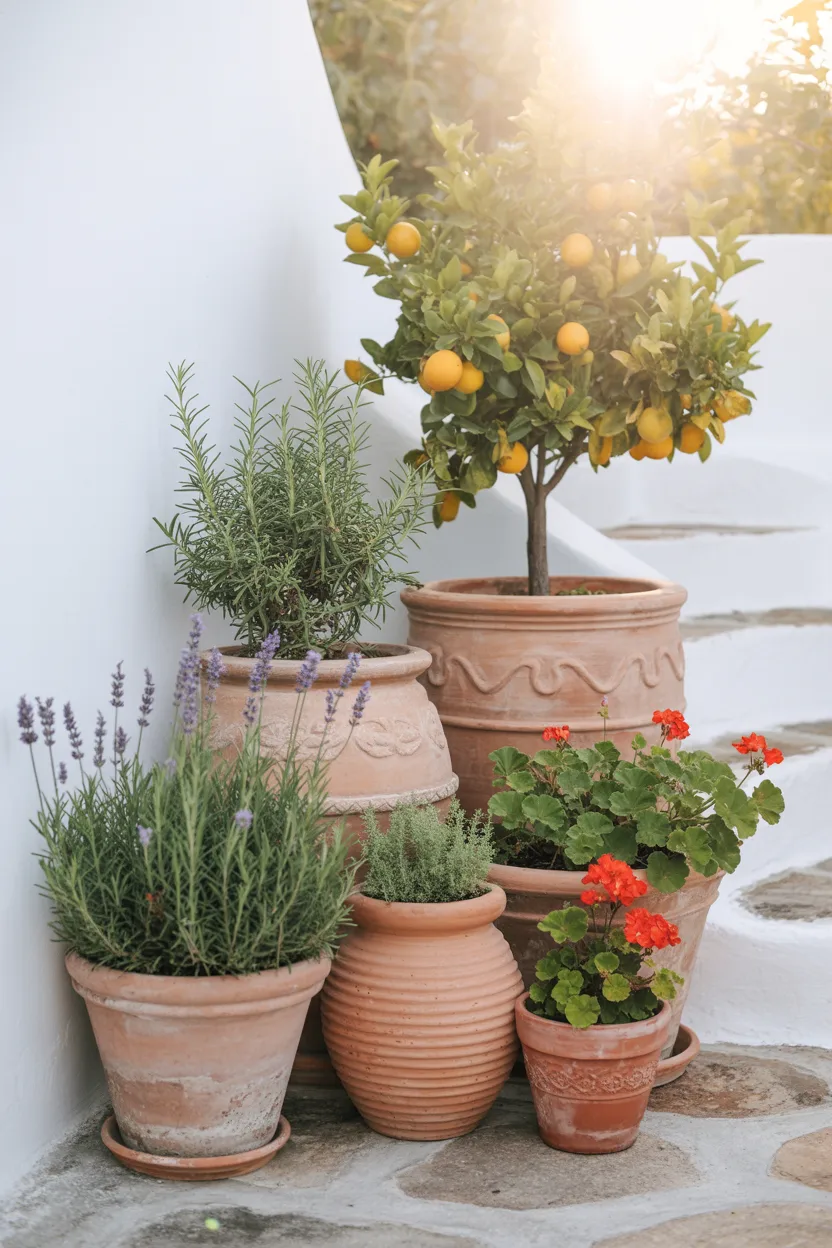
Unfinished clay defines this landscaping aesthetic. Standard Terracotta pots carry a ton of visual warmth. They bring a handmade quality to a cold concrete patio. Just dropping a few clay planters onto your deck changes the entire atmosphere.
Try not to buy matching container sets. Grouping identical pots often looks like a hotel lobby. You want a massive statement urn sitting right next to a tiny herb planter. Staggering the heights creates a deeply layered effect, making the collection look like you gathered it over a decade.
Also Read: 24 Low Maintenance Garden Ideas 2026 That Still Look Amazing
Terracotta works so well because it complements almost every classic Mediterranean element:
- Dwarf olive trees
- Fragrant lavender bushes
- Trailing rosemary vines
- Bright pink geraniums
- Potted lemon varieties
- Sprawling kitchen herbs
Clay actually looks better as it gets dirty. White crusty salt lines will build up on the exterior over time. Green moss might grow around the bottom rim. That messy patina is highly desirable, which means you never have to scrub them clean.
Use your heaviest planters as visual anchors near the back door. Then scatter the smaller ones randomly around the base so the arrangement feels completely organic. Rigid symmetry kills the relaxed coastal energy we are going for here.
3. Plant Lavender for Color and Scent
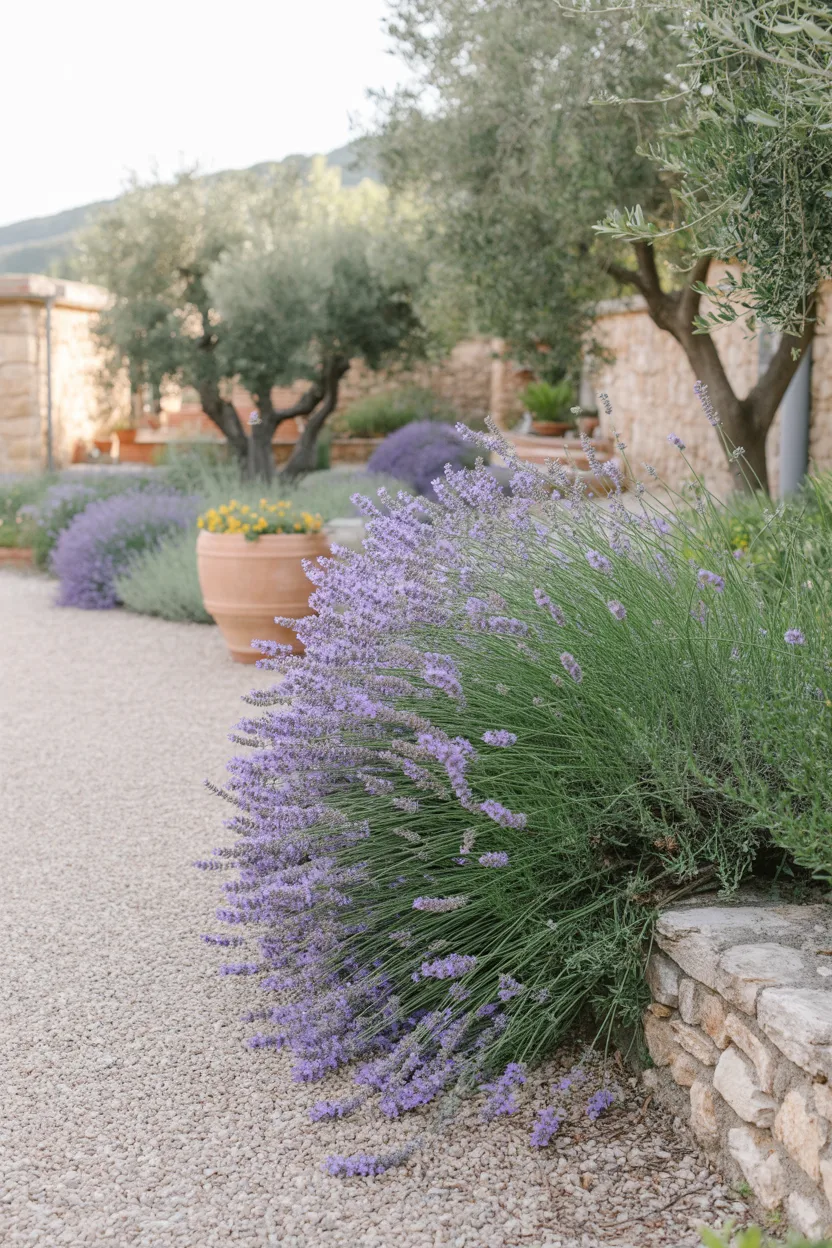
You really cannot skip the purple blooms. They provide soft purple color alongside a highly recognizable scent. A single row of these bushes instantly communicates the design theme you want. It even masks immature landscaping by stealing all the attention.
This plant handles brutal summer heat without complaining and survives poor soil conditions. The gray-green foliage creates a nice contrast against orange clay pots. It essentially acts as the primary weed-blocking ground cover for your sunny spots.
You can plant lavender in a few different ways:
- Line your front walkway to release scent as you pass
- Surround your dining chairs to deter summer insects
- Fill empty terracotta urns on a hot concrete deck
- Spill over the harsh edges of wooden vegetable boxes
- Plant right up against retaining walls for visual softness
Those silvery stalks provide texture deep into the winter. Most perennial flowers look sad when they drop their petals. This bush keeps its architectural shape year-round so you never end up with an empty muddy hole in December.
Planting lavender is a must if you want that specific coastal European aesthetic.
4. Choose Olive Trees for a True Mediterranean Feel
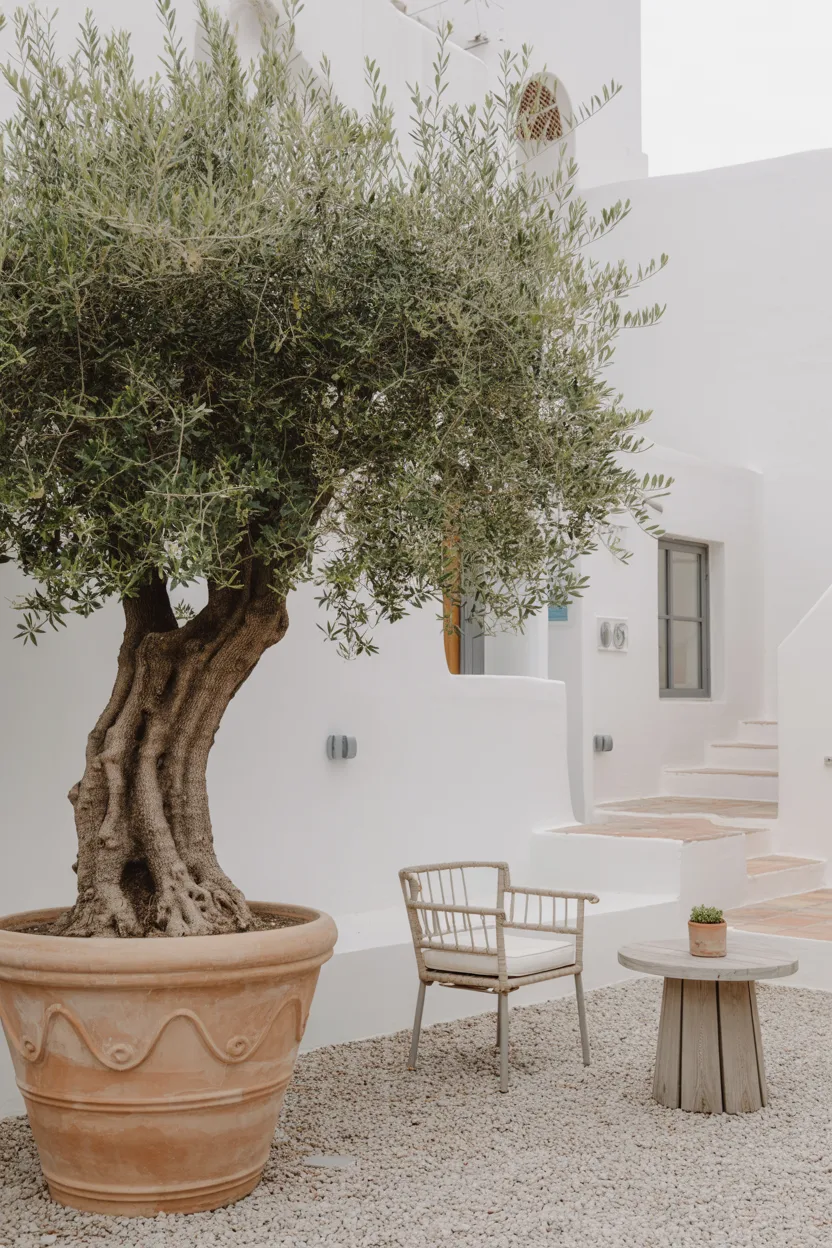
Nothing establishes this landscaping style faster than a twisted wooden trunk. Olive trees offer pale foliage that catches the wind. Even a tiny sapling looks like an antique heirloom. They carry a lot of historical weight for a simple garden plant.
I really appreciate how understated they are. The canopy stays thin so sunlight filters right through the leaves. They cast gentle shadows on the ground rather than creating a dark oppressive cave.
Also Read: 23 Outdoor Yoga Space 2026 Ideas That Feel Peaceful
Here are a few great places to use them:
- Place a dwarf variety in a pot by the front door
- Center a mature tree inside a circular gravel driveway
- Anchor the corner of a wooden dining pergola
- Flank a garden gate with a matching pair
- Soften the harsh lines of an exterior stucco wall
Pale foliage acts as a great neutral background. It calms down bright flowers and makes white plaster stand out. The color profile is incredibly forgiving.
Cold climates will absolutely kill genuine olive varieties. You can fake the look with a weeping pear. A Russian olive works well too. You just need a pale canopy with a slightly gnarly trunk structure to pull it off.
5. Build a Stone Wall for Old World Charm
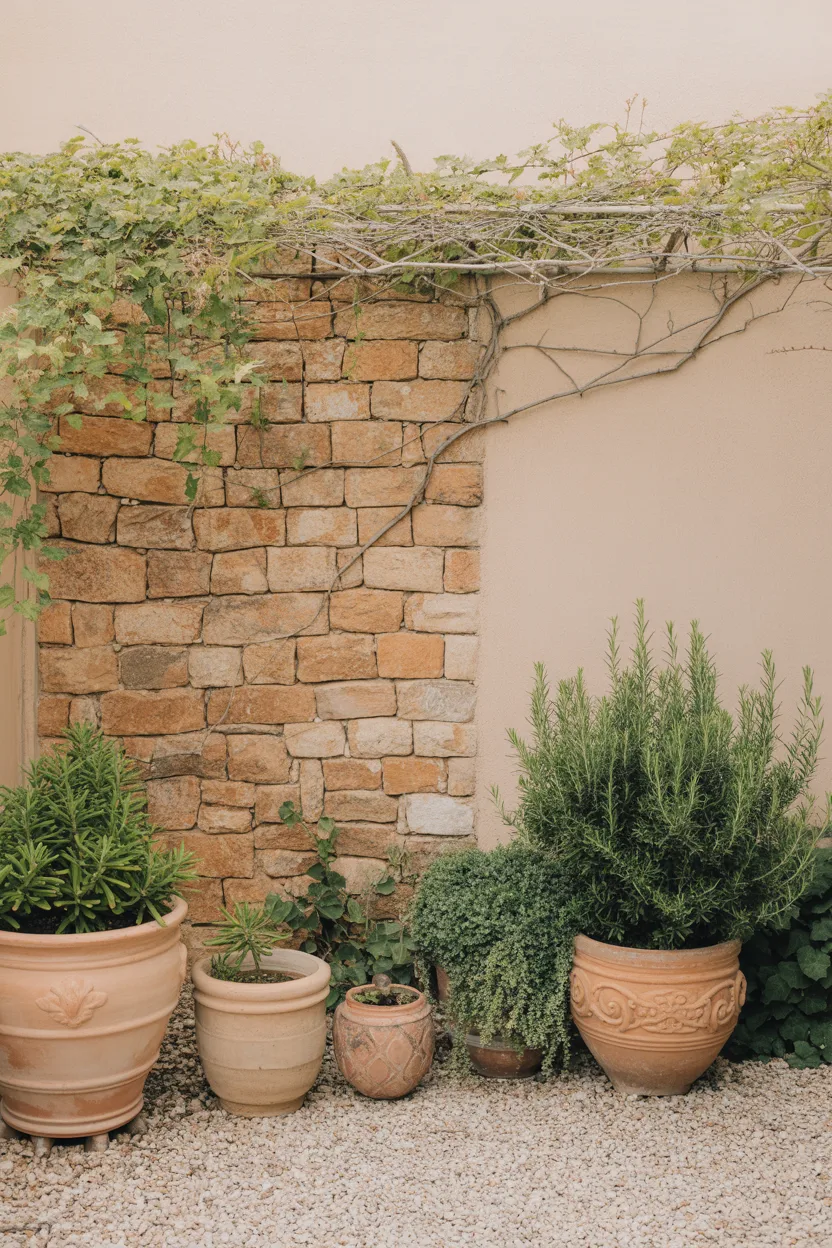
A heavy stone wall brings serious architectural weight to a backyard. It introduces shadows and breaks up a flat piece of land. Stacking raw rock makes a brand new house look like it has stood there for decades.
Raw masonry catches the sunset in a very specific way. The crevices hold tiny shadows. Moss eventually grows in the joints. The wall becomes a living piece of the landscape rather than just a property boundary.
Stone walls serve several purposes:
- Enclose a private conversation pit
- Block the view from the busy street
- Elevate your vegetable planting boxes
- Provide a climbing surface for creeping vines
- Separate the pool deck from the grassy lawn
Try to avoid uniform concrete blocks. You want jagged edges. Limestone carries a nice yellow tint. Sandstone brings in some subtle rust colors. The masonry should look hand-carved rather than mass-produced in a factory.
Massive privacy walls are expensive. A knee-high retaining wall offers a similar aesthetic for a fraction of the price. Even capping an ugly cinderblock planter with natural stone changes the whole vibe.
6. Create a Courtyard Style Seating Area
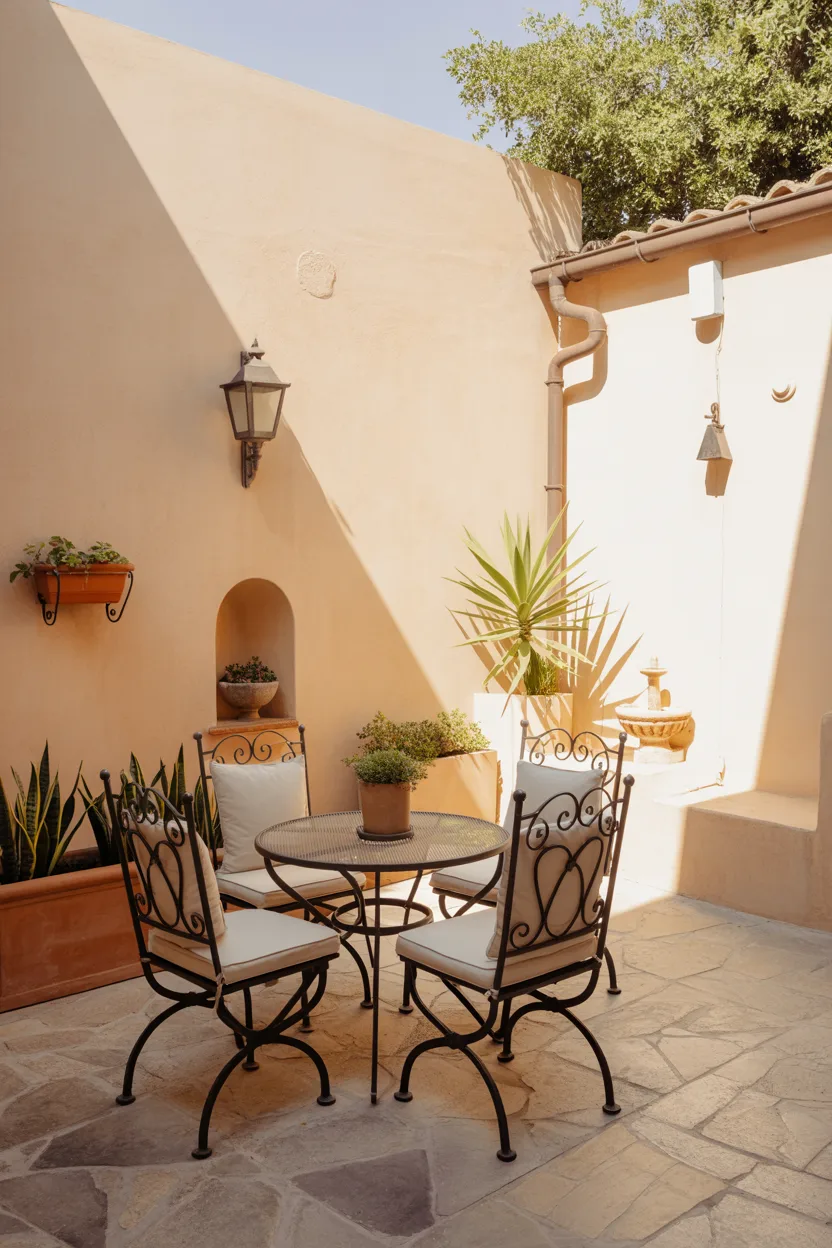
Landscaping is kind of pointless if you just stare at it through a window. You need a dedicated courtyard style seating area to actually use the yard. Carving out a spot for a cup of coffee forces you outside and turns an empty lawn into an actual destination.
You do not have to purchase a massive sectional sofa. Two iron chairs pushed into a quiet corner works brilliantly. Drop a tiny table between them. It creates an intimate setting for conversation without taking up much square footage.
For a cozy seating area, try adding:
- Heavy iron benches that resist strong winds
- Thick foam seat pads covered in beige canvas
- Giant clay urns pushed right against the furniture
- Crushed rock underfoot instead of wet grass
- Canvas umbrellas providing relief from the midday heat
- Battery-powered table lamps for reading after dark
Sitting directly in the middle of a vast empty lawn feels awkward. Push your chairs back against a solid wall. You can also nestle them under a large tree branch. Humans instinctively prefer resting in protected corners.
7. Use Warm Earth Tones Everywhere
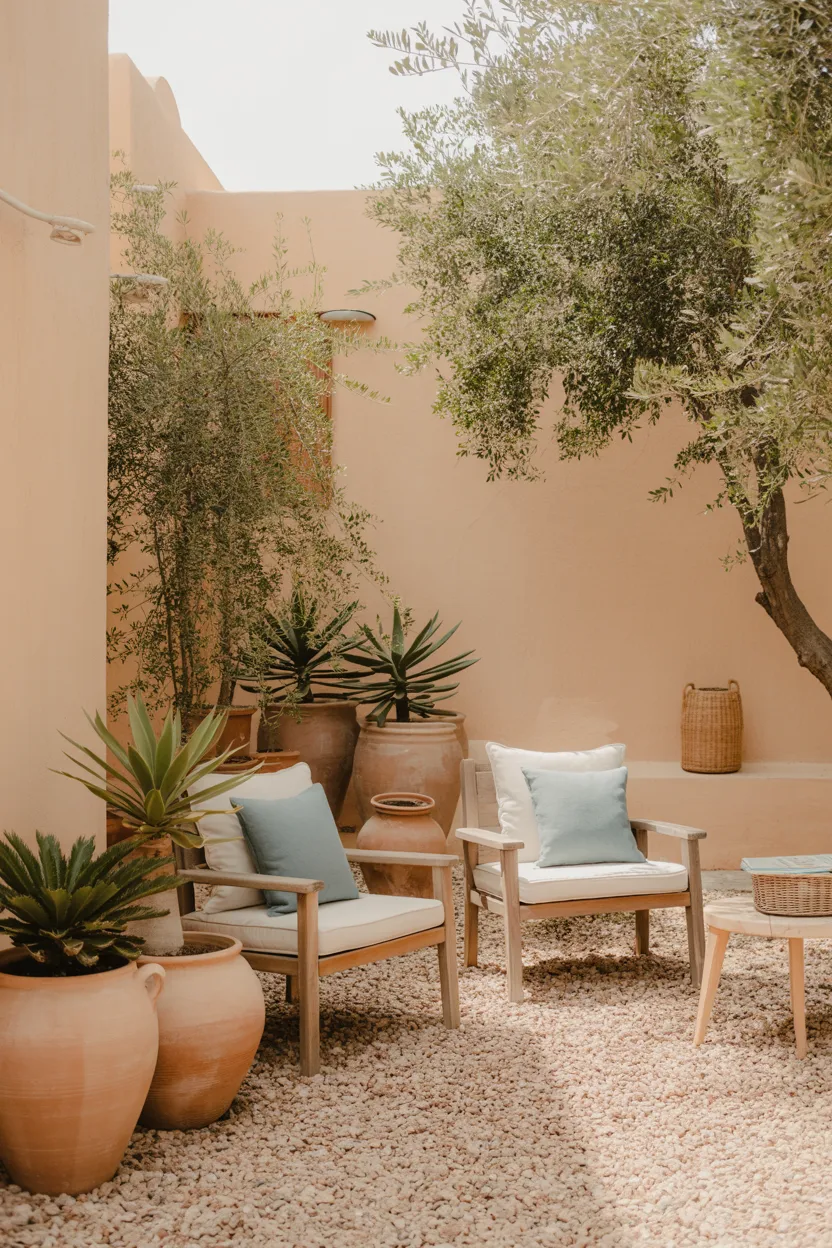
Paint choices ruin backyards all the time. A strict Mediterranean garden style 2026 color scheme guarantees a cohesive look. Buying a bright turquoise chair on a whim throws the entire visual balance off. It pays to be incredibly picky here.
The palette borrows directly from the surrounding earth. You want colors that look baked by the sun. Faded pastels and deep rustic browns blend seamlessly together.
Also Read: 20 Courtyard Water Feature Ideas 2026 That Feel Luxurious
Focus on shades like:
- Deep baked clay
- Dirty eggshell white
- Pale beach sand
- Heavy milk cream
- Dark forest canopy
- Faded denim blue
- Weathered barn wood
- Muted mustard yellow
Try to find fabrics that already look a decade old. Neon plastics belong in a children’s playground. You want materials that absorb light rather than aggressively reflecting it.
Match your seat cushions directly to your brickwork. Buy planters that echo the paint color of your house. Repeating a strict color profile makes even cheap patio furniture look incredibly high-end.
8. Grow Rosemary Along Borders and Paths
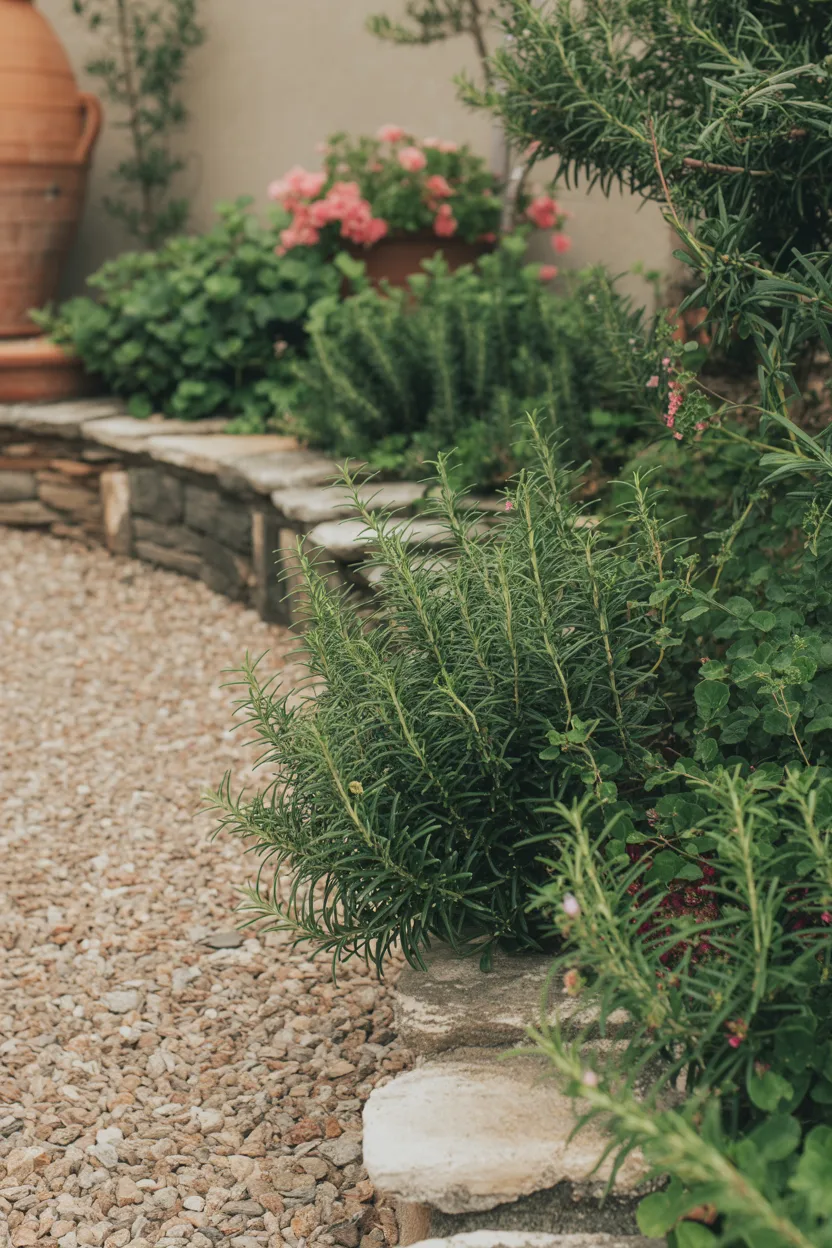
Most landscaping bushes serve zero practical purpose. Rosemary completely flips that script. It survives massive droughts. It acts as an evergreen hedge in warm states. It also happens to season dinner perfectly.
Push these shrubs right up against the edge of a walkway. Your ankles will brush the leaves as you walk past. That friction releases a wave of piney fragrance into the air. It turns a boring walk to the trash can into a genuinely nice moment.
Try growing rosemary in these spots:
- Spilling over walkway bricks
- Acting as a living fence for vegetable patches
- Planted tightly around dining table legs
- Hanging out of cracks in a retaining wall
- Stuffed into massive entrance urns
Some varieties grow straight up like stiff architectural pillars. Others creep low across the dirt. You can actually shear them into tight little spheres if you want a more formal look.
I heavily prioritize plants that earn their keep. Edible landscaping is a fun way to save money at the grocery store while keeping the yard green.
9. Add a Fountain for Instant Resort Energy
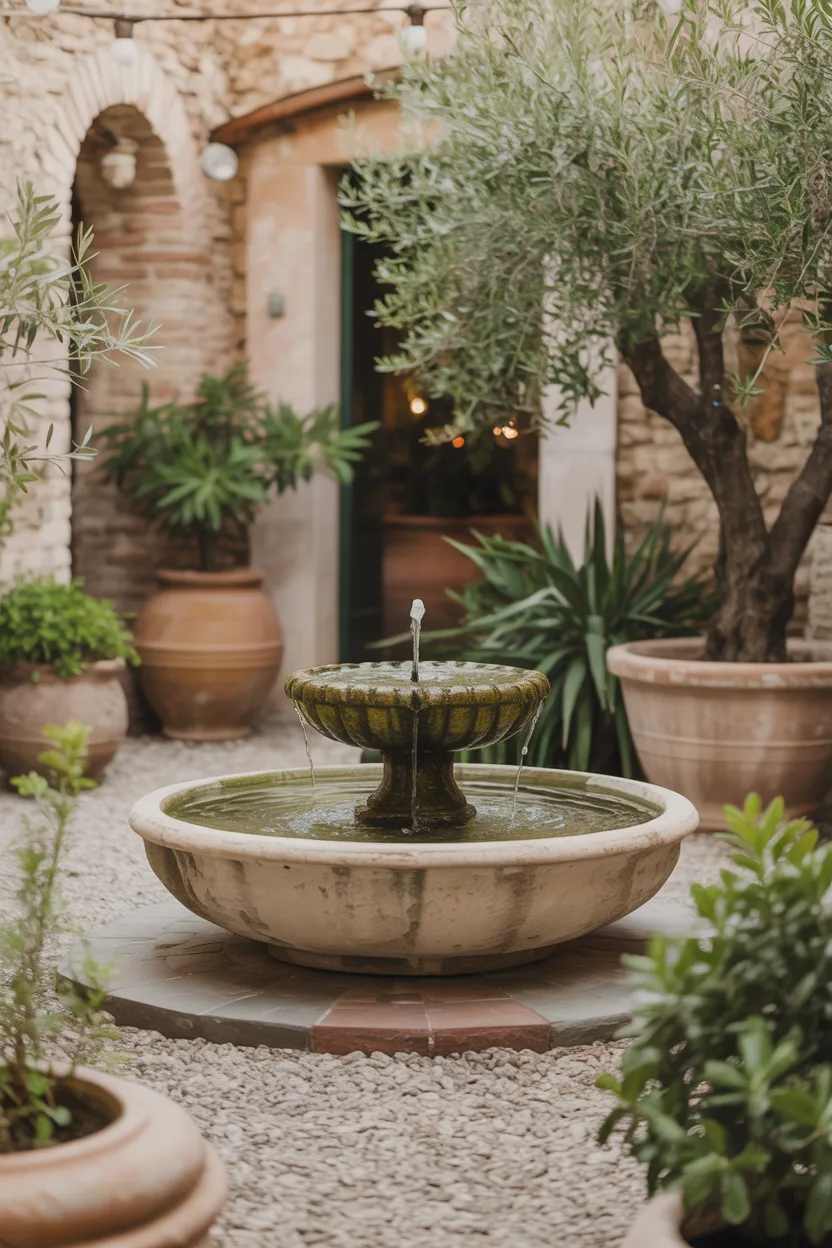
A dry yard often feels a bit lifeless. Installing a Mediterranean fountain fixes the energy instantly. Running water introduces background noise that covers up neighborhood chatter. It actually drops the air temperature nearby through evaporation.
You absolutely do not have to dig a massive pond. A tiny tabletop bubbler works magic. Mounting a metal spout on a brick wall takes up zero floor space. The trickling noise is really the only thing that matters.
Also Read: 22 Tropical Garden Design Ideas 2026 That Feel Like Paradise
A fountain improves your garden by:
- Masking the sound of busy highways
- Attracting local songbirds to the yard
- Breaking up large empty patio spaces
- Cooling the immediate breeze on a hot afternoon
- Introducing a traditional architectural element
Tuck the basin right next to your primary lounge chair. Water features are entirely useless if you cannot hear them splashing. Just keep the volume gentle. A massive waterfall sounds like a broken plumbing pipe.
Visitors always assume a bubbler costs a fortune. A cheap plastic pump hidden inside a clay pot creates a luxury aesthetic on a tiny budget.
10. Let Climbing Vines Soften Hard Surfaces
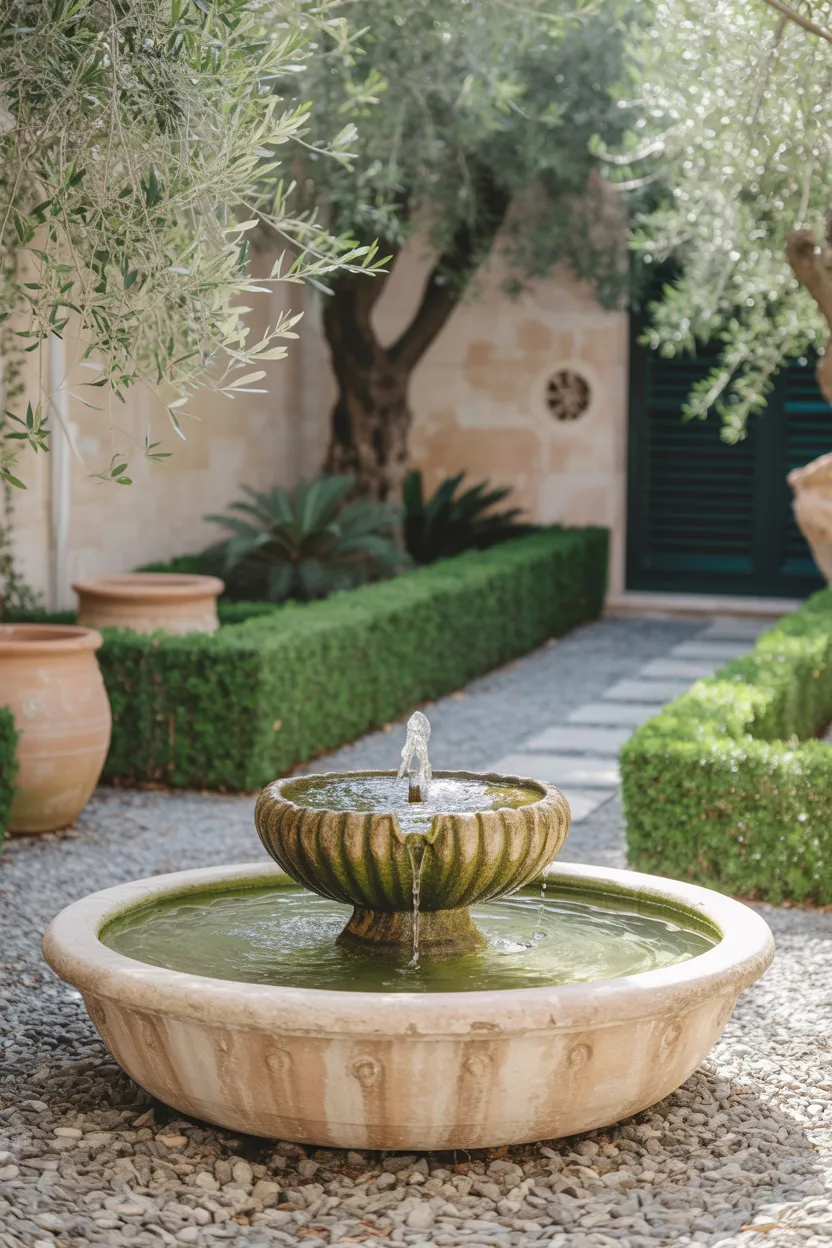
Rough masonry looks incredible next to delicate leaves. The tension between heavy rocks and fragile petals is a core design principle. Climbing vines bridge the gap perfectly. They crawl right up the stone to soften those harsh angles.
A bare wooden fence looks a bit boring. Wrapping it in green tendrils gives the yard serious age. The property suddenly looks like an overgrown historical ruin in the best way.
Also Read: 22 Japanese Garden Ideas 2026 That Feel Calm and Beautiful
Some great options include:
- Papery bright pink bougainvillea
- Intensely fragrant white jasmine
- Edible fruiting grapevines
- Thorny rambling roses
- Shade tolerant creeping fig
- Heavy drooping purple wisteria
Train these plants to swallow your wooden shade structures. A dense canopy of leaves drops beautiful dappled shadows onto the concrete. It completely masks ugly gutters or boring vinyl siding.
Dark green foliage popping against a brilliant white stucco wall is an elite combination. It requires almost zero ground space to pull off.
11. Install a Pergola for Shade and Structure
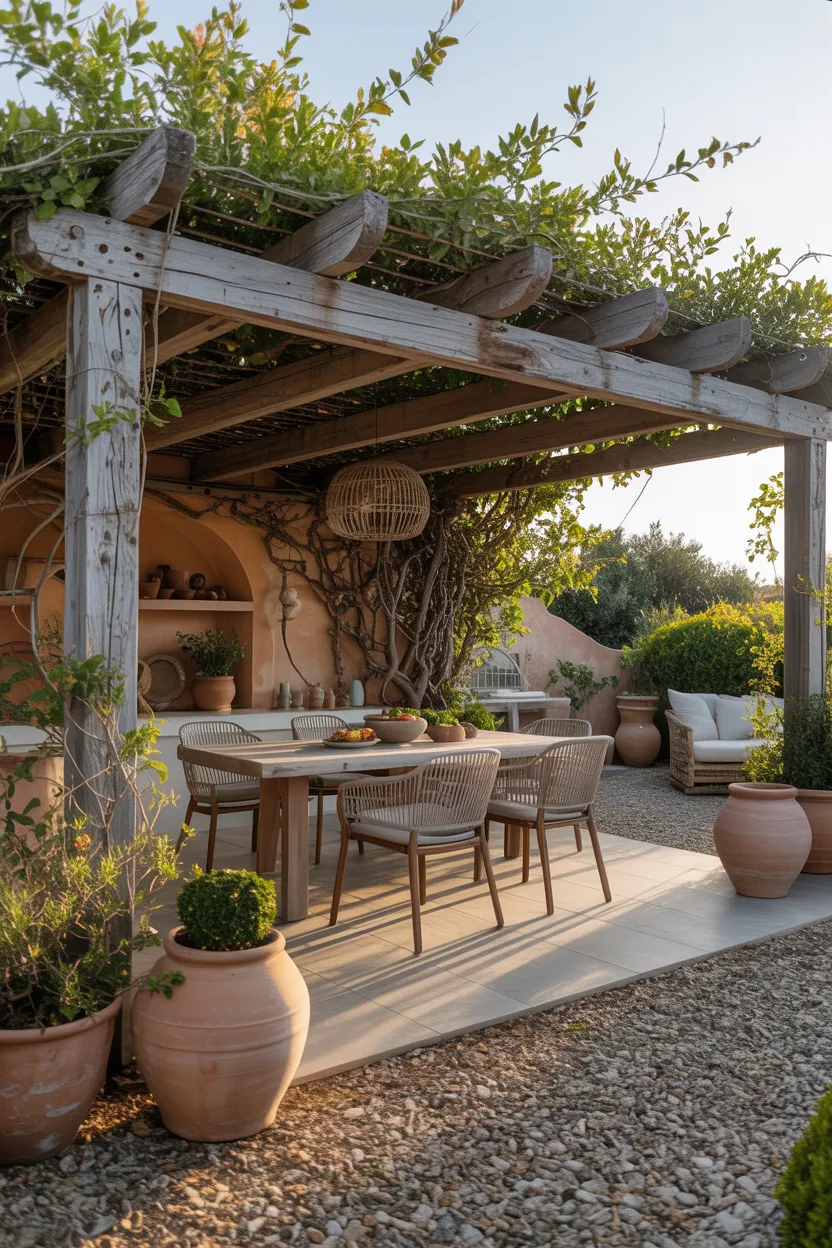
An open-air pergola changes how your family interacts with the yard. It establishes a distinct ceiling. It also blocks the brutal midday glare. You basically gain an extra living room without pouring a concrete foundation.
Sitting at a bare patio table feels a bit exposed. Throwing a slatted roof overhead provides a massive sense of security. People linger longer when they feel protected from the elements.
Also Read: 21 Outdoor Breakfast Patio 2026 Ideas for Cozy Mornings
A pergola works beautifully for:
- Sheltering a massive dining table
- Shading a deep outdoor sofa
- Connecting the backdoor to the garage
- Drawing attention to a backyard corner
- Giving tomatoes a place to hang
Rough cedar beams carry a wonderful rustic quality. Try to avoid shiny white vinyl kits. Plastic structures look incredibly cheap next to natural stone.
Weave some heavy outdoor string lights through the top rafters. The wood looks magical when illuminated from below at night.
12. Mix Herbs and Ornamentals Together
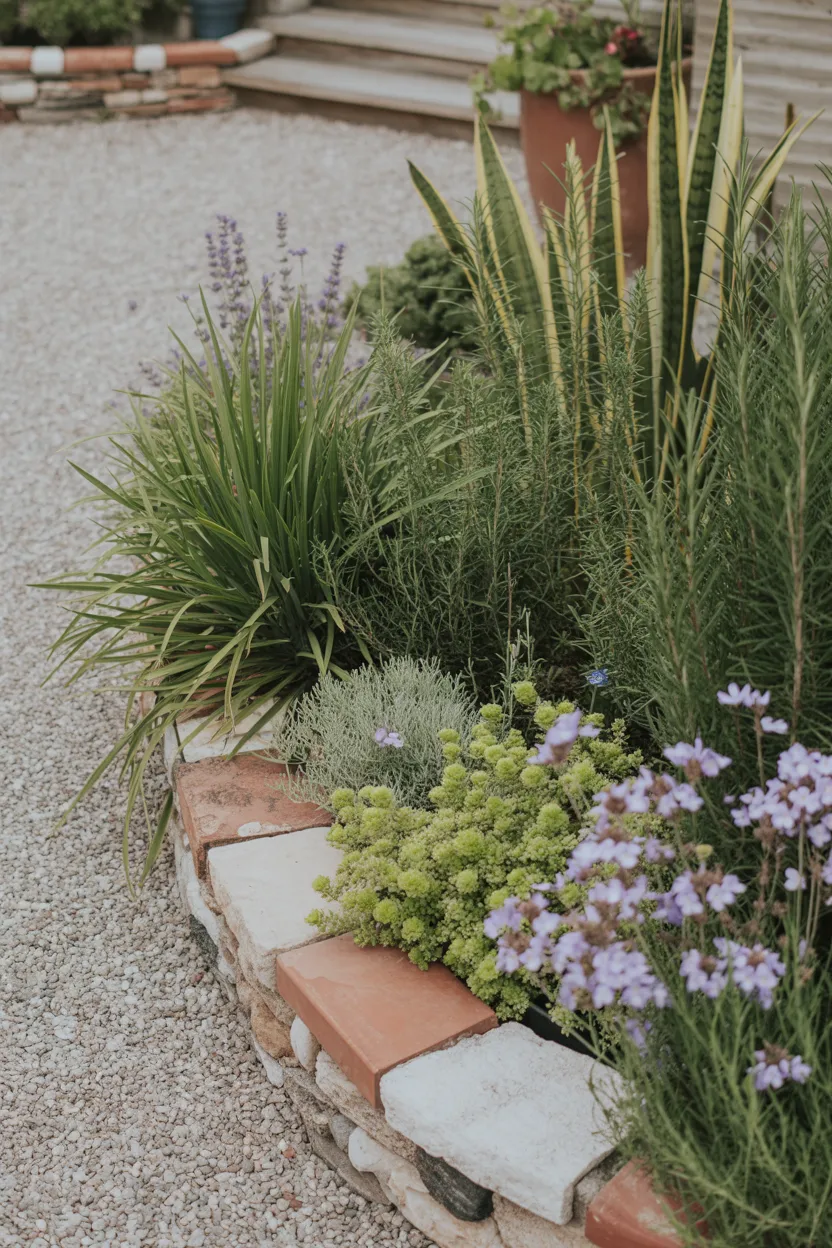
Traditional landscaping usually isolates the vegetable patch away from the pretty flowers. This style mashes them right together. Mixing herbs and ornamentals in the same dirt proves that utility and aesthetics can totally coexist.
A leafy basil plant looks stunning next to a spiky agave. Silver sage leaves contrast beautifully against dark green boxwoods. You get a wildly interesting botanical mashup.
Also Read: 23 Garden Wall Ideas 2026 That Instantly Upgrade Your Yard
This combination works so well because it gives you:
- Heavy layers of natural perfume
- Wind-catching foliage
- Free ingredients for dinner
- Subtle pastel blooms
- A wild cottage aesthetic
Rigid garden rows feel like a corporate office park. Letting a tomato plant tangle up with a rose bush feels incredibly authentic. It proves a real human actually maintains the soil.
Embrace the slightly messy overlap. It saves you from worrying about perfect bed lines.
13. Use Mosaic Details in Small Touches
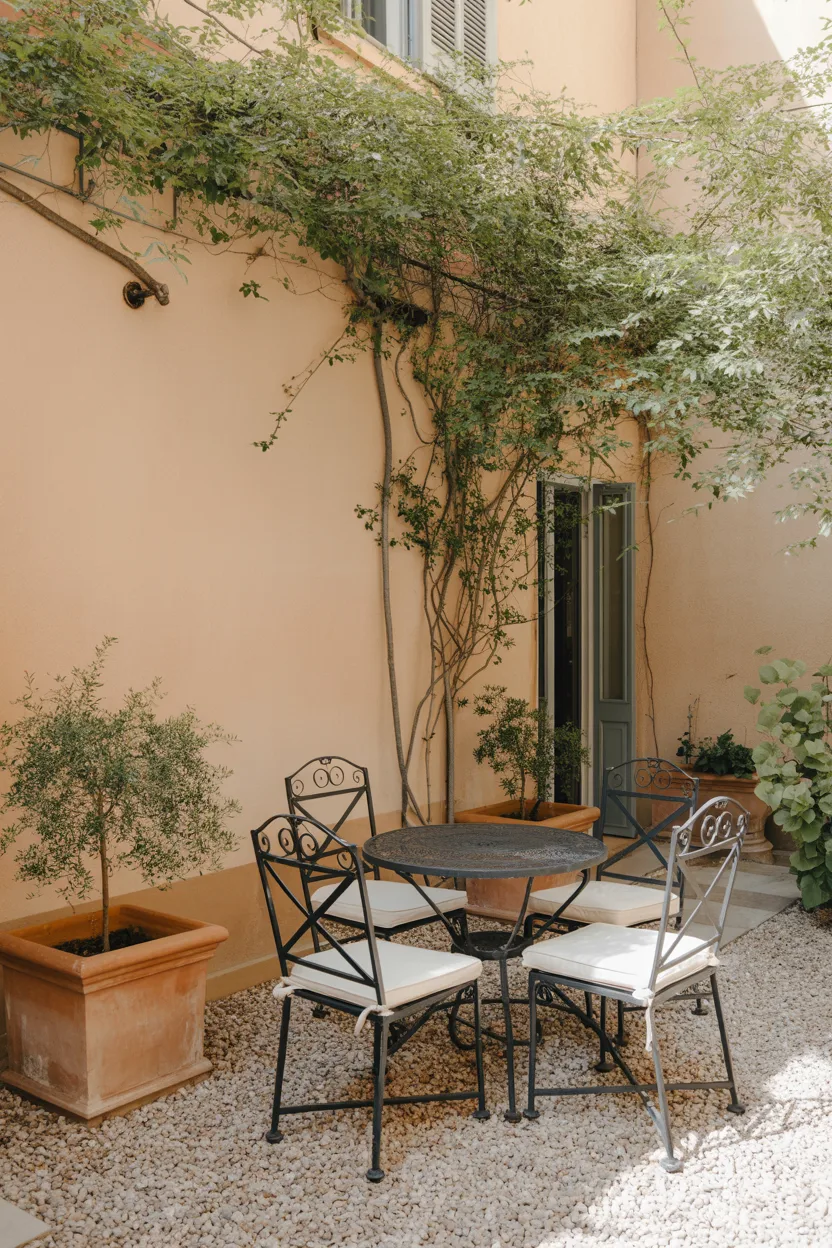
Tiling an entire patio is visually overwhelming. Tiny bursts of broken ceramic provide just enough flair. Sneaking small mosaic details into unexpected places injects a lot of personality.
Slapping some patterned tiles on the front of a concrete stair riser looks incredible. Wrapping the rim of a birdbath in blue glass catches the afternoon sun. These tiny accents keep the yard from feeling too monochrome.
Good color combinations include:
- Classic cobalt and pure white
- Forest green paired with beige
- Rusty orange alongside yellow
- Pale teal mixed into brown clay
- Charcoal grey breaking up pale mustard
Keep the ceramic pieces somewhat faded. High-gloss neon tiles look like a cheap bathroom remodel.
Think of tile as garden jewelry. You only need a few pieces to complete the outfit. Let the dirt and plants do the heavy lifting.
14. Create Layers With Raised Beds and Steps
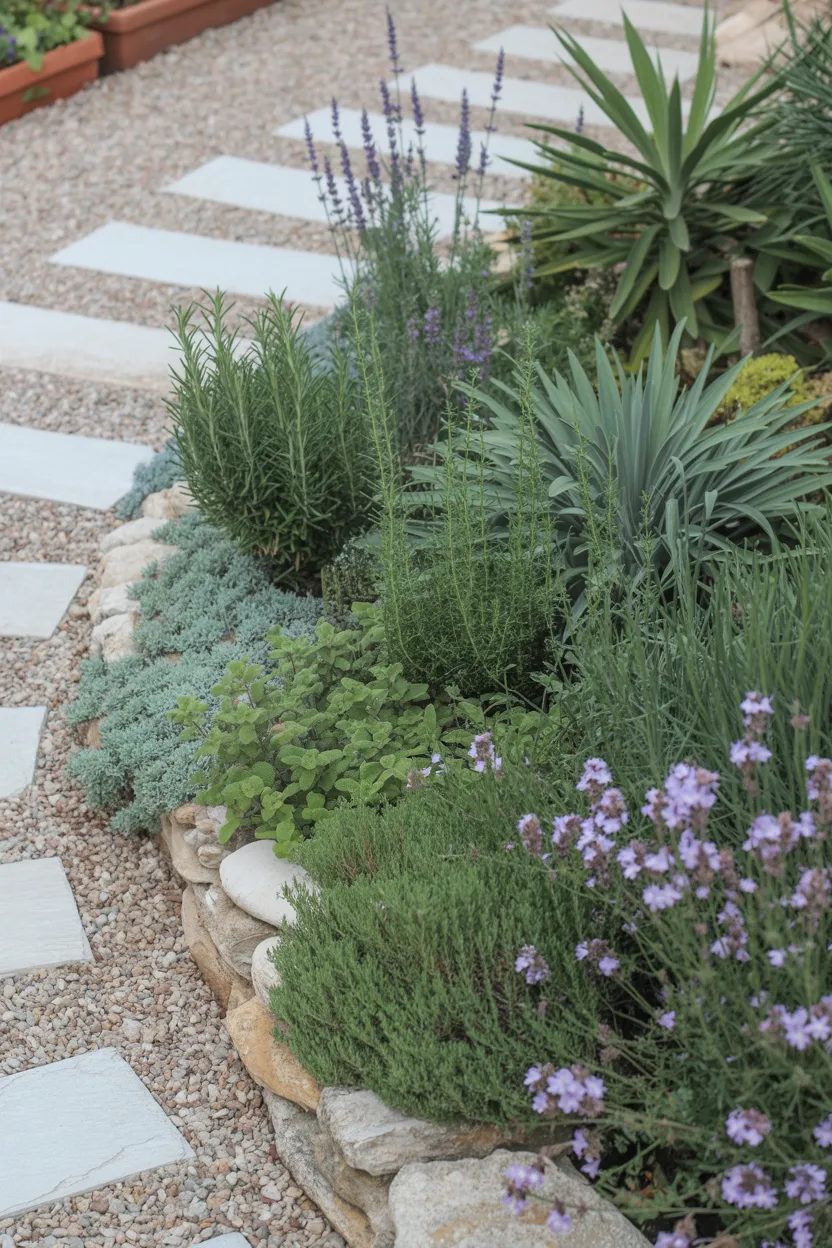
Flat lawns are incredibly boring to look at. Introducing raised beds, low walls, and shallow steps forces your eye to travel up and down. Adding vertical changes makes a flat suburban lot feel like a tiered hillside estate.
Terracing your yard carves out distinct invisible rooms. You step up onto a dining platform. You step down into a fire pit zone. You divide the property logically without building solid walls that block the breeze.
Also Read: 25 Outdoor Party Lounge 2026 Ideas for Fun Nights
Layering helps your garden:
- Break up a boring flat lawn
- Put a spotlight on your favorite tree
- Tell guests exactly where to walk
- Introduce heavy architectural shadows
- Trick the eye into seeing more square footage
A height shift of six inches is entirely sufficient. A single cinderblock wall covered in white stucco gets the job done cheaply.
Mystery makes a landscape exciting. You want partial views that force visitors to walk around the corner to see the rest.
15. Choose Wrought Iron for Classic Character
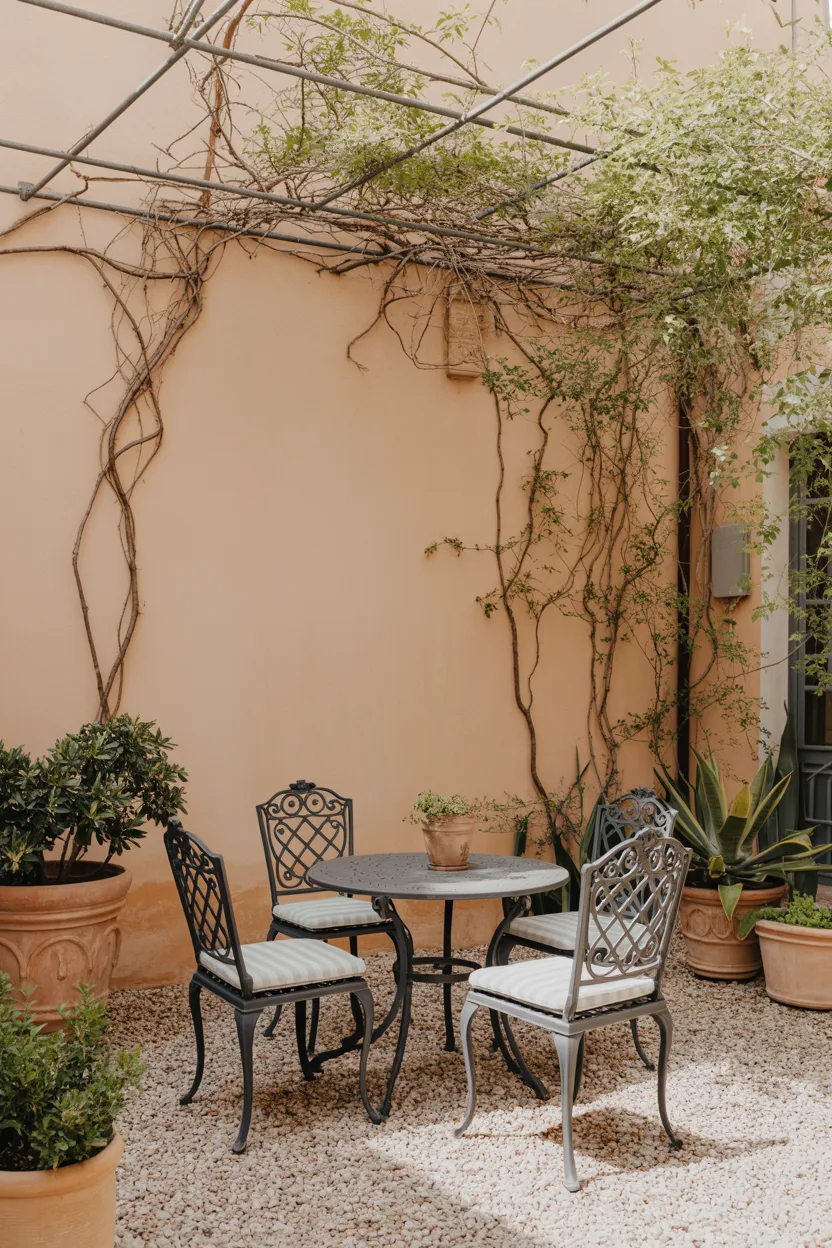
Heavy wrought iron gives off a strong European courtyard vibe. It provides harsh dark lines against fluffy green bushes. Metal injects a tiny hint of formal elegance into an otherwise deeply relaxed environment.
Buying a massive metal dining set usually looks too heavy. Stick to smaller accent pieces. A solitary black iron bench resting against a white stucco wall provides brilliant visual contrast.
Try using wrought iron for:
- Skinny bistro chairs
- Curved park benches
- Glass-topped drinks tables
- Ornate tomato cages
- Tiered potting racks
- Heavy swinging security doors
Avoid shiny painted finishes. Matte black or deeply oxidized bronze carries way more character. Metal furniture gets brutal in the sun. Be sure to throw some thick canvas cushions over the seats.
Let the metal act as an outline. The plants should always remain the focus.
16. Add Citrus Trees for Color and Life
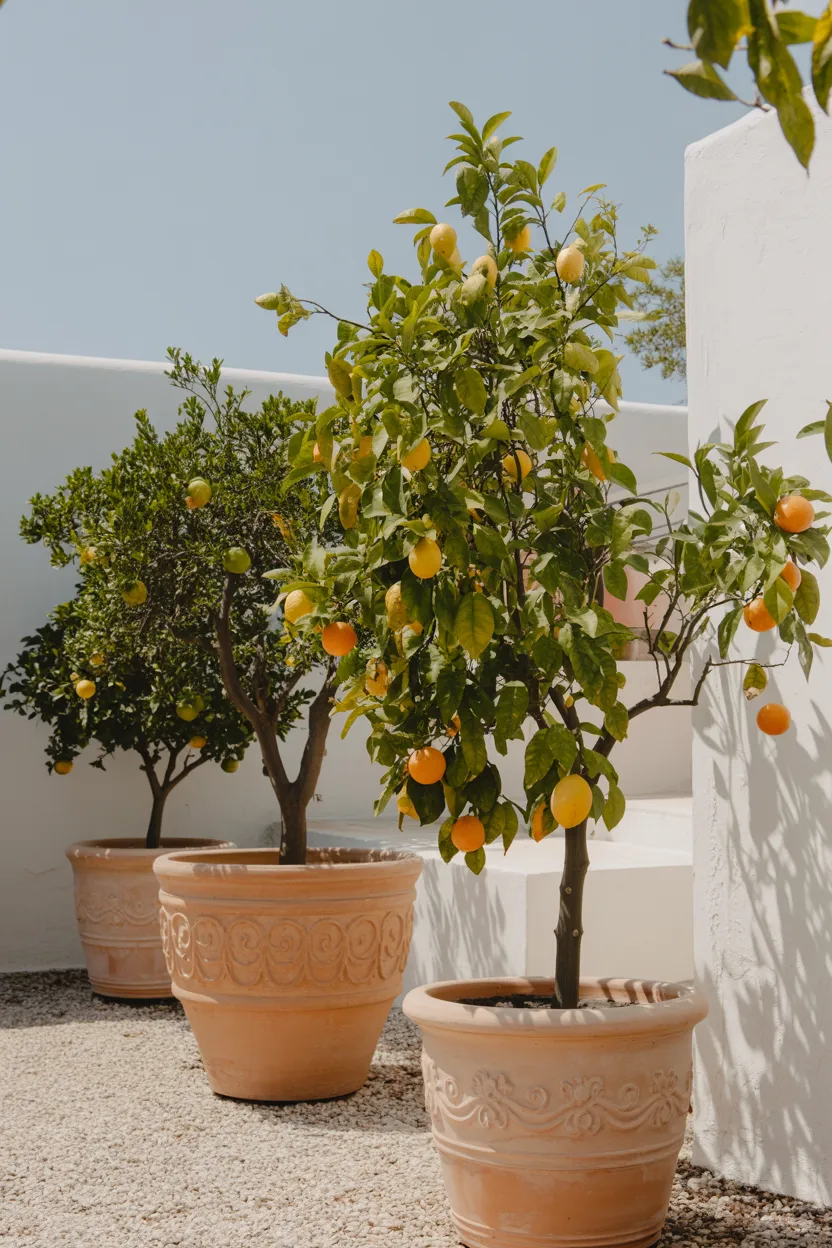
Popping a citrus tree into the mix feels incredibly authentic. The waxy leaves shine in the sunlight. The blossoms smell intoxicating in the spring. Ripe lemons provide a massive burst of bright color.
Keep these trees pushed right up against the house. They look great wedged into a giant clay urn on the patio. Potted fruit trees survive perfectly on tight apartment balconies.
Popular choices include:
- Meyer lemon bushes
- Classic navel oranges
- Tart key limes
- Miniature patio varieties
- Hardy calamondin trees
Yellow and orange skins break up the heavy green monotony. It brings life to a landscape that otherwise relies on faded dirt tones.
Plucking a lime off your own deck to drop into an evening cocktail is pretty much peak luxury.
17. Keep the Plant Palette Drought Friendly
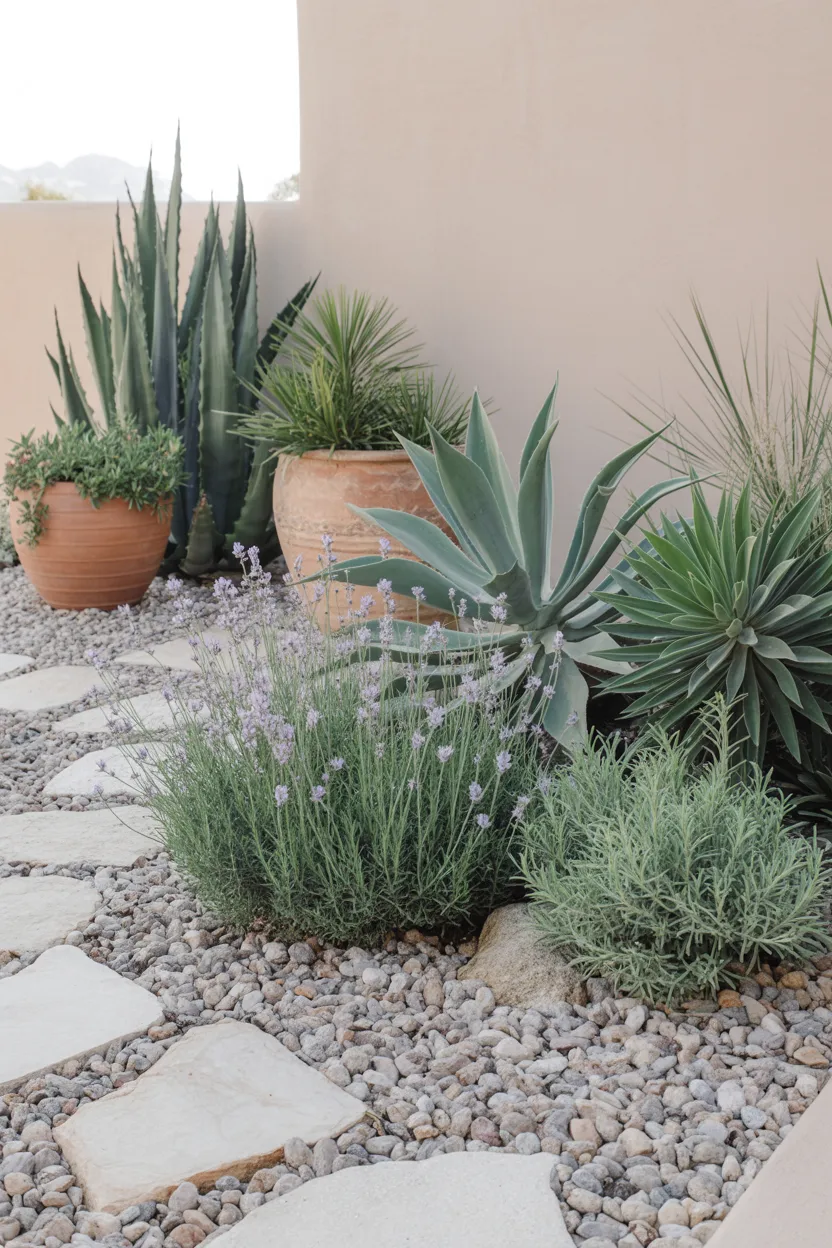
A proper Mediterranean garden design ignores thirsty tropical flowers entirely. It relies on bushes that thrive on neglect. You get a dense botanical look while barely touching your garden hose. It also saves a fortune on your water bill.
Spending Saturday afternoon dragging a sprinkler around is miserable. Landscaping should survive a busy week without dying of thirst.
Great drought friendly choices include:
- Hardy lavender
- Creeping rosemary
- Silver sage
- Sprawling thyme
- Twisted olive branches
- Structural agave
- Rock roses
- Yellow santolina
- Feathery decorative grasses
Desert plants actually rot if you baby them too much. They want terrible soil. They beg for baking heat. Their faded silver foliage blends flawlessly together.
Skipping the sprinkler does not equal a barren wasteland. The right mix of spiky and soft leaves looks incredibly full.
18. Style an Outdoor Dining Spot Like a Villa Patio
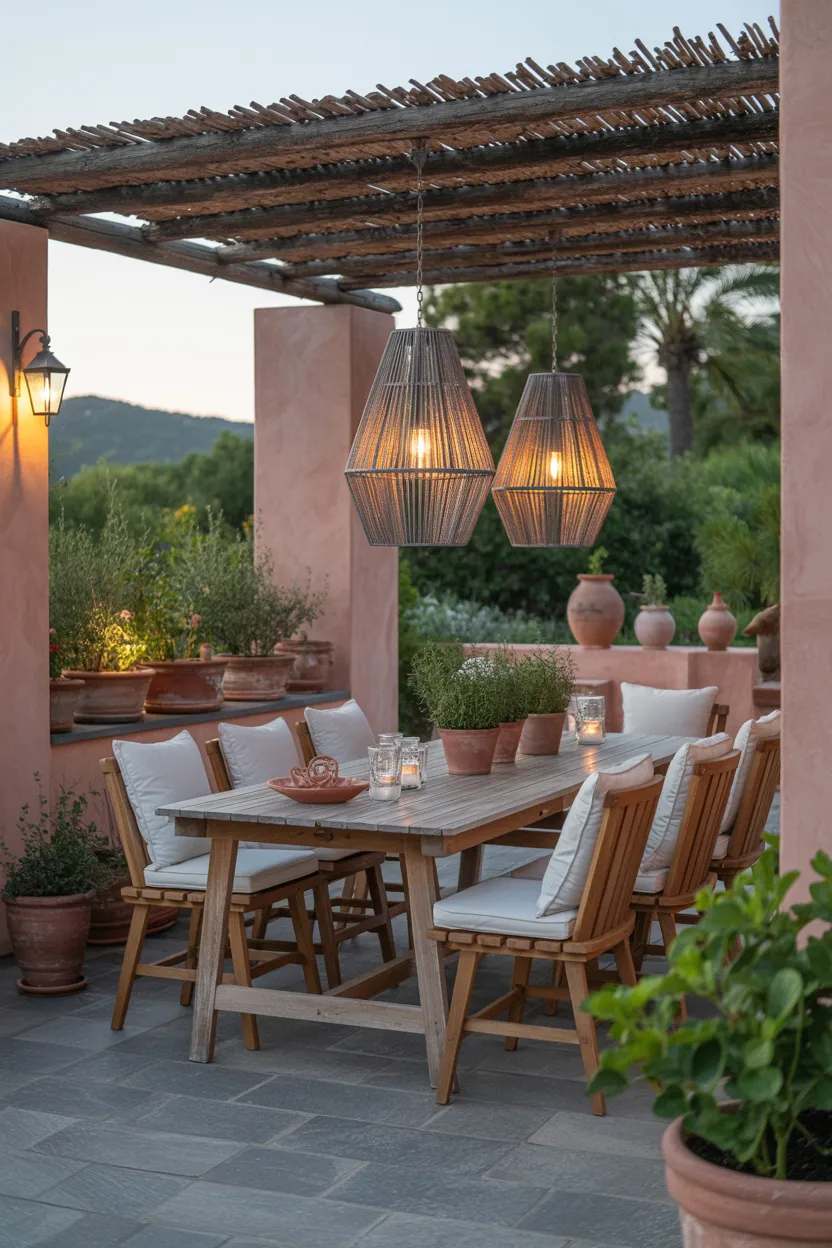
Eating outside changes the entire mood of a Tuesday evening. Building a designated Mediterranean patio dining spot forces you to actually use the yard. A house with an outdoor table feels entirely different than a house with an empty lawn.
Delivery pizza eaten under the stars feels like a luxury reservation. Cracking a bottle of wine on a gravel patio completely erases a bad workday.
Also Read: 22 Gazebo Deck Ideas 2026 for a Stylish Backyard Setup
Try setting the area up with:
- A heavily weathered teak table
- Woven rattan dining chairs
- Massive clay planters guarding the corners
- Flickering table candles
- A thick canvas canopy blocking the sun
- Wrinkled linen napkins thrown on the plates
Push a rosemary bush right up against the dining chairs. The smell will drift right over the plates. Install dim lighting so you can clearly see your guests without blinding them.
Avoid perfectly matching dining sets. A mismatched collection of chairs looks far more inviting.
19. Use White Walls to Reflect Light
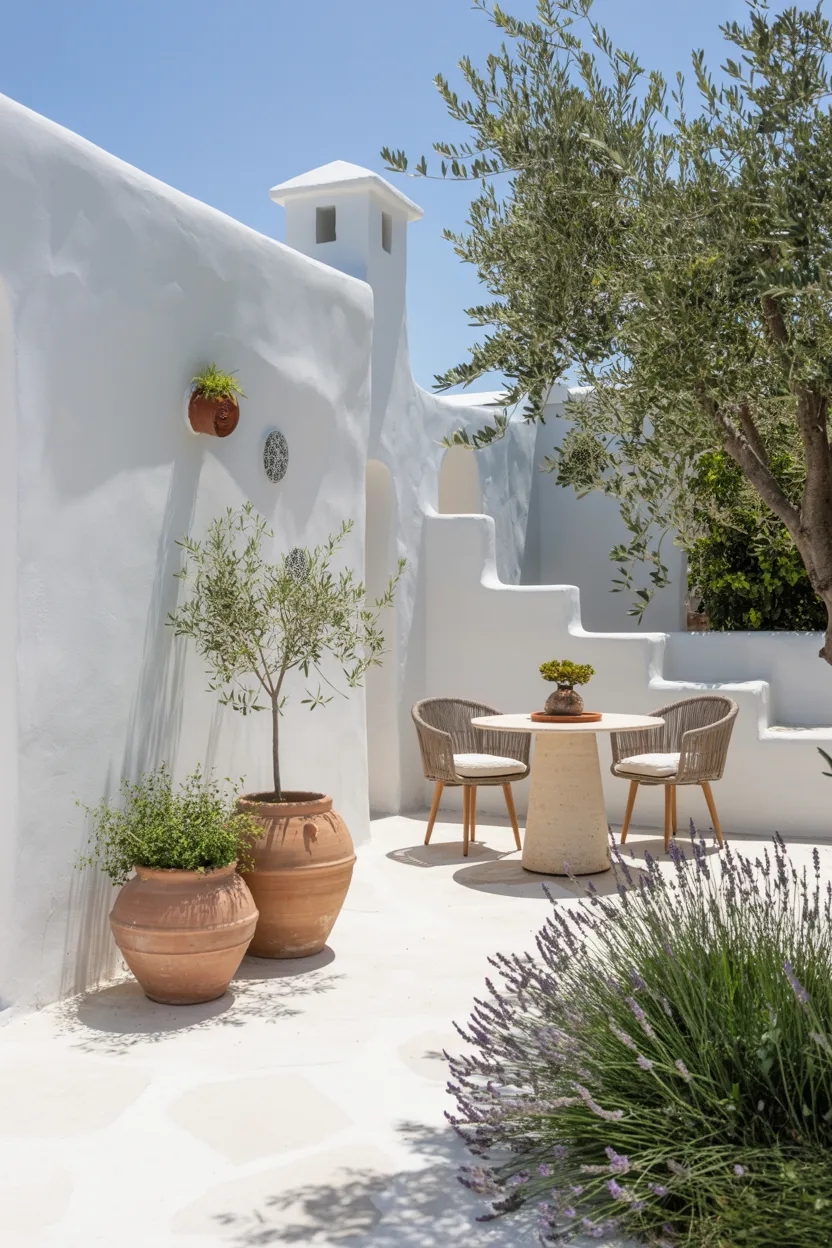
Painting a cinderblock wall white changes everything. The pale surface bounces sunlight into the dark corners of the yard. It acts as a blank canvas for your twisted olive trees to shine against.
Tiny enclosed patios usually feel like prison cells. A coat of cream paint erases that claustrophobia. The boundaries visually recede.
White walls work well because they:
- Amplify weak afternoon light
- Force dark green leaves to pop visually
- Mimic coastal Greek architecture
- Push cramped boundaries outward
- Highlight the rough texture of clay urns
Avoid standard exterior house paint. You need a chalky lime wash. Plaster works incredibly well too. High-gloss finishes look like cheap plastic siding.
Letting a dark vine crawl up that blank canvas creates instant drama.
20. Add Lanterns and Soft Evening Lighting
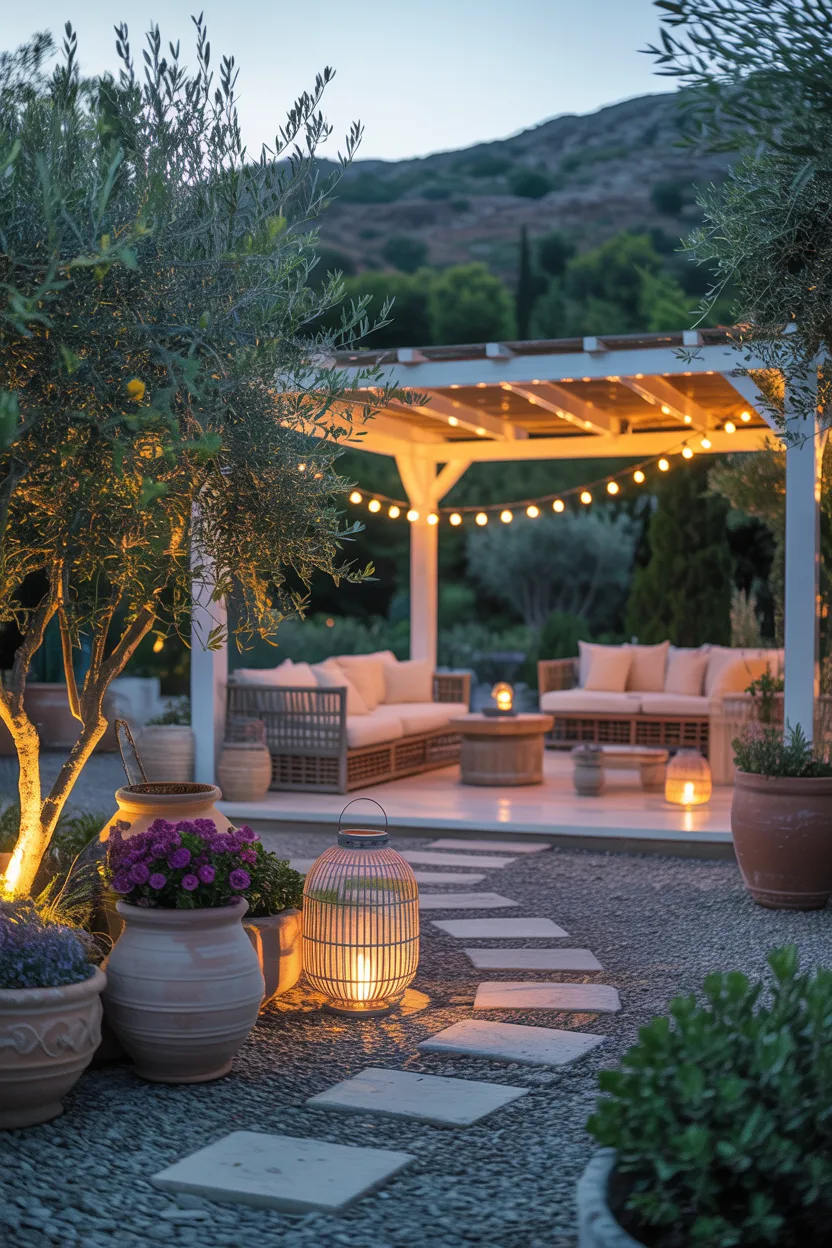
A pitch-black yard is basically useless. Soft evening lighting extends your outdoor hours. Raking light across a stone wall reveals incredible hidden shadows.
LED bulbs with a blue tint belong in a hospital. You absolutely must buy amber or warm-white bulbs. You want the yard to glow like a candle.
Use lighting in a few thoughtful spots:
- Tucked low along the gravel pathways
- Hanging heavily over the dining table
- Hidden deep inside the water fountain
- Wired directly into the stone stairs
- Flanking the wooden side gate
- Strung casually through the pergola rafters
Solar stakes are cheap and require zero electrical work. Buy a few punched-tin lanterns to cast patterned shadows across the patio floor.
Keep it dim. The stars should still be visible overhead.
21. Let the Garden Feel Slightly Imperfect
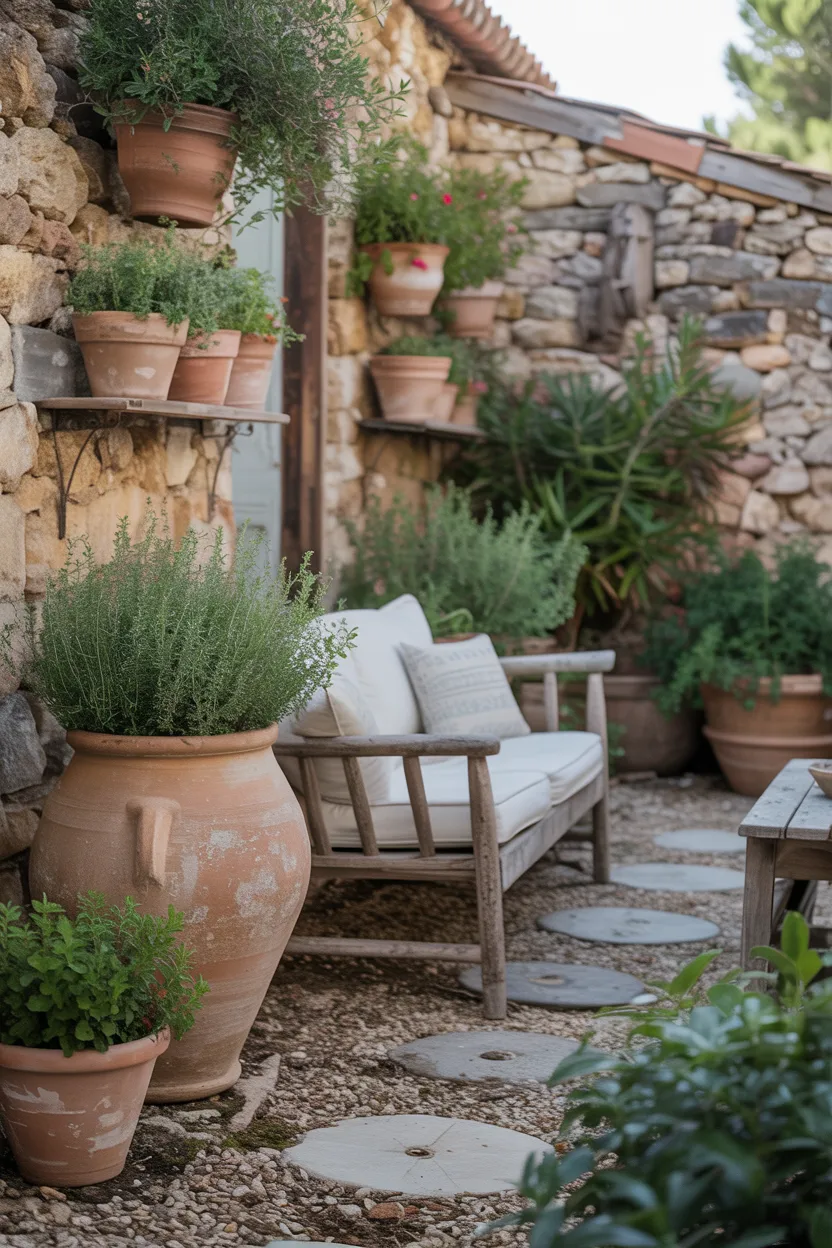
Flawless landscaping is boring. Perfection kills the vacation vibe completely. Mediterranean style demands a little bit of messiness. A cracked pot or a slightly overgrown bush proves that nature is actually in charge.
Obsessive pruning ruins the aesthetic. Shrubs trimmed into rigid geometric boxes look out of place next to a loose gravel path. You have to let the plants behave a bit wildly.
Let a few things stay loose:
- Ignore the moss growing on your clay pots
- Let the pathway stones shift out of alignment
- Allow vines to cross over your walking space
- Stop sweeping every single fallen leaf away
- Embrace the rust forming on iron chairs
A slight lack of maintenance reads as relaxed confidence. Leave the pruning shears in the shed.
22. Blend Beauty, Comfort, and Simplicity
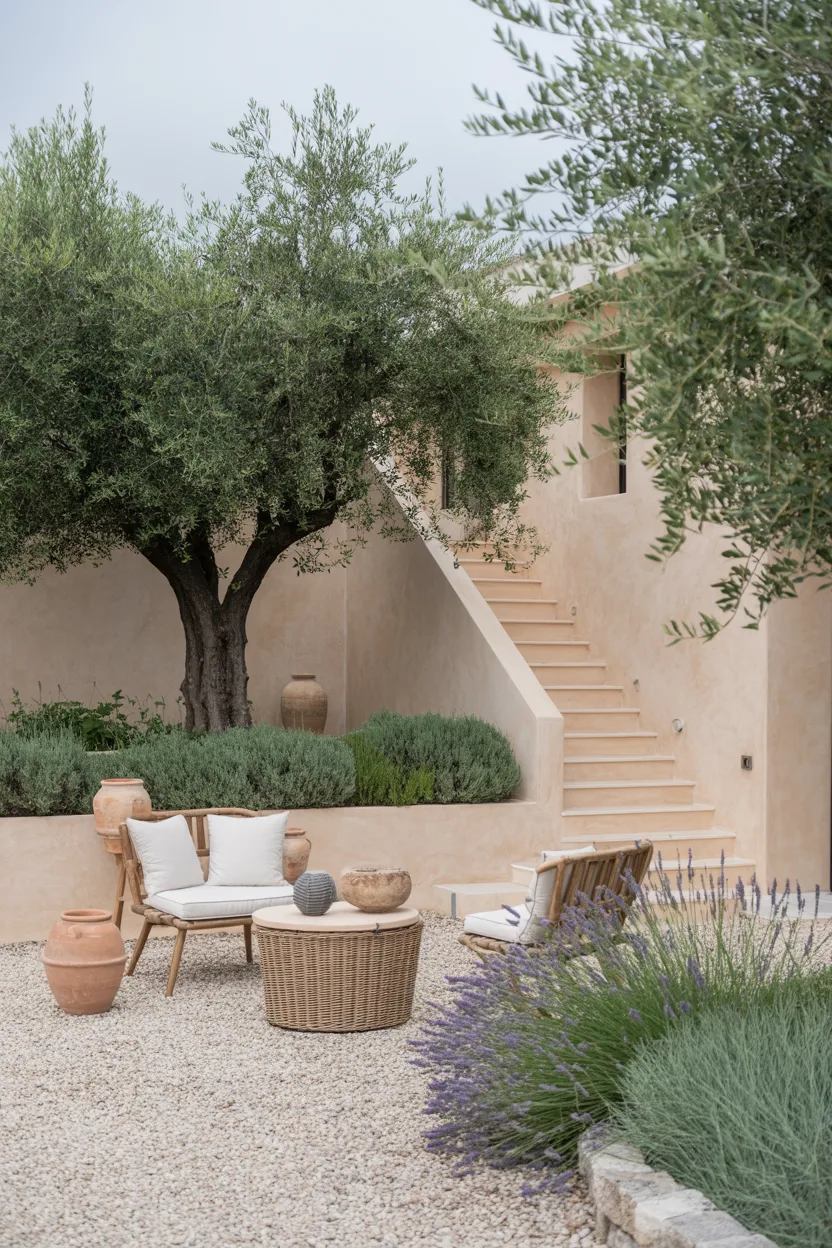
You cannot fake history. A solid Mediterranean garden style 2026 setup ignores fleeting viral trends. It leans heavily on materials that looked good a century ago. Things like crushed rock and baked clay never go out of fashion.
The best yards feel remarkably simple. A heavy table sitting under an old tree provides everything you actually need. You want an environment that encourages a slow afternoon nap.
Keep the big picture clear by focusing on these core ingredients:
- Raw unpolished building materials
- Colors baked directly from the earth
- Bushes that survive brutal heat waves
- Deep chairs meant for napping
- Dim glowing amber bulbs
- Plants you can actually toss into a salad
- A messy overgrown charm
Mastering that specific blend transforms a boring lawn into a private resort.
Final Thoughts
Big budgets are entirely optional here. A true Mediterranean garden relies strictly on atmosphere. Throwing some cheap crushed rock down and buying a few clay pots gets you ninety percent of the way there.
Pick a single corner to overhaul this weekend. Shove a rusty iron bench against the fence. Flank it with heavily scented bushes. The transformation happens incredibly fast.
Stop stressing over perfect grass. Your yard should act as a retreat from your daily obligations. Grabbing a glass of wine and walking out into your own personal coastal escape is the ultimate goal.

1 Comment