

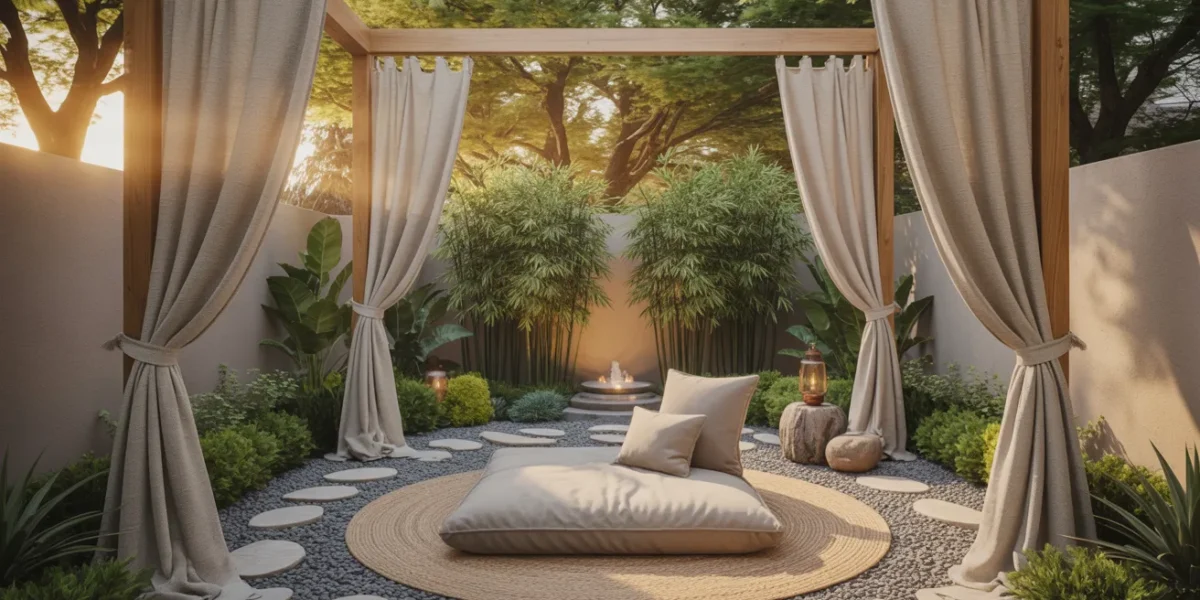
Your brain gets tired. Mine absolutely does. The noise just never seems to stop. Phones buzz constantly. Laundry piles up on the chair. Your own thoughts start acting like uninvited guests refusing to leave. An outdoor meditation space offers a genuine escape from that loop. You get one dedicated spot to just sit down and breathe. You remember that not every single second of the day needs to be productive.
I put together these 21 outdoor meditation space 2026 ideas for daily calm because I want to show you realistic options. These setups actually work in normal backyards. Some lean cozy. Others take a very minimal approach. Every single one is designed to give you a spot where daily relaxation feels achievable.
1. Create a Gravel Zen Corner
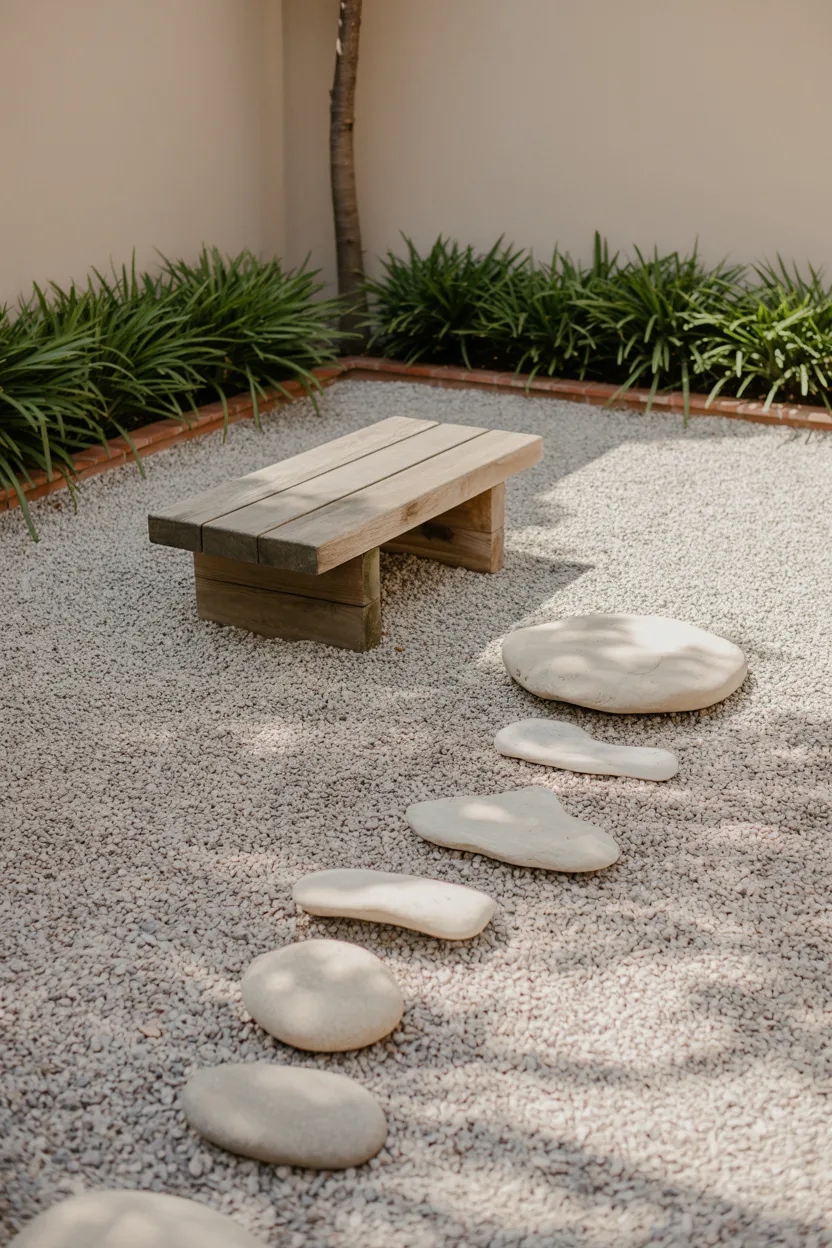
Gravel creates an incredibly grounding base for a sitting area. The crunch under your feet forces you to be present. Pale stones keep the color palette visually quiet. You get a space that demands almost zero maintenance.
Pick a quiet corner near your fence line. Pour a layer of fine pea gravel. Frame it out with some heavy landscape timbers or basic bricks. Drop a weather-resistant floor cushion right in the middle. You now have a complete meditation zone.
The visual emptiness of a rock garden works wonders for an anxious mind. It looks way cleaner than a patch of dying grass. Dragging a large boulder into the mix adds an architectural element without cluttering the floor.
Also Read: 24 Low Maintenance Garden Ideas 2026 That Still Look Amazing
Some people love dragging a heavy rake through the stones to form lines. It acts as a physical warm-up for your brain. Tracing circles around a boulder forces your breathing to slow down.
2. Tuck a Small Deck Platform Into the Garden
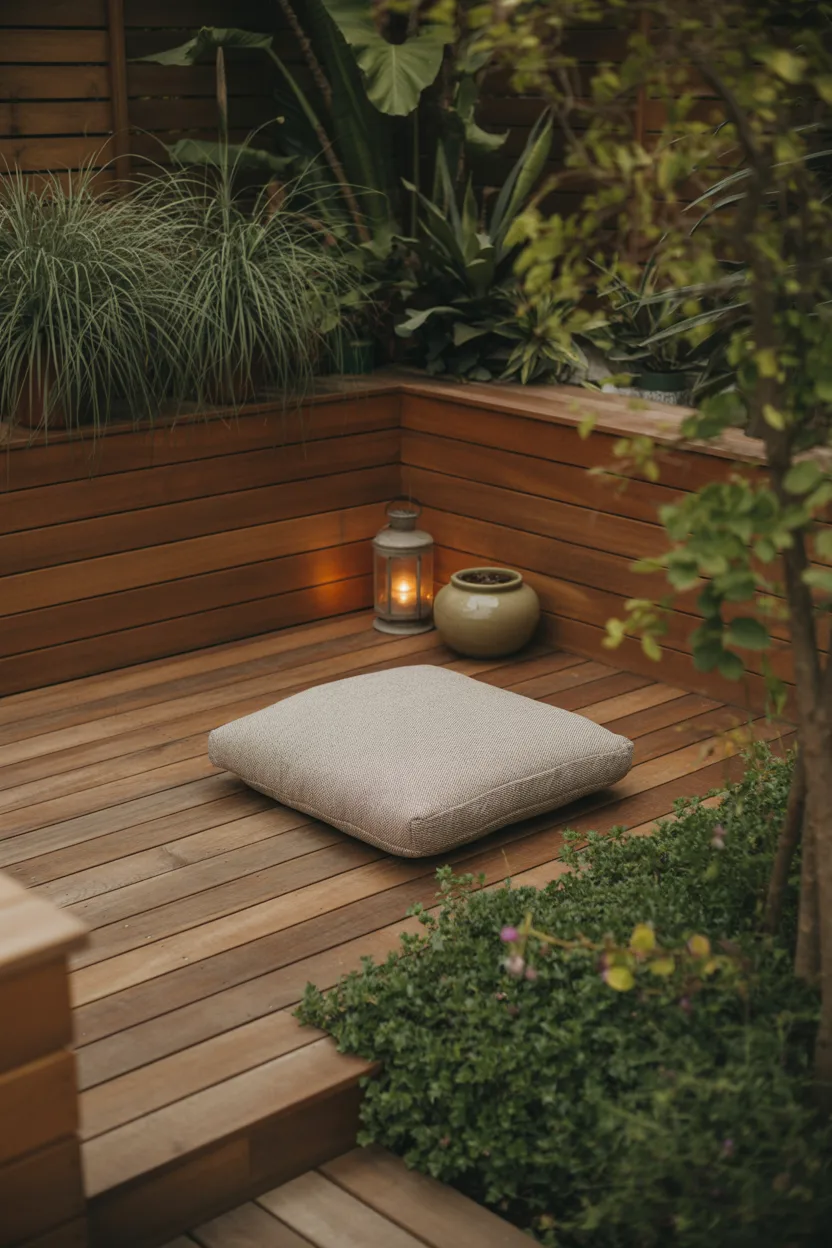
Elevating your sitting area off the dirt completely changes the mood. Building a low wooden square turns a random patch of lawn into a destination. Getting off the wet grass makes morning sessions much more appealing.
Natural timber always brings warmth to a landscape. It feels way better on bare feet than cold concrete blocks. A plain wooden platform needs very little dressing up. Toss a blanket down. Add a heavy potted plant for scale.
My favorite part of a floating deck is how it fixes bumpy lawns. Trying to sit cross-legged on a slanted hill is a nightmare. A perfectly flat wooden base stops you from wobbling around while trying to clear your head.
Wedge the platform right up against your tallest bushes. Letting ornamental grass spill over the edges blends the wood into the landscaping. You feel protected by the greenery instead of exposed in the middle of a yard.
3. Use a Pergola for Gentle Shade
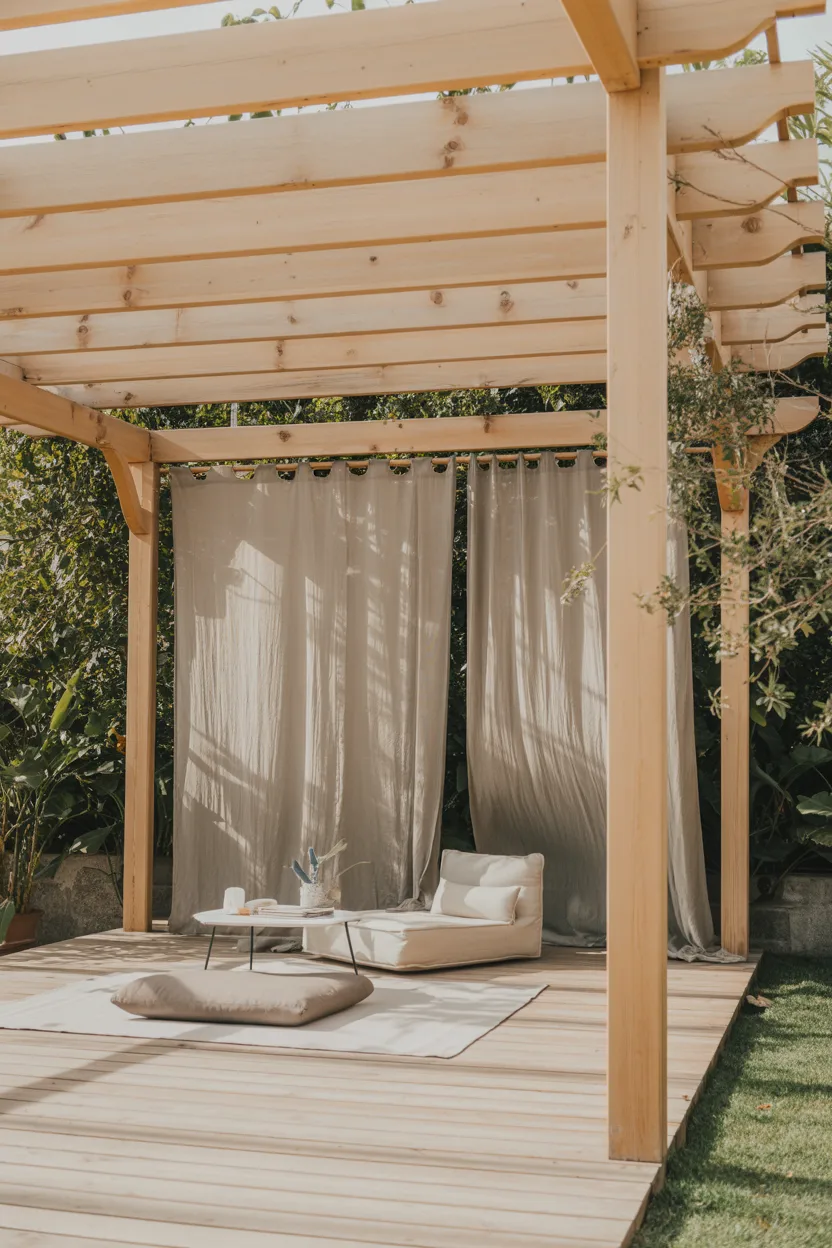
A wooden overhead structure defines the boundaries of your resting spot. It carves an actual room out of the open air. Trying to meditate while baking in the direct afternoon sun is just an exercise in endurance.
Pergolas let you control the light. You might leave the rafters totally bare. You could drape canvas across the top to block the heat. Growing a heavy wisteria vine up the posts provides incredible natural shade.
Wide open lawns often feel too vulnerable for deep relaxation. A roof frames the area perfectly. You still get the cross breeze. You just lose that weird feeling of sitting completely exposed.
Stick to minimal seating underneath the rafters. A heavy sectional sofa will just turn the area into a regular lounge. A single flat bench keeps the focus strictly on quiet time.
4. Place a Meditation Bench Under a Tree
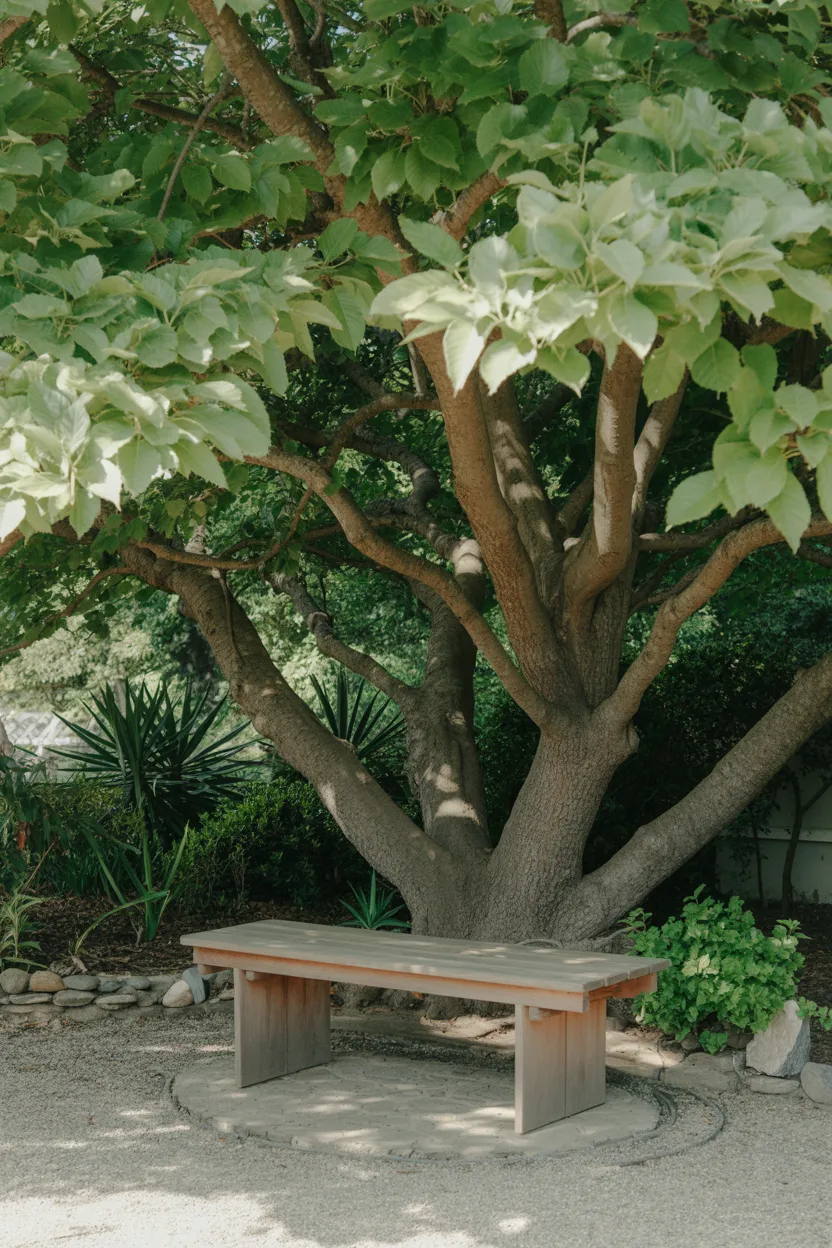
We overlook the easiest solutions far too often. Sitting under a massive oak provides a natural canopy. You hear the wind moving through the leaves. The shade is deep and cool. Nature handles all the architecture for you.
Find the oldest tree on your property. Rake up the messy twigs around the trunk. You might lay down a few flat pieces of slate to rest your feet on. Park a heavy teak bench right against the bark.
The total lack of effort here is the best part. You skip the trips to the hardware store. You just borrow the landscape that already exists. Staring up into a heavy branch network has a way of shrinking your daily worries down to size.
Renters can pull this off in minutes. Toss a few heavy planters near the bench if your neighbor’s window looks directly into the yard.
5. Build a Bamboo Privacy Nook
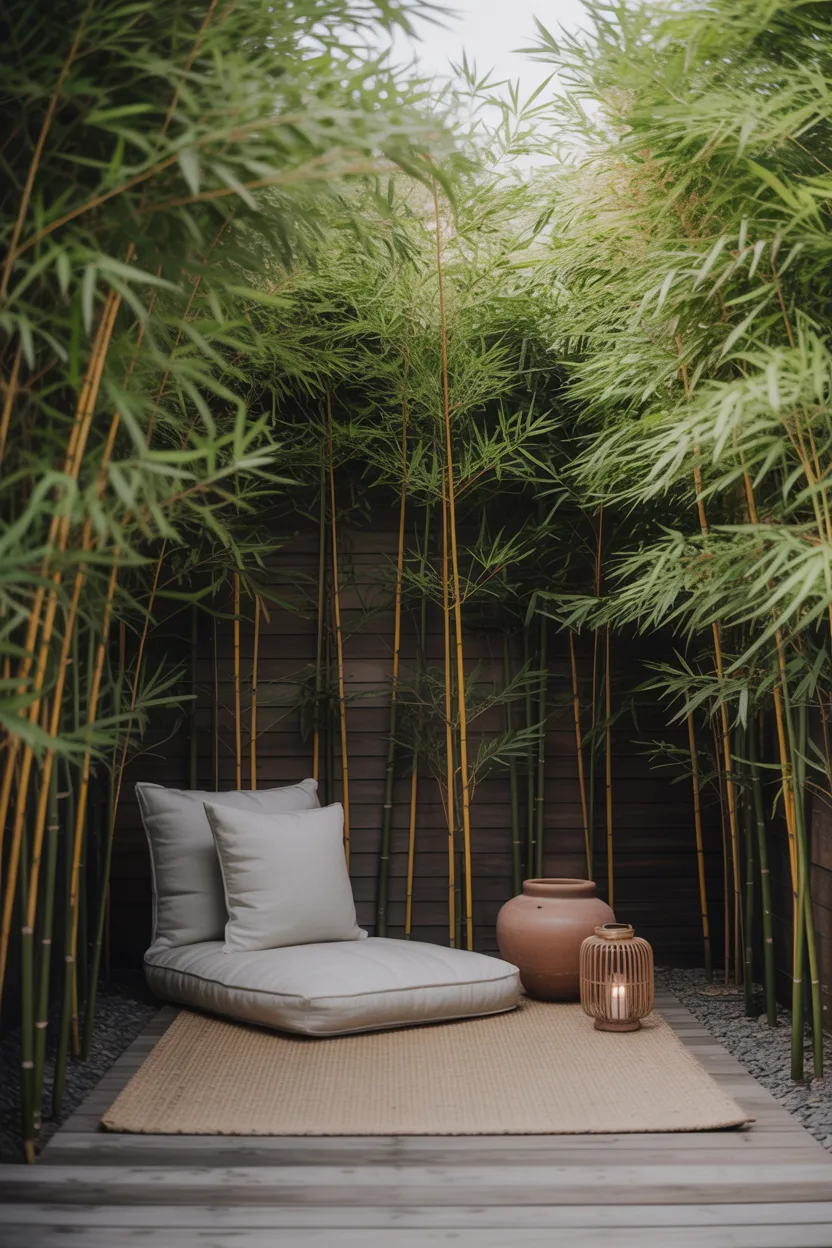
Closing yourself off from the neighborhood is crucial for focus. A bamboo wall blocks out the street view immediately. The vertical canes look organic rather than industrial. You avoid that trapped feeling a solid brick wall creates.
Also Read: 23 Outdoor Yoga Space 2026 Ideas That Feel Peaceful
Buy a roll of dried bamboo fencing from the hardware store. Zip-tie it directly to an ugly chain-link fence. If you prefer live plants, line up three deep troughs filled with clumping bamboo. Drop a seating pad right in front of the new barrier.
The hollow stalks make a very distinct clacking noise in the wind. The leaves filter light in a very specific way. You instantly feel like you walked into a secluded garden room.
Keep live bamboo strictly inside metal planter boxes. Planting it directly in the dirt will destroy your entire yard. The roots spread like a weed.
6. Design a Cozy Floor Cushion Retreat
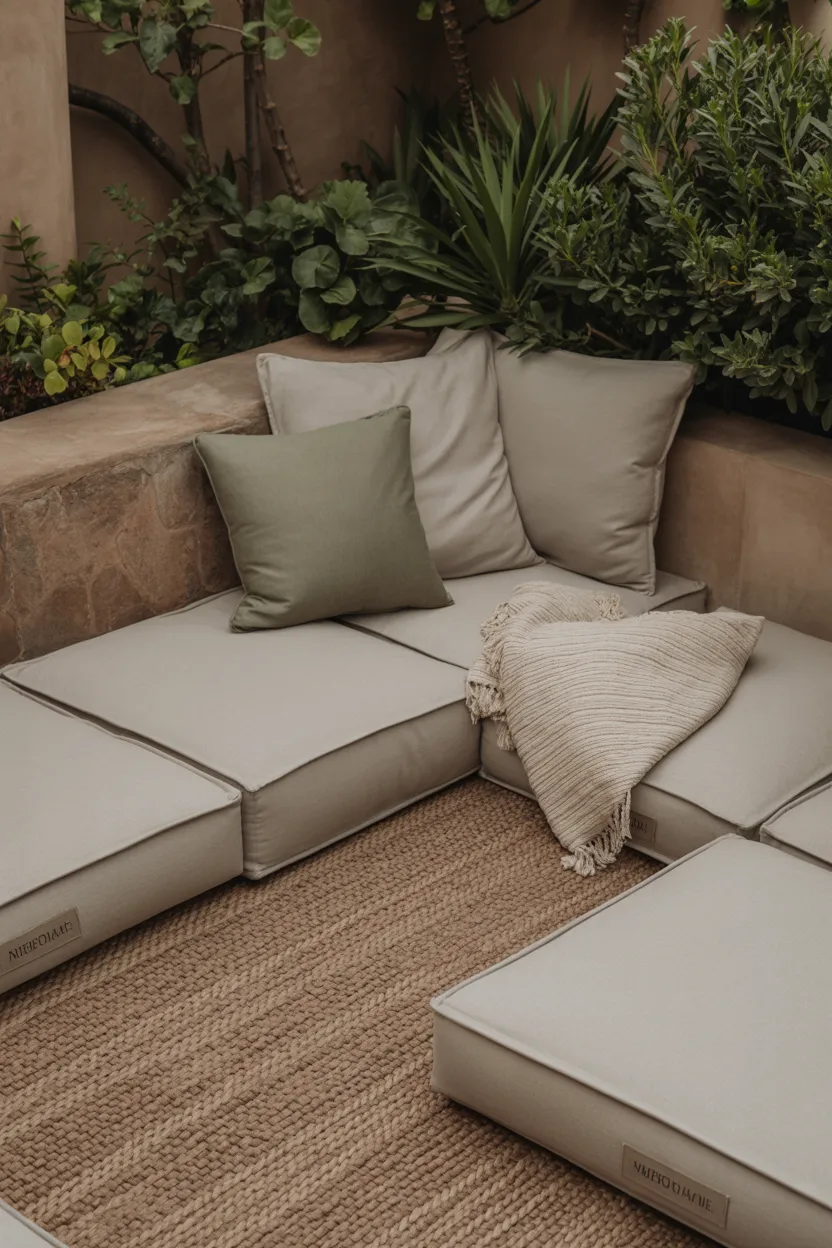
Formal meditation benches can feel intimidating. Sometimes you just want to sit on something soft. A pile of outdoor pillows removes all the strict wellness pressure. You get to just lounge and breathe.
Roll out a thick polypropylene rug over your patio concrete. Stack a few oversized floor poufs in the center. Grab a heavy bolster to support your knees. Stick to faded canvas colors like washed out sage or dusty clay.
Rigid wooden seats usually force you to leave after ten minutes. Plush pillows encourage you to stick around. You might read a book. You could drink your morning coffee there. Comfort guarantees you actually use the spot.
Resist buying an entire catalog of bohemian decor. A rug and a seating pad are really the only requirements. Dragging out fifteen different throw pillows just creates a daily storage nightmare.
7. Add a Water Feature for Soft Sound
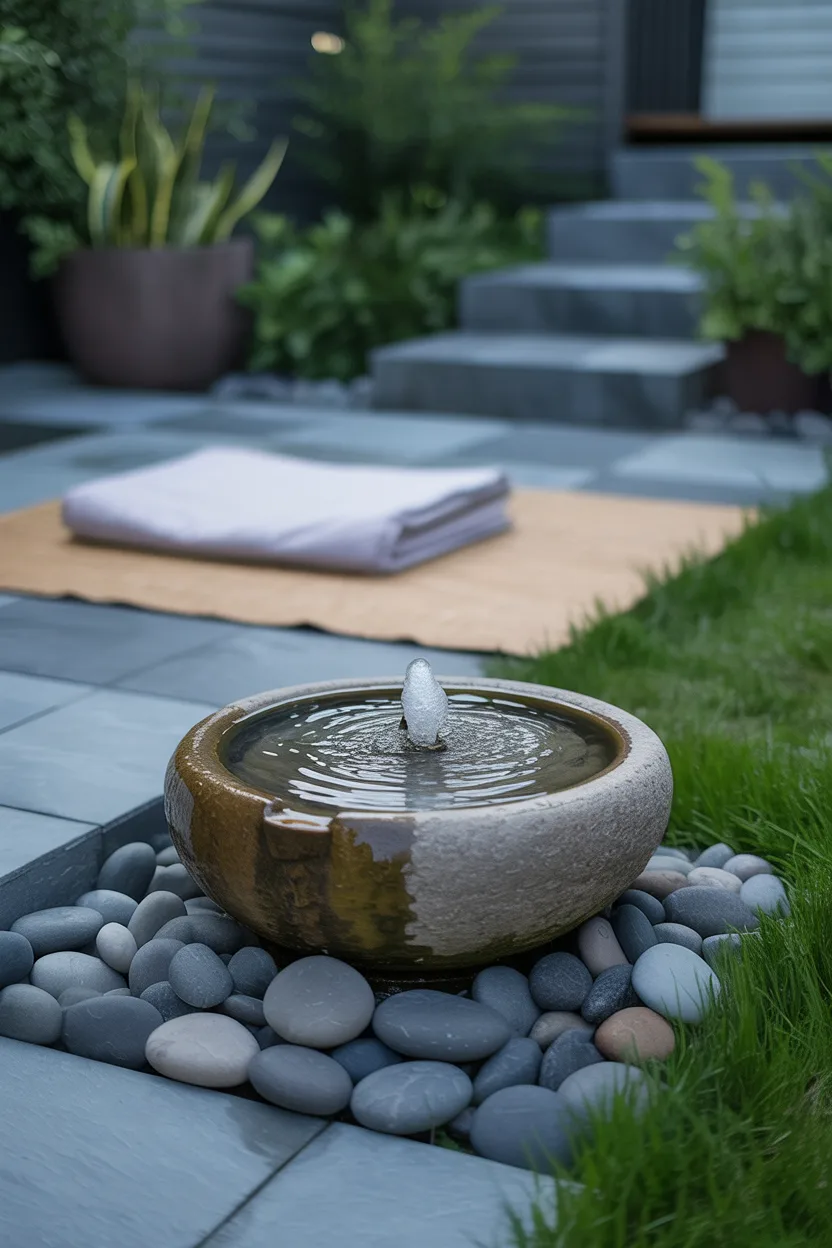
Traffic noise destroys concentration fast. Listening to your neighbor talk on the phone completely derails a quiet morning. Moving water acts as a brilliant auditory shield. It washes out the background hum of the city.
Huge landscaping waterfalls are totally unnecessary. A basic glazed pot with a recirculating pump works perfectly. You just need a steady trickling sound. A loud crashing fountain will just make you need to use the restroom.
Also Read: 20 Courtyard Water Feature Ideas 2026 That Feel Luxurious
Running water cools the air down on hot afternoons. It attracts local birds to your yard. A plain concrete basin fits right into a modern house layout. A rustic copper bucket suits an older cottage.
Tuck the pump a few feet away from your seating pad. You want it to act as background white noise. Sitting directly next to a splashing spout usually ends with you getting sprayed in the face.
8. Use Natural Stone for a Grounded Feel
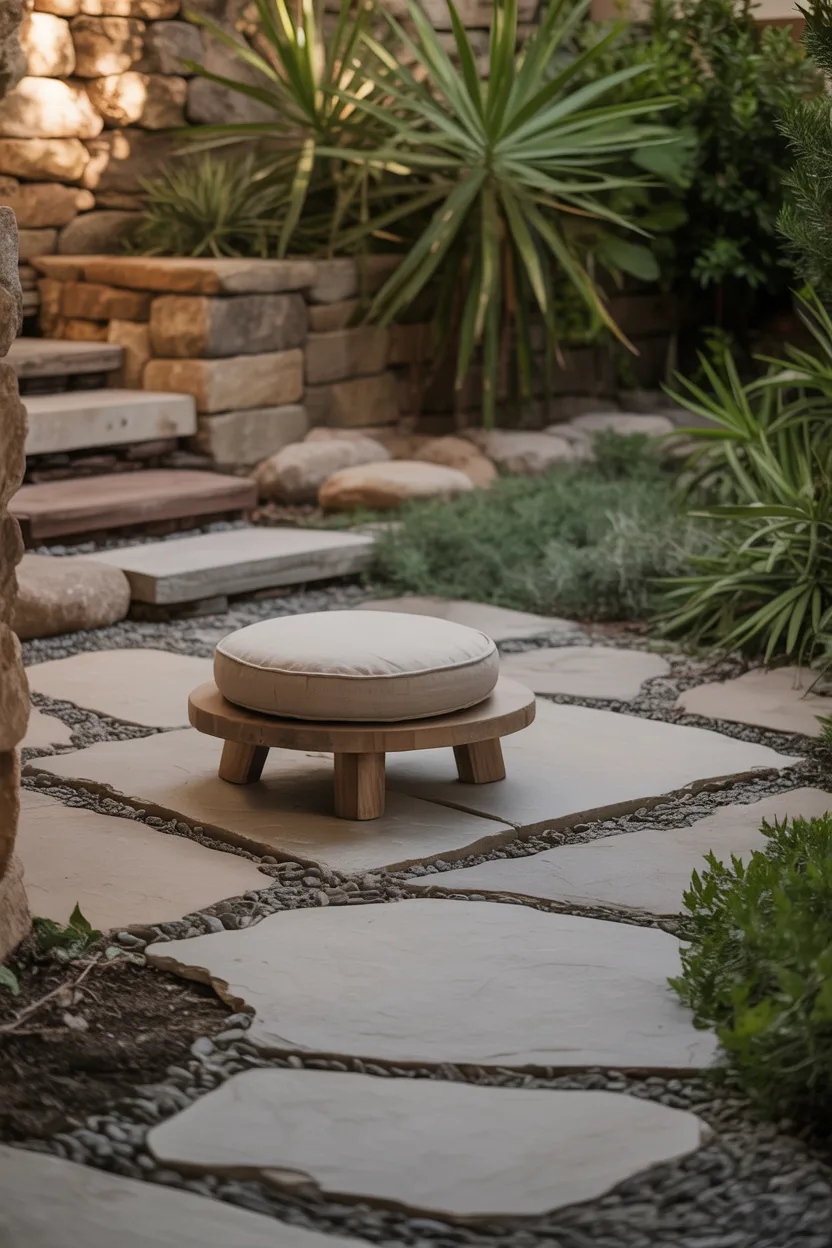
Heavy rock elements bring a serious sense of permanence. A giant slate slab feels incredibly solid underneath you. Natural stone carries a visual weight that synthetic decking boards can never replicate.
Rough edges on a boulder force you to look closely at the details. The gray and brown colors fade nicely into the background dirt. It pairs perfectly with soft moss growing in the cracks.
A flimsy plastic chair sitting in the grass feels like an afterthought. A massive granite bench looks intentional. Creating a heavy physical anchor point gives your daily routine more legitimacy.
Avoid cutting the rocks into perfectly straight lines. Let the jagged organic edges stay exposed. Lay a few flat flagstones in the dirt and call it a day.
9. Turn a Patio Corner Into a Calm Zone
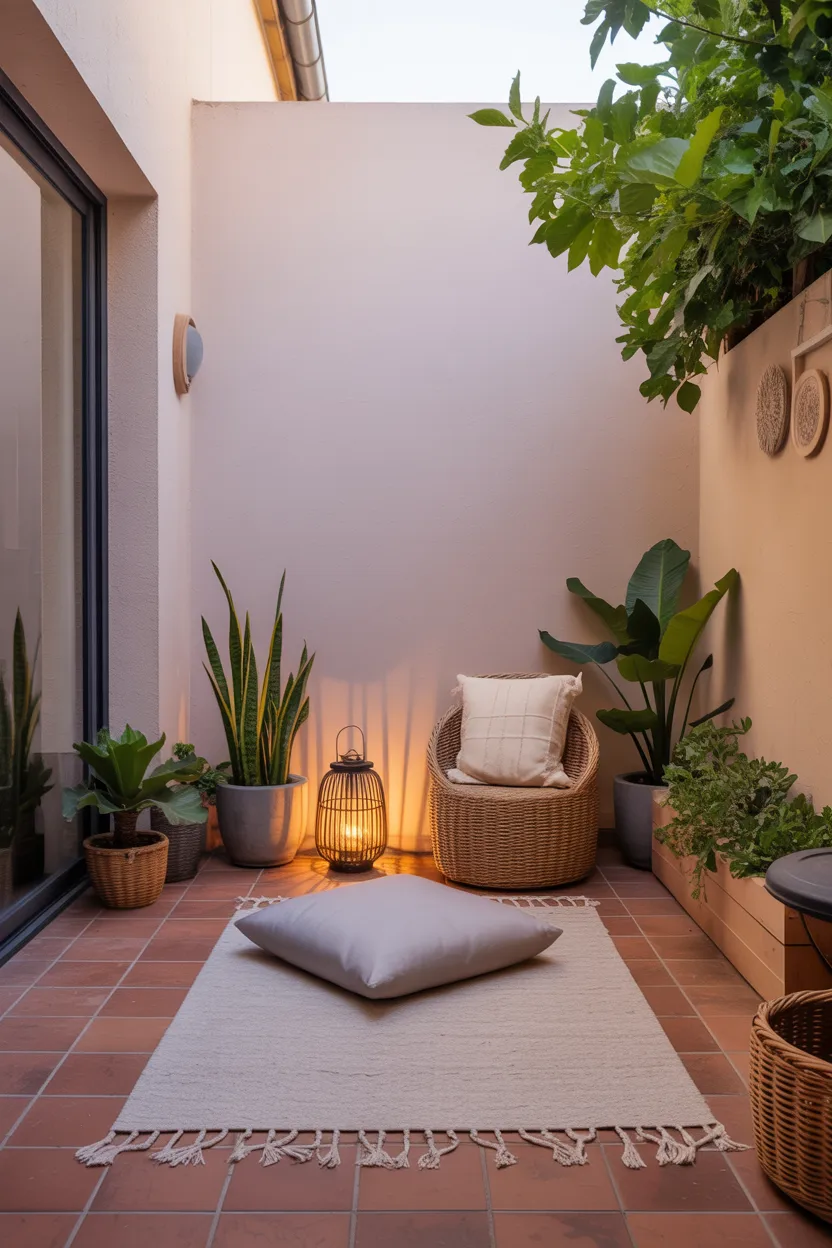
Not everyone owns an acre of rolling hills. Apartment renters absolutely deserve a dedicated spot to breathe. Claiming a single square of your concrete balcony takes zero construction skills.
Shove the dusty grill to the opposite side. Throw away the dead potted plants. Sweep the dust out of the corner. Lay down a clean yoga mat. Place a heavy ceramic bowl filled with water next to it.
Also Read: 22 Tropical Garden Design Ideas 2026 That Feel Like Paradise
Real life happens on small porches next to loud streets. Designing a mental escape inside a tight footprint is highly practical. You do not need a wealthy person’s botanical garden to sit with your thoughts.
Block out the neighbor’s view with a freestanding slatted wood screen. A tall snake plant in a heavy pot works just as well. Giving yourself a visual barrier from the street drops your stress level instantly.
10. Create a Minimalist Sand Garden
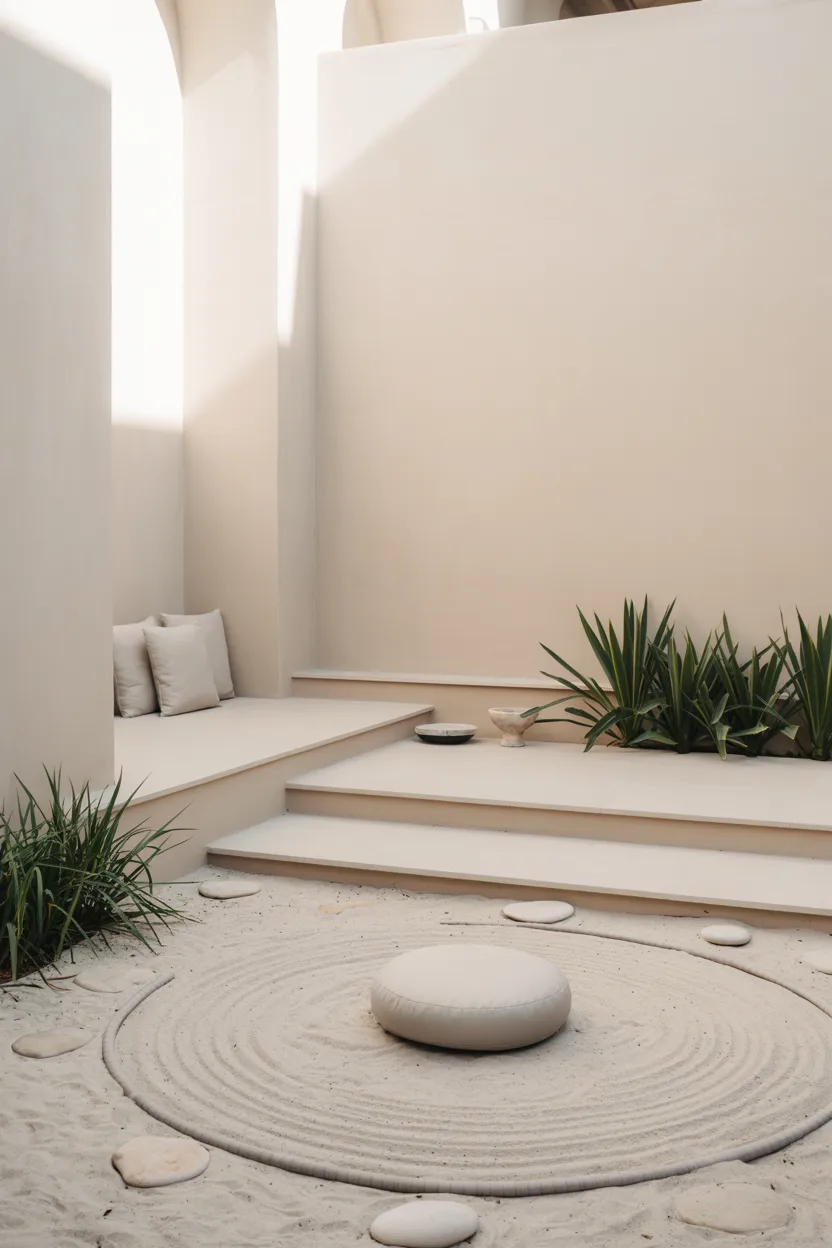
Pale sand completely wipes the visual slate clean. It looks softer than jagged gravel. The bright beige color reflects sunlight beautifully. Staring at an empty sandbox sounds weird until you actually try it.
Build a low wooden frame to keep the material contained. Buy a few bags of play sand from the hardware store. Nestle a single dark rock off to one side. Walk away. Do not add statues or weird chimes.
Clutter forces your brain to constantly process information. Staring at a flat expanse of sand shuts that processing down. Your eyes finally get to rest.
Contemporary houses look incredible with dry landscaping. A smooth sand pit contrasts perfectly against rigid stucco walls. Just make sure stray cats do not mistake it for a litter box.
11. Use an Outdoor Daybed for Restorative Meditation
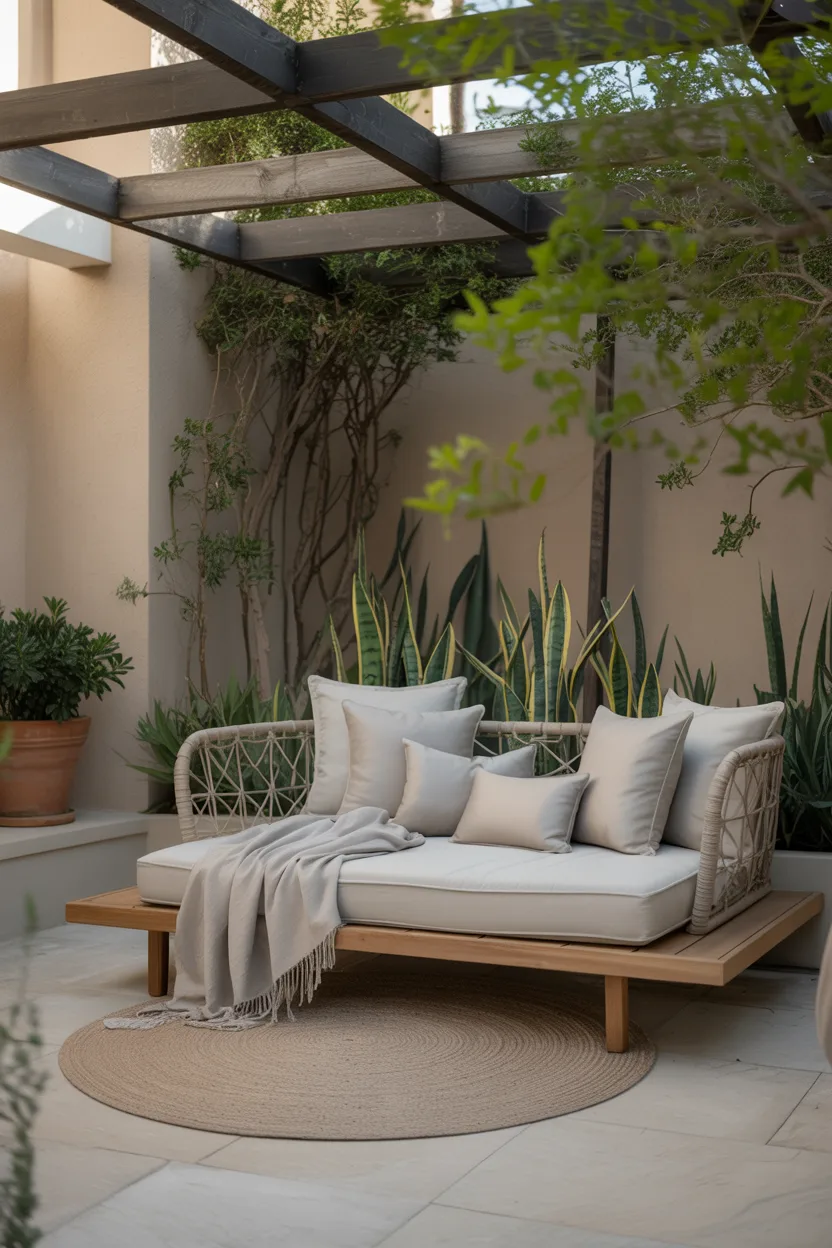
Sitting up straight on a hard block hurts your lower back. Lying flat on your spine opens up your breathing completely. A thick mattress placed outside feels incredibly decadent.
Buy a deep outdoor sofa with a single long seat cushion. Push it deep underneath a covered porch. Keep a heavy fleece blanket folded over the armrest for chilly mornings.
Also Read: 21 Outdoor Breakfast Patio 2026 Ideas for Cozy Mornings
Dedicated meditation zones sometimes sit empty for weeks. A daybed guarantees daily use. You might start out focusing on your breath. Ten minutes later you are just taking a really excellent nap.
Strip away the decorative throw pillows. You need flat space to stretch out. A giant piece of furniture needs very little accessorizing to look complete.
12. Frame the Space With Tall Planters
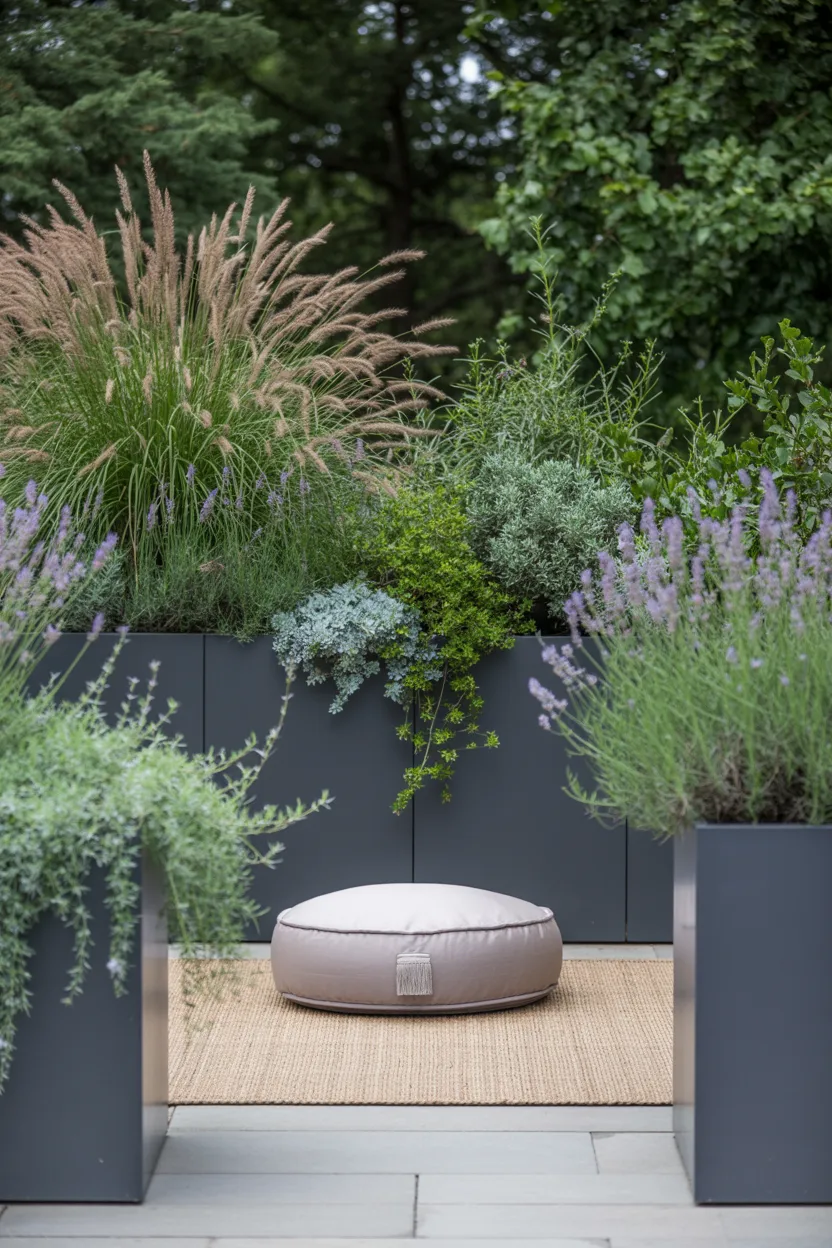
Putting up a permanent fence takes serious effort. Heavy pots act as a temporary wall. You get to rearrange the layout whenever you want. Renters can pack up the entire boundary wall on moving day.
Buy three tall fiberglass containers. Fill them with tall arborvitae or feather reed grass. Line them up in a row right beside your seating pad. You suddenly have a leafy barricade hiding you from the street.
Drilling holes into concrete creates serious commitment anxiety. Dragging a few pots around is totally risk-free. If the afternoon sun hits your face at a weird angle, just slide the pot over a few inches.
Staring at a solid brick wall gets oppressive. Plants filter the light. They drop shadows across your mat. The subtle movement of the leaves keeps the space feeling alive.
13. Add an Outdoor Rug to Warm Things Up
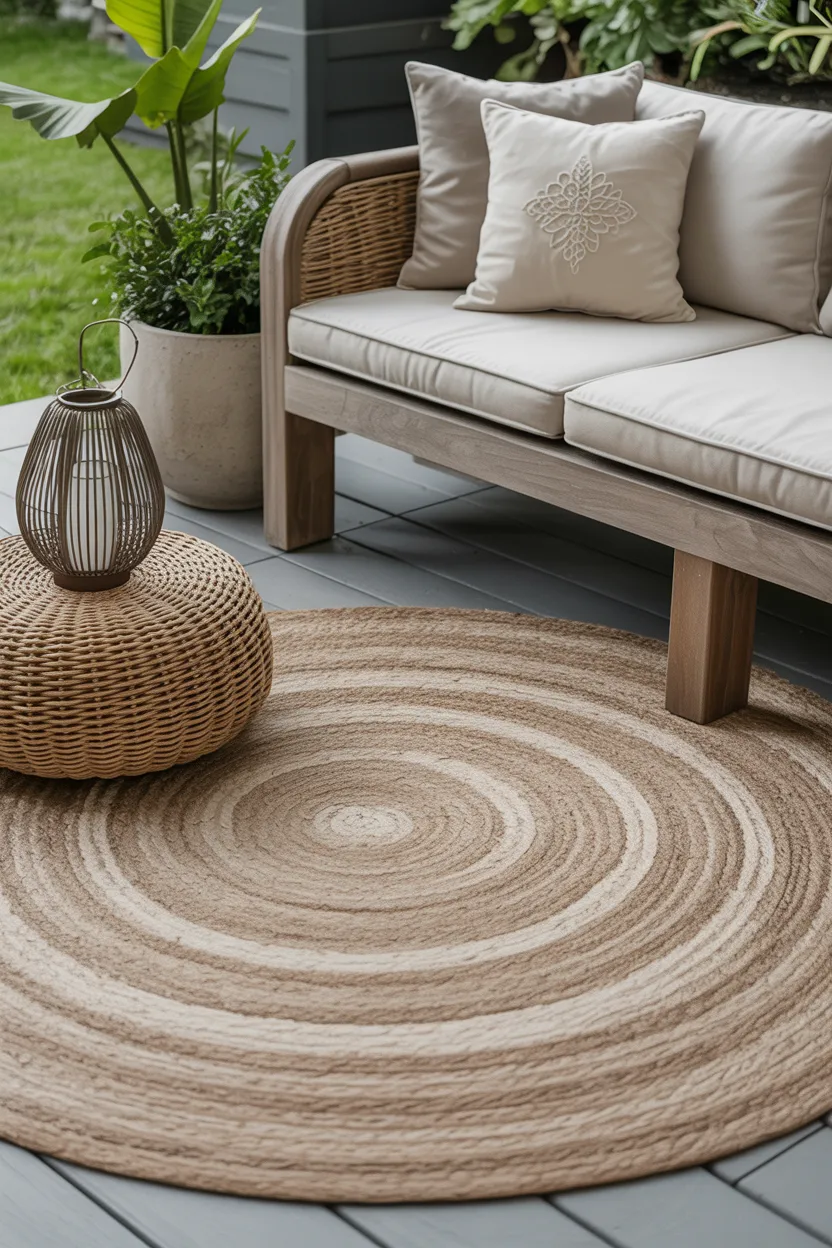
Bare concrete looks like a garage floor. A massive textile covers up the ugly stains instantly. Walking barefoot on a woven mat feels far better than stepping on cold rough stone.
Unrolling a rug visually separates your meditation spot from the dining table. Look for recycled plastic mats in faded oat or slate colors. Avoid those loud geometric prints that scream for attention.
Patios without textiles look abandoned. A rug signals that humans actually spend time there. It frames your sitting cushion perfectly.
Also Read: 23 Garden Wall Ideas 2026 That Instantly Upgrade Your Yard
Check the tags before buying. Indoor carpets will rot and grow mildew after the first rain. You want something you can wash down with a garden hose.
14. Create a Hidden Side Yard Sanctuary
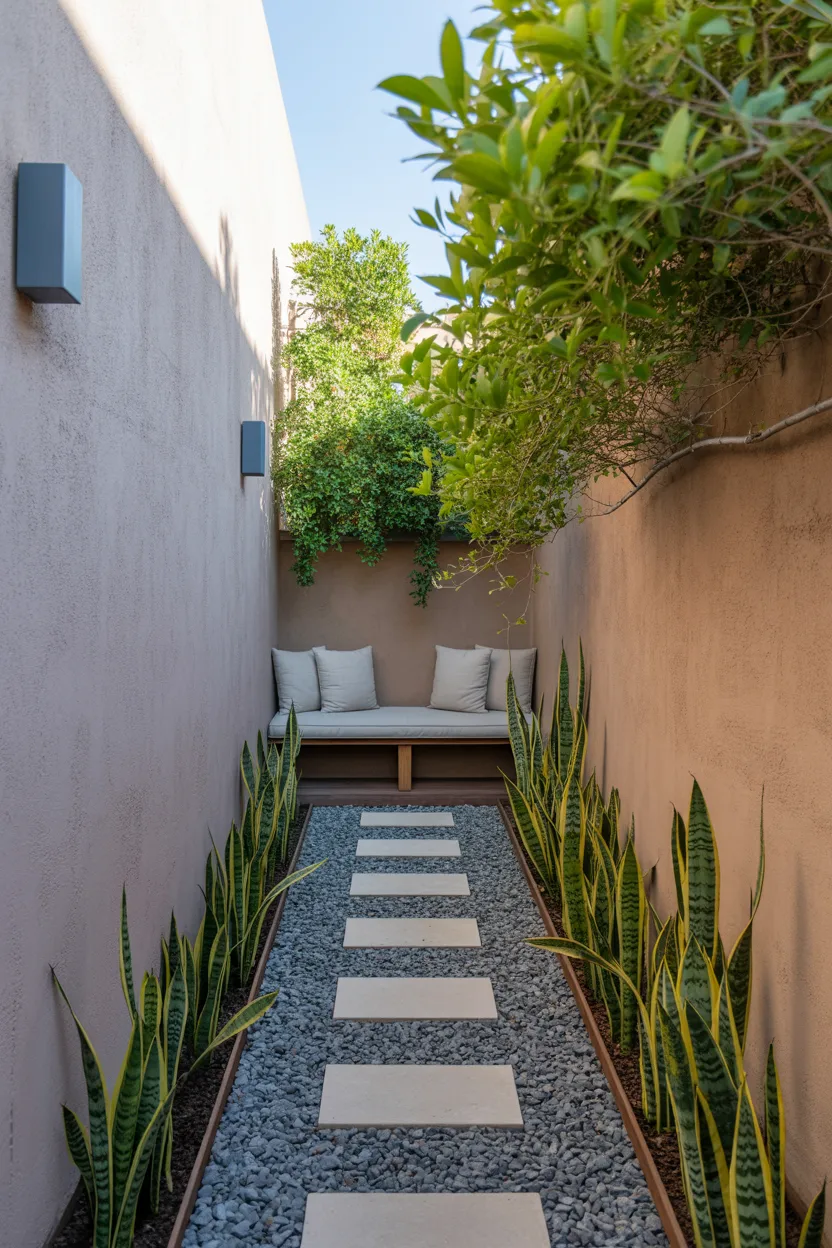
Narrow strips of land beside the house usually turn into junk piles. We hide the trash cans there. Tucking a chair into that tight alley completely transforms dead space into a private hideaway.
Haul the rusty wheelbarrow to the garage. Lay down a weed barrier and cover it in crushed rock. Push a narrow wooden stool against the siding of the house.
Kids rarely play in the side yard. The dog ignores it. You get a space entirely isolated from the chaotic main lawn. Walking around the corner of the house physically removes you from the daily grind.
People complain about tiny properties constantly. They ignore the ten-foot gap next to their air conditioner. A bit of sweeping turns that forgotten gap into prime real estate.
15. Set Up a Morning Sun Meditation Spot
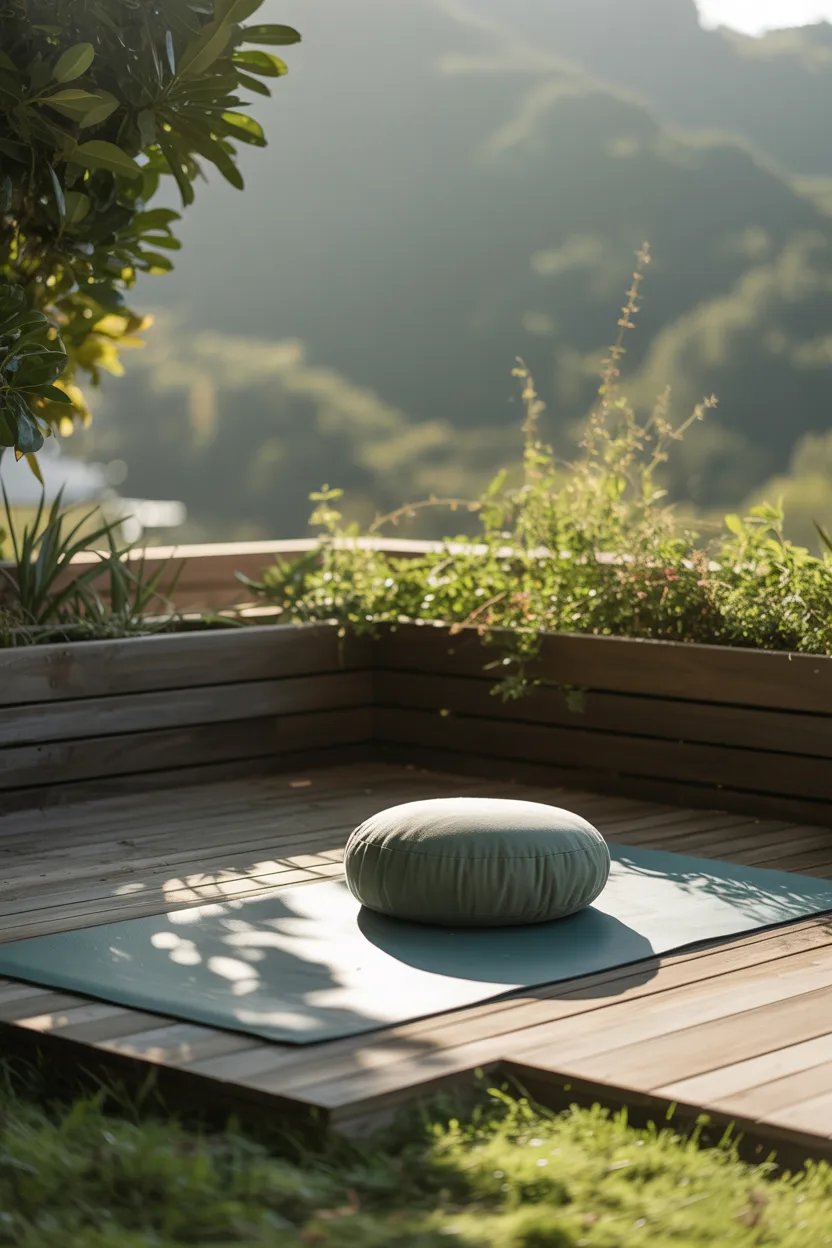
Waking up early is awful. Finding a warm patch of sunlight makes the alarm clock slightly more tolerable. Letting the sunrise hit your face resets your internal clock in a very biological way.
Track where the light hits your yard at seven in the morning. Drag your floor pad to that exact square. East-facing walls usually provide the best early warmth before the brutal afternoon heat kicks in.
Humans are essentially houseplants with complicated emotions. We naturally gravitate toward the light. Seeing a brightly lit corner out the kitchen window drags you outside before you have time to make excuses.
Also Read: 25 Outdoor Party Lounge 2026 Ideas for Fun Nights
Groggy brains cannot handle complicated setups. Leave the blanket permanently draped over the chair. You just want to stumble out the door with your coffee mug and sit down.
16. Use Sheer Curtains for a Soft Retreat Feel
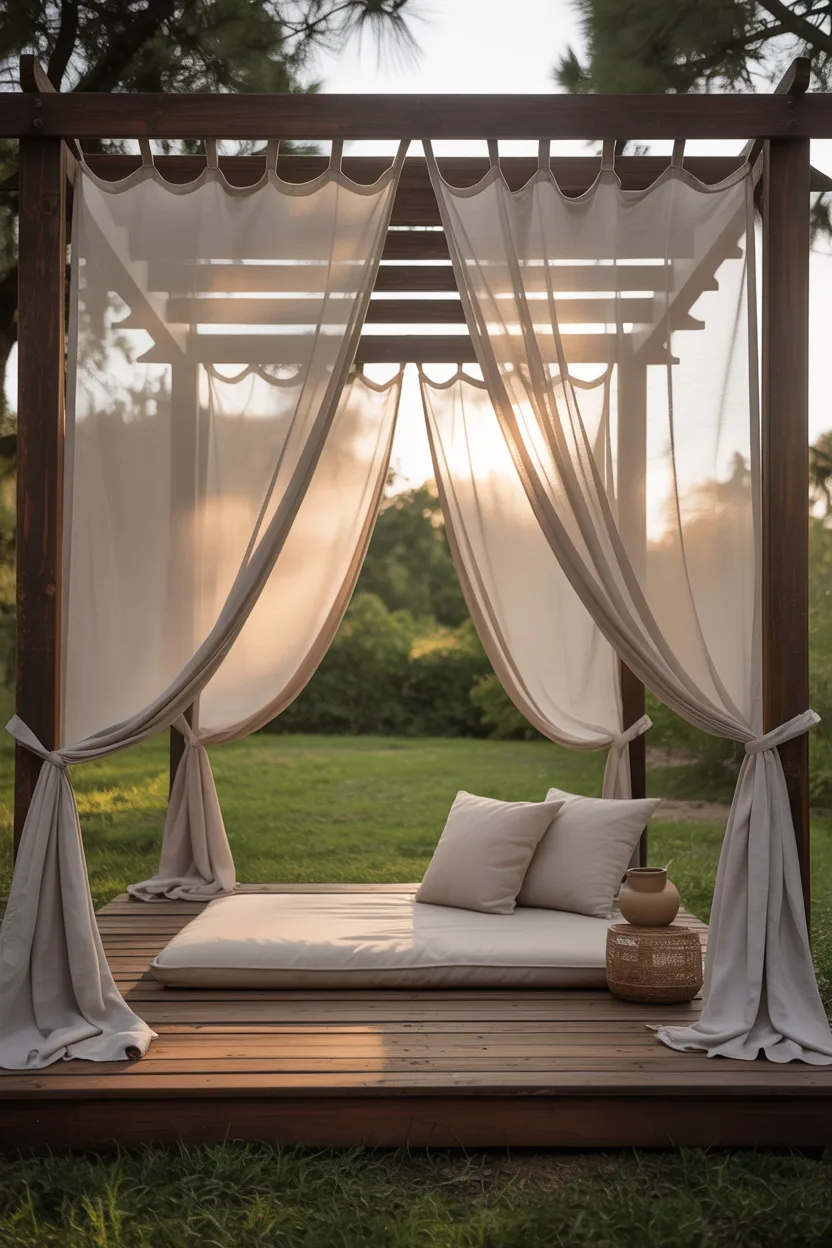
Hanging fabric outside instantly creates a resort vibe. Thick canvas blocks out the world entirely. Thin sheer panels blur the neighborhood while letting the breeze pass right through.
Screw a tension rod onto your existing patio beams. Thread a few panels of unbleached cotton across it. Wash out the heavy dark colors. Stick to pure white or pale sand to keep the visual weight light.
Watching thin fabric ripple in the wind gives you an easy focal point. Tracking the slow motion helps steady your breathing. You get a nice secluded bubble that never feels like a dark cave.
Do not drape every single open wall. Tie back the corners with thick rope. You still want to see the trees in your yard.
17. Bring in Lanterns for Evening Calm
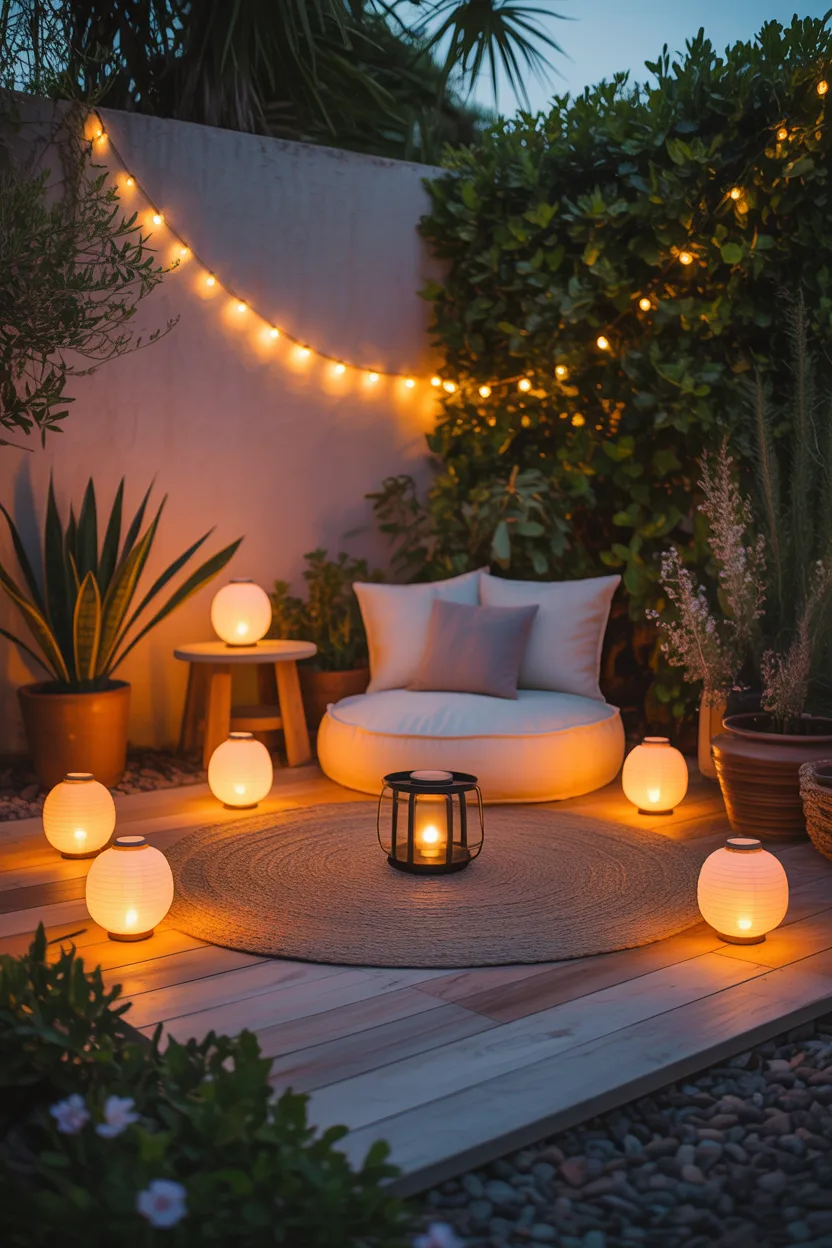
The sun goes down early in the winter. A pitch black yard just feels hostile. Adding a few glowing lights lets you keep your evening routine alive all year round.
Skip the complicated hardwired fixtures. Buy some metal boxes housing fake flickering candles. Set one near the pathway. Place another right next to your sitting block. The scattered glow looks way better than a single blinding overhead bulb.
Flipping on a massive security floodlight ruins the meditative vibe immediately. Dim amber light signals to your brain that the day is officially over.
Tiny balconies look incredible with a little strategic lighting. A battery-operated lamp sitting on a stool requires zero floor space.
18. Make a Small Japanese Inspired Meditation Garden
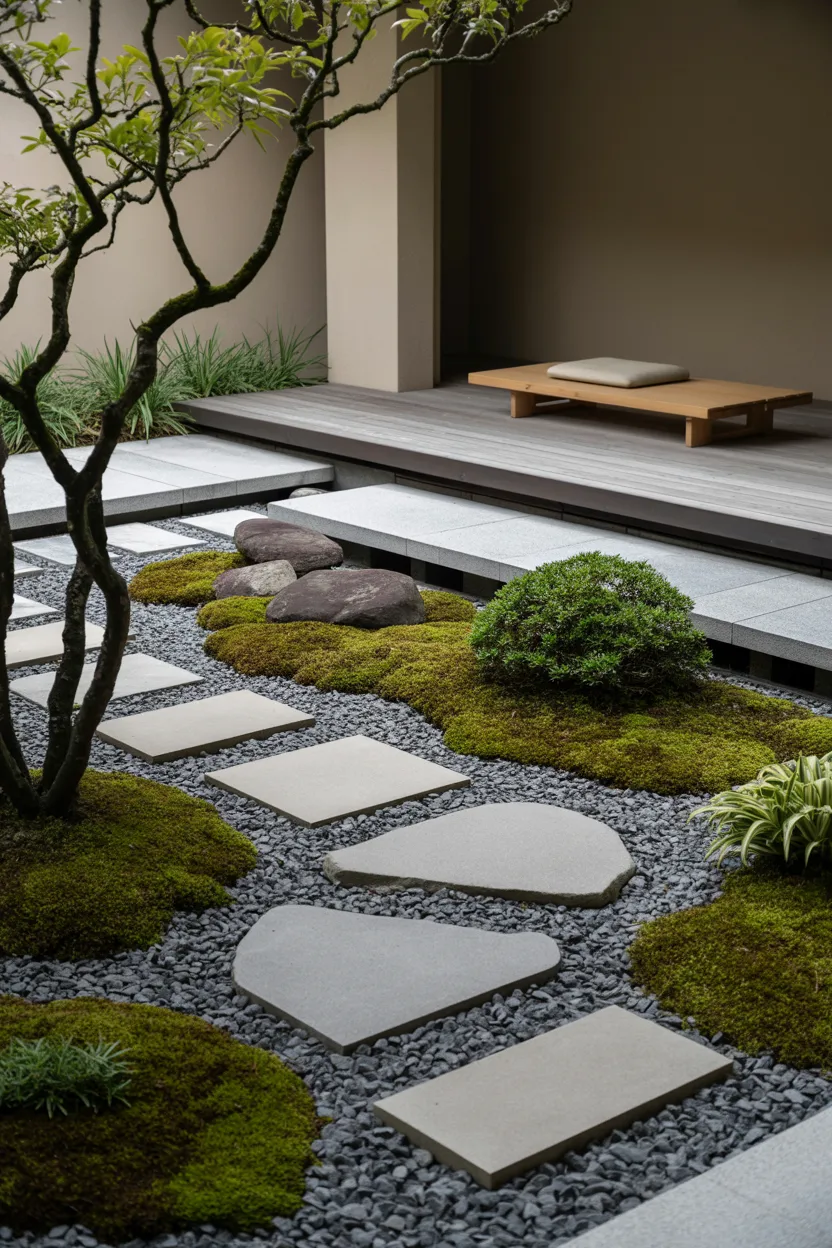
Traditional Eastern landscapes mastered the art of visual restraint centuries ago. You do not have to build a giant koi pond to steal their best ideas. A few deliberate choices go a very long way.
Combine dark moss with smooth river rocks. Build a low wooden boundary. Emptiness is actually the most important element in this style. A completely blank corner of gravel carries massive design weight.
Cluttered yards stress people out. A highly structured Japanese aesthetic demands order. You cannot leave a dirty shovel lying around a Zen rock garden. The strict cleanliness forces your mind to quiet down.
Resist buying cheap plastic Buddha statues from a big box store. A single weathered stone lantern is more than enough. Respecting the empty space is the whole point.
19. Use a Hammock Chair for Gentle Swaying Calm
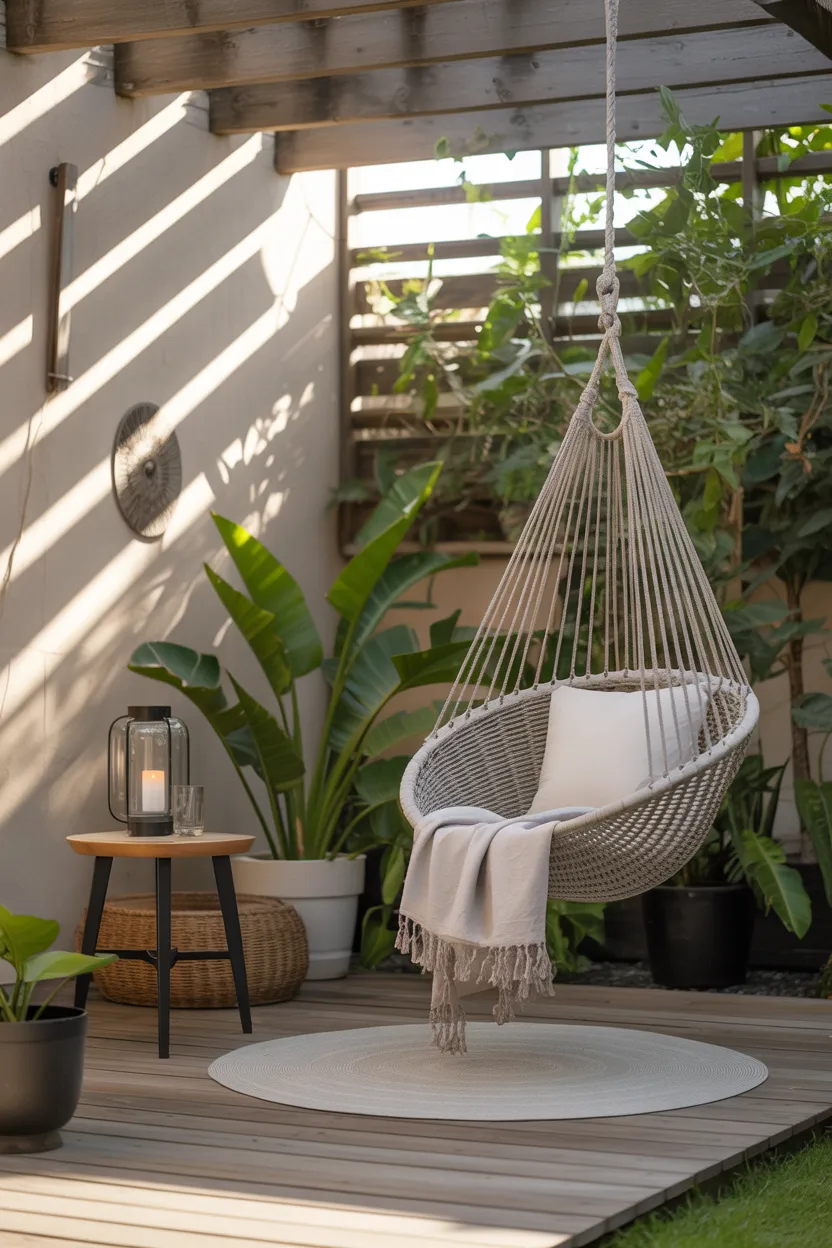
Some brains simply cannot handle sitting perfectly still. Forced stillness actually triggers panic for highly anxious people. A hanging seat provides a repetitive motion that burns off that nervous energy.
Bolt a heavy steel hook into a thick porch rafter. Suspend a woven macrame chair from thick ropes. Make sure you use heavy-duty hardware to avoid a terrible accident. Park a tiny wooden stool next to it to hold your drink.
Traditional meditation looks very serious. A hammock feels inherently playful. You can tuck your knees up and rock back and forth. You might stare at the clouds for twenty minutes. It all counts.
Also Read: 22 Gazebo Deck Ideas 2026 for a Stylish Backyard Setup
Keep your feet lightly touching the floor. Pushing off too hard turns the setup into a playground ride.
20. Make It Seasonal With Simple Swaps
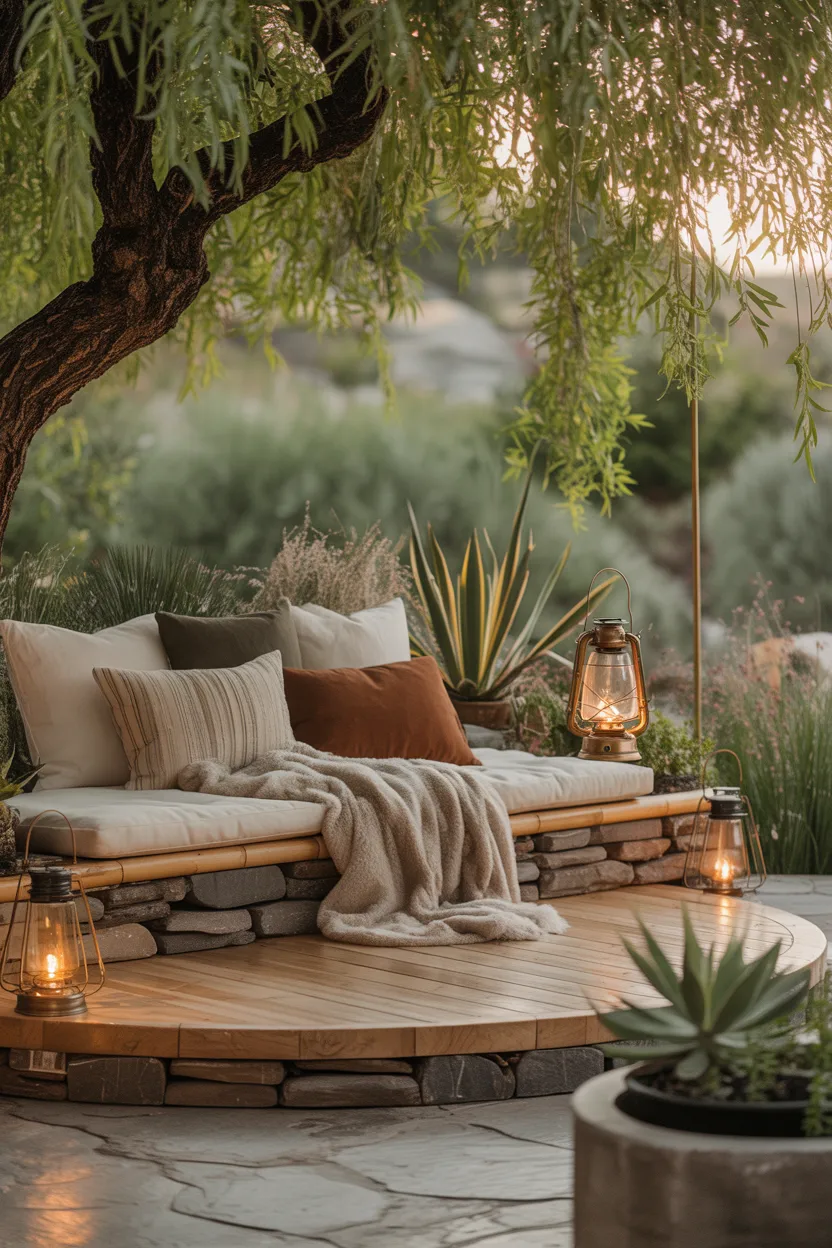
Changing weather usually destroys our outdoor habits. November hits and the patio gets abandoned until May. A little strategic planning keeps your spot functional year-round.
August requires a battery-operated fan and canvas shade. December calls for a heavy wool blanket and a thermos of hot tea. The bench stays exactly where it is. You just swap out the survival gear.
Small changes keep the brain interested. Updating the pillows gives you an excuse to tidy the space up. Sitting outside in a heavy coat breathing in freezing air is actually a wildly refreshing experience.
Buy a waterproof deck box. Shove your thick cushions inside when the snow starts falling. Nobody wants to sit on a soggy frozen pillow.
21. Keep One Space Ultra Simple and Screen Free
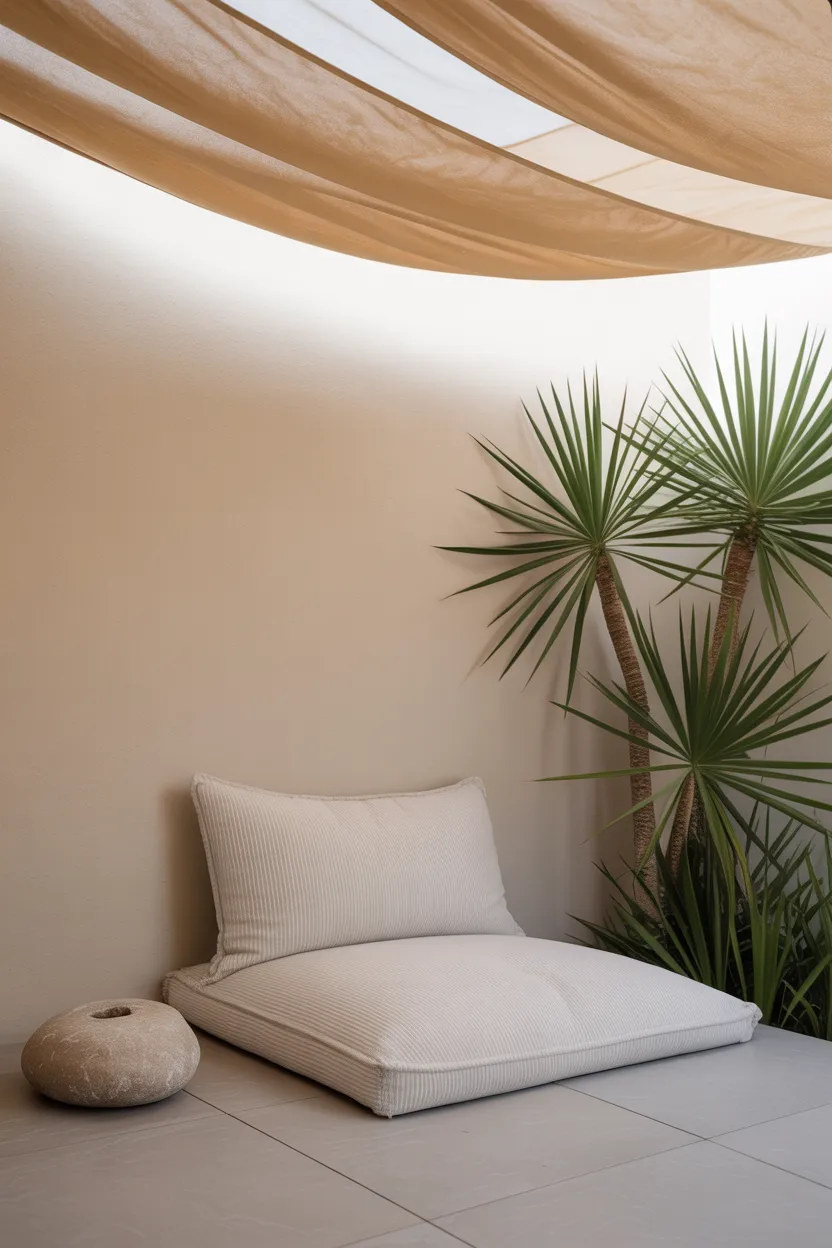
We drag our phones everywhere. We stare at them on the toilet. We look at them during dinner. You absolutely must establish a strict boundary line in your yard where the glowing rectangle is not allowed.
Leave the smart watch on the kitchen counter. Walk out with empty hands. A bare wooden stool next to a bush is a perfect setup. Having absolutely nothing to look at forces you to finally look inward.
Interior design logic fails outside. You do not need to style a vignette. You are building a mental decompression chamber.
Also Read:21 Gazebo Lighting Ideas 2026 That Feel Warm and Magical
Stop trying to track your heart rate or queue up the perfect ambient playlist. Just go sit outside and listen to the actual birds for a change.
Best Decor Elements for an Outdoor Meditation Space
Any object you bring outside needs to serve a specific purpose. It must provide physical comfort. It needs to block a line of sight. It has to produce a calming sound. Anything else is just expensive clutter.
Here are some of the most helpful decor elements:
- Neutral floor cushions or heavy pillows
- Washable flat-weave outdoor rugs
- Heavy teak or cedar benches
- Large flat river stones
- Fiberglass privacy planters
- Battery-operated amber lanterns
- Recirculating water bowls
- Unbleached cotton curtain panels
- Heavy clay pots filled with greenery
- Woven storage baskets for blankets
Earth tones blend right into the landscaping. Washed out grays and faded greens look incredibly peaceful. Neon pink patio chairs will just give you a headache.
Mistakes to Avoid When Designing Your Space
People ruin their backyards with good intentions all the time. Catching a few common layout errors early saves you money and serious frustration.
Making It Too Decorative
Stacking a dozen tiny statues around your mat looks ridiculous. It just gives you more things to dust. A quiet mind requires an empty floor.
Ignoring Comfort
Buying a beautiful carved wooden stool is a massive mistake if it digs into your spine. Your knees will ache. You will find excuses to skip your morning routine. Ugly comfort beats painful aesthetics every single time.
Forgetting About Shade
Direct July sunlight turns a peaceful session into a sweaty nightmare. You desperately need a tree branch or a canvas sail to block the heat.
Choosing High Maintenance Materials
Delicate fabrics require constant washing. Polished metal rusts instantly. Buy heavy-duty outdoor gear that survives a thunderstorm without your help.
Adding Too Much Technology
Dragging an extension cord outside to power a smart speaker defeats the purpose. Unplugging from the digital grid is literally the goal of sitting in the grass.
How to Make Yourself Actually Use It Daily
A gorgeous backyard oasis is totally worthless if you only look at it through the kitchen window. Building the habit is way harder than buying the furniture.
Stop packing your gear away every morning. Leave the heavy block outside permanently. If you have to drag a heavy chair out of the garage every time you want to sit down, you will quit by Wednesday.
Connect the new habit to an old trigger. Walk out the back door right after you hit the brew button on the coffee machine. Step outside immediately after you take your work boots off.
A few practical ways to build consistency:
- Pick a specific time block you can actually protect
- Aim for five minutes instead of an hour
- Leave your main sitting cushion outside
- Bring a cup of hot tea to make it enjoyable
- Sit in the exact same spot to build muscle memory
You just want the process to feel automatic. Repetition takes the mental effort out of the equation entirely.
Final Thoughts
Carving out a spot for quiet time is totally achievable. You do not need to hire a landscape architect. Hauling a heavy cushion under a shady tree works perfectly fine. You might prefer a sleek gravel box. You could hang a hammock. The layout just needs to fit your daily reality.
Look through these 21 outdoor meditation space 2026 ideas for daily calm and pick the easiest one to execute. Stop waiting until you own a massive property. Stop putting it off until your budget gets bigger. You just need a place to sit down.
Claim a tiny corner of your patio today. Sweep the leaves away. Sit down for five minutes. Trading a few minutes of scrolling on your phone for a hit of actual fresh air is always a massive win.

1 Comment