

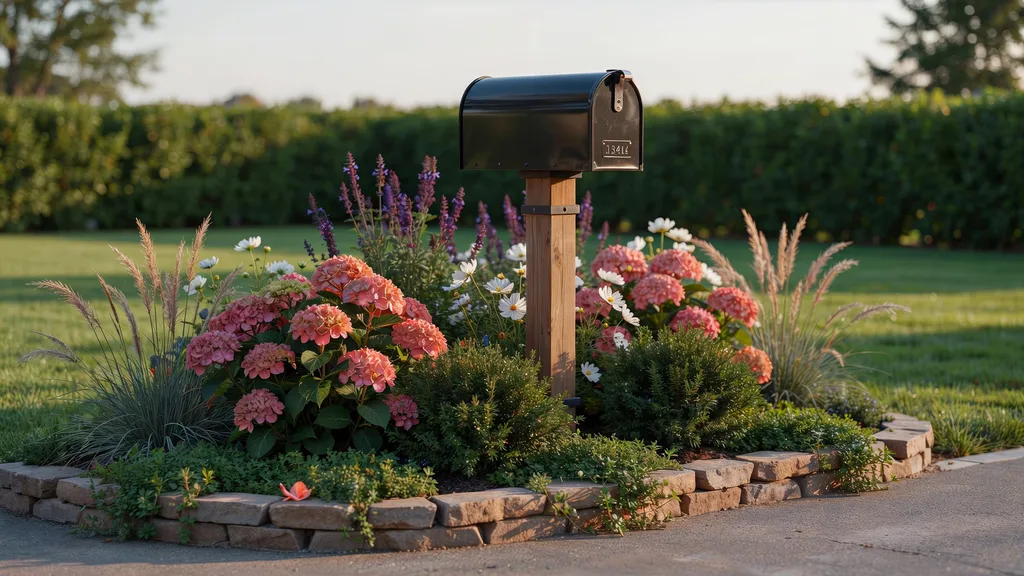
Your mailbox is the first thing people see when they pull up to your house. And honestly? Most mailboxes are just sad little poles stuck in the ground with zero personality. A well-landscaped mailbox can completely change how your whole front yard looks, and you don’t need a major renovation to pull it off. If you’re looking for Mailbox Landscaping Ideas, there are plenty of simple ways to make this small feature stand out.
I’ve spent way too many weekend afternoons obsessing over mailbox planting beds, so let me share what actually works.
1. Classic Flower Bed Ring
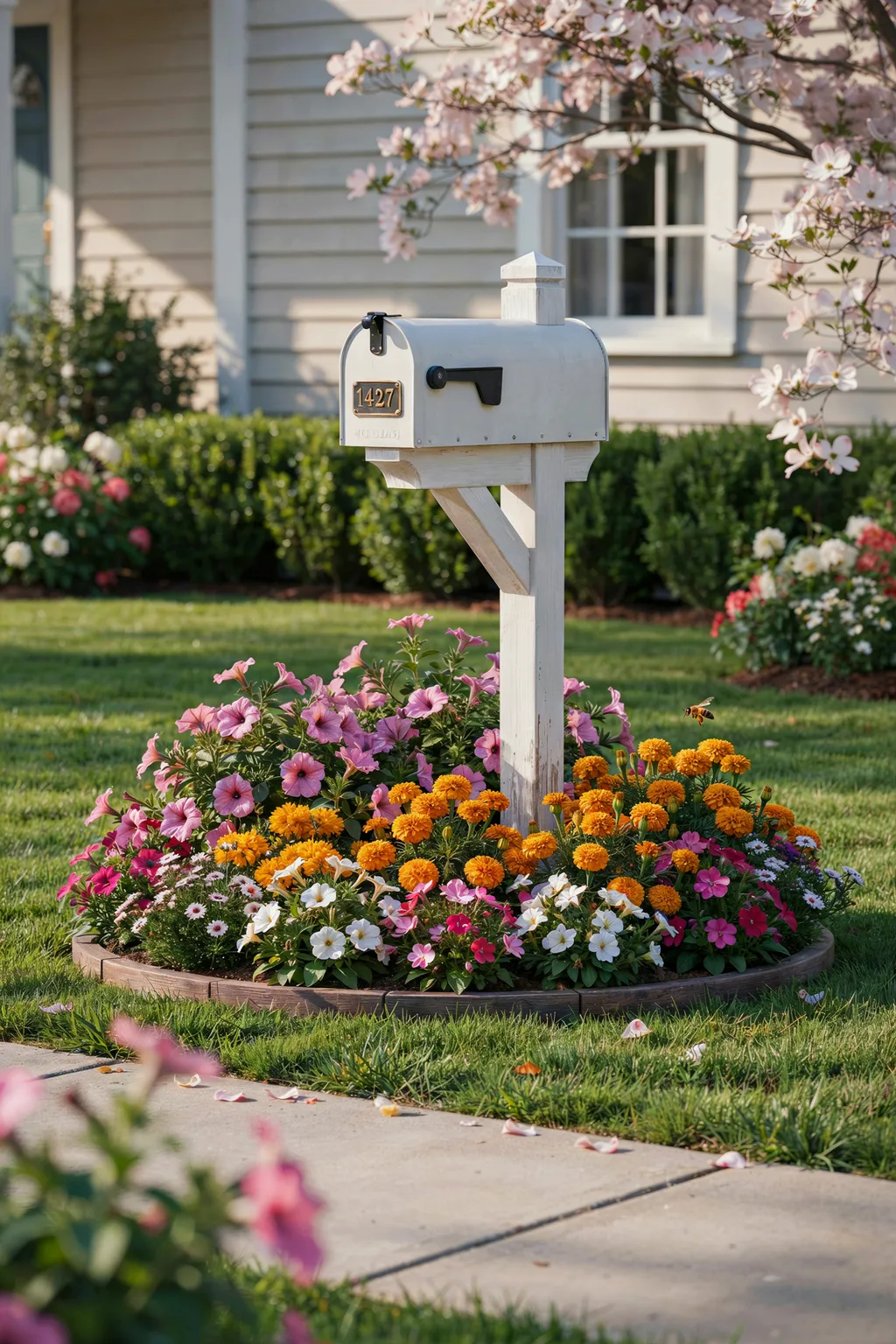
A simple ring of annuals around the mailbox base is the easy starting point, and there’s genuinely nothing wrong with it. Petunias, marigolds, and impatiens all work great here. They’re affordable, colorful, and easy to replant each season.
Also Read: 21 Bathroom Makeover Ideas for a Luxury 2026 Look
Keep the bed no wider than 2 to 3 feet so it doesn’t swallow the mailbox. You want the flowers to frame it, not bury it.
2. Raised Stone Planting Bed
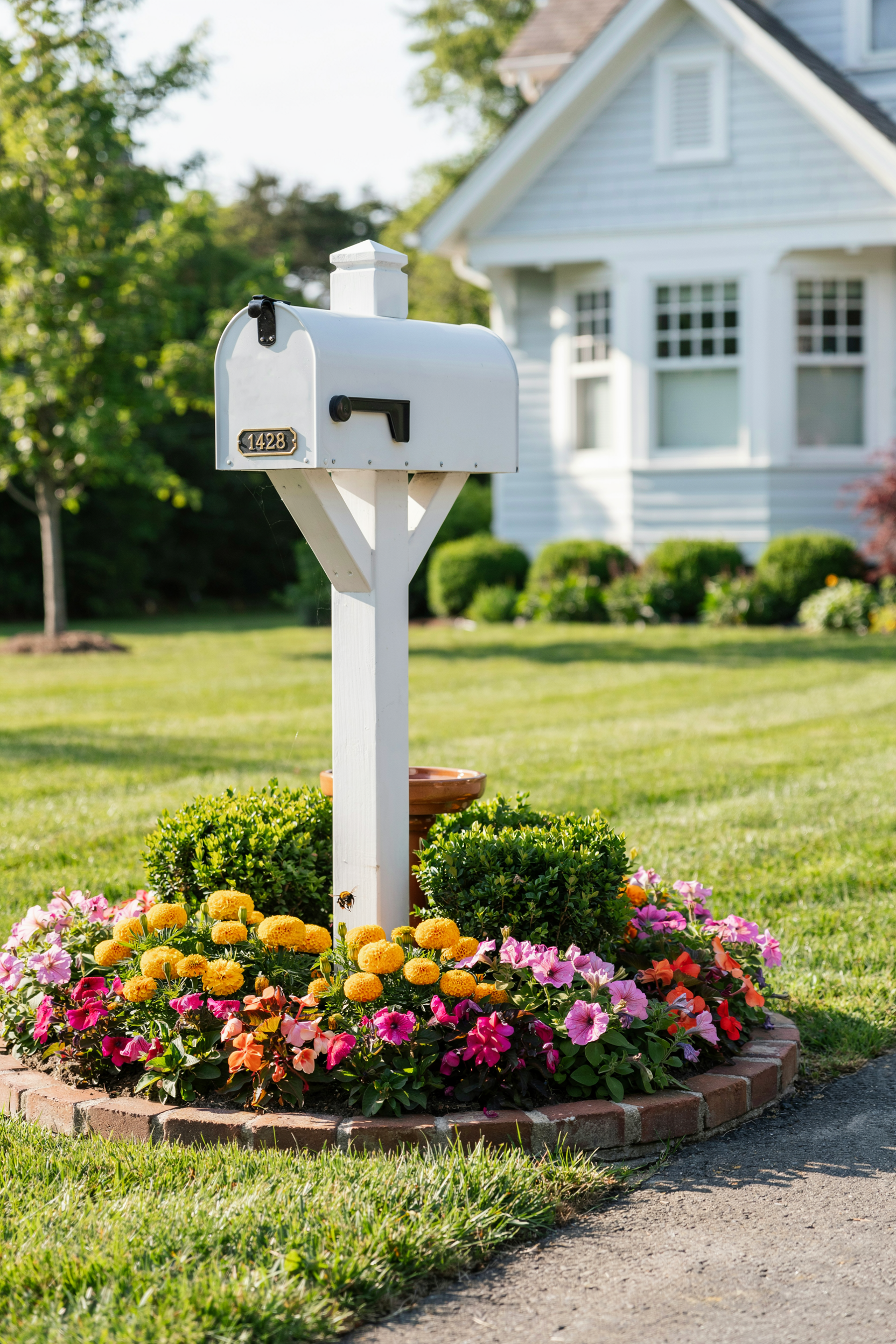
Stack a ring of stone, brick, or concrete pavers around the mailbox post to create a raised planting bed. This instantly looks more intentional and polished than a flat ground-level bed.
Fill it with a mix of trailing plants and upright ones. Creeping phlox on the edges and salvia in the center is a combination I personally come back to every spring without fail.
3. Climbing Vines on a Wooden Post
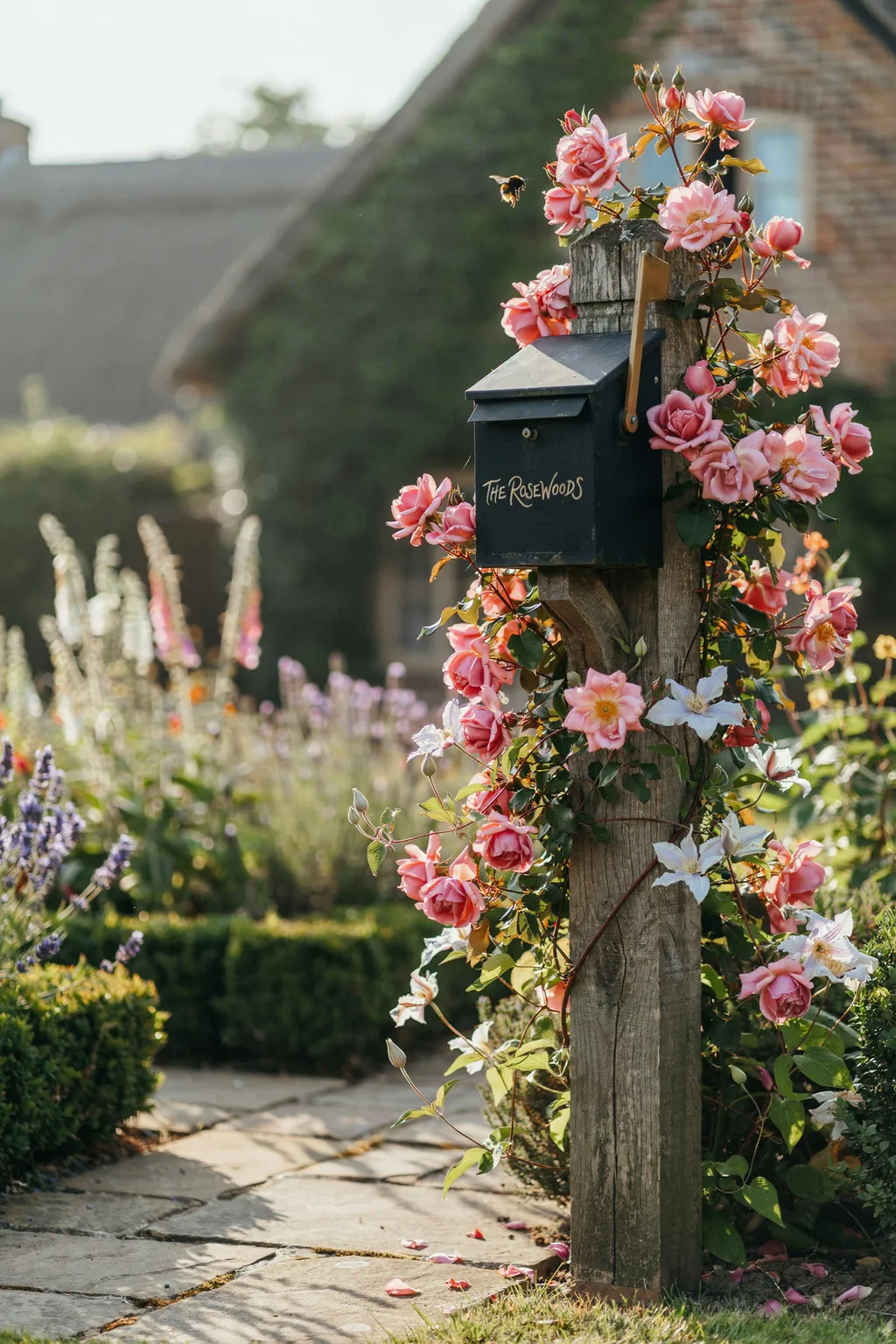
If your mailbox sits on a wooden post, let something climb it. Climbing roses, morning glories, or clematis can wrap the post and bloom all summer long.
Just be careful here. You don’t want aggressive vines like Virginia creeper anywhere near your actual mailbox hardware. Keep the climbers on the post and lower support structure only, and you’ll be fine.
4. Ornamental Grasses for Low-Maintenance Style
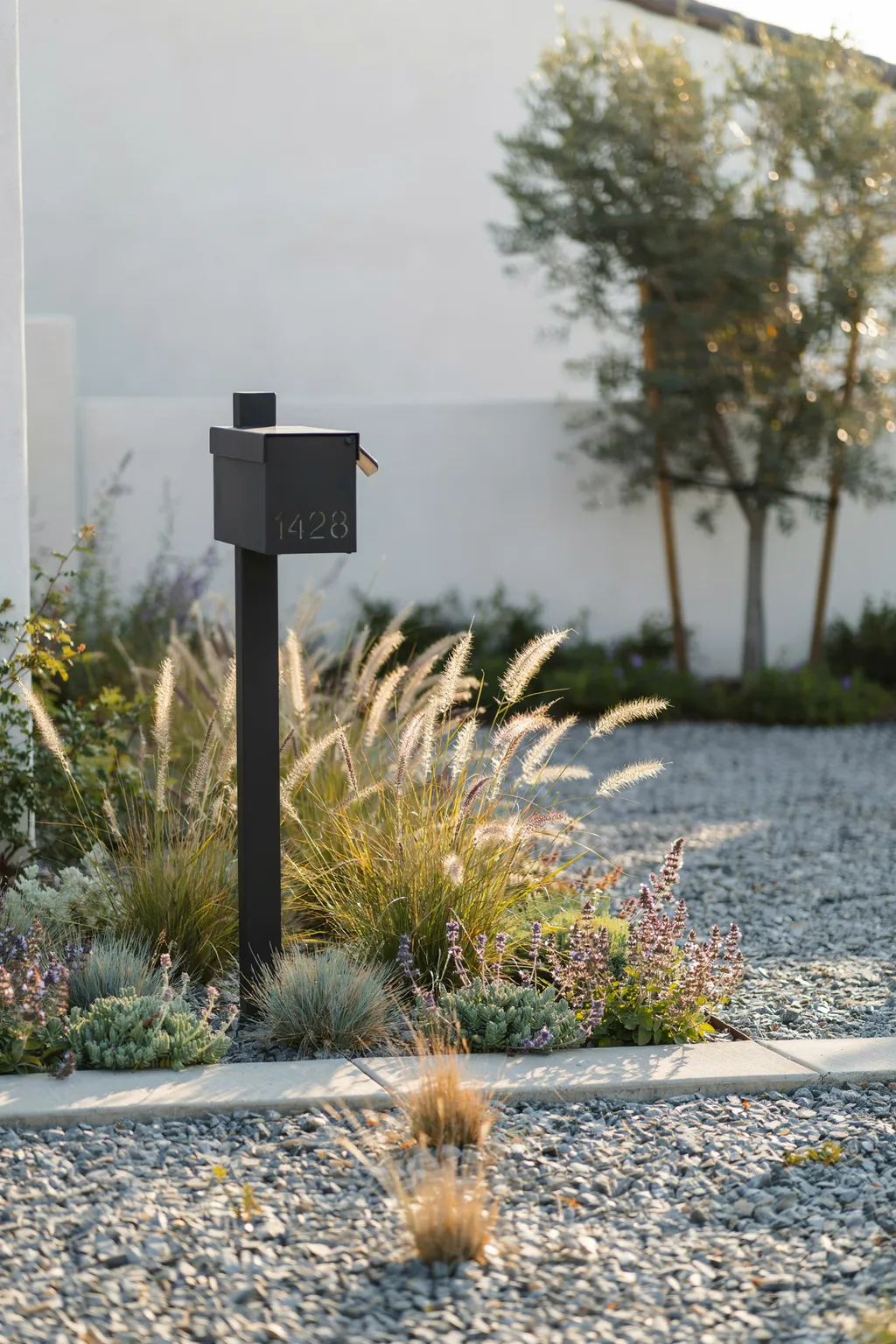
Not everyone wants to babysit flowers all summer. IMO, ornamental grasses are the most underrated mailbox landscaping option out there. Blue fescue, Karl Foerster grass, and fountain grass look great, survive neglect, and add real movement and texture to the space.
Also Read: 20 Kitchen Makeover Ideas for a Stylish 2026 Home
Pair them with a few low-growing perennials and you’ve got a planting that basically runs itself. That’s a win.
5. Boxwood Foundation Planting
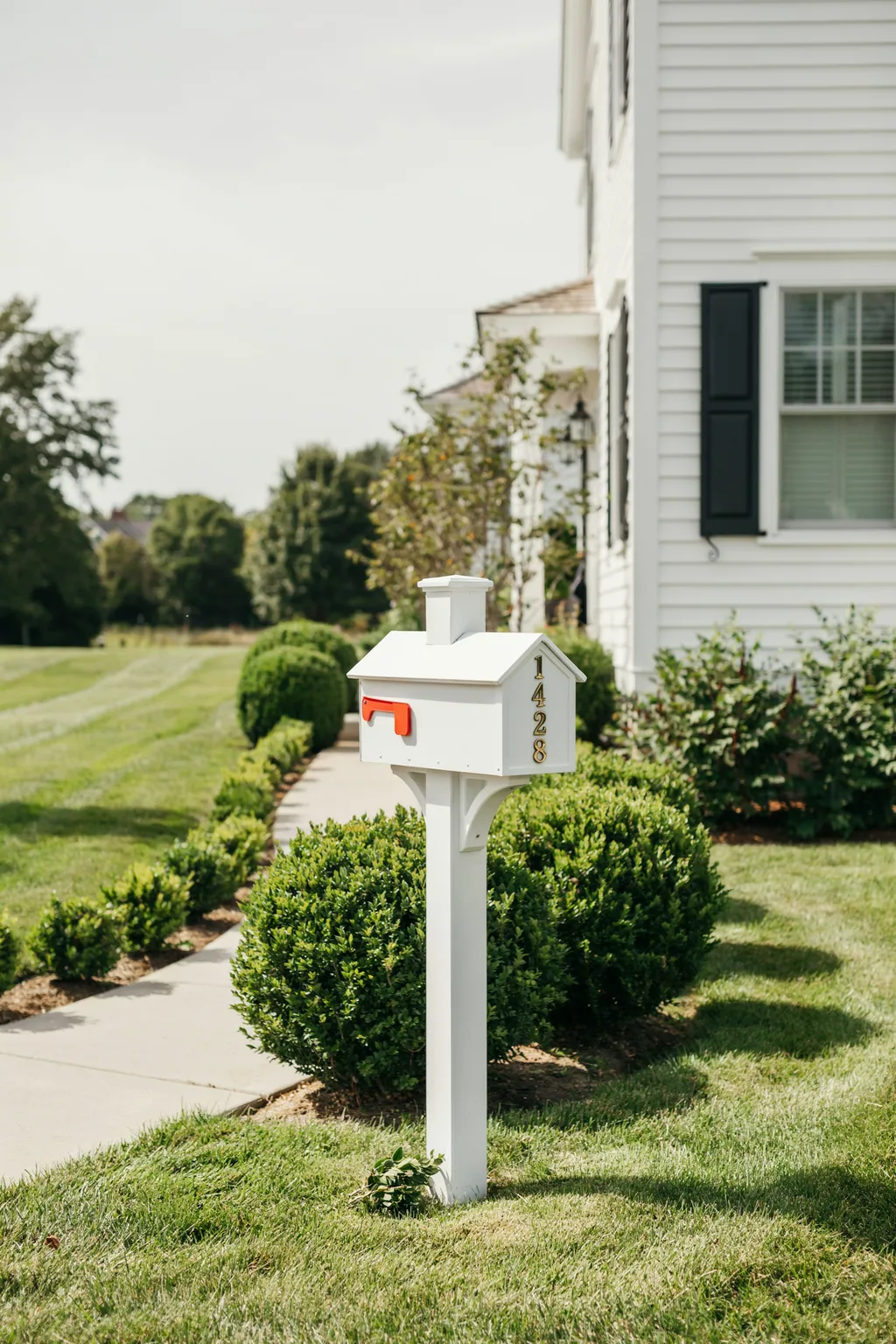
Boxwood shrubs create a very clean, formal look. Planting two matching boxwoods on either side of the mailbox post creates a symmetrical frame that reads as polished from the street.
Trim them once or twice a year and they’ll hold their shape for years. Low effort, high payoff, zero drama.
6. Seasonal Color Rotation
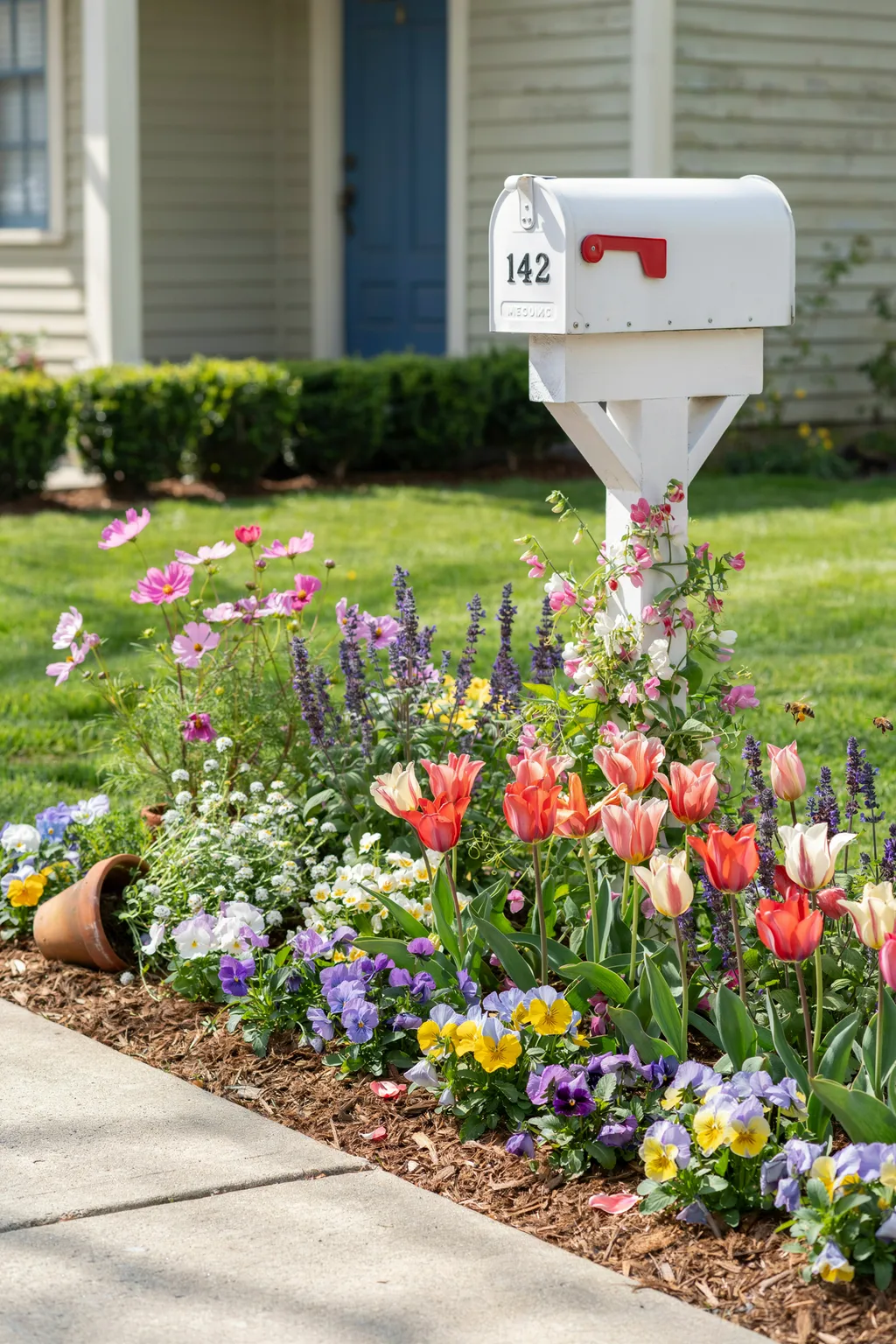
Some people love swapping out plants every season. It sounds like a lot of work, but it honestly keeps your curb appeal fresh all year round. Here’s a simple rotation that works well:
- Spring: tulips and pansies
- Summer: zinnias and salvia
- Fall: ornamental kale and mums
- Winter: evergreen sprigs and holly
If you enjoy gardening, this approach lets you stay creative no matter what month it is.
7. Native Plant Garden
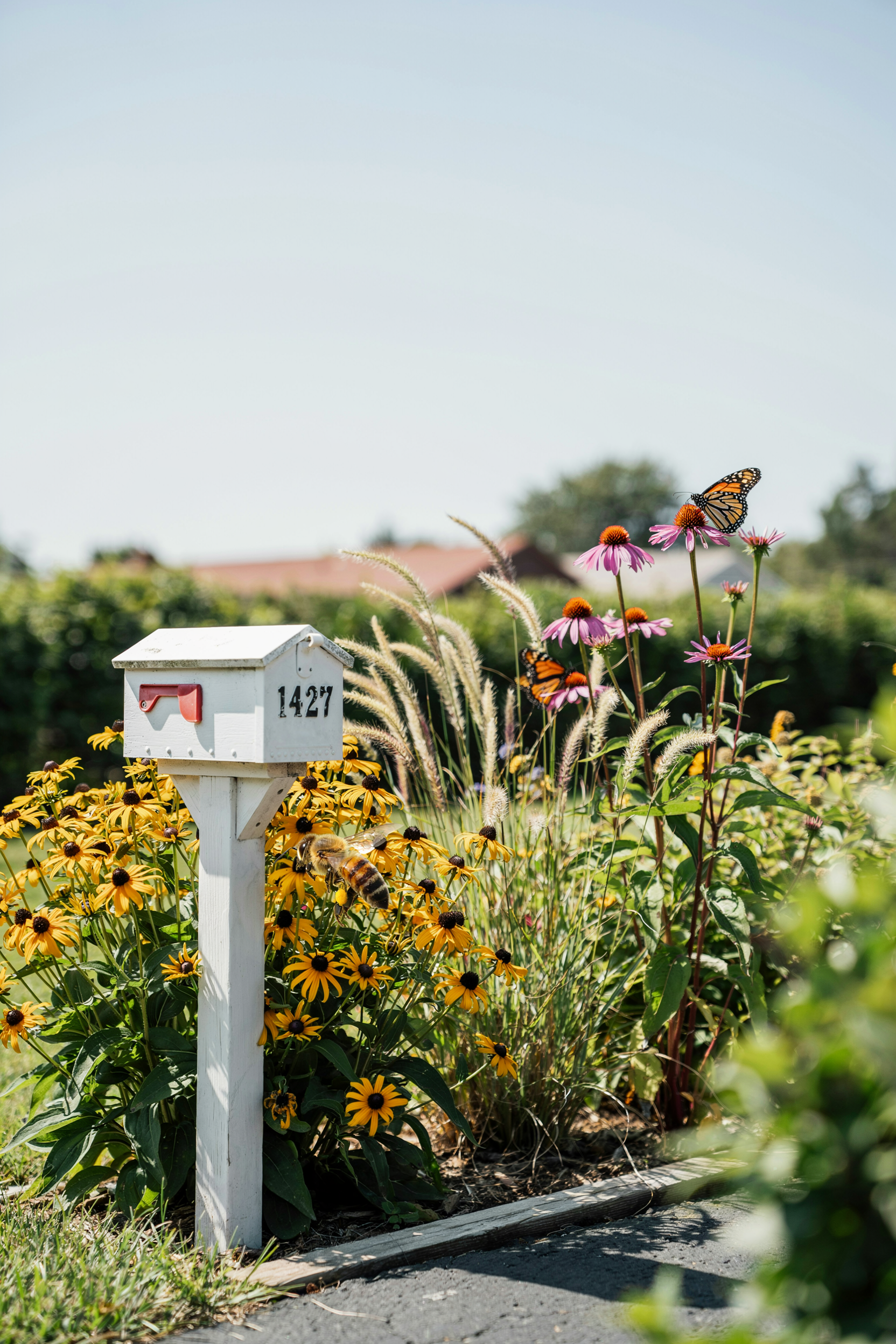
Want something beautiful that basically takes care of itself? Go native. Black-eyed Susans, coneflowers, and native sedges all thrive with minimal input once they get established.
Native plants also support local pollinators, which is a nice bonus. Your mailbox garden becomes a small working ecosystem, not just a decoration sitting there looking pretty.
8. Layered Perennial Border
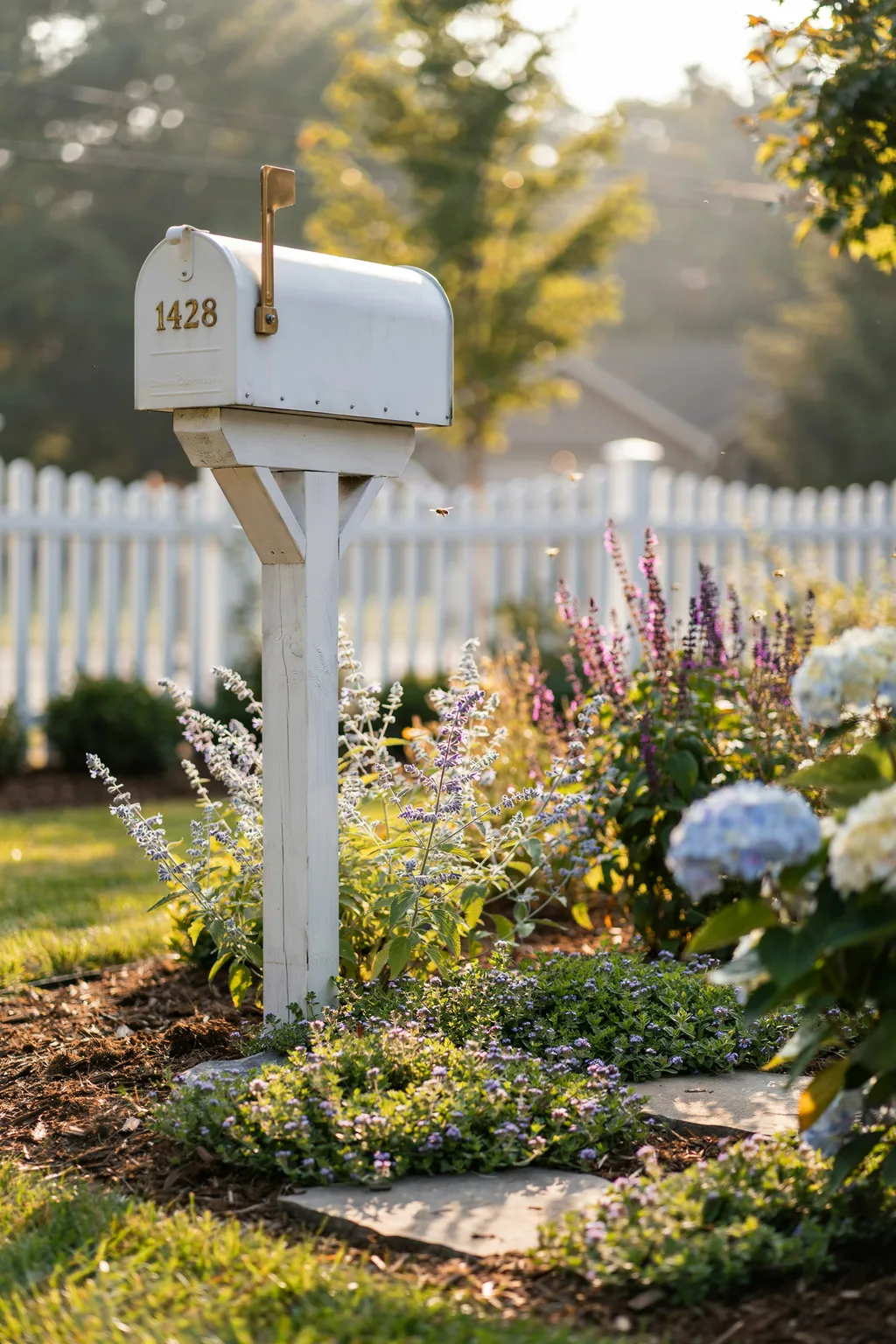
Layering is a design principle that works at every scale. At the mailbox, it means planting short plants at the front, medium ones in the middle, and something slightly taller toward the back.
Also Read: 25 Contemporary Living Room Ideas for Modern Homes
Creeping thyme up front, Russian sage in the middle, and tall salvias at the back is one easy combination that stays interesting from spring through fall. The layering adds depth and makes the whole thing look professionally designed, even if you planned it in ten minutes.
9. Rustic Wood Planter Box
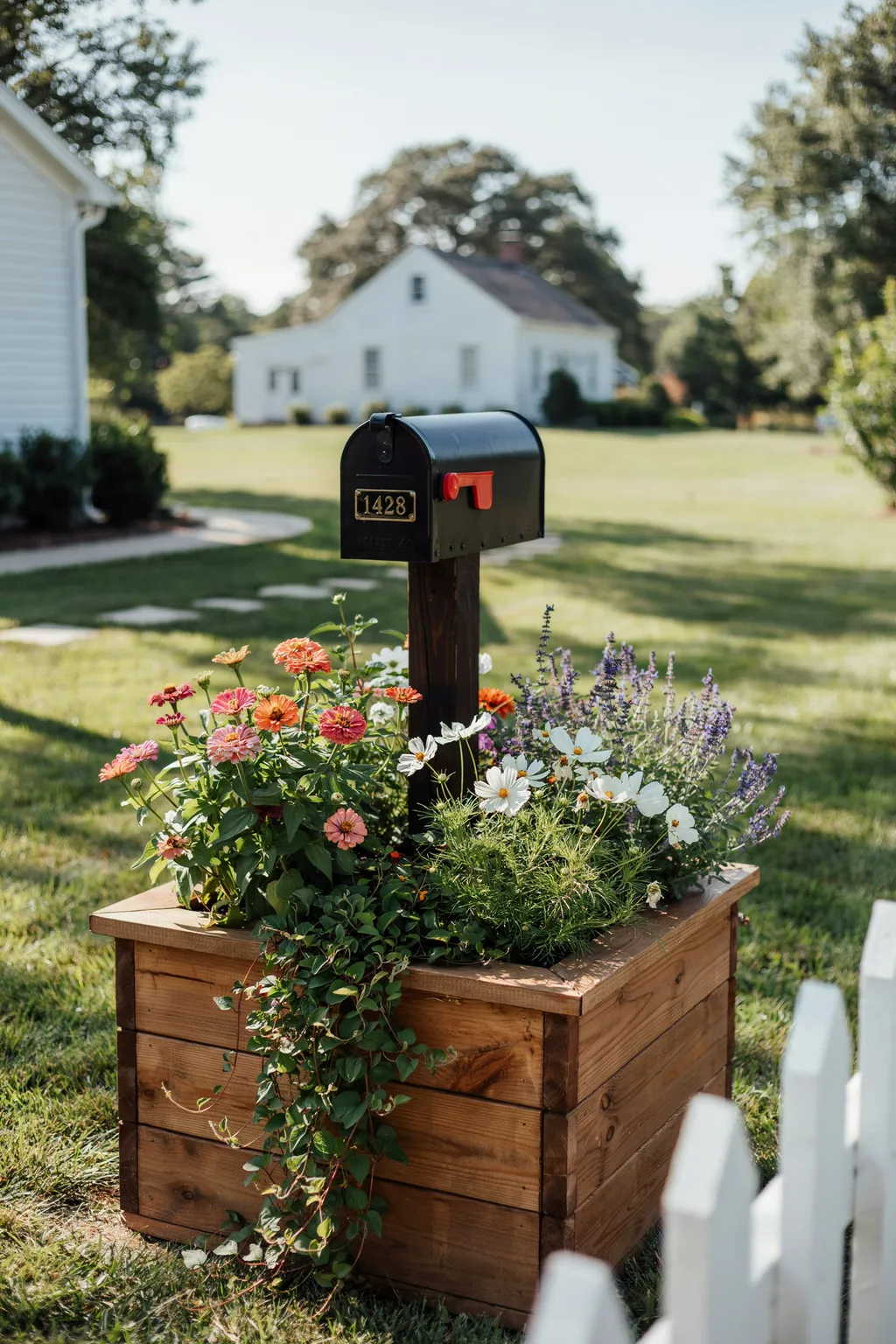
Build or buy a simple rectangular planter box and set it at the base of your mailbox post. Fill it with whatever you like, whether that’s herbs, flowers, or succulents.
The wood adds a warm, cottage-like feel that works well with craftsman or farmhouse-style homes. Cedar or redwood holds up best outdoors and doesn’t need a lot of maintenance to stay looking good.
10. Brick Surround With Groundcover
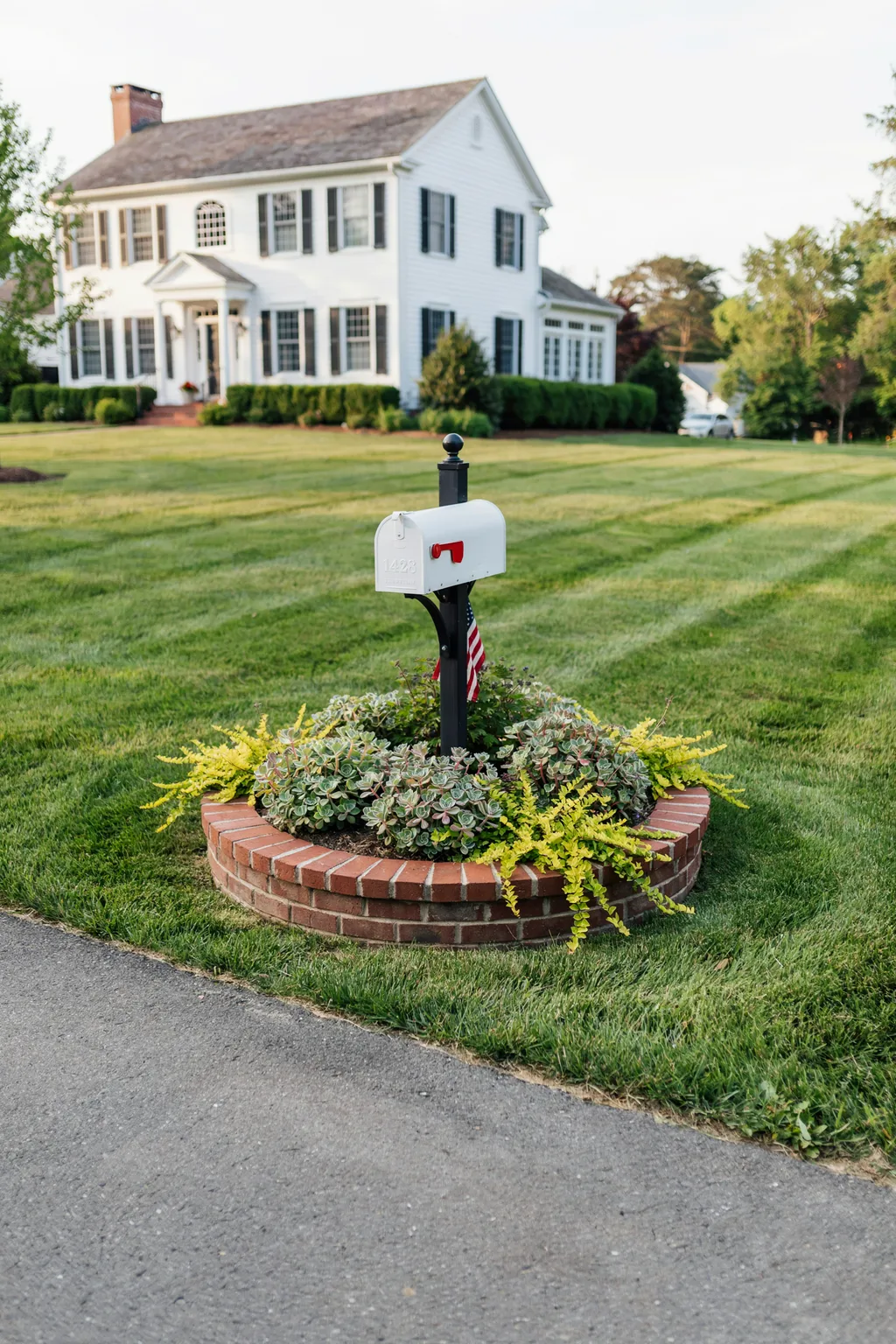
A low brick border around the mailbox, filled with a spreading groundcover like creeping Jenny or sedum, creates something tidy and basically permanent.
This works especially well if your front walkway or driveway already has brick elements. Matching the materials ties the whole front yard together in a way that feels intentional.
11. Succulents for Dry Climates
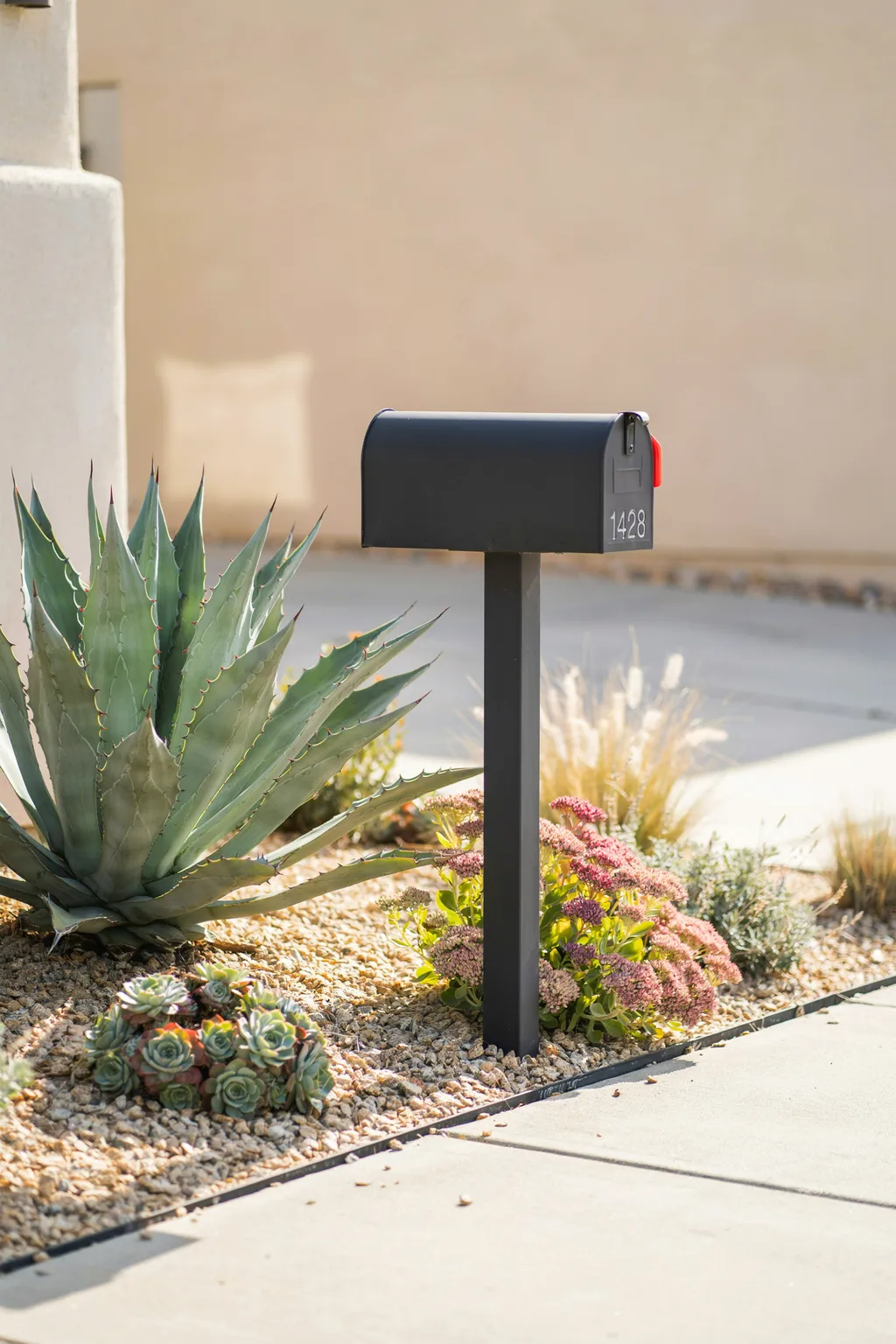
If you live somewhere hot and dry, succulents are genuinely your best friend at the mailbox. Hens and chicks, agave, and sedums handle neglect and drought without batting an eye.
They also look sculptural and modern, which makes for a nice contrast to the typical suburban mailbox situation 🙂
12. Moss and Fern Combo for Shade
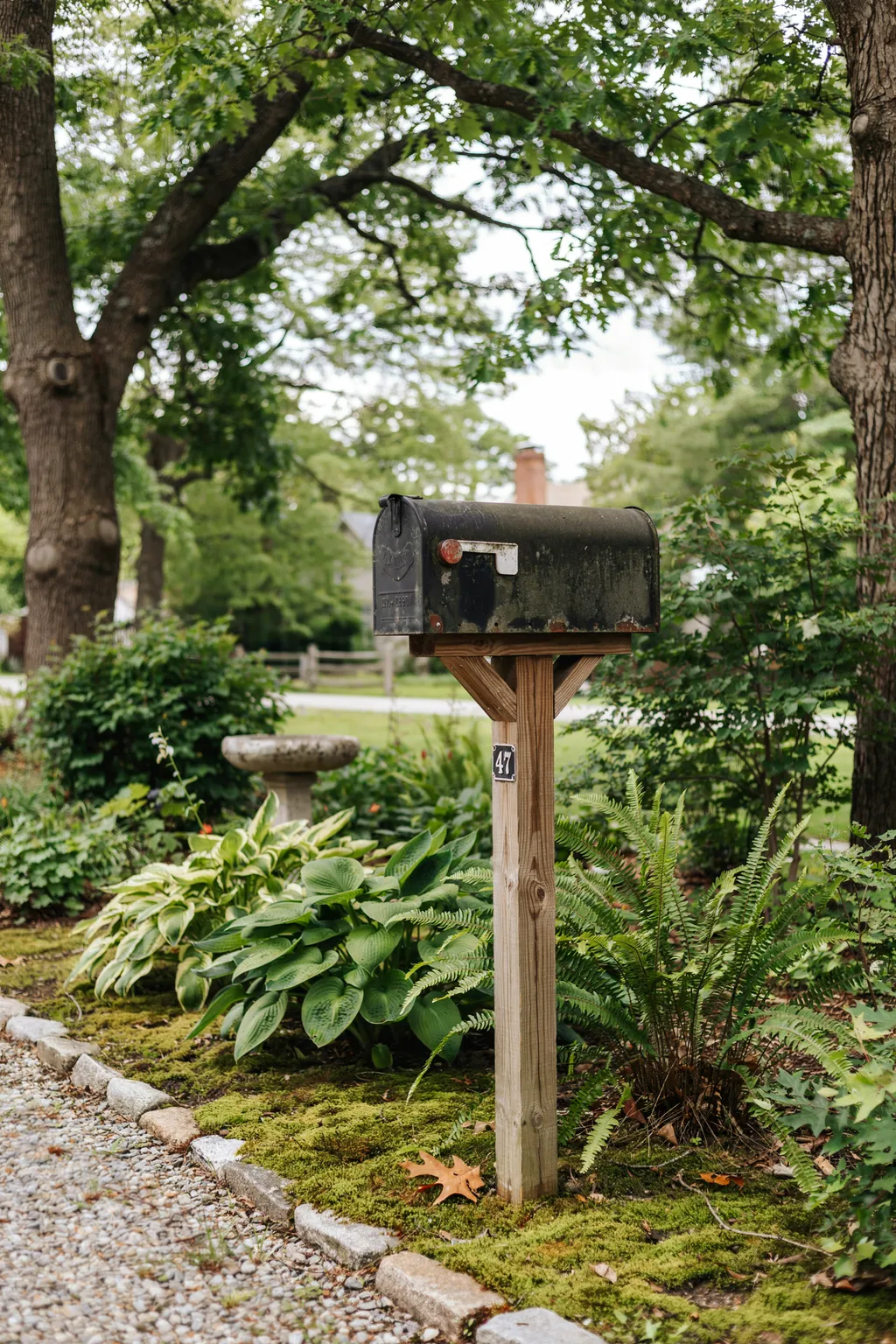
Got a mailbox that sits under a big tree? Most sun-loving plants will struggle and die there. Go with shade-tolerant options instead. Ferns, hostas, and moss create a lush, cool look that actually works in low light without any fight.
This combo also looks great against a stone or weathered wood mailbox post. Very relaxed, very natural.
13. Solar Lights Around the Base
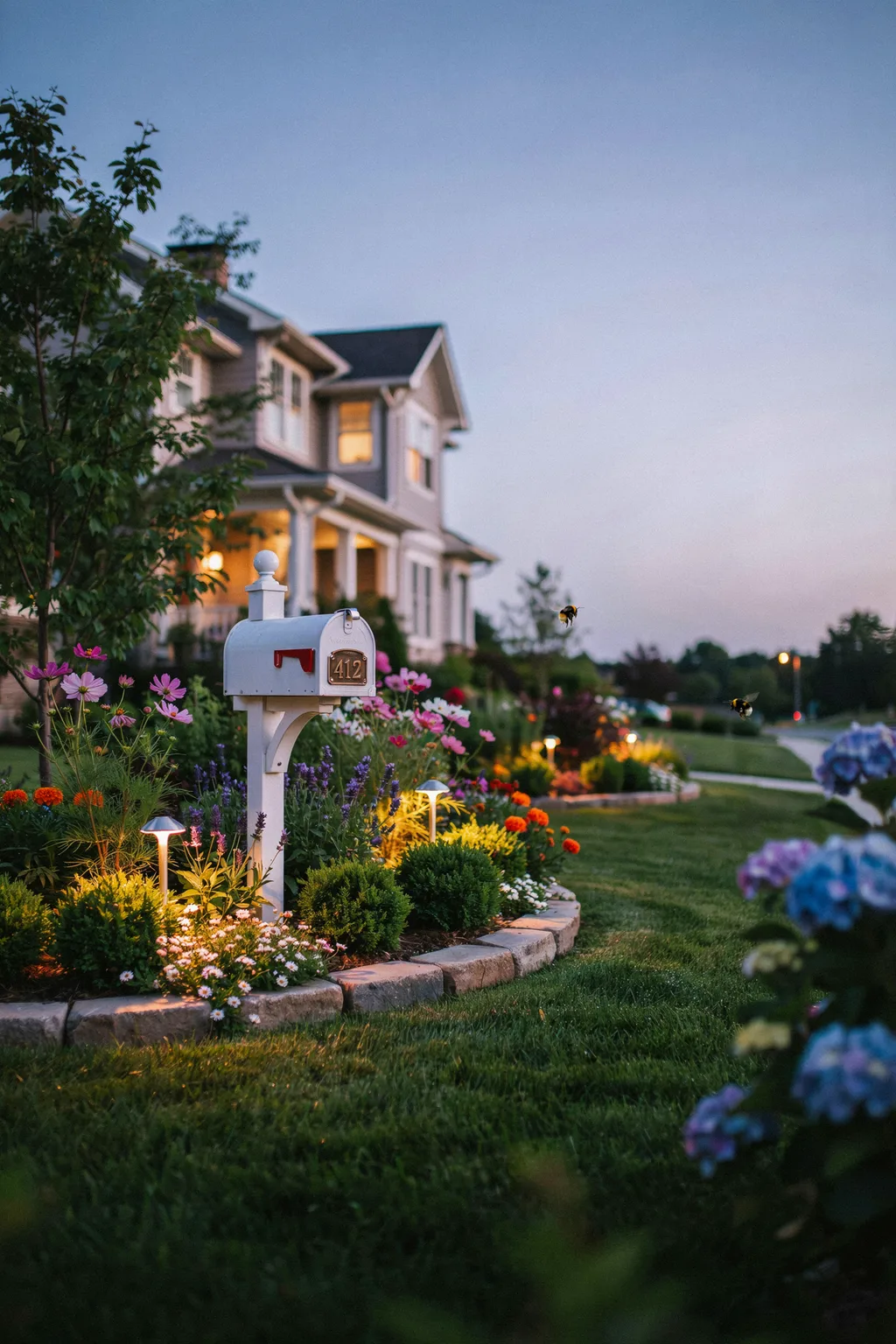
Good landscaping isn’t only about plants. Adding small solar stake lights around your mailbox planting bed means the whole thing looks good at night too, not just during the day.
Also Read: 23 Cozy Bedroom Makeover Ideas You’ll Love in 2026
This is especially useful if your mailbox sits along a curve or near a driveway where visibility matters after dark. Warm white lights are way more flattering than bright white ones. Trust me on that one.
14. River Rock Mulch
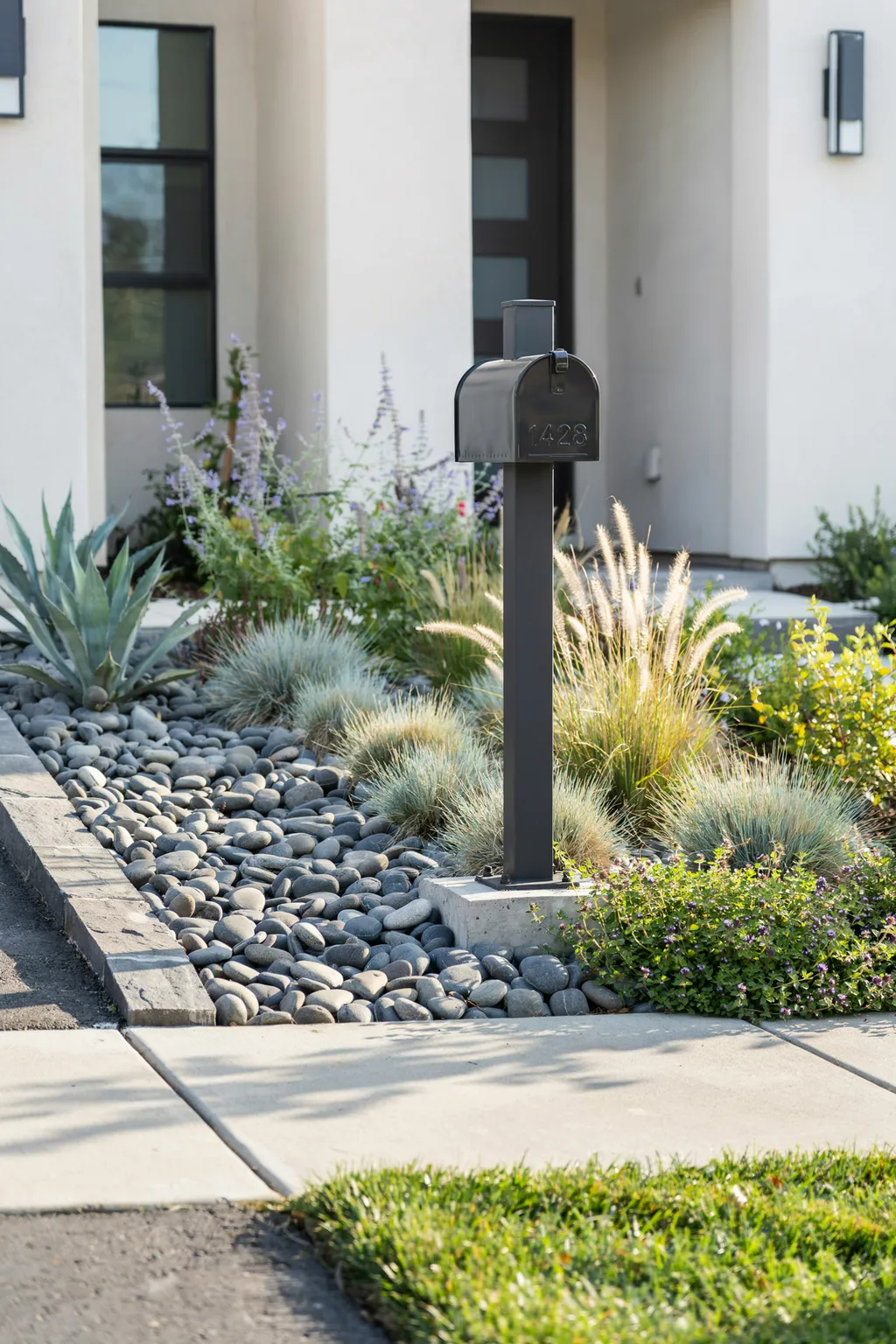
Swap out traditional wood mulch for river rock around your mailbox planting bed. It looks cleaner, lasts longer, and doesn’t wash away in heavy rain the way bark mulch does.
River rock also looks deliberate in a way plain mulch never quite manages. Pair it with low-water plants and your mailbox area becomes essentially zero-maintenance. That’s the dream, right?
15. Cottage Garden Style
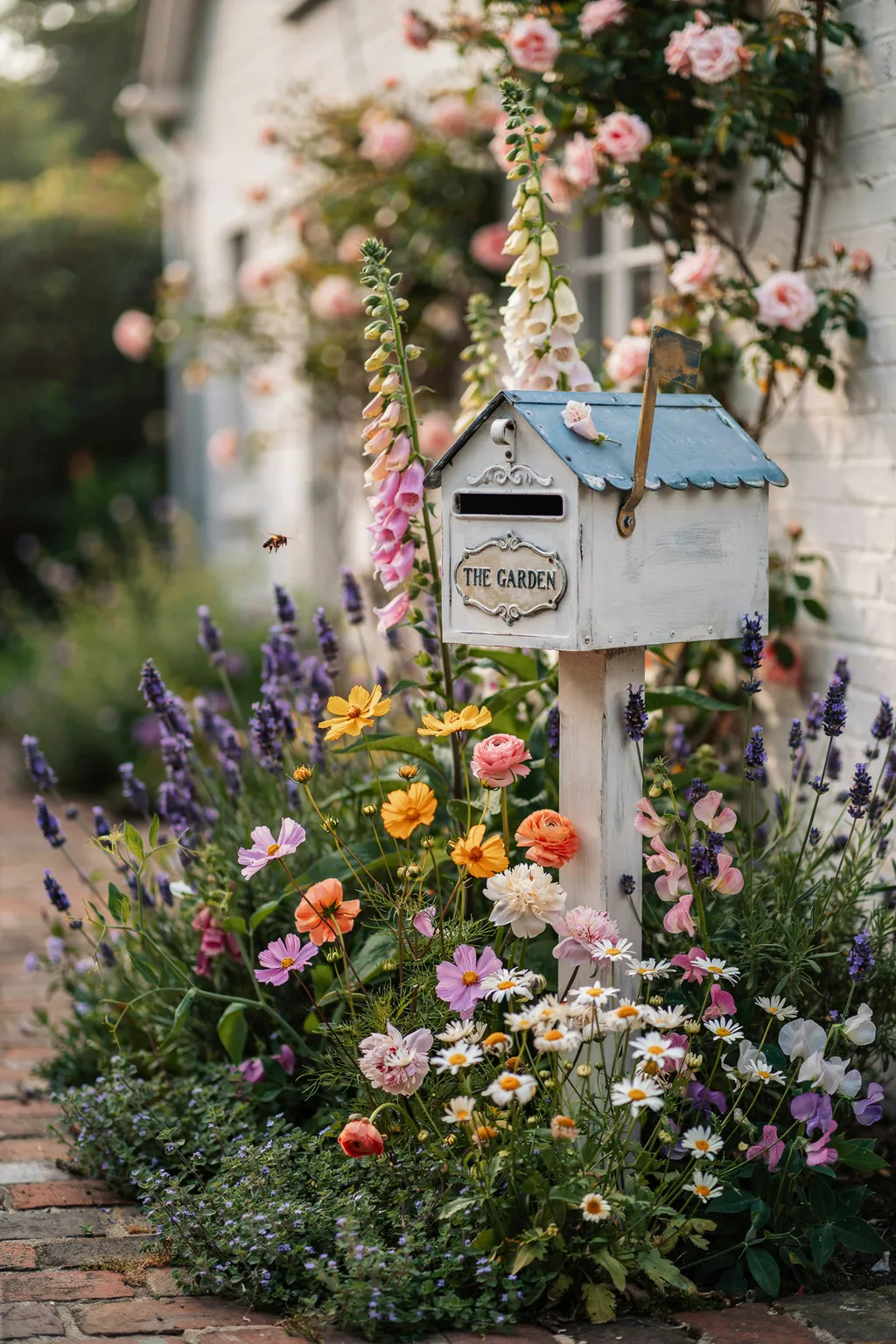
Loose, relaxed, and full of blooms, cottage gardens look effortless while feeling vibrant. Lavender, foxglove, and daisies planted casually around the mailbox post nail this look without much effort.
This style works best when you slightly over-plant rather than spacing things out too neatly. The slight cheerful chaos is completely intentional, and it shows.
16. Formal Topiary Accent
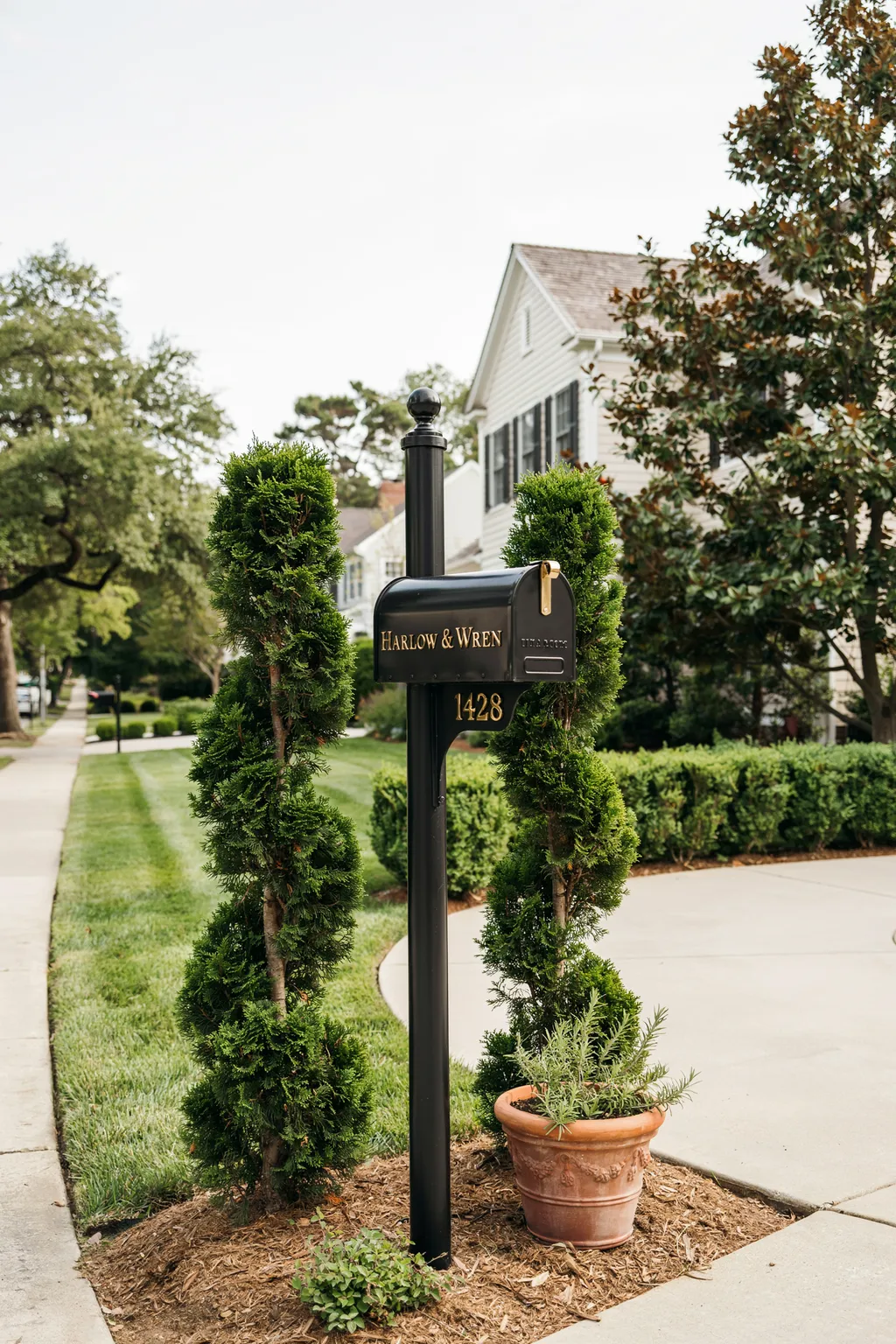
One well-placed topiary next to the mailbox, like a spiral juniper or a globe-shaped boxwood, creates a strong architectural statement. This works particularly well with traditional or colonial-style homes.
It’s high-impact without being high-maintenance once the plant settles in. Honestly one of the easiest ways to make your mailbox look expensive.
17. Flowering Shrubs
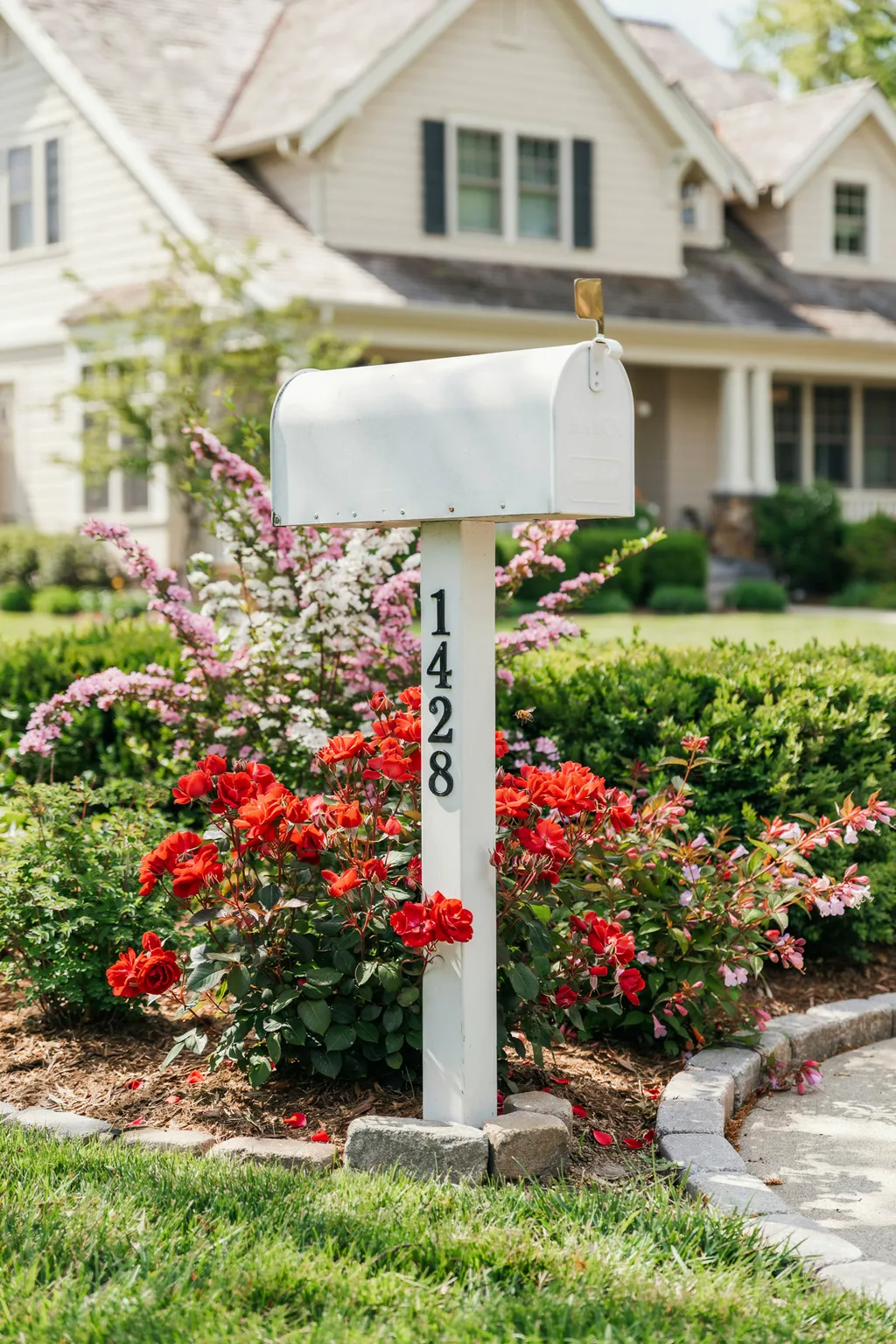
Knock Out roses, spirea, and abelia are all flowering shrubs that come back year after year and bloom heavily without much fussing. Planting one or two alongside the mailbox gives you reliable seasonal color without annual replanting.
These are great for anyone who wants the look of flowers without committing to buying new annuals every single spring.
18. Edged Mulch Bed With Bold Annuals
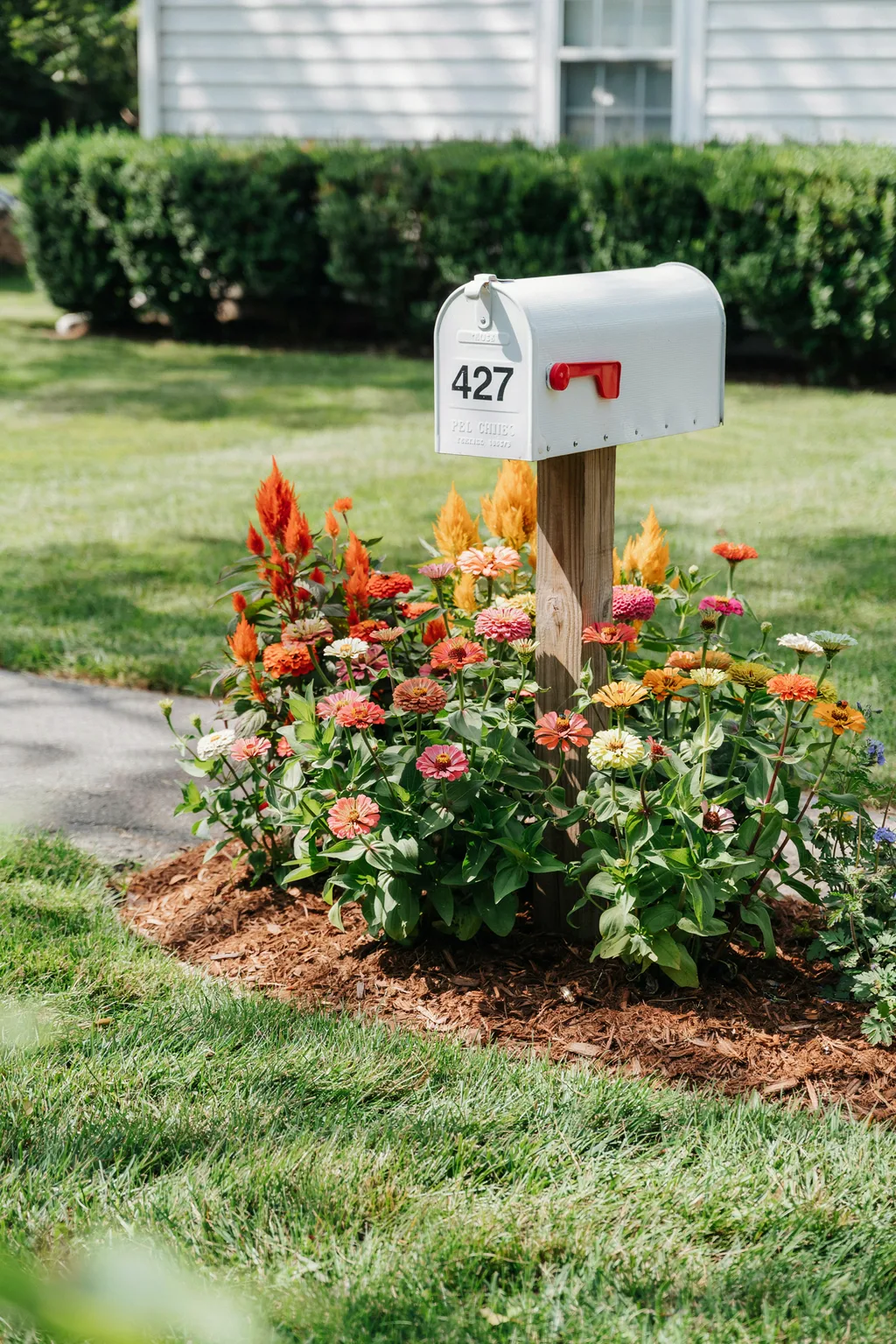
A clean, sharply edged mulch bed looks far more deliberate than a ragged, undefined planting. Edge the bed with a steel or plastic lawn edger, then fill it with bold annuals like zinnias or celosias.
The sharp edge does most of the visual heavy lifting here. It signals that someone is actually paying attention to the front yard, and people notice that.
19. Mailbox Garden With a Color Theme
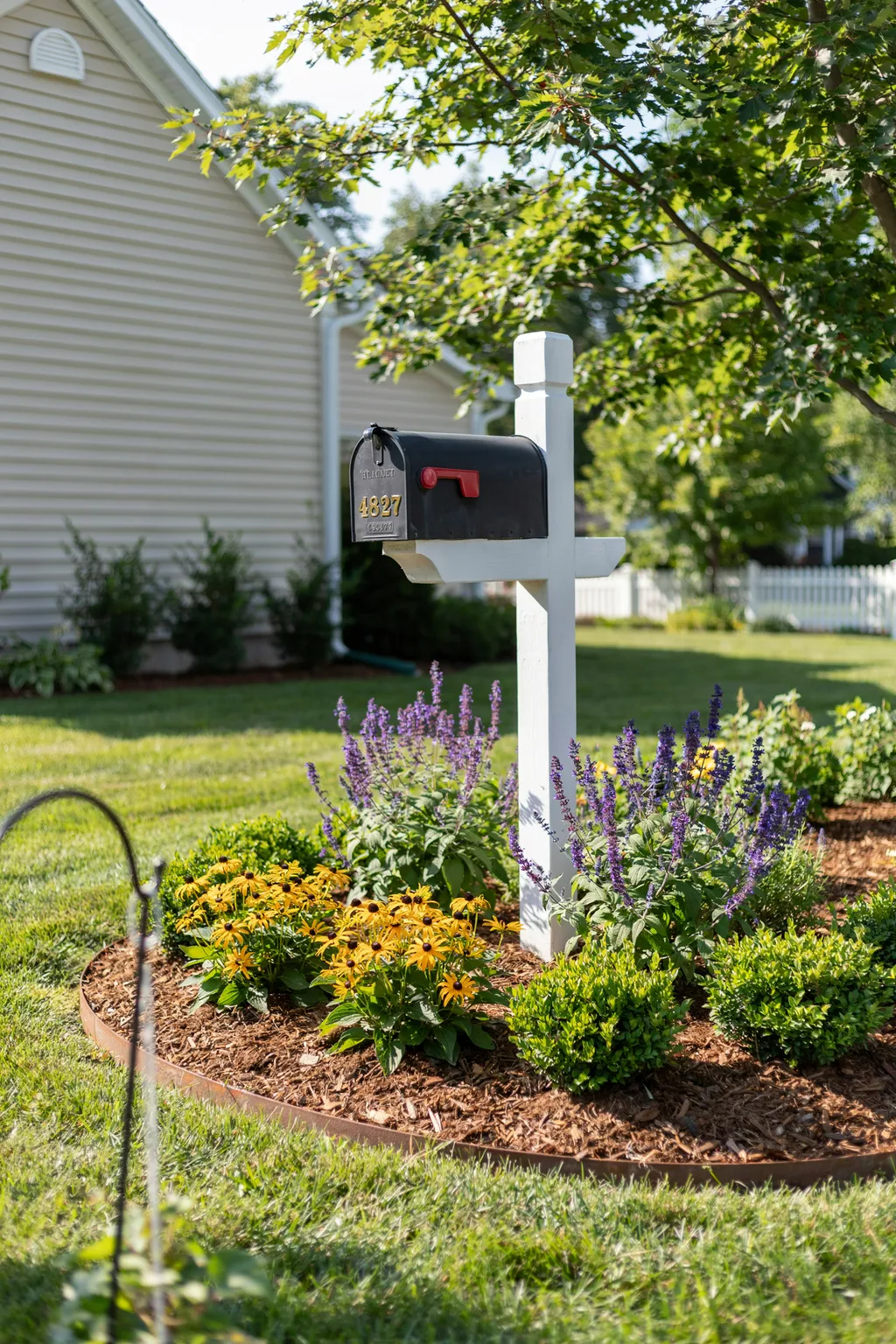
Pick two or three colors and stick to them throughout your mailbox planting. Purple and yellow is a classic combo, think salvia paired with black-eyed Susans. Pink and white feels soft and elegant if you want something a little quieter.
A clear color theme makes even the simplest planting look considered and intentional from the street. It’s one of those easy tricks that makes a big visual difference.
20. Flagstone Path to the Mailbox
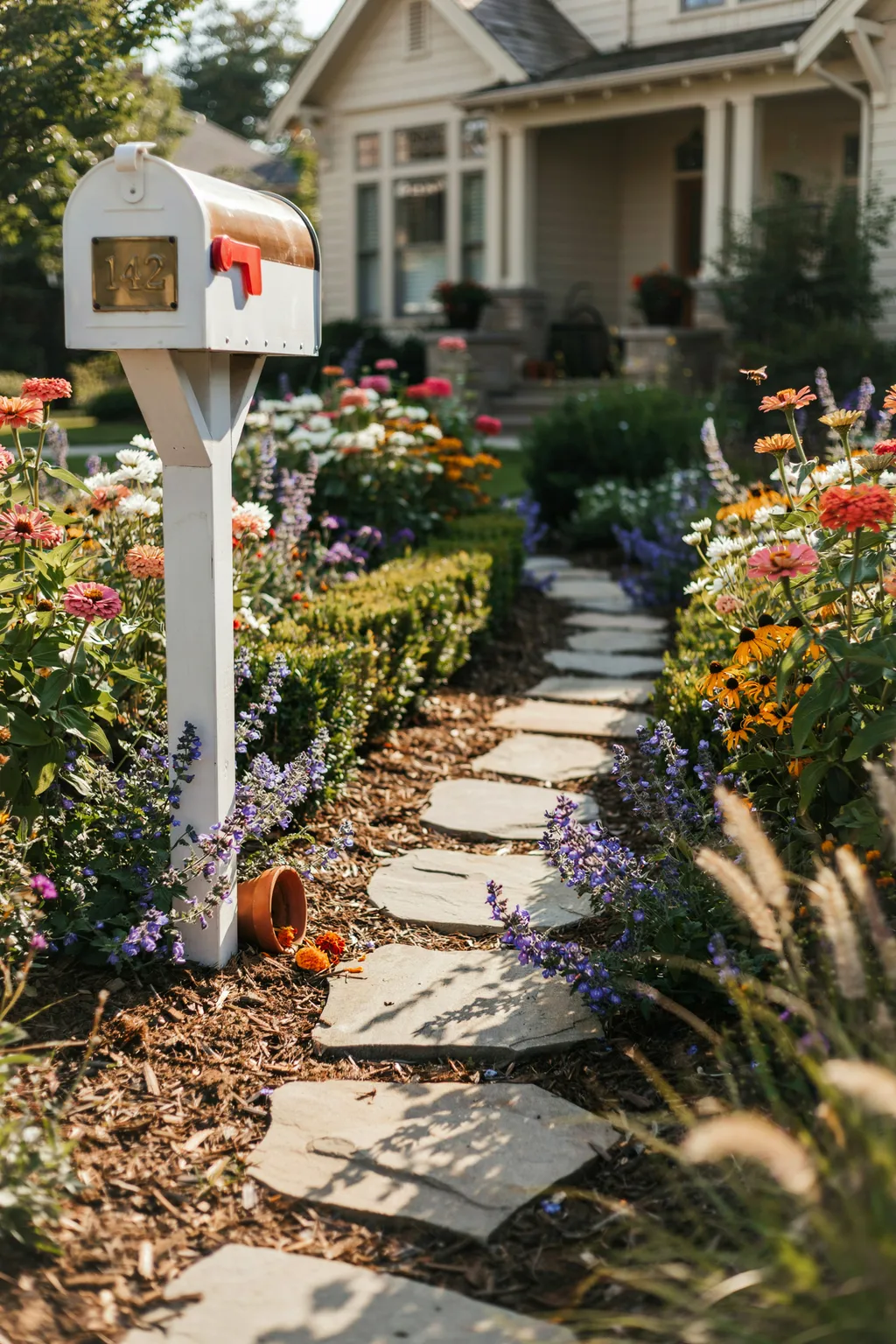
If your mailbox sits close enough to your driveway or front walk, connect it with a short flagstone path. Even three or four stones creates a visual link between the mailbox and your home’s entrance.
Also Read: 21 Farmhouse White Kitchen Cabinet Ideas for 2026
This small detail makes your front yard feel like a designed whole rather than a collection of random separate elements. Small effort, big visual payoff.
21. Mini Picket Fence Surround
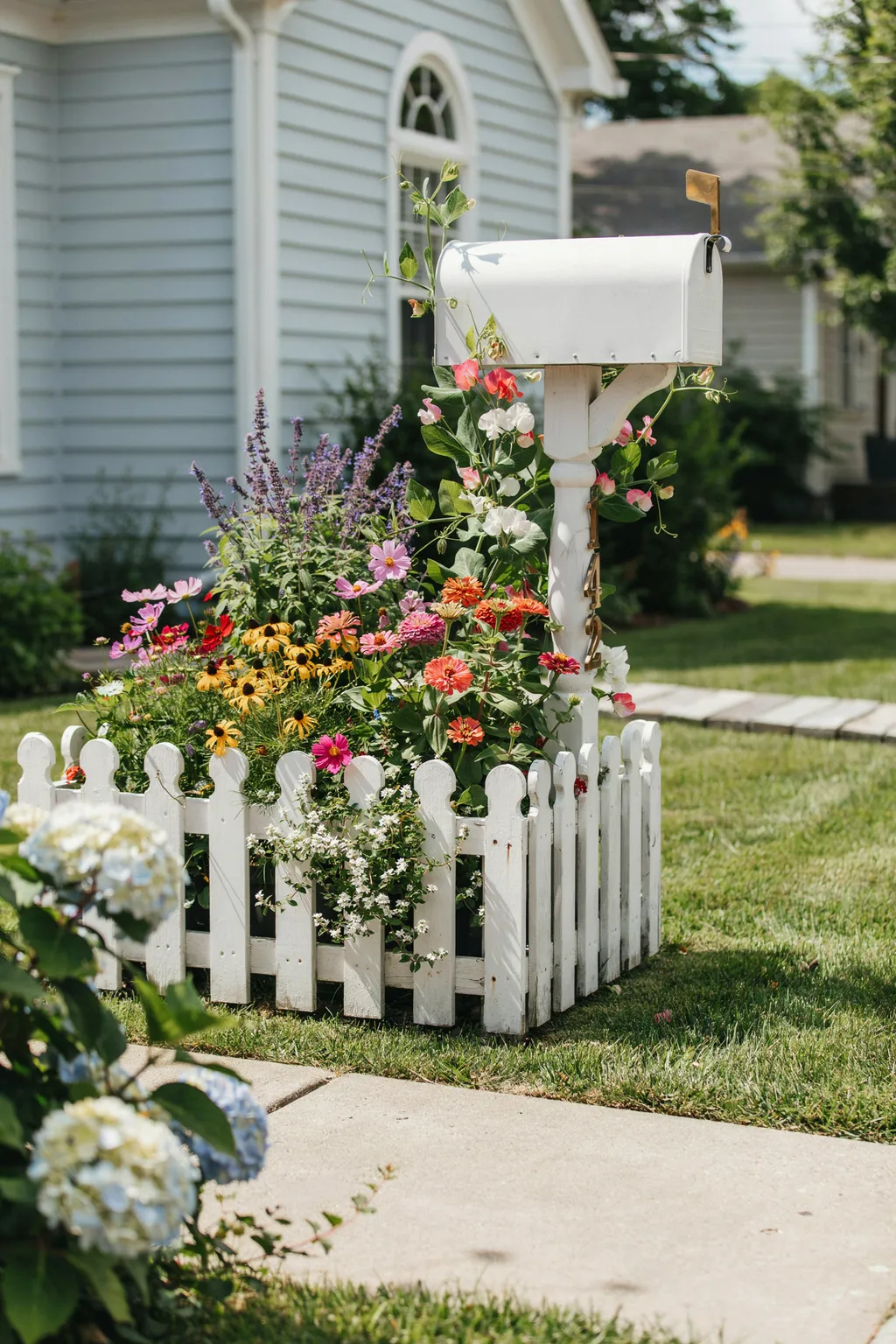
A small white picket fence around the mailbox planting bed is charming, easy to install, and works with almost every traditional or cottage-style home.
The fence doesn’t need to be tall at all. Even 8 to 12 inches gives the planting a distinct, defined boundary and adds a classic detail that most mailboxes are missing.
22. Drought-Tolerant Herb Garden
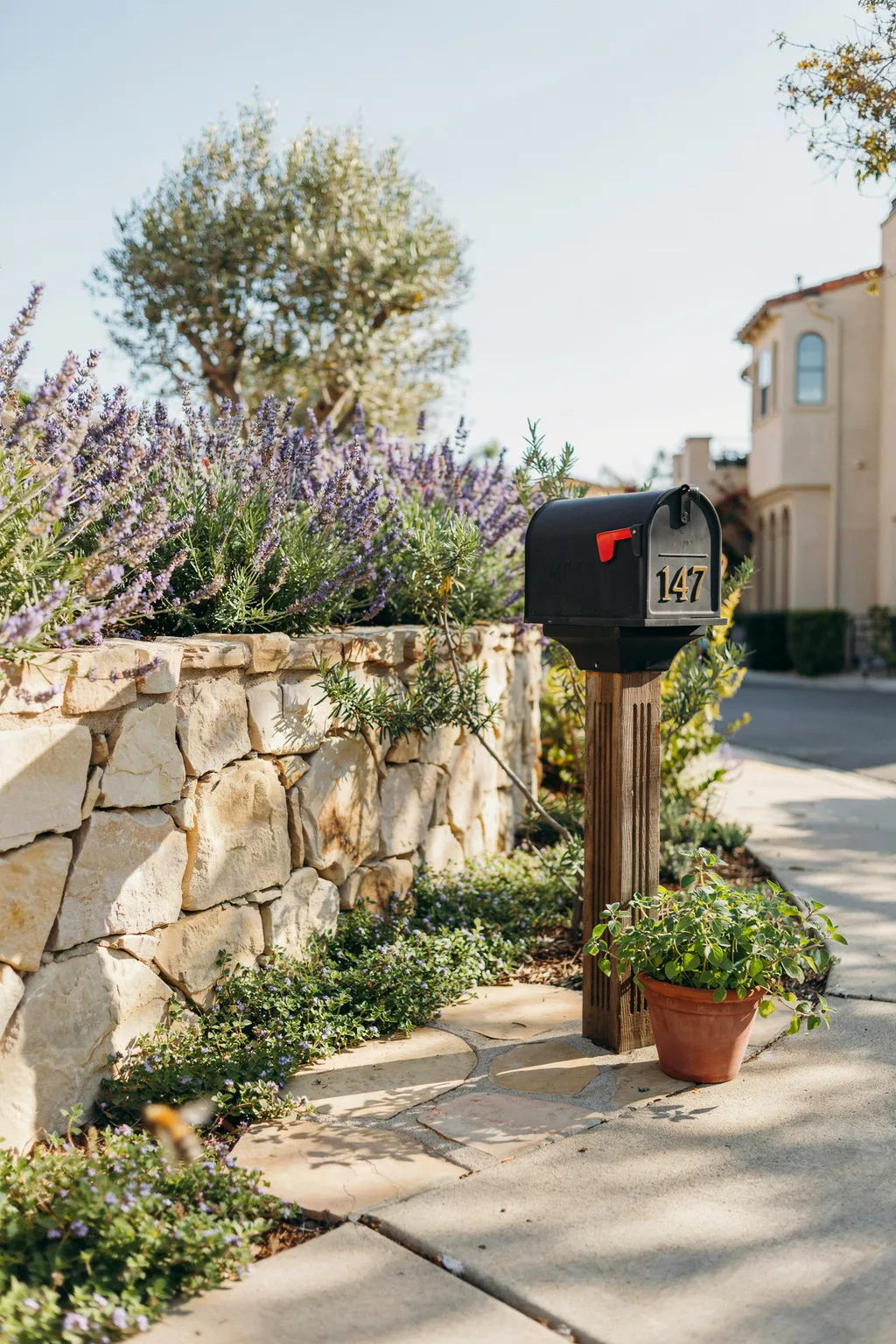
Here’s an idea that’s both practical and pretty: plant herbs around your mailbox. Lavender, rosemary, and thyme are all drought-tolerant, smell amazing, and look genuinely interesting year-round.
Also Read: 20 Modern Blackout Curtain Ideas for Bedrooms 2026
Walk out to grab the mail and pick a handful of fresh herbs for dinner on the way back. Functional landscaping at its best. FYI, this idea works especially well with Mediterranean-style homes where the look fits naturally.
23. Wildflower Mix for Casual Charm
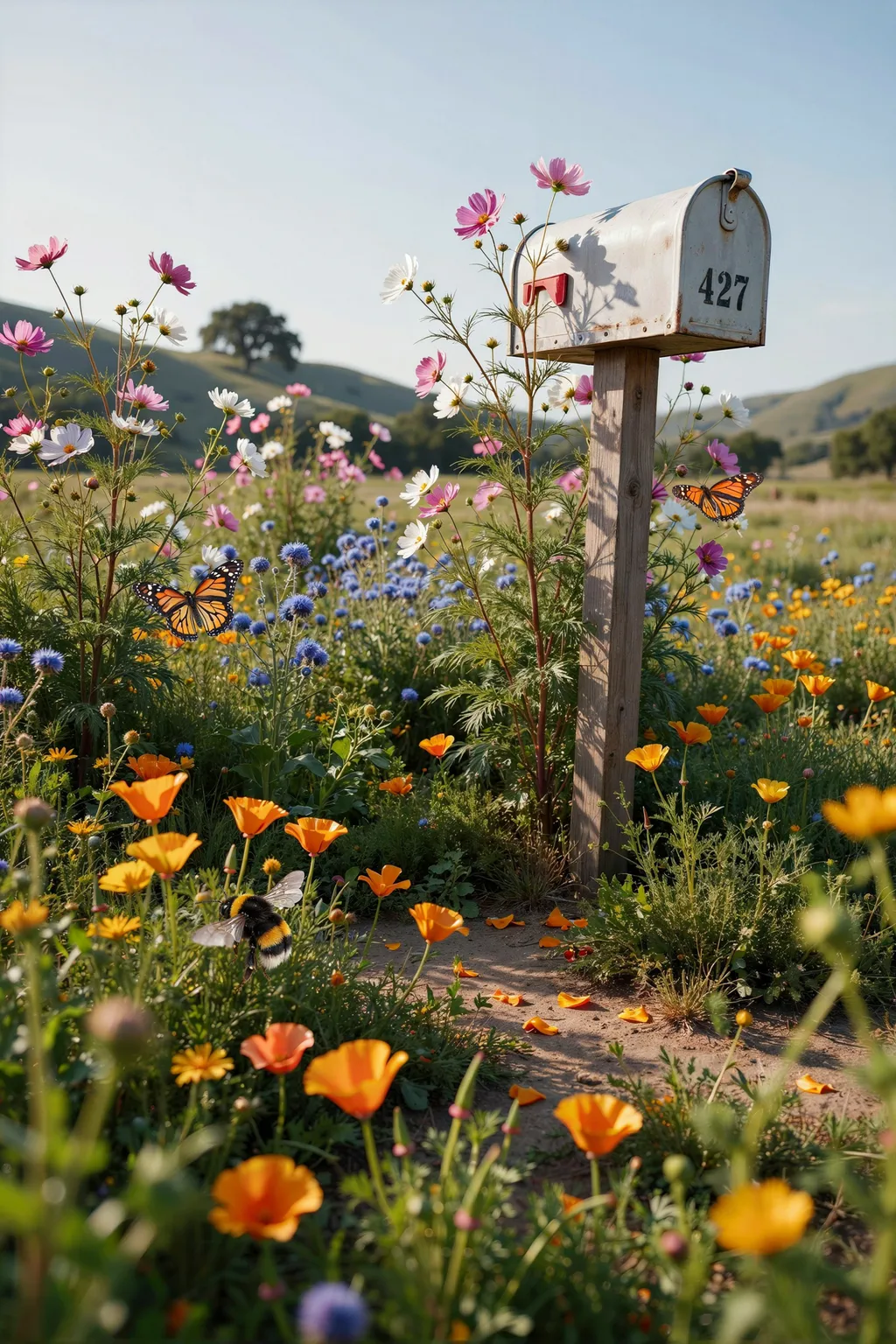
Scatter a wildflower seed mix around the mailbox in early spring and just let it do its thing. Cosmos, bachelor’s buttons, and California poppies grow quickly and give a carefree, meadow-like feel that’s hard to replicate any other way.
This approach is genuinely low effort. It requires patience while the seeds get going, and then it basically manages itself season after season.
24. Tall Ornamental Post With Hanging Basket
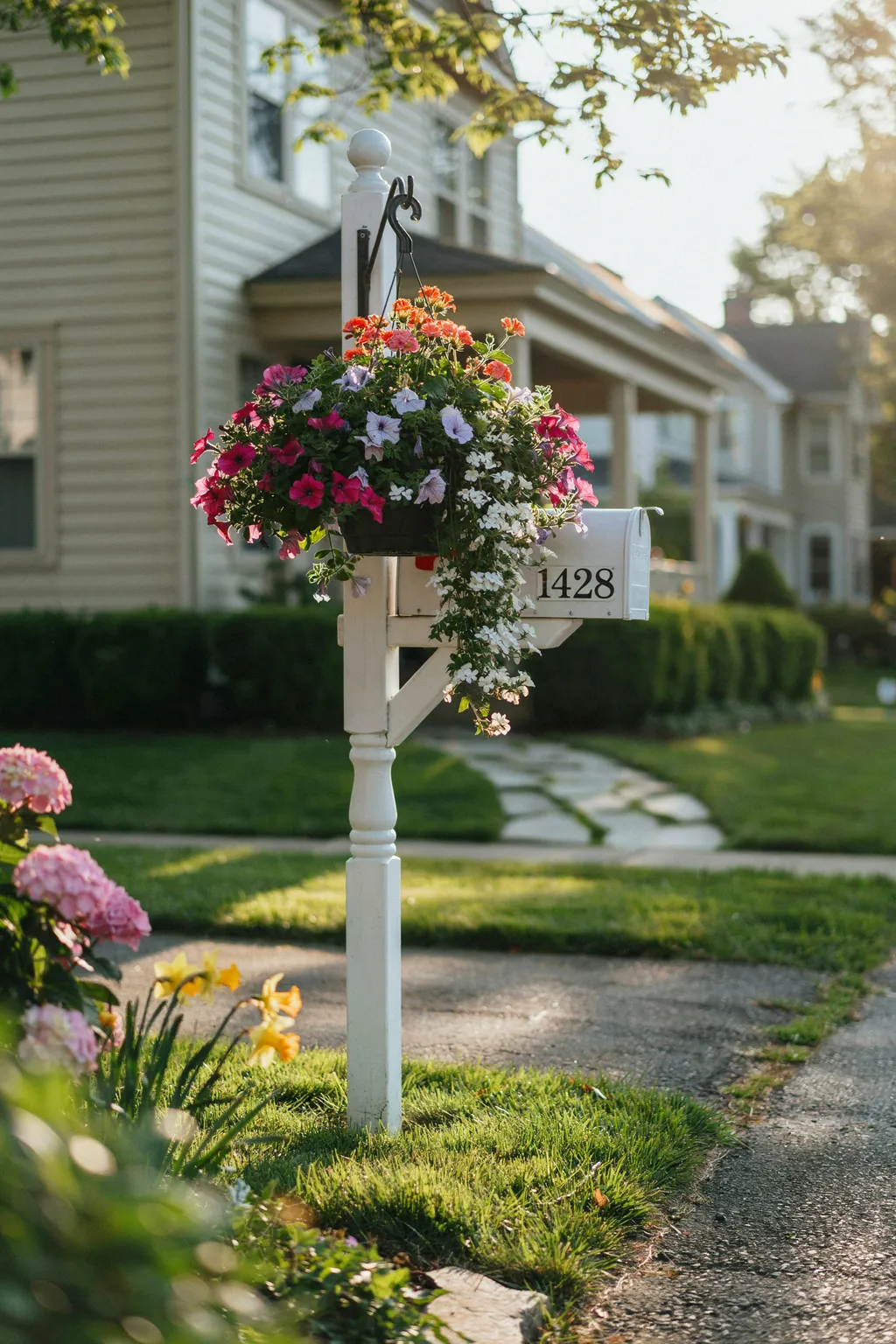
If you’re replacing your mailbox post anyway, go with a tall decorative post that has a bracket for a hanging basket. Trailing petunias or fuchsias in a hanging basket add a vertical dimension that most mailbox setups skip entirely.
It also pulls the eye upward, making your whole front yard feel taller and more lush than it actually is. Worth considering if you’re already doing the work.
25. Year-Round Evergreen Foundation
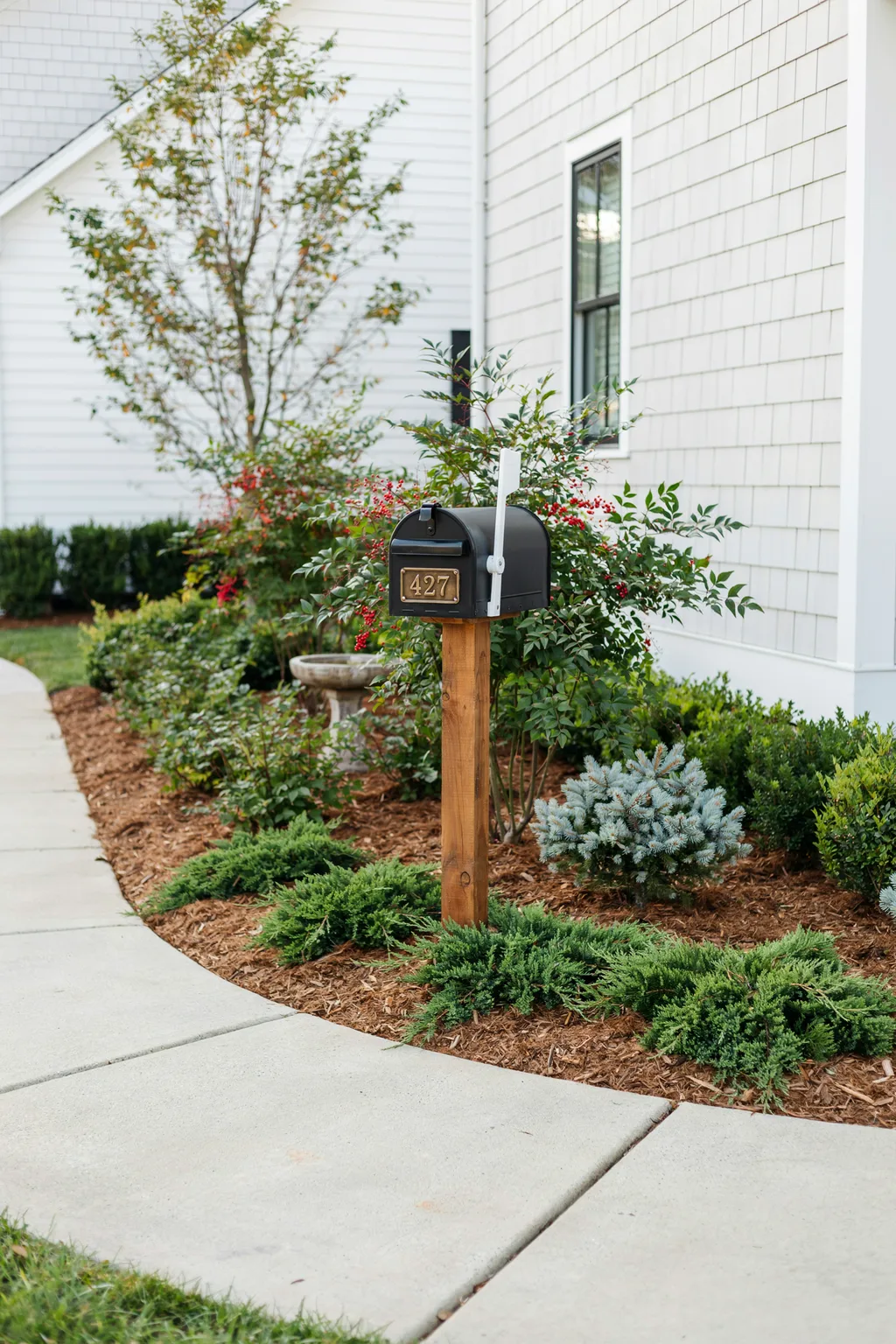
Want zero seasonal stress? Build your mailbox planting entirely around evergreens and plants with winter interest. Dwarf conifers, creeping juniper, and nandina all hold their color and structure through every season.
Evergreen plantings look put-together in February just as much as in July. If you live somewhere with harsh winters, this is hands-down the most reliable approach you’ll find.
A Few Practical Tips Before You Start
Before you grab a shovel, a few things are worth thinking through first:
- Check your HOA rules — some communities restrict what you can plant near the mailbox or require USPS access to stay clear
- Know your sunlight — most mailboxes get full or partial sun, but shade options exist if yours sits under a tree
- Keep postal access clear — plants shouldn’t block the mailbox door or crowd the mail carrier’s approach
- Match your home’s style — a formal boxwood border looks out of place in front of a rustic farmhouse, and the other way around too
- Think about scale — a massive planting bed overwhelms a small mailbox, so keep your proportions in check
The Bottom Line
Your mailbox is a small canvas with a big audience. You don’t need a large budget or any landscaping experience to make it look great. Just pick a style that fits your home, choose plants that work for your climate and light situation, and keep the scale proportional.
Whether you go bold with climbing roses or keep it simple with a clean stone border and ornamental grasses, the upgrade from bare dirt and a lonely post is genuinely massive. Your neighbors will notice. So will anyone who drives past your house thinking about the neighborhood.
